Indian Cake Recipe
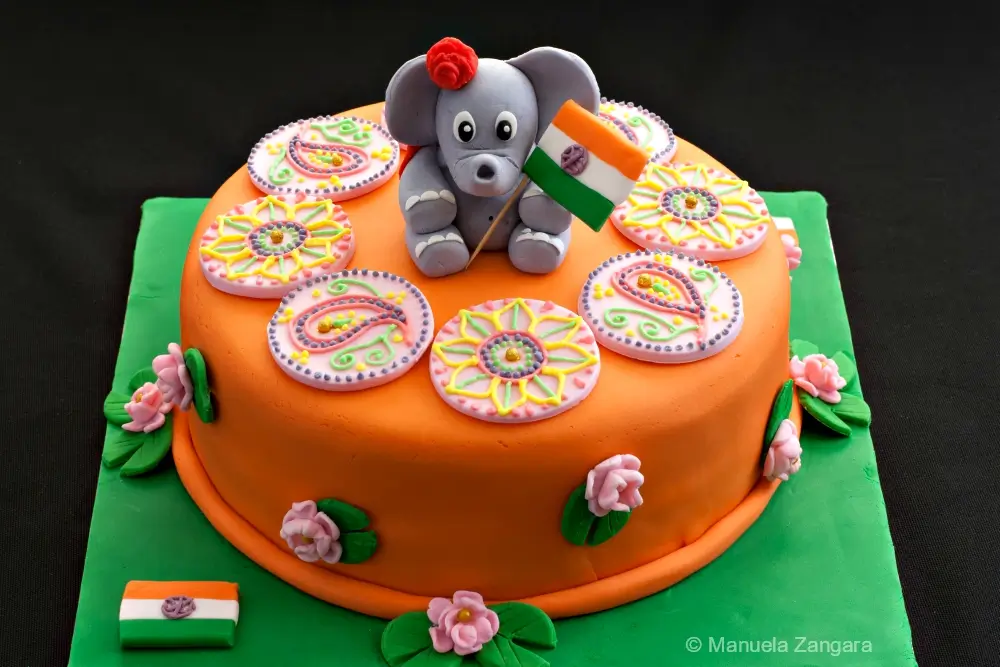
With a golden crumb, fondant shimmer, and sugar sparkle, this Indian Cake stands bright with colour, soft in texture, and light in sweetness, made for birthdays and cheerful gatherings.
Ingredients
- 2 Yoghurt Cakes – baked in 1×23 cm – 9 inches and 2×10 cm – 4 inches round pans
- Coloured fondant
- Edible glue
- Sugar pearls
- Gel colours
- Edible glitter
- Icing for crumb coating
- Icing sugar or cornstarch
Instructions
Cake
-
Bake 2 yoghurt cakes to begin with and freeze until ready to assemble.
-
Colour all the fondant needed. Dip a toothpick into the gel colour, then rub it onto the piece of fondant to be tinted. Knead until the colour is evenly combined. Alternatively, use ready-coloured fondant.
Decorations
-
Make the lotus flowers using a cookie cutter. Use a toothpick to add detail and make them look more realistic, then place a sugar pearl in the centre. Cut out the leaves with a cookie cutter, attach the flowers to the leaves using edible glue, and set aside to dry.
-
Make the Indian flags by rolling 3 ropes of coloured fondant. Stick them together with edible glue and flatten with a fondant smoother. Create the Ashoka Chakra with a very thin rope of blue fondant and glue it to the flag. Insert a toothpick into one of the flags and set aside to dry.
-
Cut out 8 rounds of pink fondant. They can be as thin or as thick as preferred; about biscuit thickness works well. Let them dry overnight before decorating.
-
To make the mehndi patterns on the fondant rounds, use a small 1.5 tip and coloured royal icing. Decorate with golden pearls and edible glitter.
-
Make the elephant using this YouTube tutorial on how to make a fondant elephant.
Assembling
-
The day before the party, assemble the cake. Prepare icing for the crumb coating using a smooth, spreadable consistency. Take the 2 yoghurt cakes out of the freezer and level them while still frozen using a sharp serrated knife.
-
Cover a cake board with green fondant and leave it to dry or harden. It’s best to do this the day before so the board is firm enough to support the cake without sinking.
-
To crumb-coat the cake, spread a layer of icing on top of one cake and place the second cake on top. Choose the flattest surface for the top layer (usually the bottom of one of the cakes) to make decorating easier. Coat the entire cake with icing, starting from the top and moving down the sides.
Note: Use a cake spatula to smooth the surface as much as possible, then refrigerate until the icing hardens. This layer helps the fondant sit smoothly and prevents crumbs from showing through.
-
Once the crumb coat is firm, spread icing in the centre of the cake board and place the cake on top.
-
Roll out the orange fondant and cover the cake completely. Smooth with a fondant smoother and trim the excess. To hide any imperfections, roll out a thin rope of orange fondant and wrap it around the base of the cake.
-
Attach the lotus flowers, mehndi rounds, and flags to the cake using edible glue.
-
Set the elephant in the middle of the cake, securing the flag with the toothpick to complete the decoration.
Recipe Notes
The yoghurt cakes can be baked ahead and frozen until needed. The times listed here cover decorating and assembly only, not the initial baking.