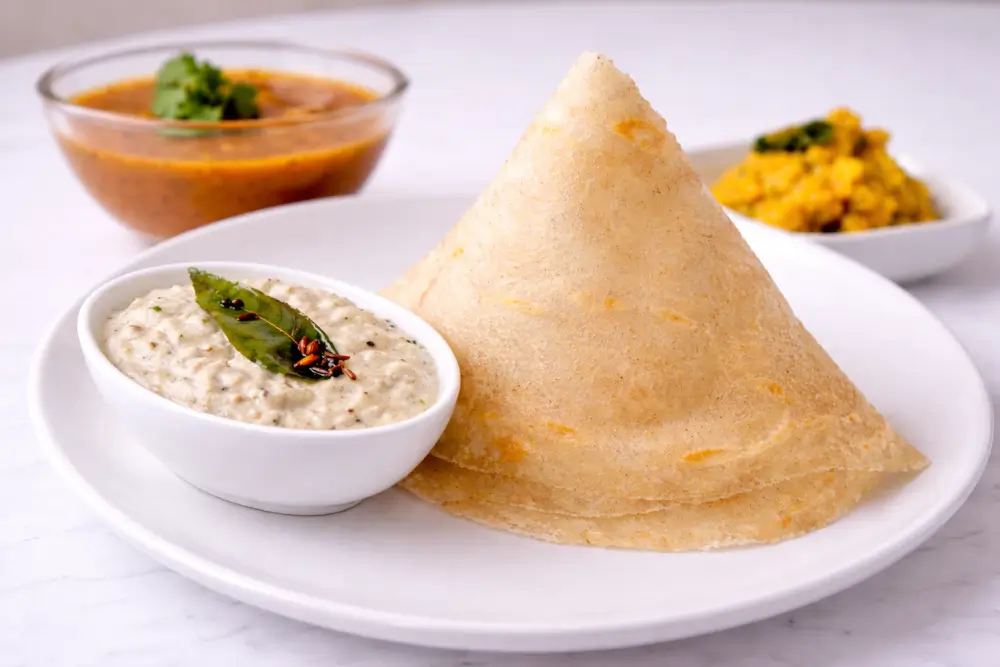
Dosa and Coconut Chutney Recipe
Crisp, golden Dosa and Coconut Chutney come together as a simple, satisfying pairing, with thin, crisp layers and a smooth side for contrast.
Ingredients
Dosas
- 400 g – 2 cups rice
- 50 g – ¼ cup channa dal
- 200 g – 1 cup urad dal
- 10 –12 g – 1 tbsp fenugreek seeds
- vegetable oil – as needed
- salt – as needed
- water – as needed
Coconut Chutney
- 80 –100 g – 1 cup coconut – fresh coconut, frozen coconut, or desiccated coconut
- 1 green chilli
- 10 –12 curry leaves
- 5 g – 1 tsp ginger paste
- salt – to taste
Tempering
- ¼ tsp mustard seeds
- ¼ tsp cumin seeds
- 6 –7 curry leaves
- 15 ml – 1 tbsp vegetable oil
Instructions
For the Dosa Batter
-
Place the rice in one bowl and cover it with water. In a separate bowl, add the urad dal, channa dal, and fenugreek seeds, then cover with water and leave both to soak for 6 hours.
-
After 6 hours, drain the rice and lentils, making sure to preserve the soaking liquids as you’ll need them later. Blend everything together with some of the reserved liquids into a fine paste.
Note: For a crispier dosa, keep the batter slightly grainy instead of blending it completely smooth.
-
Adjust the batter consistency by adding a little of the reserved liquids if needed. Use the soaking water instead of fresh water, as it helps with fermentation and gives better results in both flavour and texture.
-
Leave the batter to ferment overnight in a warm place. Keep it warm by placing it in the oven with the heat turned off and covering it with thick towels.
-
The next day, add salt and adjust the consistency with water or the reserved liquids until the batter is similar to a crêpe batter. Mix well and set aside.
Cooking the Dosas
-
Spread the batter on a cold tawa or non-stick pan. Use a round cup to spread it in a circular motion to create a very thin layer, then turn the heat on. When small bubbles start forming, drizzle a little vegetable oil around the edges to help release the dosa.
Note: A cold tawa helps spread the batter more evenly. A regular-sized tawa works well, even without professional tools. You can refer to the original recipe on Vahrehvah to see how dosas are traditionally made.
-
Once the edges start to brown, fold the dosa into a half-moon, roll it into a cone, or leave it flat, depending on how you want to serve it.
-
After making the first dosa, turn off the heat and cool the tawa with cold water. When the tawa is cold, make the next dosa.
Note: Dosas don’t need to be flipped and are ready when cooked on one side.
-
Transfer to a plate and serve warm with sambhar or coconut chutney.
Coconut Chutney
-
Grind the coconut, green chilli, ginger, curry leaves, and salt with 1–2 tablespoons of water until slightly chunky or smooth, depending on your preference, then transfer to a bowl.
-
Heat the vegetable oil in a small frying pan. Add the mustard seeds. When they start popping, add the cumin seeds and curry leaves and fry for about 30 seconds over medium heat, making sure they don’t burn.
-
Pour the hot tempering over the chutney and mix well.
-
Adjust the consistency with a little water if needed, mixing gently until you reach your preferred thickness.
-
Serve with Dosa, idlis, or other Indian snacks.
Recipe Notes
- This recipe makes a large batch of batter, and half the quantity is enough for 4 people.
- About 6 hours are needed for soaking, followed by 8–12 hours for fermentation.
|
|