

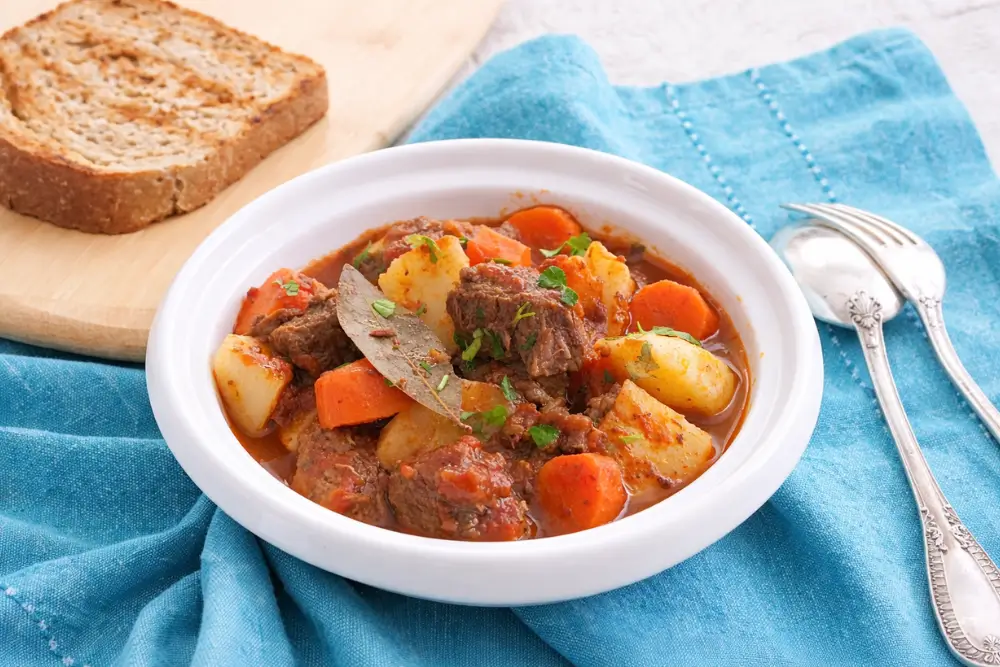
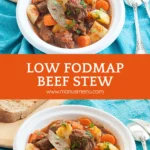
A slow-simmered tomato sauce with tender beef gives Low FODMAP Beef Stew a deep savoury taste and a thick, hearty texture.
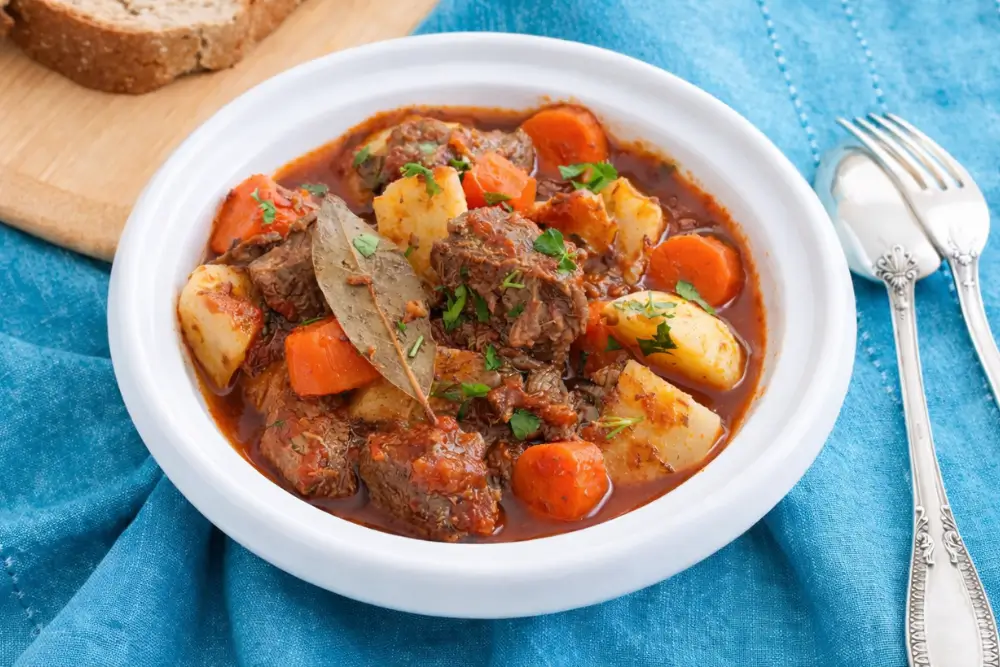
I absolutely adore stew. This Low FODMAP Beef Stew is a hearty, slow-cooked dish with tender beef and rich flavours, perfect for meals meant to be enjoyed slowly.
It’s a recipe I come back to often, and I’m happy to share it with all of you.
Like most stews, it relies on simple, everyday ingredients, but the finished dish always surprises me with how rich and well-rounded the flavours become.
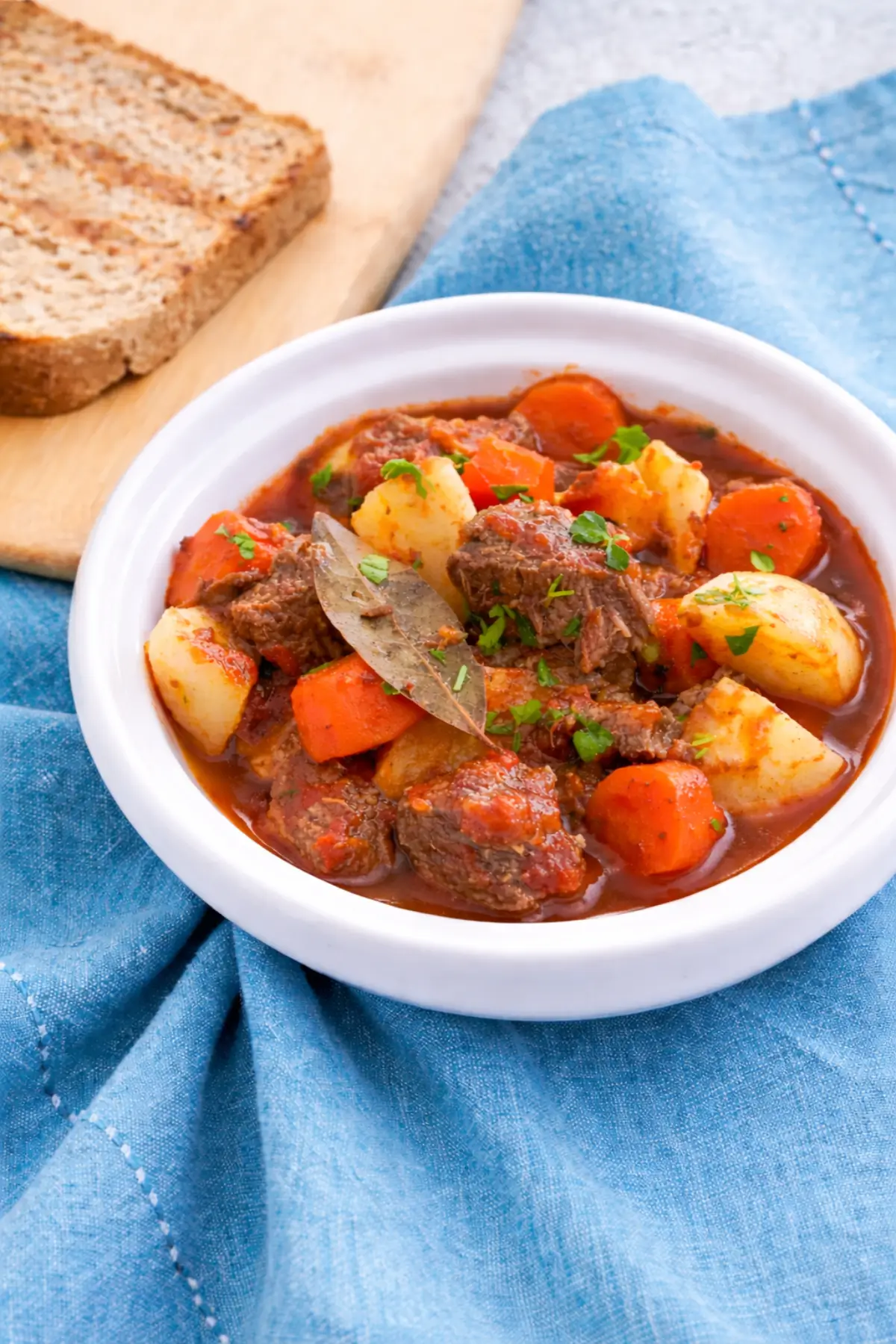
I usually prepare a large pot and portion it out for later. It freezes well and is perfect for days when time is short, but a proper home-cooked meal is still what you want.
If you plan to do the same, freeze it before adding the carrots and potatoes, as the meat holds its texture better. The vegetables can easily be added on the day you plan to serve them.
What Makes This Stew a Favourite
- Delivers tender beef after a long, gentle simmer with meat soft enough to break apart easily with a spoon.
- Works well for batch cooking, allowing a large pot to be portioned and kept for later meals.
- Freezes well and warms through evenly, keeping the texture of the beef consistent after reheating.
Key Ingredients for Beef Stew
Beef Chuck Steak
A reliable cut for slow cooking, chuck becomes tender as it cooks and keeps its moisture over time. Choose pieces with light marbling and cut them into even cubes so they cook evenly.
Garlic-Infused Olive Oil
Brings a gentle garlic flavour without using fresh garlic, keeping the stew suitable for low FODMAP cooking. Use oil that has been infused and strained, not oil with garlic pieces left inside.
Tinned Tomatoes
Add freshness and light acidity to the stew while helping create a rich cooking liquid. Plain tinned tomatoes without onion, garlic, or added flavourings work best.
Find the complete list with measurements in the recipe card below.
How to Make Low FODMAP Beef Stew
Step 1: In a pot, sauté the spring onion tops with the extra virgin olive oil and the garlic-infused oil until fragrant.

Step 2: Add the beef and brown it well on all sides.
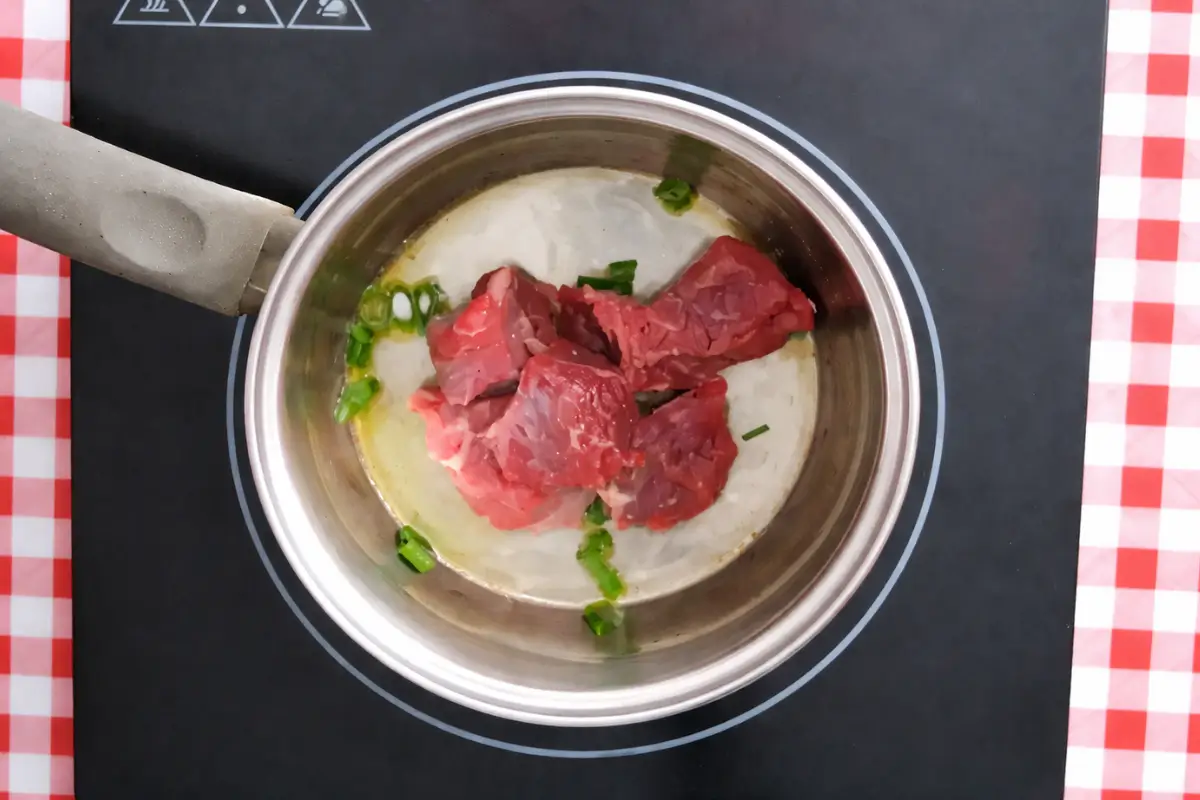
Step 3: Add the tinned tomatoes, bay leaf, salt, and enough water to just cover the meat. Mix well, bring to a boil, then cover and simmer for 2 hours.
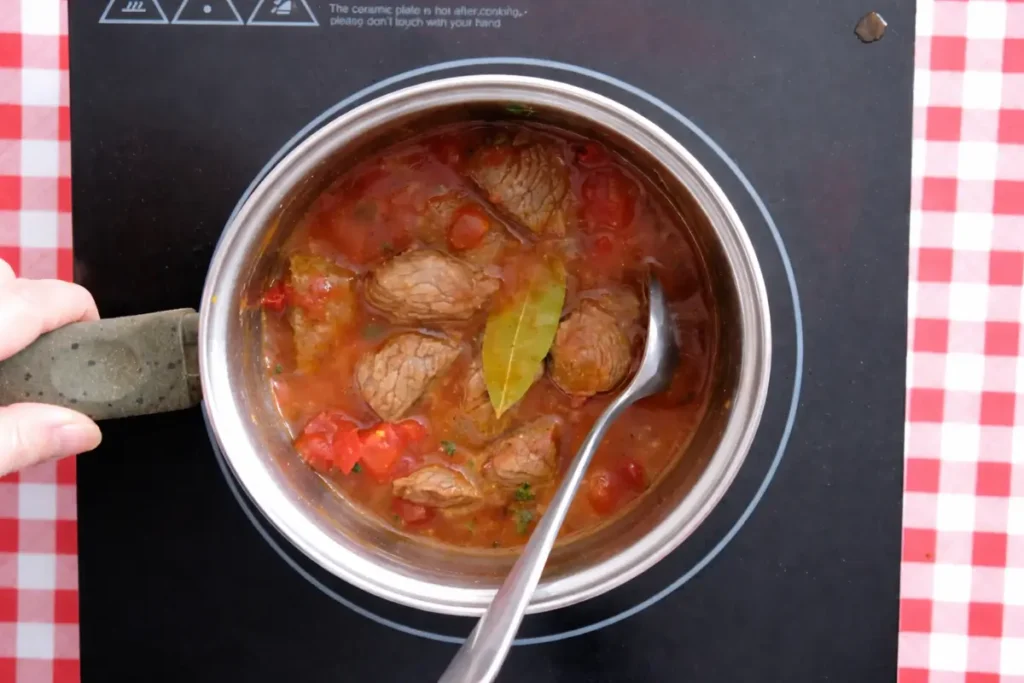
Step 4: Add the carrots and potatoes, along with more water if needed.
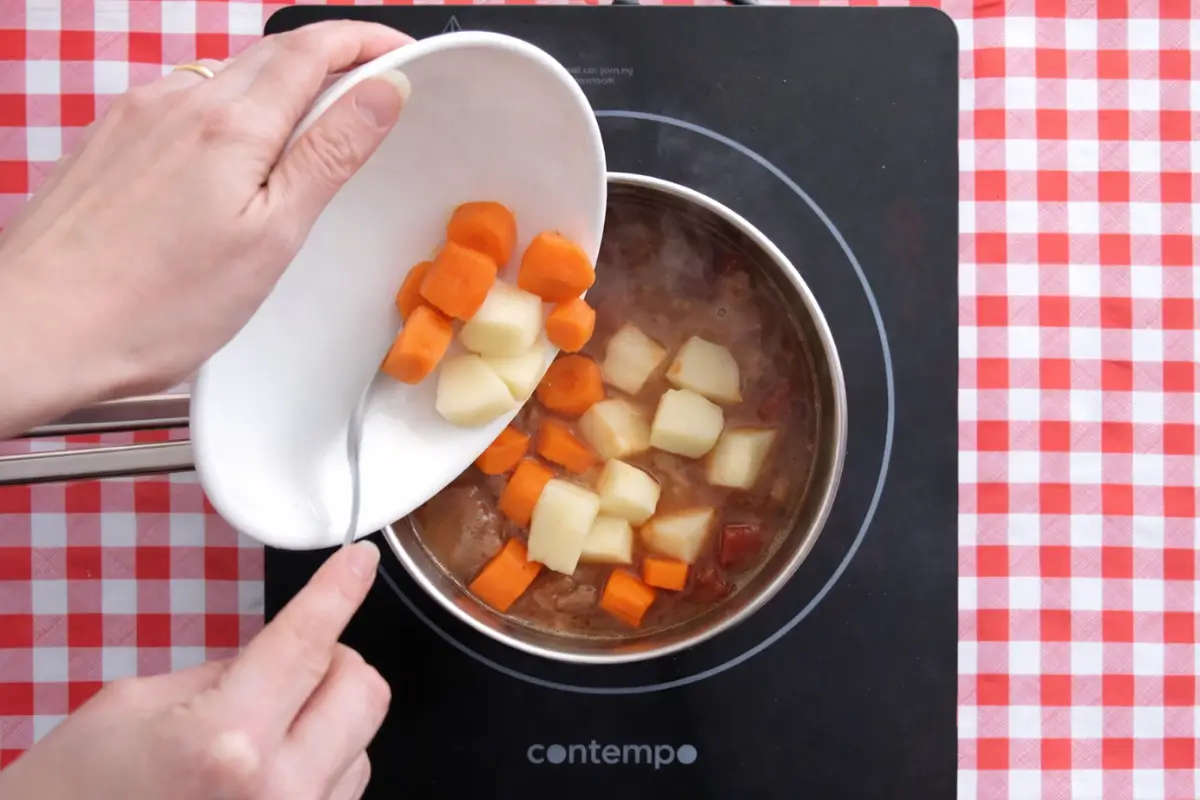
Step 5: Cover and continue simmering until the carrots, potatoes, and meat are tender.
Step 6: Stir in the chopped parsley and serve warm with low FODMAP bread or polenta.
Alternative Cooking Methods for Beef Stew
Slow-Cooker Beef Stew – Brown the beef first in a pan, then transfer it to a slow cooker with the tinned tomatoes, bay leaves, carrots, potatoes, and water. Cook on low for 6–8 hours, until the beef is tender and the vegetables are fully cooked.
Oven-Braised Beef Stew – After browning the beef, place all the ingredients in a heavy, oven-safe pot with a tight-fitting lid. Cook in a low oven at 150–160°C – 300–325°F for about 3 hours, until the beef is soft and the vegetables are cooked through.
Pressure Cooker Beef Stew – Brown the beef directly in the pressure cooker, then add the tomatoes, bay leaves, carrots, potatoes, and water. Cook under high pressure for 35–40 minutes, then allow natural pressure release before opening.
Frequently Asked Questions
Other slow-cooking cuts, such as beef blade or brisket, work well in this recipe. Choose a cut with some fat, as it helps keep the meat tender during the long simmer.
Yes. Low FODMAP vegetables like parsnips, pumpkin, or green beans fit well with the existing flavours. Add them toward the end so they cook through without breaking down.
Yes. Without potatoes, the stew feels lighter but still has plenty of flavour from the beef and tomatoes. Polenta or low FODMAP bread works well as a substitute on the plate.
Bay leaves suit the stew well, and small amounts of thyme or rosemary can be added if tolerated. Keep the herbs minimal so they do not distract from the beef and vegetables.
Low FODMAP bread or polenta pairs naturally with the cooking liquid. A simple green salad on the side adds freshness and contrast.
Extra Help from the Kitchen
Trim Excess Surface Fat – Remove thick outer fat from the chuck to keep the cooking liquid clean and reduce excess grease during simmering.
Let the Beef Come to Room Temperature – Take the meat out of the fridge about 20 minutes before cooking to help it brown more evenly in the pot.
Skim During Simmering – If any foam or excess fat rises to the surface during the first part of cooking, skim it off with a spoon for a clearer, better-tasting stew.
Check the Liquid Level Periodically – Add hot water as needed to keep the meat just covered and maintain steady cooking.
Rest Before Serving – Leave the stew off the heat for 10–15 minutes before serving to allow the flavours to settle and the texture to improve.
Variations and Twists
Finish with Fresh Thyme – Use a small sprig of fresh thyme together with the bay leaves to complement the beef and tomatoes.
Swap in Turnips – Replace 1 carrot with 300 g – 10.5 oz turnips, diced, for a mild root vegetable flavour that cooks well in the stew.
Add Capsicum – Stir in 1 medium red or yellow capsicum with the carrots and potatoes to add colour and mild sweetness.
Use Parsnips with Carrots – Replace 1 carrot with 300 g – 10.5 oz parsnips, combining them with the remaining carrots for a slightly sweeter vegetable mix that holds its shape during cooking.
Finish with Spinach – Stir in 60 g – 2 oz fresh spinach just before serving for added greens and colour.
Storage and Shelf Life
Store the stew in an airtight container in the refrigerator for up to 3–4 days once fully cooled. For freezing, allow it to cool completely, then portion and freeze for up to 3 months.
For the best texture, freeze it before adding the carrots and potatoes. Thaw overnight in the fridge.
Reheat gently on the stovetop over low heat, adding a little water if needed, until hot throughout.
More Hearty Beef Meals
Low FODMAP Beef Stew Recipe
Ingredients
- 900 g – 2 lb beef chuck steak – trimmed and cubed
- 1 tbsp extra virgin olive oil
- 1 tbsp garlic-infused olive oil
- 2 tbsp green onion tops – green part only, sliced
- 500 g – 1 lb tinned tomatoes
- 2 bay leaves
- 3 large carrots – cut into large chunks
- 3 large potatoes – cut into 6 pieces each
- water – as required
- salt – to taste
- parsley – chopped
Instructions
- In a pot, sauté the spring onion tops with the extra virgin olive oil and the garlic-infused oil until fragrant.
- Add the beef and brown it well on all sides.
- Add the tinned tomatoes, bay leaf, salt, and enough water to just cover the meat. Mix well, bring to a boil, then cover and simmer for 2 hours.
- Add the carrots and potatoes, along with more water if needed.
- Cover and continue simmering until the carrots, potatoes, and meat are tender.
- Stir in the chopped parsley and serve warm with low FODMAP bread or polenta.
Notes
- For those not following a low FODMAP diet, use 2 tablespoons of extra virgin olive oil and add 1 finely chopped garlic clove in place of the garlic-infused oil. The spring onion tops can also be replaced with about 3 tablespoons of chopped onion.
- If you’re following a low FODMAP diet, keep in mind that 1 slice of regular bread is considered low FODMAP. I usually choose 100% spelt sourdough instead, which allows me to enjoy a slightly larger portion.

Love travelling as much as cooking?
Many of the recipes I share are inspired by places I’ve visited around the world. On Travel with Manu you’ll find destination guides, itineraries and travel inspiration to help you plan your next adventure.













Your ingredients list 500 gms tinned tomatoes.
Your directions say tomato paste.
Which is it, tomatoes or tomato paste?
That seems like a lot of tomato for a Low Fodmap recipe.
Hi Angela, thanks for pointing this out
The recipe has now been updated. It uses 500 g of tinned tomatoes only and there is no tomato paste in the recipe. That was a mistake in the instructions and has been corrected.
Regarding the Low FODMAP concern, tinned tomatoes are low FODMAP up to about 100 g per serve. This recipe uses 900 g of beef and serves 6 people, so the tomato amount per portion stays well within Low FODMAP guidelines.
Thanks again for catching it and for taking the time to comment!
I’ve made it 3-4x now for my FODMAP son and family, and all the non Fodmaps folks, it’s wonderful!!great reviews
That looks delicious! Comfort food recipes will always find a way to me eventually, I love trying new things. This looks and sounds incredible.
Yummy, I wish I had the ingredients now