

Enjoy a classic-style Low FODMAP Japanese Beef Curry made with tender beef, root vegetables, and a thick, mildly spiced curry sauce.
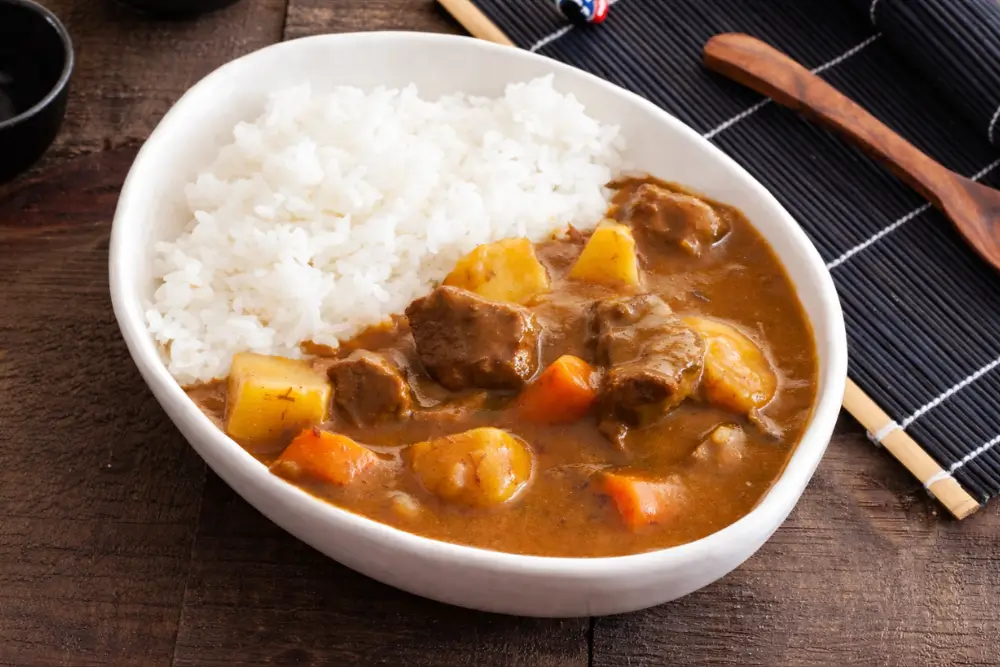
When I make this Low FODMAP Japanese Beef Curry, I treat it more like a stew than a typical curry. It cooks slowly and develops a thick, smooth sauce with a mild spice and a slight sweetness.
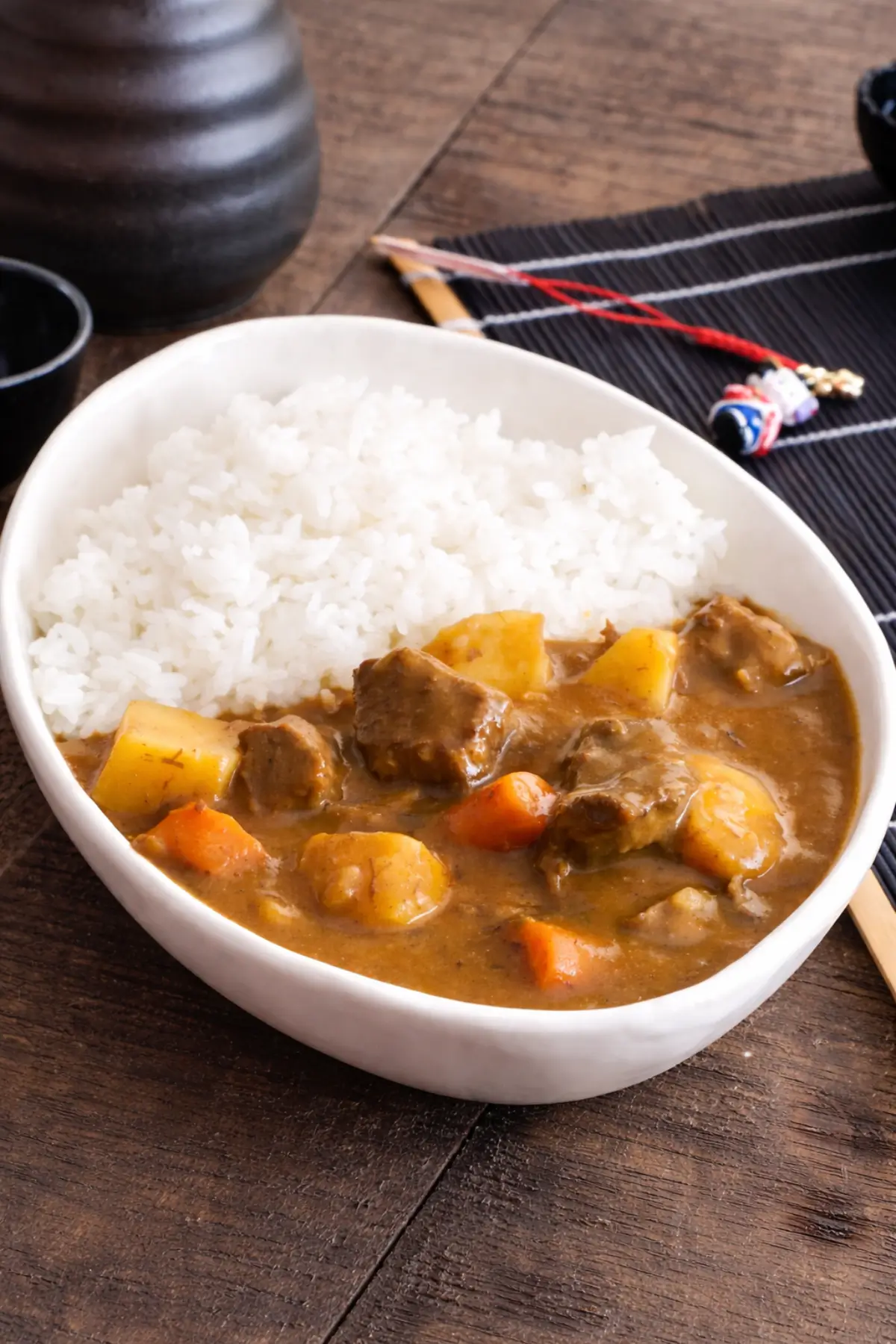
Japanese curry (カレー) is quite different from other Asian curries. It’s less intense, more rounded, and the texture is richer, especially as the beef and vegetables soften during cooking. The red wine in this version adds extra depth, which I always appreciate.
Curry was introduced to Japan by the British and adapted over time into something more suited to everyday cooking. It’s now a staple in many homes.
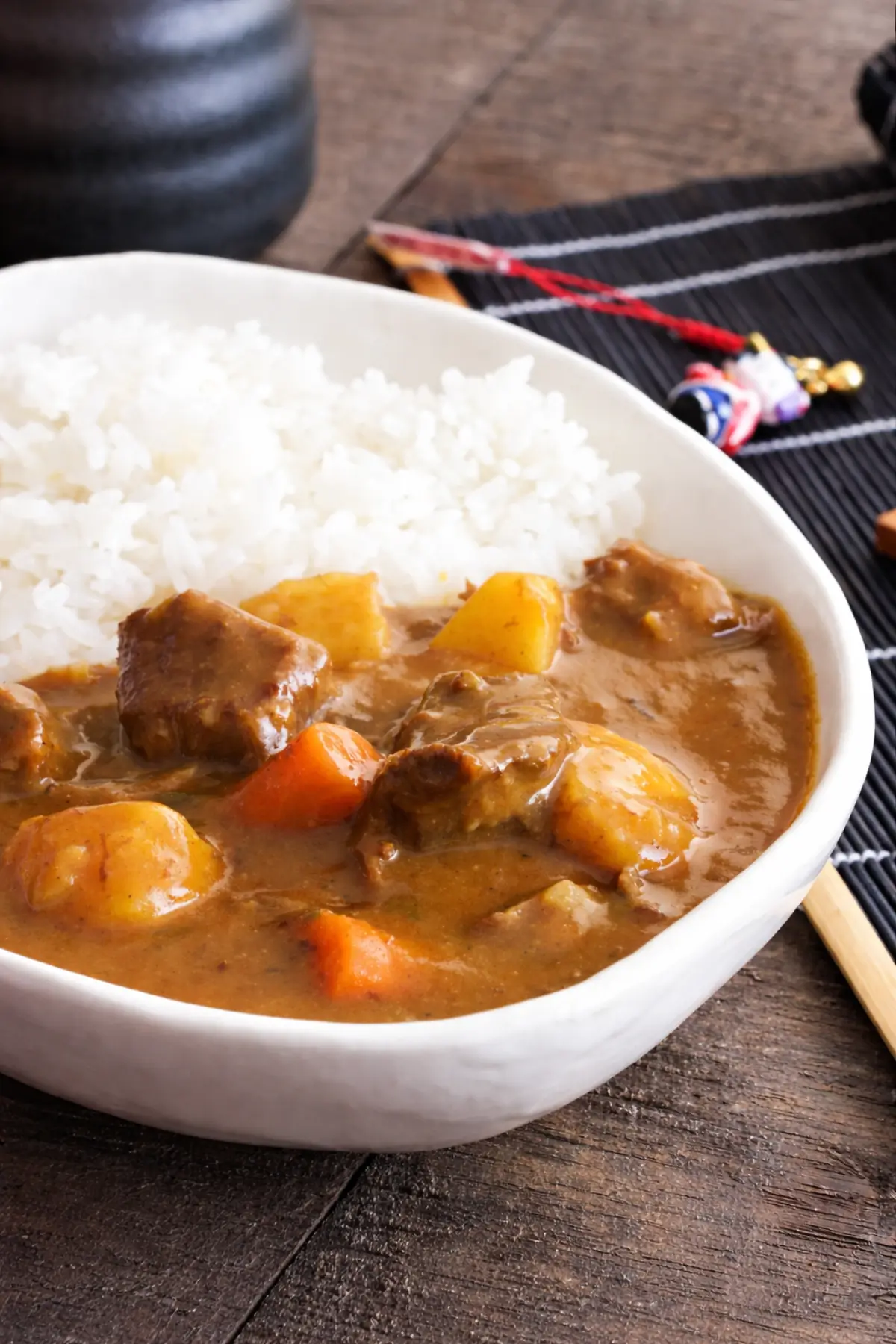
I used beef here because it becomes tender with simmering, but chicken or pork work just as well. To keep it Low FODMAP, the recipe uses a homemade Japanese curry roux to thicken the sauce without relying on high FODMAP ingredients.
Enjoy, and don’t forget to check out the video recipe and leave a comment to let me know how you like it!
Reasons to Make Low FODMAP Beef Curry
- Works well for batch cooking since it holds up nicely and doesn’t lose its texture after a day or two.
- Easy to portion out, which makes it practical if you’re planning meals ahead for the week.
- Pairs naturally with rice, making it simple to serve without needing extra sides or complicated add-ons.
Key Ingredients for Low FODMAP Japanese Beef Curry
Beef
Beef gives the curry its richness and a satisfying bite. Cuts like chuck or brisket work best because they stay tender and hold their shape without becoming dry.
Vegetables
Carrots add a gentle sweetness, while potatoes give body and help create a thicker texture. Yukon Gold keeps a firmer bite, while Russet gives a softer finish. Spring onions add a mild onion flavour that blends in without being too strong.
Garlic-Infused Olive Oil
Garlic-infused oil brings in that familiar garlic flavour without using actual garlic. It adds depth while keeping the dish suitable for a low FODMAP diet.
Spices
Curry powder gives the main flavour and colour, while garam masala adds warmth and rounds everything out. Asafoetida helps replace the savoury notes usually coming from onion and garlic without standing out.
Low FODMAP Curry Roux
I use my homemade low FODMAP curry roux, which gives the sauce a thick, smooth consistency and the classic Japanese texture.
Find the complete list with measurements in the recipe card below.
How to Make Low FODMAP Japanese Beef Curry
Step 1: Season the beef with salt and coat it with flour.

Step 2: Brown the beef well in the garlic oil. Stir in the grated ginger and spring onions until combined.
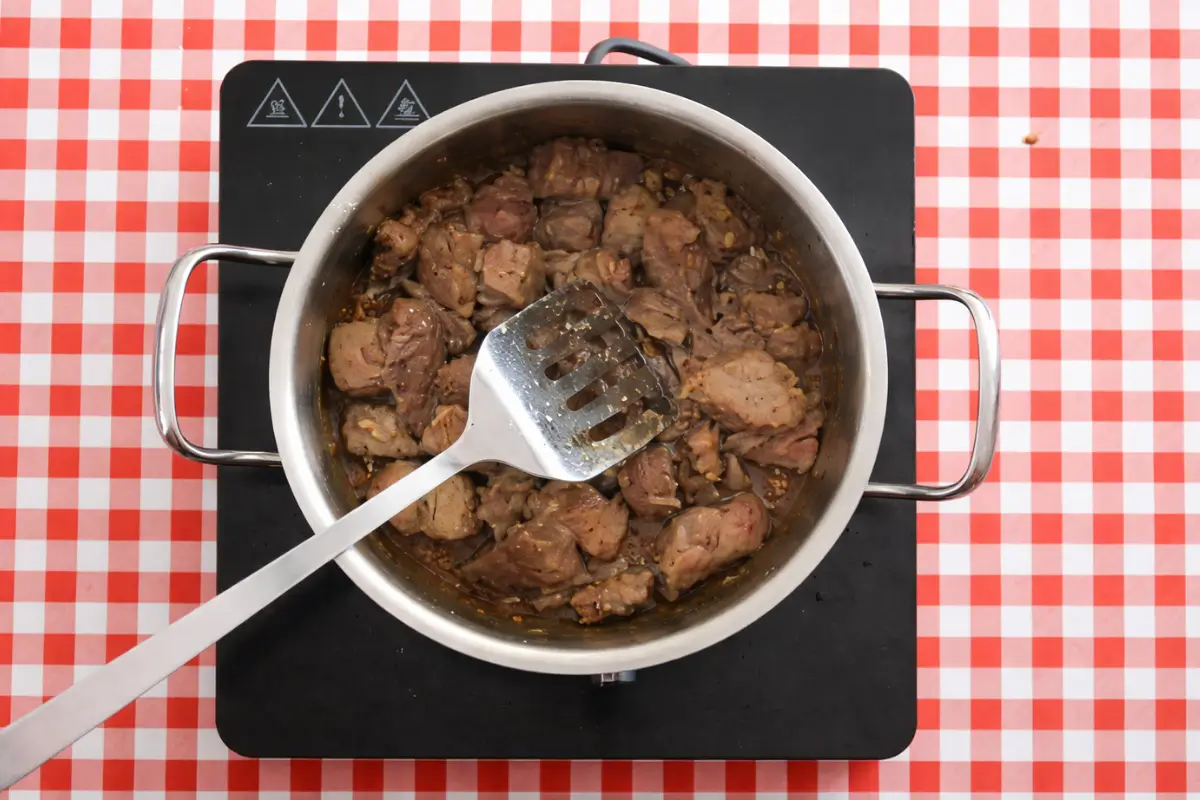
Step 3: Stir in the curry powder, asafoetida, garam masala, and tomato paste until evenly combined.
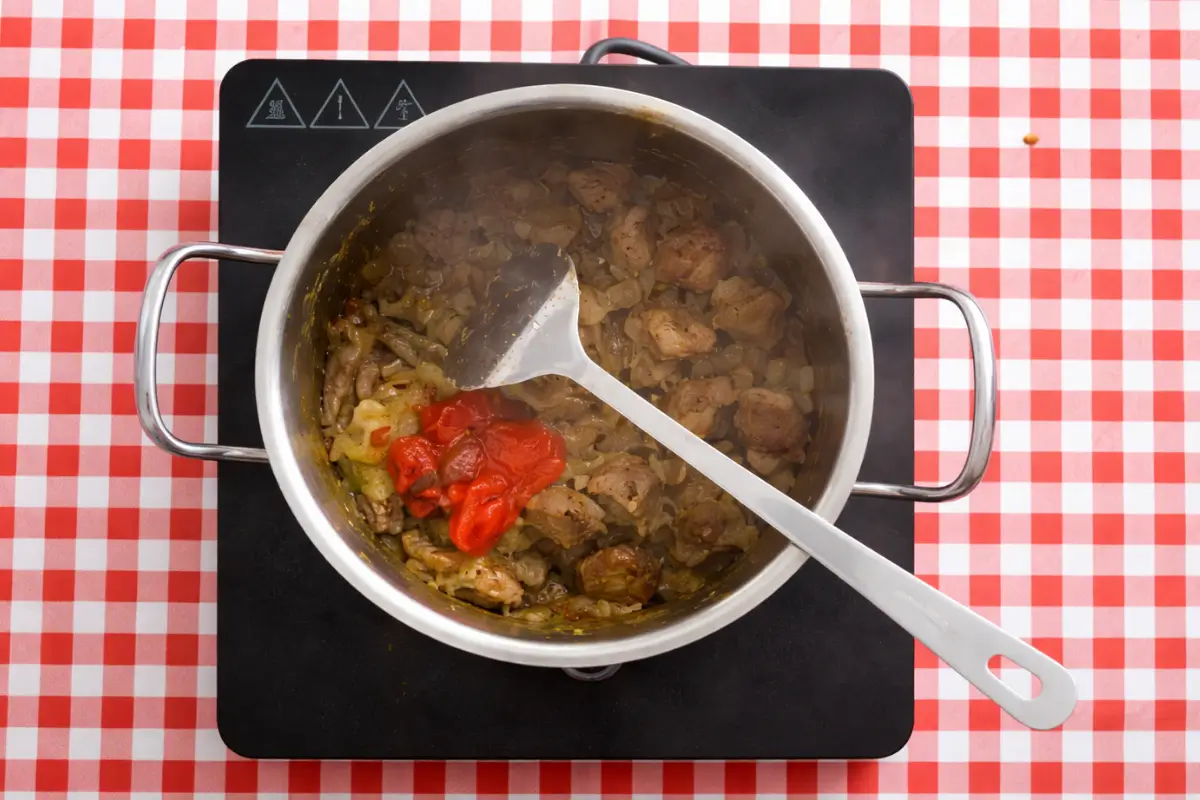
Step 4: Add the wine and let the alcohol evaporate.
Step 5: Pour in the water and add the bay leaves. Cover and cook for 1 ½ hours, or until the beef is tender.
Step 6: Add the chopped carrots and potatoes, cover, and continue cooking until tender.
Step 7: When the vegetables are cooked, add the curry roux. Melt it inside a ladle, then stir until the sauce thickens to your liking.
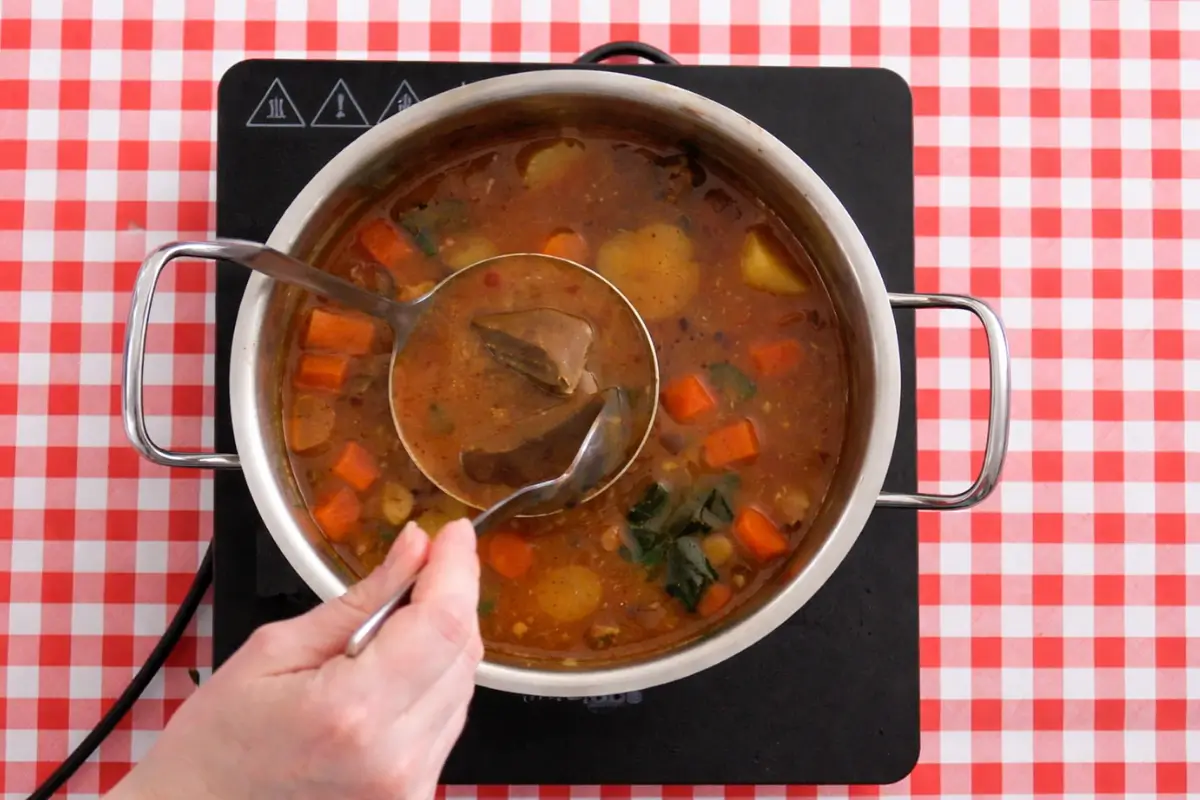
Step 8: Stir in the milk, Worcestershire sauce, and sugar. Taste and adjust the salt if needed.
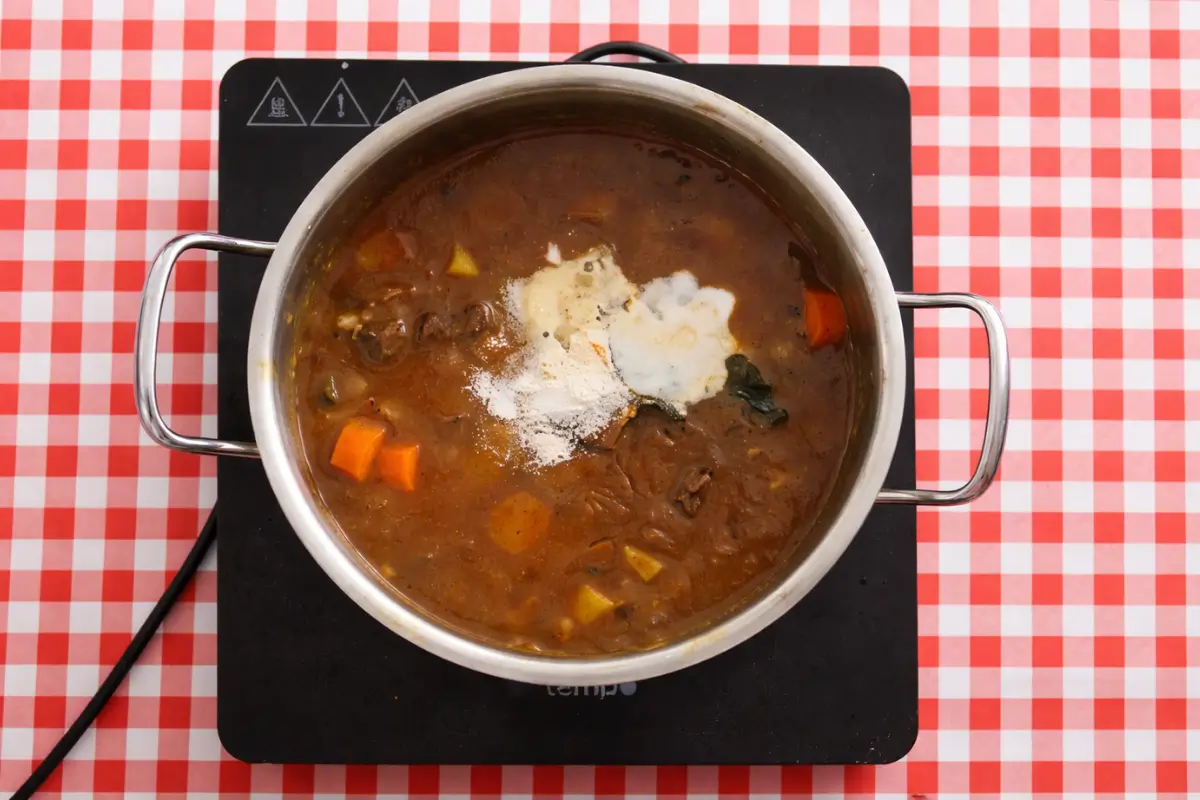
Step 9: Serve on rice.

Frequently Asked Questions
Yes, you can leave it out, but the curry will miss some of the savoury flavour usually provided by onion and garlic. The sauce will taste lighter and less layered.
You can use brisket, short ribs, or beef shin as alternatives. These cuts stay tender during long cooking and give a similar texture, though short ribs will make the sauce richer and slightly fattier.
Yes, you can. Brown the beef first, then transfer everything except the roux, milk, and seasonings. Add those at the end once the beef and vegetables are tender.
Melt the curry roux fully in a ladle with hot liquid before adding it to the pot, then stir it in gradually. This helps prevent clumping and gives the sauce a smooth, even texture.
Extra Help From The Kitchen
Control The Thickness Before Adding Roux – Let the liquid reduce slightly before adding the curry roux. This gives better control over the final texture and prevents the sauce from turning too heavy too quickly.
Use A Wide Pot For Better Reduction – A wider pot allows more evaporation, which helps the sauce thicken naturally and concentrate the flavour without relying only on the roux.
Add Worcestershire Sauce Gradually – Start with a smaller amount and adjust at the end. The flavour builds quickly and can take over if added all at once.
Skim Excess Fat From The Surface – After simmering the beef, skim off any excess fat that rises to the top. This keeps the sauce smoother and prevents it from feeling greasy.
Adjust Thickness After Vegetables Cook – Once the potatoes and carrots are fully cooked, check the consistency before adding more roux. Vegetables release moisture, which can thin the sauce more than expected.
Variations and Twists
Swap In Chicken – Use chicken thighs in place of beef for a lighter version with a softer texture. Chicken holds well during the long simmer and stays tender without drying out, while giving a milder flavour.
Add Grated Apple – Add a small amount of grated apple to bring in gentle sweetness and slight acidity. Keep the amount limited to avoid excess fructose, or use a spoonful of marmalade or extra sugar to achieve a similar rounded flavour.
Use Sweet Potatoes or Kabocha Squash – Replace part of the regular potatoes with sweet potatoes or kabocha squash for a softer texture and a slightly sweeter taste. Keep portions moderate, or use kabocha for a more stable low FODMAP option with a similar texture.
Add Mushrooms – Use oyster mushrooms or canned, drained champignons for a low FODMAP option. These add a deeper savoury flavour and a firmer bite that works well with the thick curry sauce.
Adjust The Spice Level – Increase the curry powder or garam masala to strengthen the spice flavour, or reduce for a milder result.
Storage and Shelf Life
Store the curry in an airtight container in the fridge for up to 3 to 4 days. Let it cool slightly before refrigerating, but don’t leave it at room temperature for too long.
For longer storage, freeze in airtight containers for up to 1 to 3 months. Keep in mind the potatoes may soften more after freezing. You can remove them before freezing if you prefer a better texture.
Thaw overnight in the fridge, then reheat gently on the stove over low heat. If the sauce has thickened, add a splash of water while reheating to bring it back to the right consistency.
Explore More Low FODMAP Favourites
- Low FODMAP Chicken Curry
- Low FODMAP Lamb Korma
- Low FODMAP Beef Stew
- Low FODMAP Eggless Japanese Potato Salad
- Low FODMAP Moussaka
Low FODMAP Japanese Beef Curry Recipe
Equipment
Ingredients
- 6 spring onions – green part only
- 3 carrots – cut into chunks
- 2 medium potatoes – cut into chunks
- 900 g – 2 lb beef – cubed
- salt – to taste
- 2 tbsp gluten-free or low FODMAP flour
- 2 tbsp garlic-infused olive oil
- ½ tbsp grated ginger
- ½ tbsp low FODMAP curry powder – I used Keen’s
- ¼ tsp asafoetida
- 1 tsp low FODMAP garam masala
- 1 ½ tbsp tomato paste
- 240 ml – 1 cup red wine
- 1.9 l – 8 cups water or low FODMAP stock
- 2 bay leaves
- 6 pieces low FODMAP curry roux
- 2 tbsp lactose-free milk
- 1 tbsp Worcestershire sauce
- 1 tbsp sugar
Instructions
- Season the beef with salt and coat it with flour.
- Brown the beef well in the garlic oil. Stir in the grated ginger and spring onions until combined.
- Stir in the curry powder, asafoetida, garam masala, and tomato paste until evenly combined.
- Add the wine and let the alcohol evaporate.
- Pour in the water and add the bay leaves. Cover and cook for 1 ½ hours, or until the beef is tender.
- Add the chopped carrots and potatoes, cover, and continue cooking until tender.
- When the vegetables are cooked, add the curry roux. Melt it inside a ladle, then stir until the sauce thickens to your liking.
- Stir in the milk, Worcestershire sauce, and sugar. Taste and adjust the salt if needed.
- Serve on rice.
Notes
- I use beef chuck steak for this recipe because it has enough fat to stay tender during cooking.
- If you don’t need to follow a low FODMAP diet, you can use store-bought Japanese curry roux instead. You can also use regular garam masala, regular milk, and ½ chopped onion in place of the spring onions. Regular olive oil can be used instead of garlic-infused olive oil, and you can add 1 clove of chopped garlic as well.
This post may contain affiliate links. If you make a purchase through these links, I may earn a small commission at no extra cost to you.

Love travelling as much as cooking?
Many of the recipes I share are inspired by places I’ve visited around the world. On Travel with Manu you’ll find destination guides, itineraries and travel inspiration to help you plan your next adventure.

















Leave a Reply