


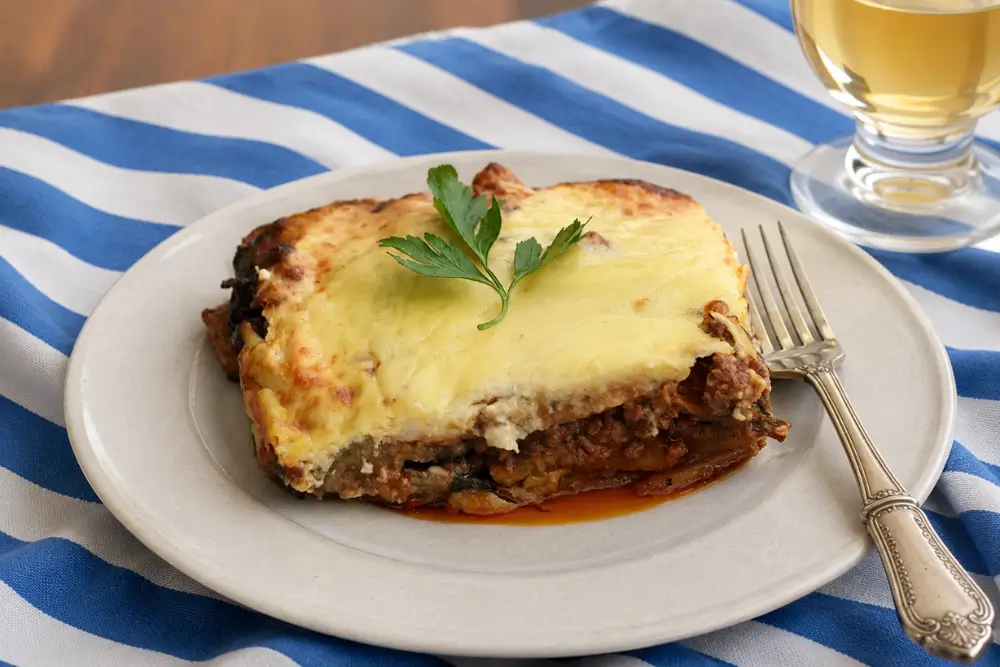
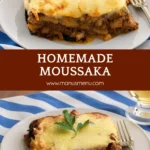
A warm tray of Moussaka is all you need after a long day. Soft veggies, rich meat sauce, and creamy topping come together in one satisfying bake.
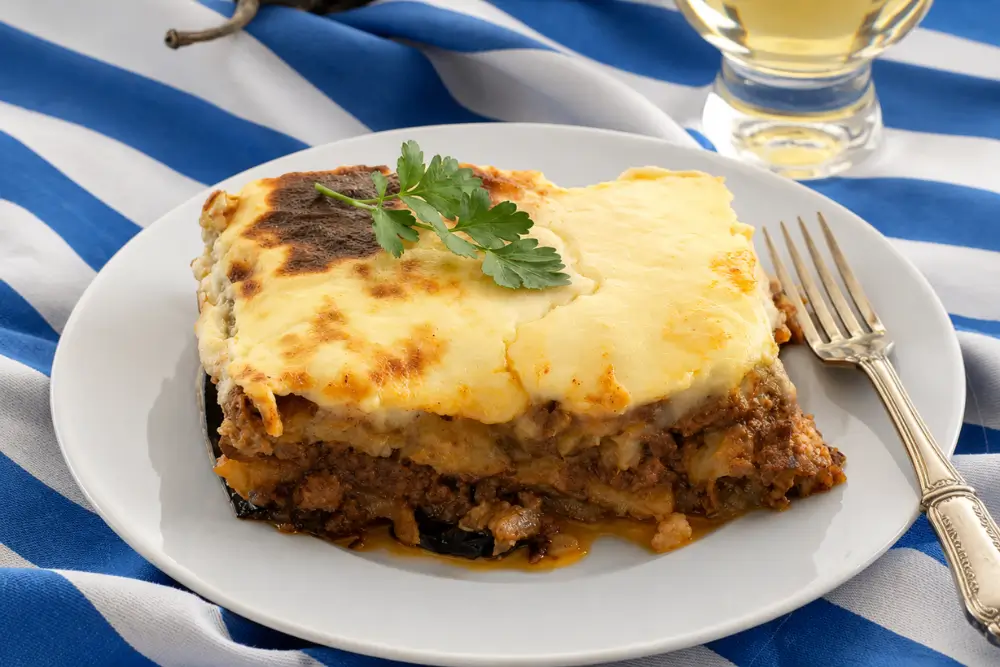
This is definitely not an Italian recipe. As everyone knows, moussaka is a traditional Greek dish. I still remember the first time I tried it. I was in Paris with my parents, and we went out for dinner in Saint-Germain-des-Prés, an area full of little French and foreign restaurants.
I was a small child then, but I can still picture walking into a cosy Greek restaurant and choosing a dish with a name I had never heard before. My mum told me it was “similar to lasagne”, which was enough to convince me to give it a go. I fell in love with it at the first bite and have enjoyed it many times since.
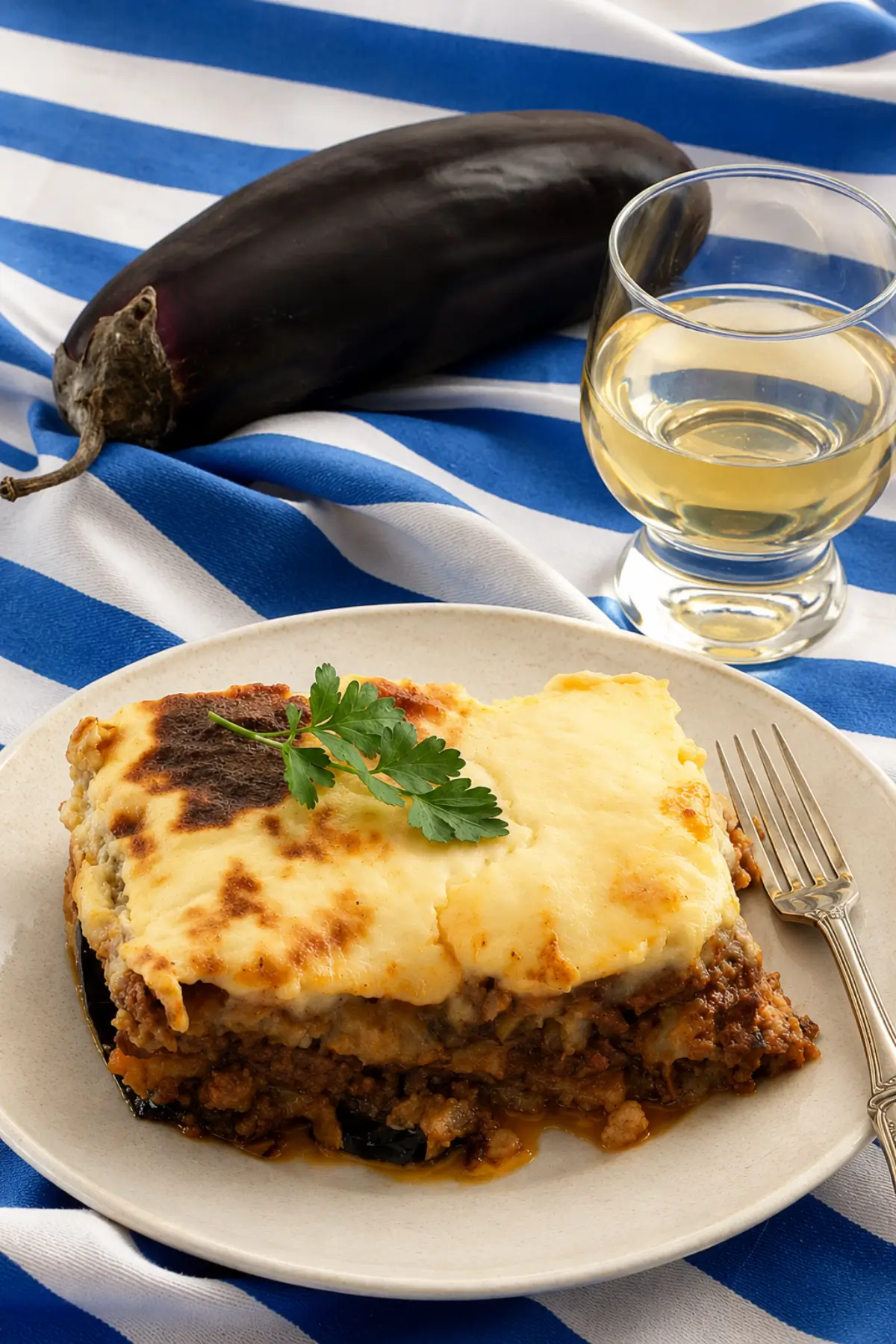
Now that I’m an adult, I have my own homemade version. It’s slightly different from the one I tasted that night. I use eggplants, zucchini, and potatoes, and I keep the cheese sauce layer thinner.
I’m not Greek, and I’m not claiming this is an authentic moussaka. It’s simply the version we enjoy at home. I hope you like it too. And if you haven’t done it yet, remember to join my international giveaway for a chance to win a digital scale!
What is Moussaka?
Moussaka is a layered baked dish made with fried eggplant, minced meat cooked in a tomato-based sauce, and a creamy cheese or béchamel topping. It resembles a lasagna in structure, but the layers are made with vegetables instead of pasta.
The word moussaka comes from the Arabic musaqqā, which means “moistened” or “well-soaked,” referring to the way the layers absorb the sauce as the dish cooks.
Why We Love Homemade Moussaka
- Dish holds up nicely for casual family dinners when you want something homemade.
- Leftovers taste even better the next day and warm through without breaking apart.
- Cheese topping adds a light savoury finish that complements the vegetables.
Key Ingredients for Moussaka
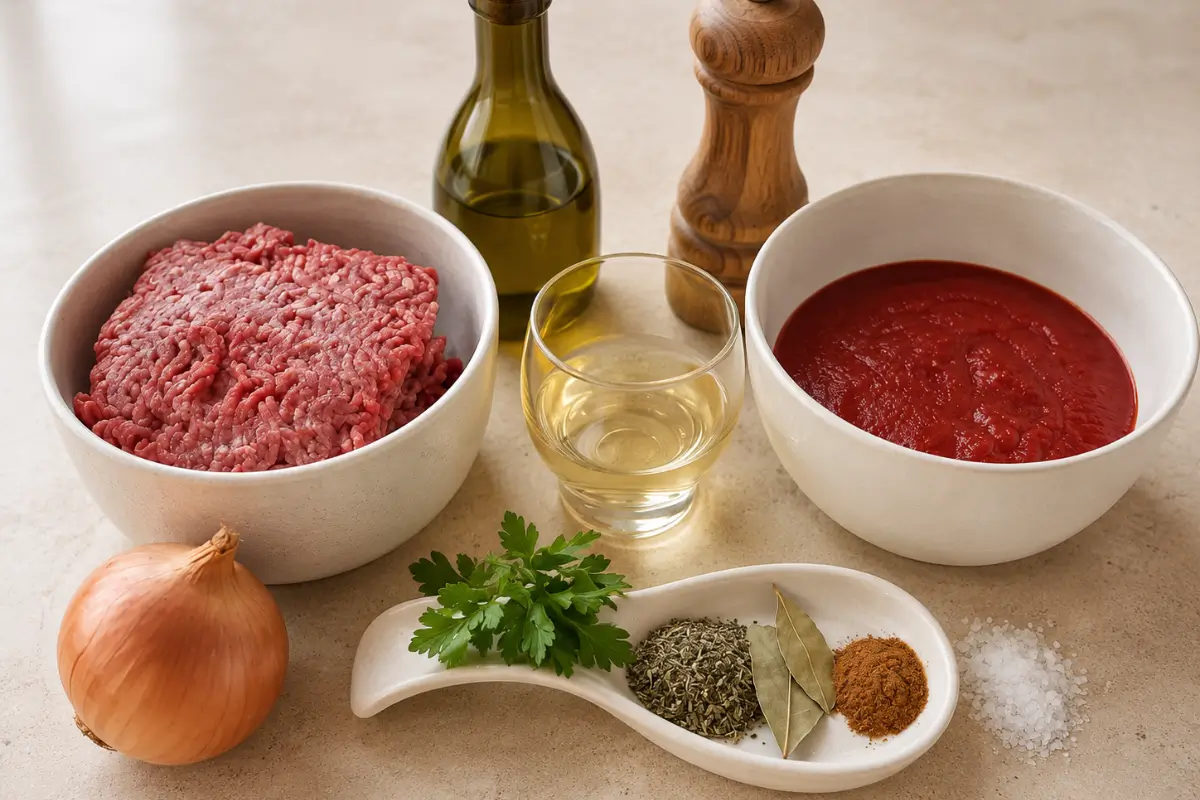
Eggplants
Soften into tender slices and absorb the flavours of the meat sauce. Their mild, slightly sweet taste works well with the cinnamon and herbs. Choose firm eggplants with smooth skin for the best result.
Zucchini
Bring gentle moisture to the dish without making it watery. Their light taste pairs well with the tomato and herbs in the sauce. Medium zucchini hold their shape and cook evenly.
Potatoes
Add a gentle earthy taste and help each slice stay firm once rested. Waxy varieties such as Yukon Gold or Kipfler keep their shape during frying or baking and give a smooth, consistent bite.
Pecorino Romano
Brings a savoury, slightly sharp flavour to the cheese sauce and helps the top layer brown. Freshly grated Pecorino melts smoothly into the warm roux.
Find the complete list with measurements in the recipe card below.
How to Make Moussaka
To Make the Meat Sauce
Step 1: Put the chopped onion and extra virgin olive oil in a frying pan and cook until the onion is soft and almost transparent.
Step 2: Add the mince and break any lumps with a wooden spoon. Cook over medium–high heat until the meat browns well.
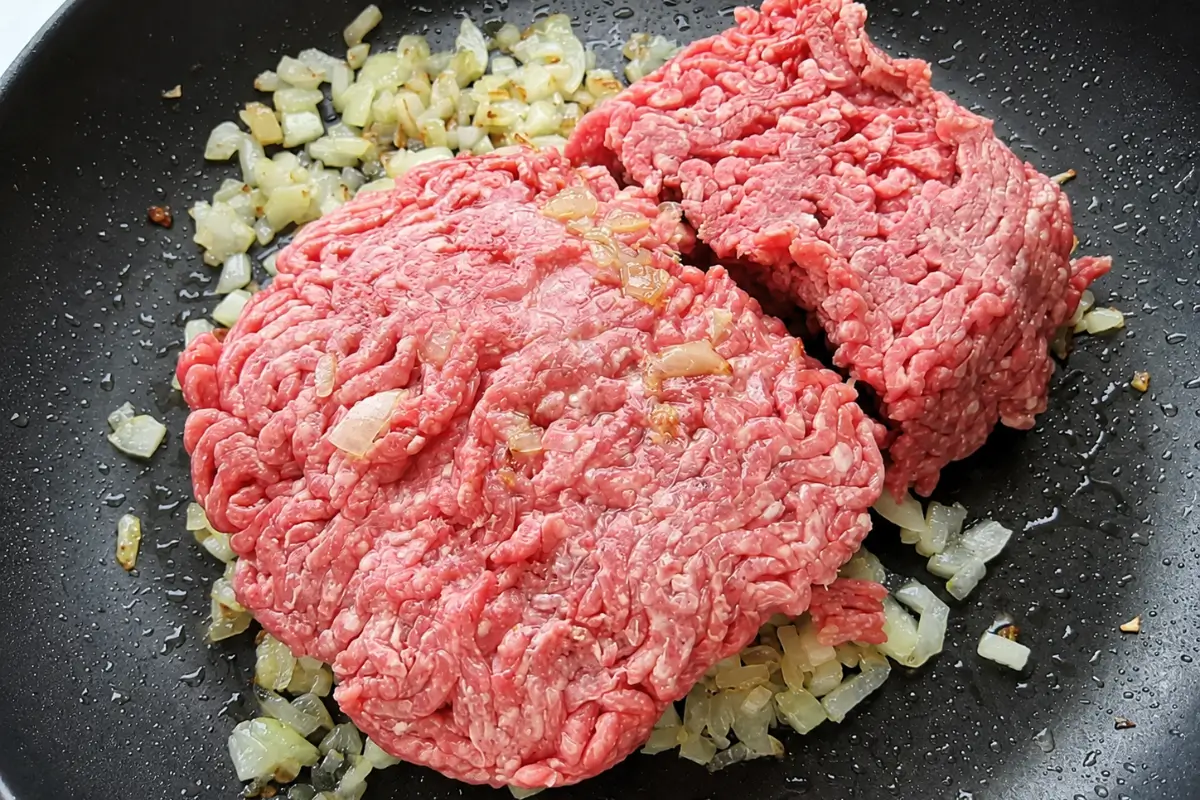
Step 3: Add the tomato purée, salt, pepper, parsley, bay leaf, mixed herbs, and cinnamon. Stir, add a glass of water, cover, and cook on low heat until the sauce thickens.
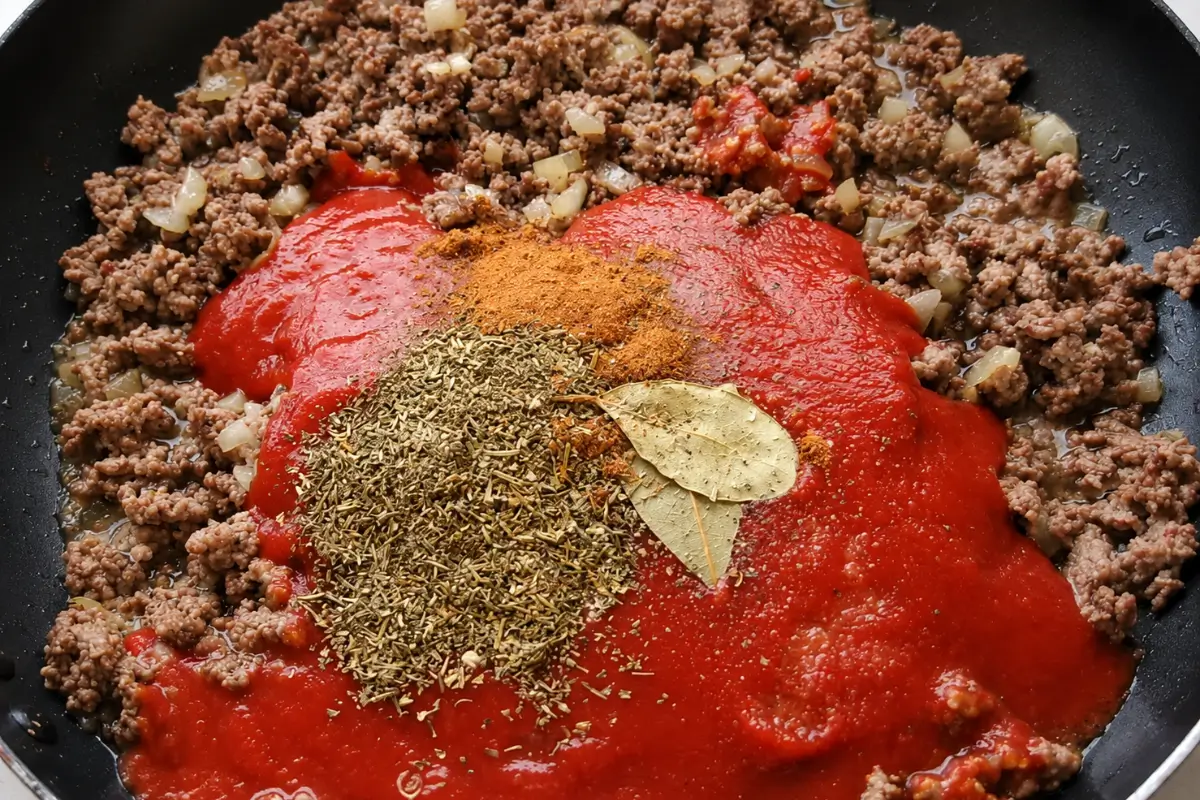
Step 4: When the mince is brown, add the wine, increase the heat, and let the alcohol evaporate.
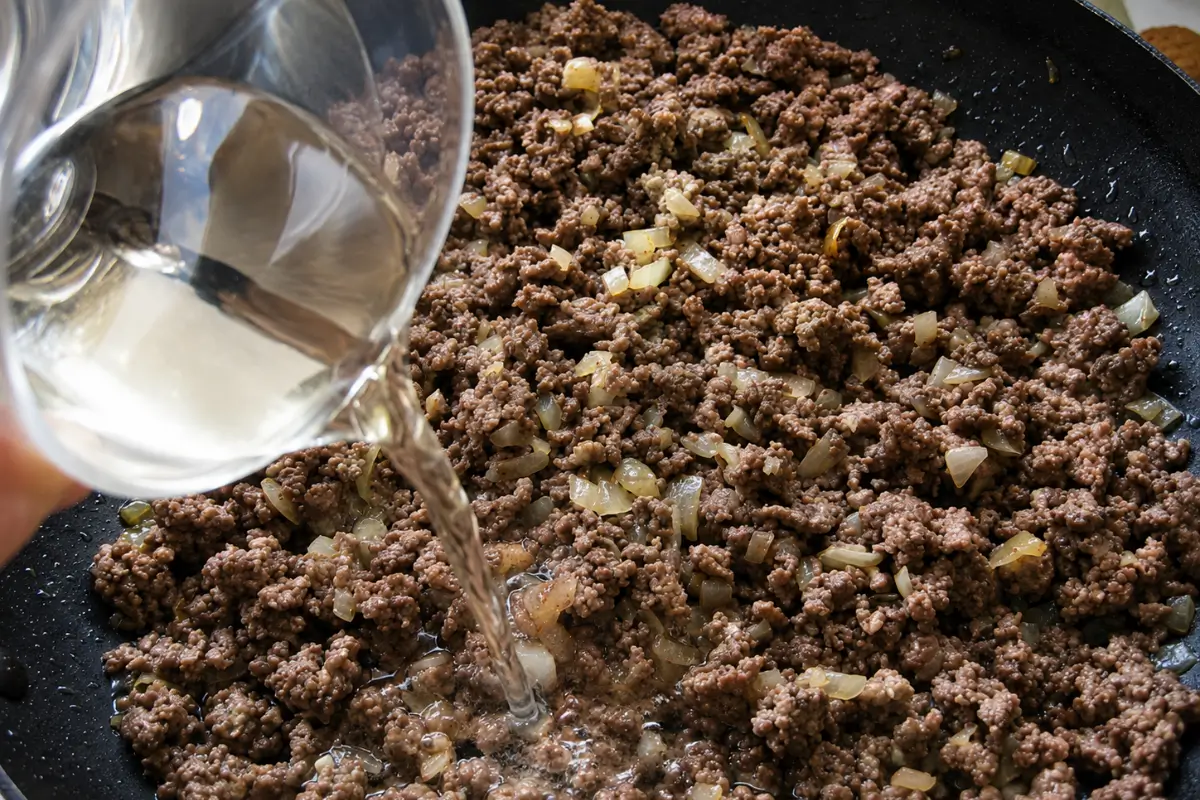
Step 5: When the sauce is ready, set it aside.
For the Vegetables
Step 1: Slice the eggplants and zucchini into 1 cm slices and the potatoes into ½ cm slices.
Step 2: Place the sliced eggplants in salted cold water for at least half an hour to reduce bitterness.
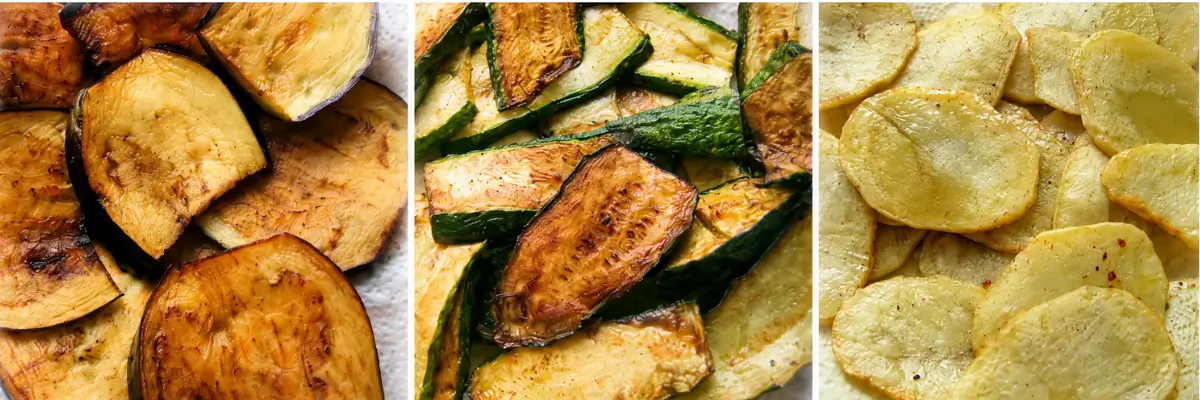
Step 3: Deep-fry all the vegetables in hot vegetable oil in batches and place them on kitchen paper to drain any excess oil.
For the Cheese Sauce
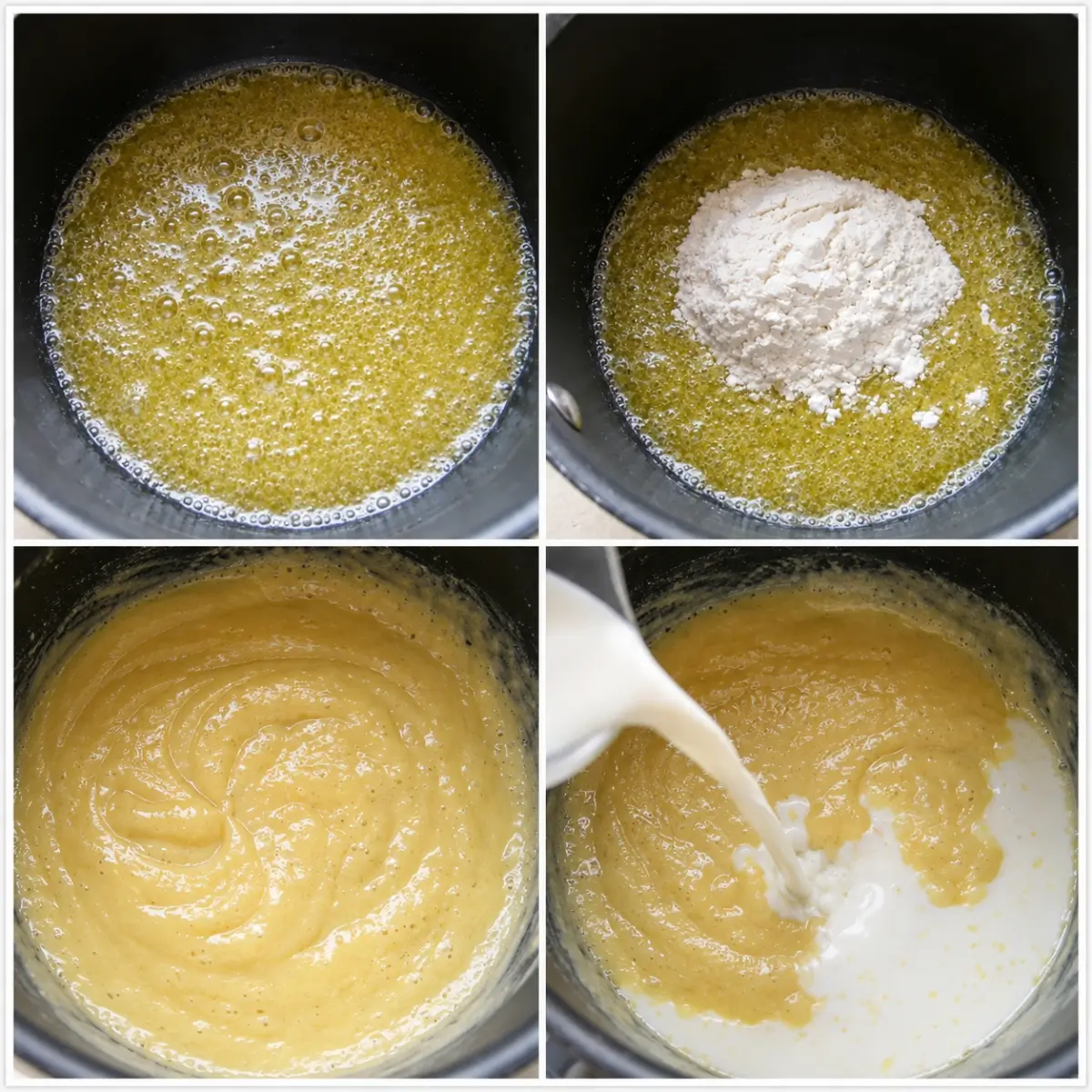
Step 1: Heat the milk and set it aside. Melt the butter in a medium pot.
Step 2: Add the flour and stir with a wooden spoon or whisk until smooth and lump-free.
Step 3: Slowly pour in the hot milk while stirring continuously. Add salt and cook the sauce for 5 minutes.
Step 4: Add the grated Pecorino Romano and stir. Turn off the heat, cover the pot to prevent a skin from forming, and let the sauce cool.
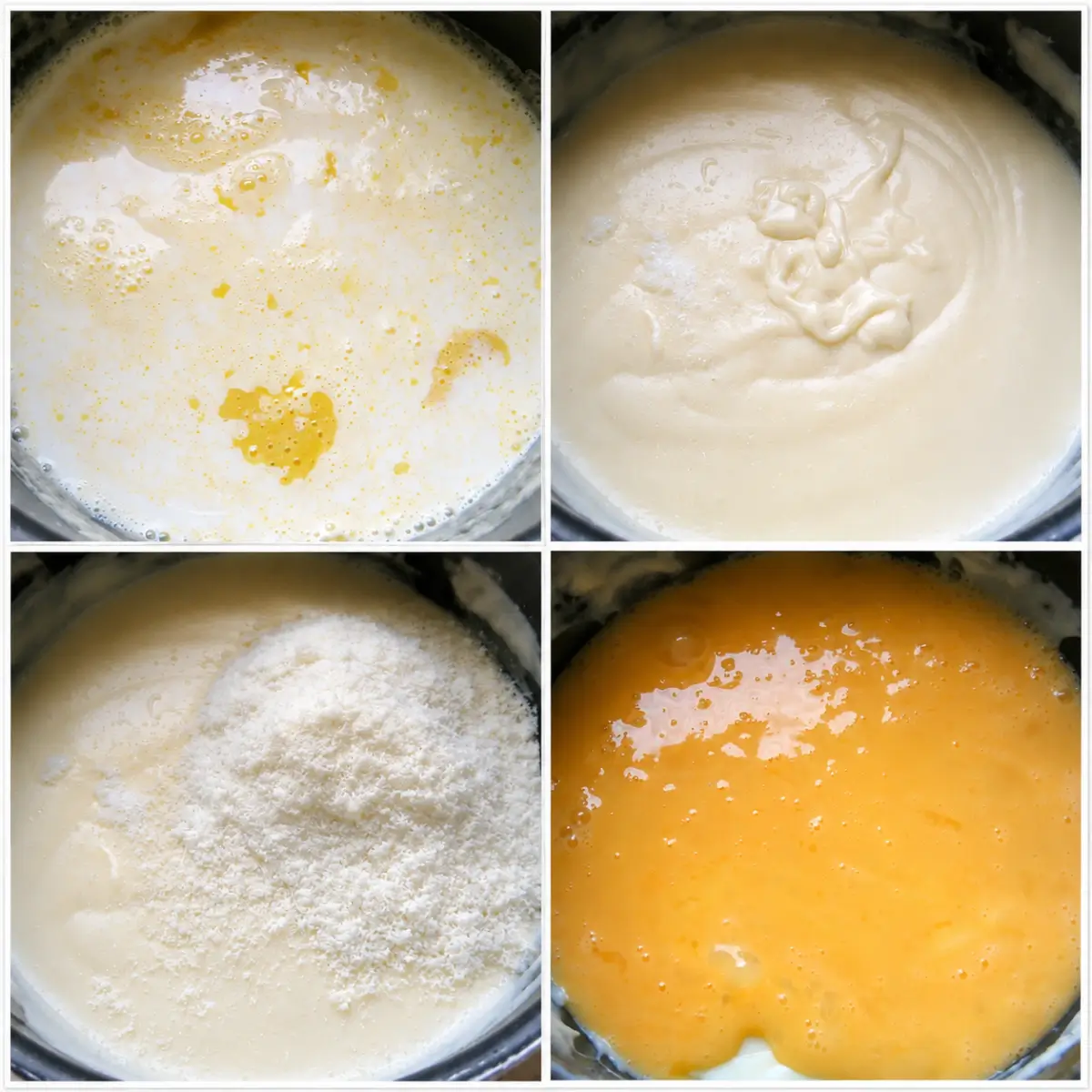
Step 5: Lightly beat the eggs and add them to the cooled sauce. Stir well and set aside.
Assembling the Moussaka
Step 1: Place a layer of eggplants in an ovenproof dish, followed by a layer of meat sauce.
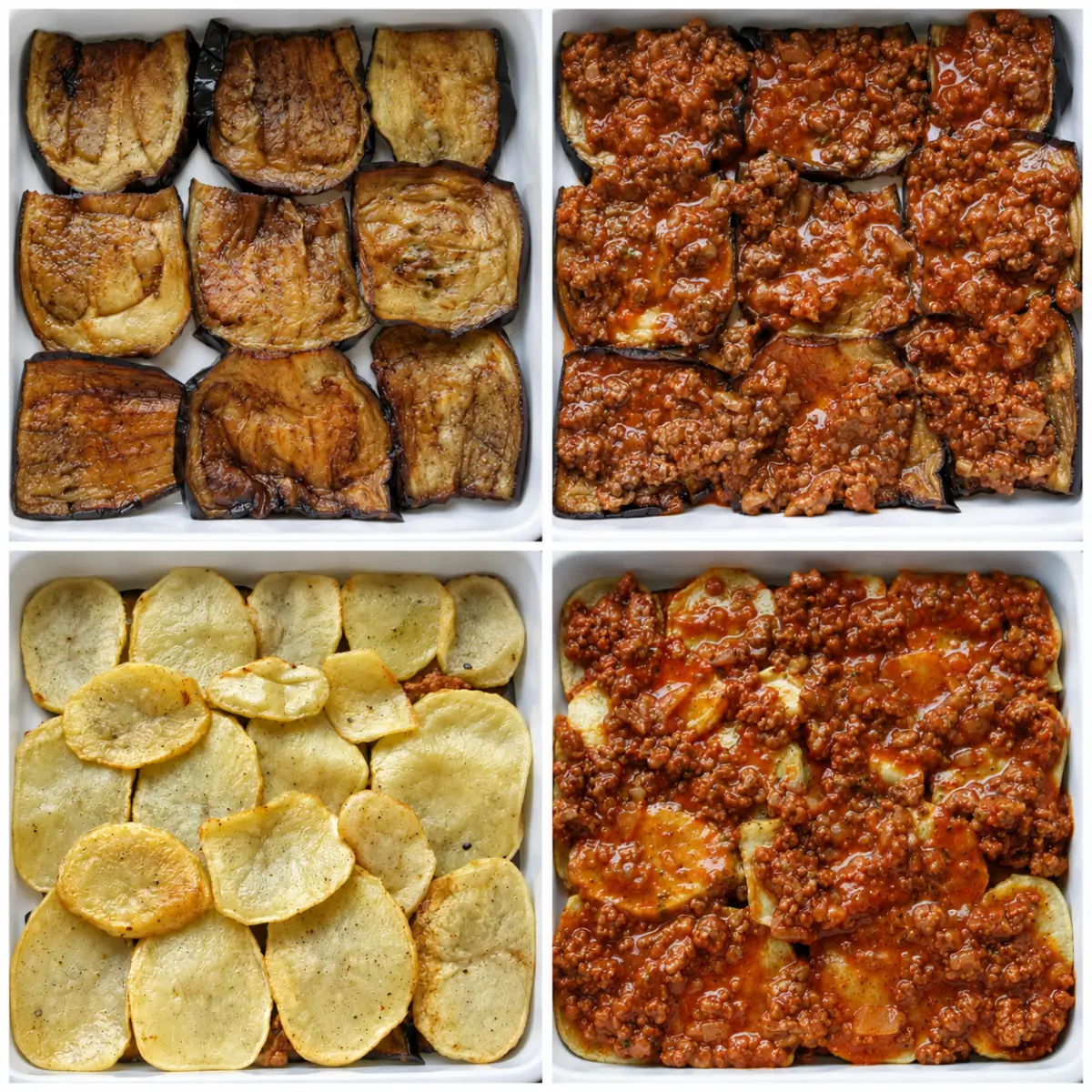
Step 2: Add a layer of potatoes, then another layer of meat sauce.
Step 3: Add the zucchini, another layer of meat sauce, and finish with eggplant and meat sauce.
Step 4: Pour the cheese sauce evenly over the top.
Step 5: Bake in a preheated fan-forced oven at 180°C – 355°F for 20 minutes or until golden and heated through.
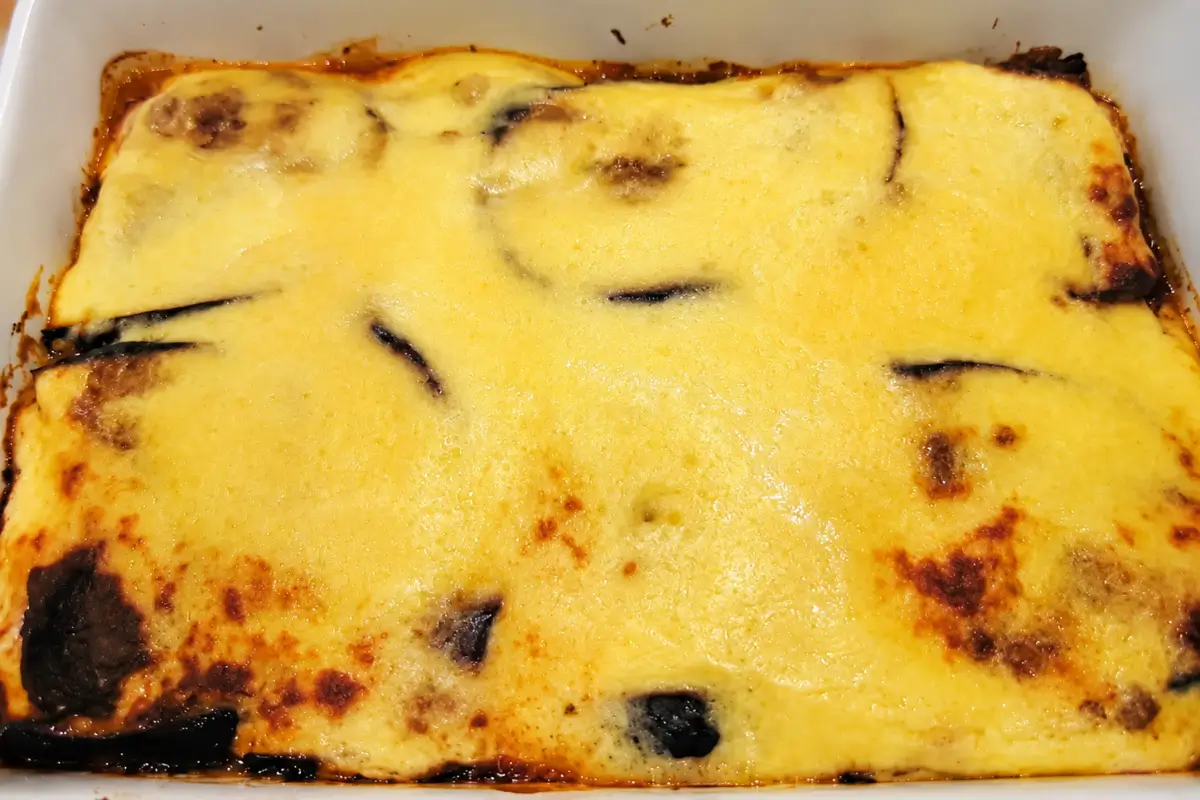
Step 6: Slice and serve.
Frequently Asked Questions
Yes. You can prepare the dish using only eggplants and zucchini. The final slice will be softer, so let it rest a little longer before serving.
Remove excess oil from the vegetables, keep the meat sauce on the thicker side, and let the dish rest before cutting so the layers stay firm and do not turn watery.
Yes. Lamb mince works well and gives a fuller taste, while chicken or turkey mince create a lighter result. Keep the meat sauce thick so the layers stay firm when sliced.
Eggplants, zucchini, and potatoes form the base, but you can also add thin slices of roasted capsicum or fresh tomato for more flavour and colour.
Yes. Replace the wine with water or stock. The sauce will still develop good flavour from the herbs, cinnamon, and tomato purée.
Extra Help from the Kitchen
Stir the Meat Sauce Occasionally – Gentle stirring during the simmering time prevents sticking and keeps the consistency uniform from top to bottom.
Choose Firm Vegetables – Firm eggplants, zucchini, and potatoes hold their shape better during frying and layering, giving cleaner slices once baked.
Avoid Overfilling the Frying Pan – Fry vegetables in modest batches to maintain the oil temperature and achieve an even colour on each slice.
Keep the Meat Sauce Slightly Thick – A thicker sauce prevents the layers from slipping and keeps the base from becoming watery as it bakes.
Use a Heatproof Measuring Cup – Pouring warm milk from a cup gives more control when adding it to the roux, helping you avoid splashes and uneven pouring.
Variations and Twists
Use Lamb Mince Instead of Beef – Lamb mince gives the meat layer a deeper flavour and pairs well with the cinnamon and herbs already in the sauce.
Bake the Vegetables Instead of Frying – Brush the eggplants, zucchini, and potatoes with a little olive oil and bake until soft and lightly coloured for a lighter result with less oil.
Add Roasted Capsicum Between Layers – Thin roasted capsicum strips bring gentle sweetness and add more colour when you slice into the finished dish.
Vegan Moussaka – Use a lentil or mushroom filling in place of the meat sauce and prepare a plant-based cheese topping with olive oil and dairy-free milk.
Storage and Shelf Life
Store leftover moussaka in an airtight container in the fridge for up to 3 days. Freeze individual slices in well-sealed containers for up to 2 months.
Thaw the portions overnight in the fridge before baking. Reheat in the oven at 180°C – 350°F until heated through and firm.
Other Layered Bakes to Try
Moussaka Recipe
Ingredients
Vegetables
- 2 eggplants – sliced
- 3 zucchini – sliced
- 3 potatoes – sliced
For the Meat Sauce
- 2 tablespoon extra virgin olive oil
- 1 large onion – thinly chopped
- 500 g beef mince
- 60 ml white wine
- 450 ml tomato purée
- 1 tablespoon parsley – chopped parsley
- 1 tablespoon Mediterranean mixed dry herbs – sage, thyme, rosemary, basil, marjoram, oregano
- 1 bay leaf
- ½ teaspoon cinnamon
- salt
- pepper
For the Cheese Sauce
- 90 g – 6 tablespoon butter
- 40 g – ⅓ cup flour
- 500 ml milk
- 2 eggs – lightly beaten eggs
- 60 g – ⅔ cup Pecorino Romano – thinly grated
Instructions
To Make the Meat Sauce
- Put the chopped onion and extra virgin olive oil in a frying pan and cook until the onion is soft and almost transparent.
- Add the mince and break any lumps with a wooden spoon. Cook over medium–high heat until the meat browns well.
- Add the tomato purée, salt, pepper, parsley, bay leaf, mixed herbs, and cinnamon. Stir, add a glass of water, cover, and cook on low heat until the sauce thickens.
- When the mince is brown, add the wine, increase the heat, and let the alcohol evaporate.
- When the sauce is ready, set it aside.
For the Vegetables
- Slice the eggplants and zucchini into 1 cm slices and the potatoes into ½ cm slices.
- Place the sliced eggplants in salted cold water for at least half an hour to reduce bitterness.
- Deep-fry all the vegetables in hot vegetable oil in batches and place them on kitchen paper to drain any excess oil.
For the Cheese Sauce
- Heat the milk and set it aside. Melt the butter in a medium pot.
- Add the flour and stir with a wooden spoon or whisk until smooth and lump-free.
- Slowly pour in the hot milk while stirring continuously. Add salt and cook the sauce for 5 minutes.
- Add the grated Pecorino Romano and stir. Turn off the heat, cover the pot to prevent a skin from forming, and let the sauce cool.
- Lightly beat the eggs and add them to the cooled sauce. Stir well and set aside.
Assembling the Moussaka
- Place a layer of eggplants in an ovenproof dish, followed by a layer of meat sauce.
- Add a layer of potatoes, then another layer of meat sauce.
- Add the zucchini, another layer of meat sauce, and finish with eggplant and meat sauce.
- Pour the cheese sauce evenly over the top.
- Bake in a preheated fan-forced oven at 180°C – 355°F for 20 minutes or until golden and heated through.
- Slice and serve.

Love travelling as much as cooking?
Many of the recipes I share are inspired by places I've visited around the world. On Travel with Manu you'll find destination guides, itineraries and travel inspiration to help you plan your next adventure.


The DNA of this dish seems very italian. The traditional mousakka is turkish, this version was made in the 1920's and resembles a lasagna mixed with a traditional eggplant parmesan.
Your moussaka looks delicious. I havent had moussaka in years! I will have to try this recipe.
Very nice recipe and loads of great pics, so much better than a pure text method explanation. Thanks for posting 🙂
Love that little flashback to Paris, Manu. I have food memories like that too. The best mousakas I've eaten have been outside Greece too! Going to try your version because this is a dish I love.
I thought you would be interested in this little known fact about moussaka:
Moussaka (from Arabic: مسقعة musaqqaʿa 'chilled'[1][2]; in Greek: "μουσακάς" Mousakás, South Slavic: musaka/мусака, Turkish: musakka, Hungarian: rakott padlizsán[3]) is an eggplant based dish of the Balkans, Eastern Mediterranean, & the Middle East. The best known variation is the Greek one.[4]
Most versions are based primarily on sautéed eggplant (aubergine) and tomato, usually with minced meat. The Greek version includes layers of meat and aubergine topped with a white sauce/Béchamel sauce and baked. Turkish musakka, on the other hand, is not layered. Instead, it is prepared with sautéed aubergines, green peppers, tomatoes, onions, and minced meat. It is eaten with cacık and pilaf. There are also variants with zucchini, carrots and potatoes. The Serbian version and Bulgarian version use potatoes instead of aubergines, pork mince and the top layer is yogurt mixed with raw eggs and a couple of spoons of flour. In the Arab world, moussaka is a cooked salad made up primarily of tomatoes and aubergine, similar to Italian parmigiana, and is usually served cold as a mezze dish.
The modern Greek version was probably invented by Tselementes in the 1920s.[5] It has three layers: a bottom layer of sautéed aubergine slices; a middle layer of cooked ground lamb cooked with onion, garlic, chopped tomatoes, herbs, and spices (cinnamon, allspice and black pepper); and a top layer of béchamel sauce or egg custard. The composed dish is baked until the top layer is browned. Moussaka is usually served lukewarm.
In Serbia and Bulgaria there is also a three-layer version: the bottom layer consists of ground pork and beef, the middle layer slices of potatoes, the top layer a custard. Each layer is cooked on its own and layered in a pan and baked until the top layer is browned.