

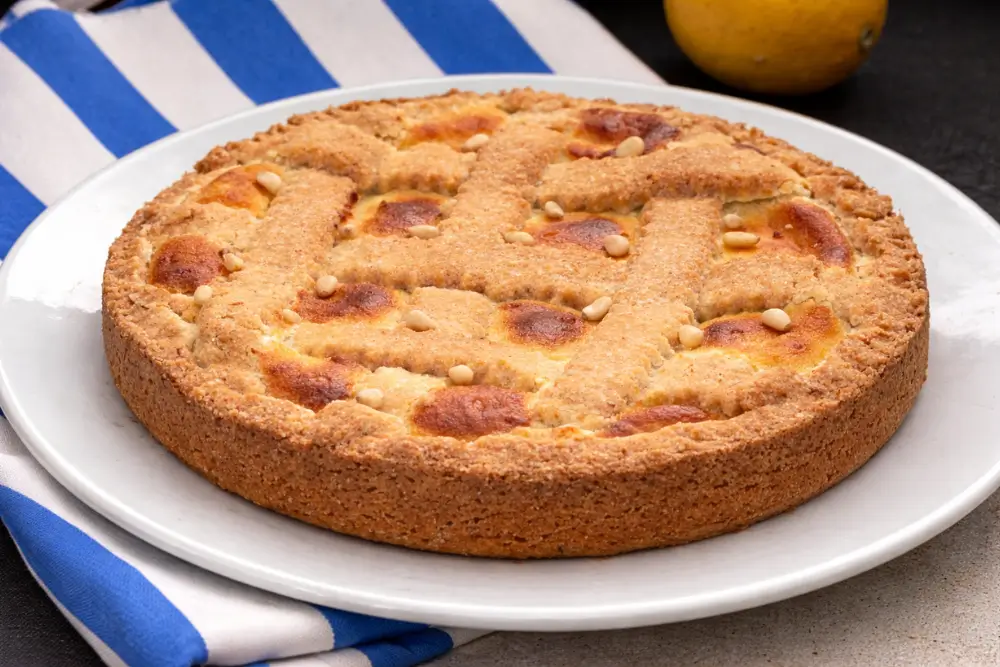
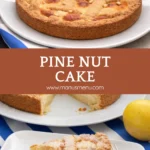
Buttery crostata crust with a soft semolina centre and pine nuts baked on top gives this Pine Nut Cake a rich, nutty finish with a gentle hint of lemon.
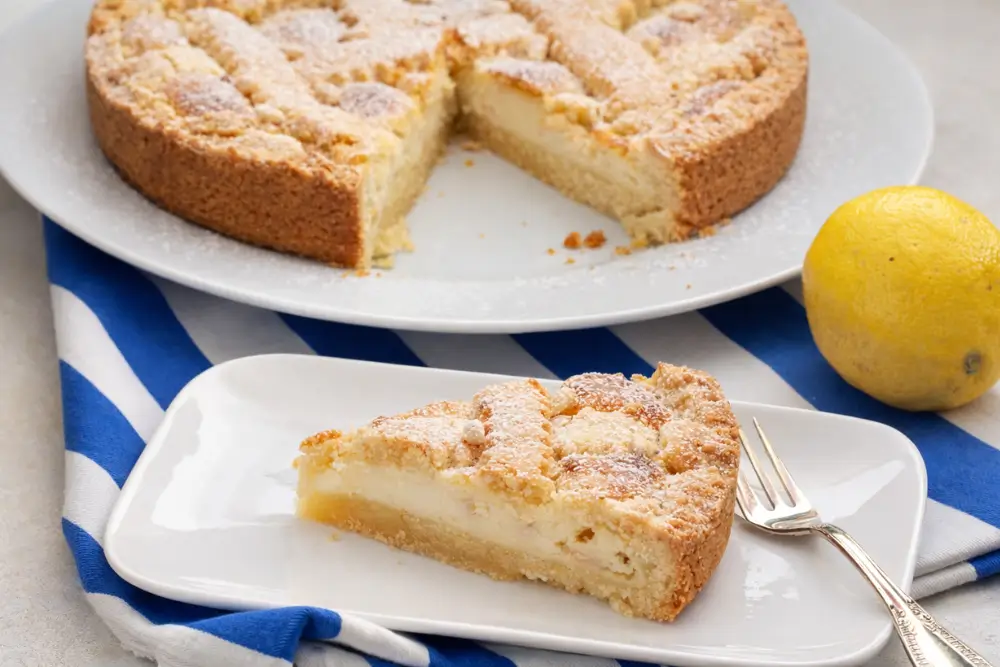
This recipe is one of my favourite cakes. It’s a Pine Nut Cake, traditionally from the southern Italian city of Naples.
I love anything made with a crostata crust as a base, but this cake takes it a step further with its creamy semolina, milk, and pine nut filling.
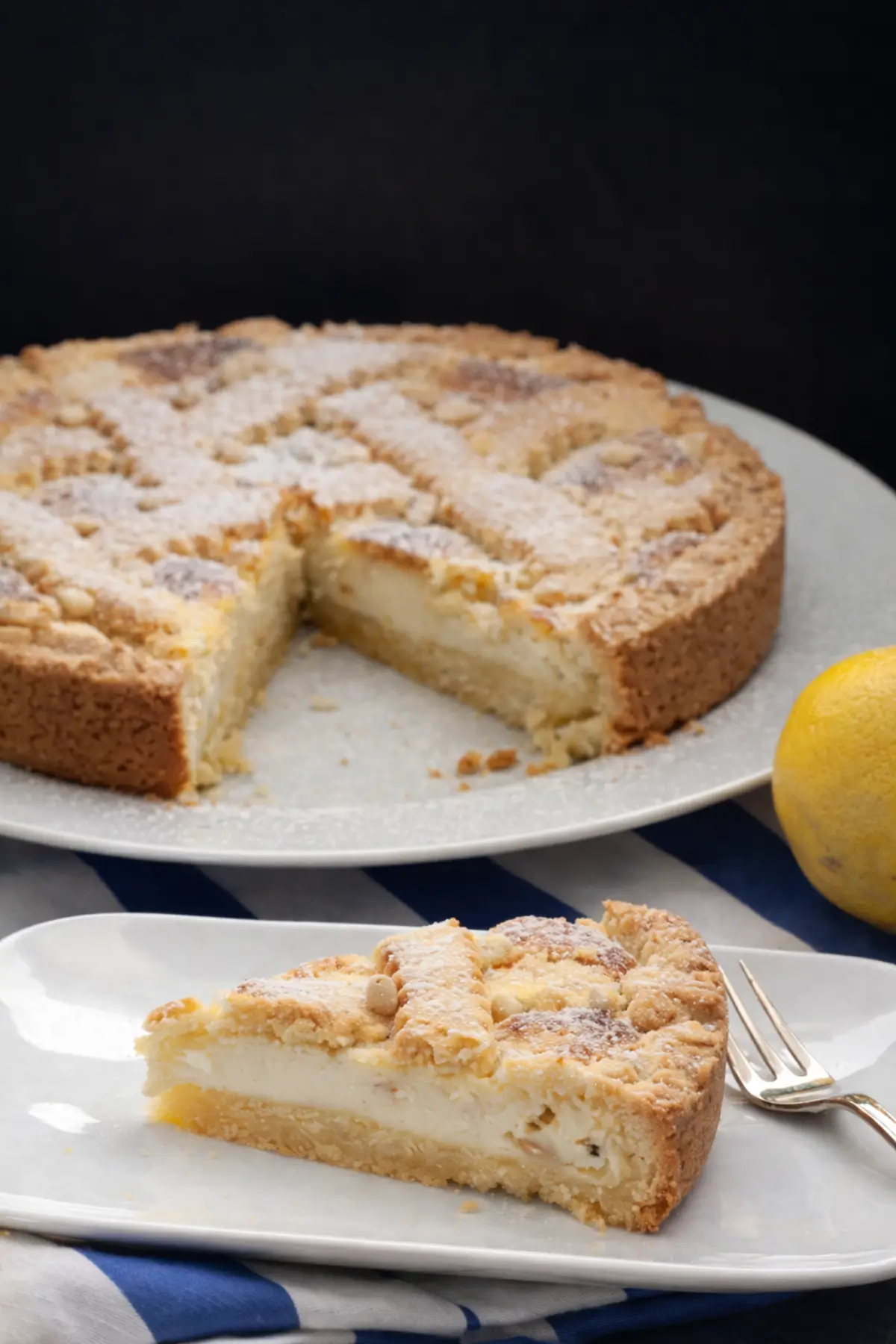
Like many of my favourite recipes, this one’s made with simple and affordable ingredients, with the exception of the ¼ cup of pine nuts needed for the filling.
Chances are, you already have everything else in your pantry and fridge.
It’s a hearty dessert and pairs perfectly with a cup of your favourite afternoon tea. Try it and let me know how you like it. Buon appetito!
Why We Love This Pine Cake
- Works well as an afternoon snack since it’s easy to slice and pairs naturally with tea or coffee.
- Uses simple ingredients that are easy to find in most kitchens without needing anything extra.
- Keeps well after baking and still tastes good the next day, with the filling staying smooth.
Key Ingredients for Pine Nut Cake
Pine Nuts
Pine nuts add a delicate nutty flavour and a soft bite throughout the filling. Choose fresh, pale nuts, as older ones can taste slightly bitter.
Semolina
Semolina gives the filling its soft, thick consistency once baked. Fine semolina works best, as it cooks more evenly and avoids a grainy texture.
Milk
Creates the creamy texture of the filling and helps the semolina cook properly. Whole milk gives a smoother and slightly richer result.
Unsalted Butter
Butter adds richness and keeps the crust tender without making it too soft. Using unsalted butter allows better control over the flavour.
Find the complete list with measurements in the recipe card below.
How to Make Pine Nut Cake
Crostata Crust
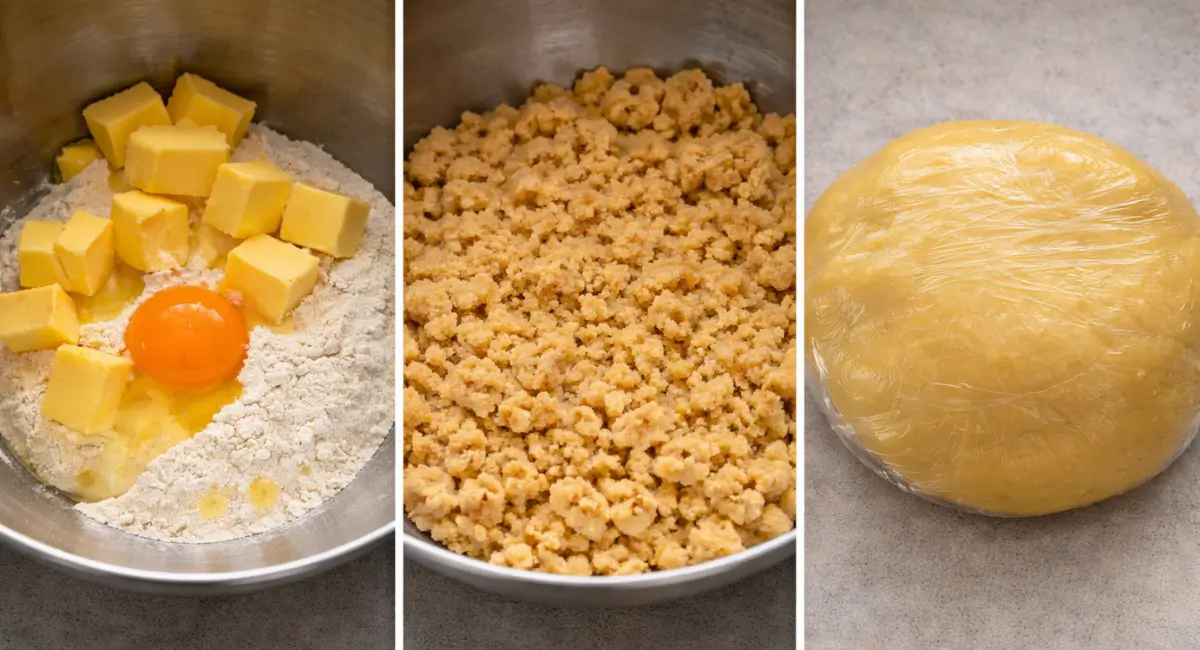
Step 1: Put the flour, sugar, butter, egg, and salt in the bowl of an electric mixer fitted with a paddle attachment. Mix until crumbly, then quickly knead by hand until a smooth dough forms.
Step 2: Wrap the dough in cling wrap and refrigerate for 30 minutes.
Filling
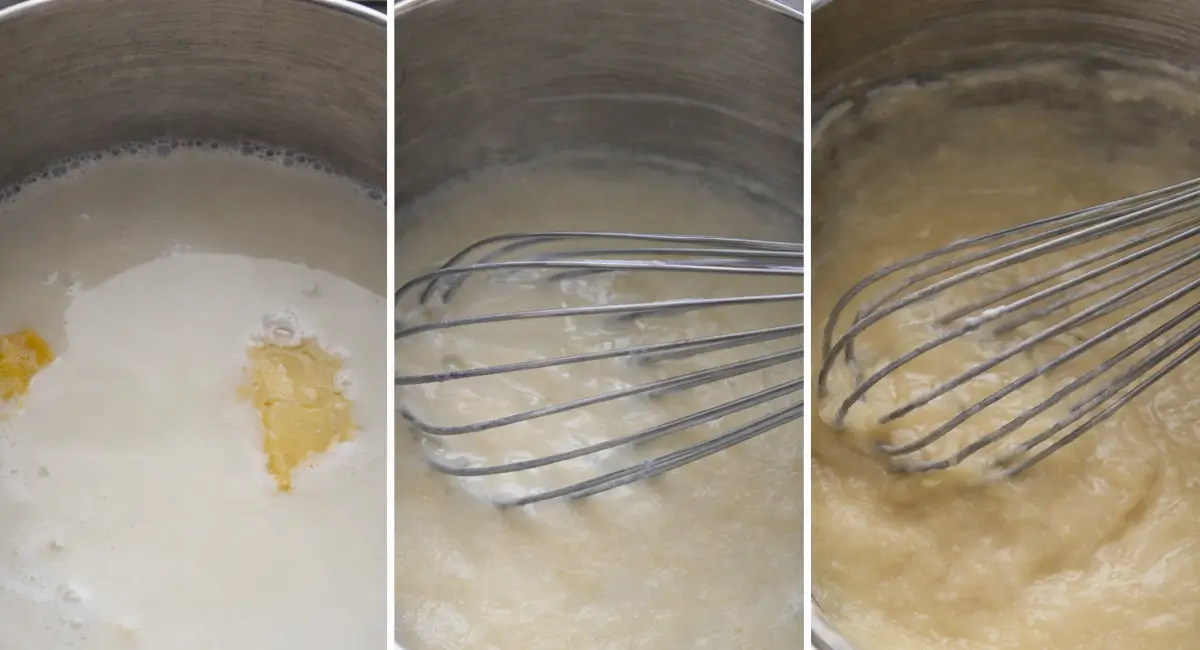
Step 1: Put the milk, salt, butter, sugar, and lemon zest in a pot. Mix well and place over medium heat.
Step 2: After about 1 minute, add the semolina and whisk well to prevent lumps.
Step 3: Cook for about 5 minutes, or until the mixture thickens to a crème pâtissière consistency.
Step 4: Add the beaten egg and pine nuts, then stir until fully combined.
Assembling
Step 1: Take the dough out of the fridge, place it on baking paper, and roll it into a sheet about 1 cm – 0.4 inch thick.
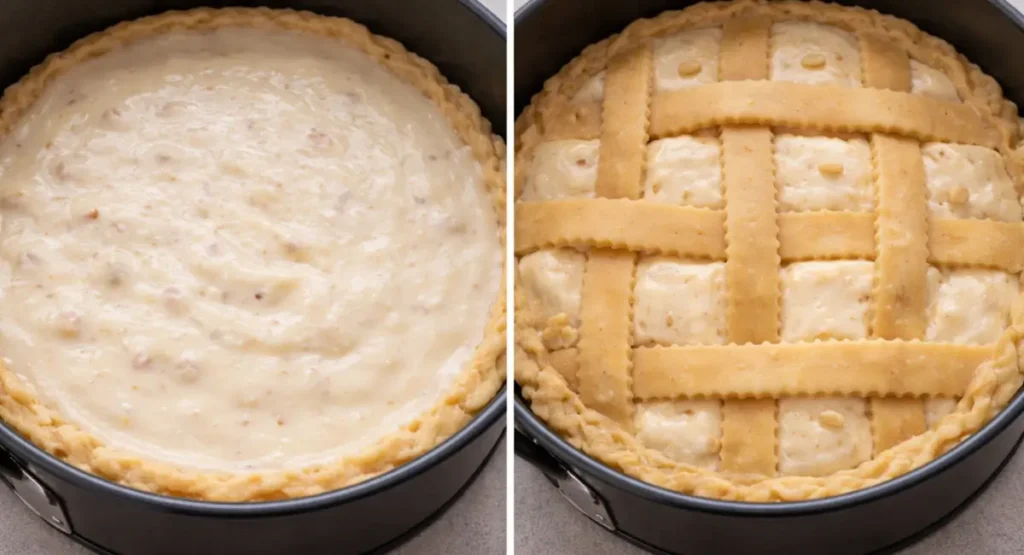
Step 2: Transfer the dough to a greased 20 cm – 8 inch springform pan. Press it down evenly and ensure the sides are fully covered.
Step 3: Pour the semolina and pine nut mixture over the base.
Step 4: Roll out the remaining dough, cut strips 1.5 cm – ½ inch wide, and arrange them on top to form a diamond pattern.
Step 5: Bake in a preheated oven at 180°C – 355°F for 25–30 minutes, or until cooked through.
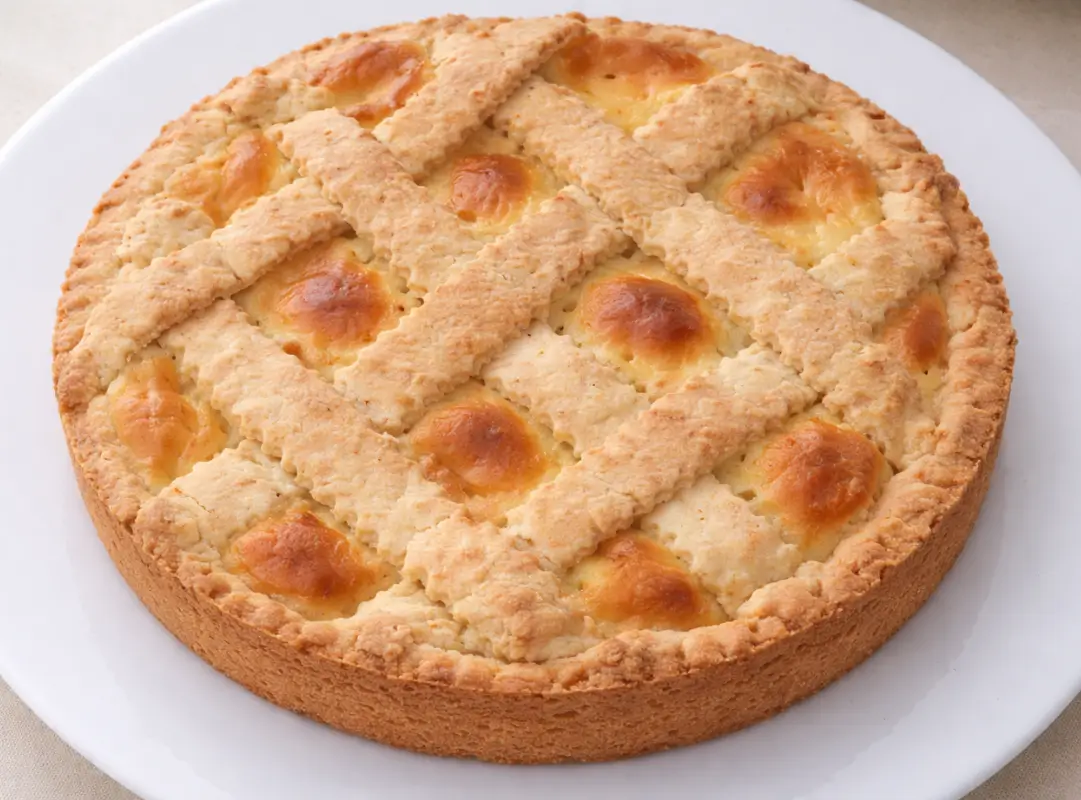
Step 6: Let the cake cool completely, then unmould, dust with icing sugar, and serve.
Frequently Asked Questions
Chopped almonds, hazelnuts, or walnuts can be used instead, with each bringing a slightly different flavour while still keeping a similar texture in the filling.
Yes, you can use a regular cake pan or cake tin instead. Line it with baking paper and let the paper come up the sides. This helps you lift the cake out easily without breaking the crust.
You can, but the texture will be slightly more grainy. Fine semolina gives a smoother result and works better for this type of filling.
Serve at room temperature once fully cooled so the filling holds its shape properly. Pair with espresso, black tea, or a light dusting of icing sugar and fresh fruit for contrast.
Extra Help from the Kitchen
Roll the Dough Evenly – Keep the dough at a consistent thickness so it cooks at the same rate throughout. Thinner areas can brown too quickly, while thicker parts stay undercooked.
Toast the Pine Nuts Lightly – Toast the pine nuts in a dry pan for a few minutes before adding them to the filling. This deepens their flavour and improves their texture.
Don’t Overwork the Dough – Handle the dough only until it comes together smoothly. Too much kneading can make the crust firm instead of tender.
Chill the Dough If It Softens – If the dough becomes too soft while rolling or shaping, place it back in the fridge for a few minutes. This makes it easier to handle and helps keep clean edges.
Bake Until the Centre Is Set – Check the centre of the cake before removing it from the oven. It should feel firm to the touch rather than soft or loose.
Variations and Twists
Use Pastry Cream Instead of Semolina – Replace the semolina filling with classic Italian pastry cream for a smoother, richer result with a more custard-like texture.
Use a Full Pastry Top Instead of Lattice – Cover the filling with a second layer of pastry instead of strips, then bake until golden brown and finish with icing sugar.
Add Vanilla to the Filling – Add a small amount of vanilla along with the lemon zest to give a warmer, more rounded flavour through the filling.
Top with Pine Nuts Instead of Lattice – Skip the lattice and scatter pine nuts over the surface before baking for a more traditional Italian finish.
Add a Thin Jam Layer Under the Filling – Spread a light layer of apricot or raspberry jam over the base before adding the filling to bring a slight fruit note and contrast.
Storage and Shelf Life
Store Pine Nut Cake with semolina filling in an airtight container on the counter at room temperature for up to 1 day in a cool spot.
If your kitchen runs warm, place it in the fridge, where it will keep for up to 4 days.
Freeze individual slices wrapped well for up to 2 months. Thaw them in the fridge overnight, then let them sit at room temperature before serving. Avoid reheating, as it can affect the texture of the filling.
Other Italian Desserts You May Enjoy
Pine Nut Cake Recipe
Equipment
Ingredients
Crostata Crust
- 250 g – 2 cups all-purpose flour
- 125 g – 1 cup granulated sugar
- 125 g – ½ cup unsalted butter – softened
- 1 egg
- 1 pinch of salt
Filling
- 250 ml – 1 cup milk
- 50 g – ⅓ cup semolina
- 35 g – 2¾ tbsp granulated sugar
- 5 g – 1 tsp butter
- 1 egg – lightly beaten
- 30 g – ¼ cup pine nuts
- ½ tsp lemon zest
- 1 pinch of salt
Instructions
Crostata Crust
- Put the flour, sugar, butter, egg, and salt in the bowl of an electric mixer fitted with a paddle attachment. Mix until crumbly, then quickly knead by hand until a smooth dough forms.
- Wrap the dough in cling wrap and refrigerate for 30 minutes.
Filling
- Put the milk, salt, butter, sugar, and lemon zest in a pot. Mix well and place over medium heat.
- After about 1 minute, add the semolina and whisk well to prevent lumps.
- Cook for about 5 minutes, or until the mixture thickens to a crème pâtissière consistency.
- Add the beaten egg and pine nuts, then stir until fully combined.
Assembling
- Take the dough out of the fridge, place it on baking paper, and roll it into a sheet about 1 cm – 0.4 inch thick.
- Transfer the dough to a greased 20 cm – 8 inch springform pan. Press it down evenly and ensure the sides are fully covered.
- Pour the semolina and pine nut mixture over the base.
- Roll out the remaining dough, cut strips 1.5 cm – ½ inch wide, and arrange them on top to form a diamond pattern.
- Bake in a preheated oven at 180°C – 355°F for 25–30 minutes, or until cooked through.
- Let the cake cool completely, then unmould, dust with icing sugar, and serve.

Love travelling as much as cooking?
Many of the recipes I share are inspired by places I’ve visited around the world. On Travel with Manu you’ll find destination guides, itineraries and travel inspiration to help you plan your next adventure.











It looks very tasty . . . I will surely try it . . . Thank you for sharing Manu mam 🙂
this is one of my favorite Italian desserts