

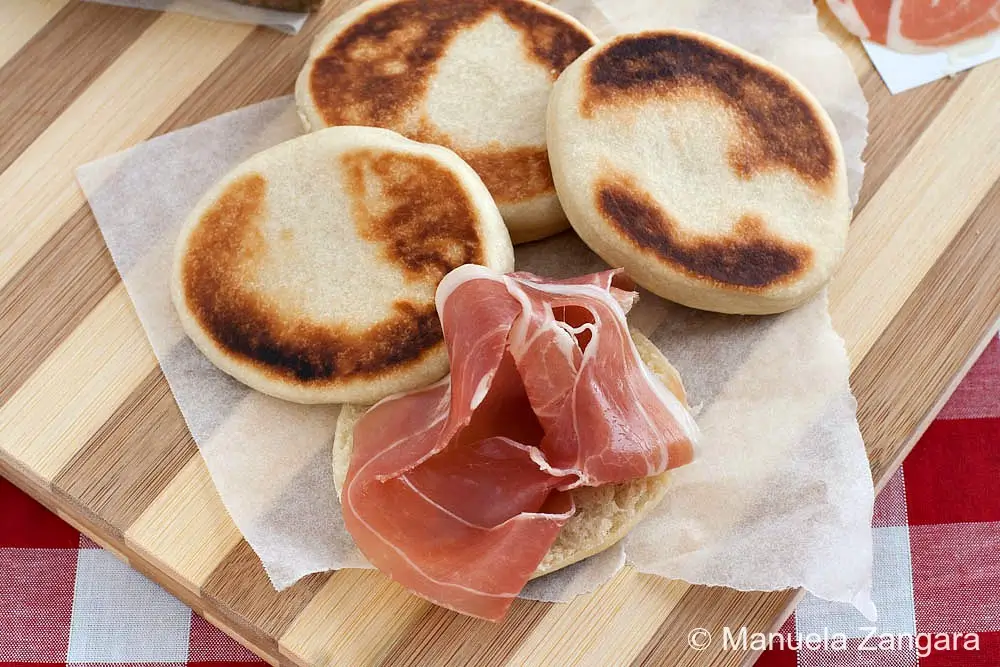
Tigelle Bread, also known as Italian Crescentine, is a traditional flatbread from Emilia-Romagna, cooked on the stovetop and filled with cold meats and cheeses.
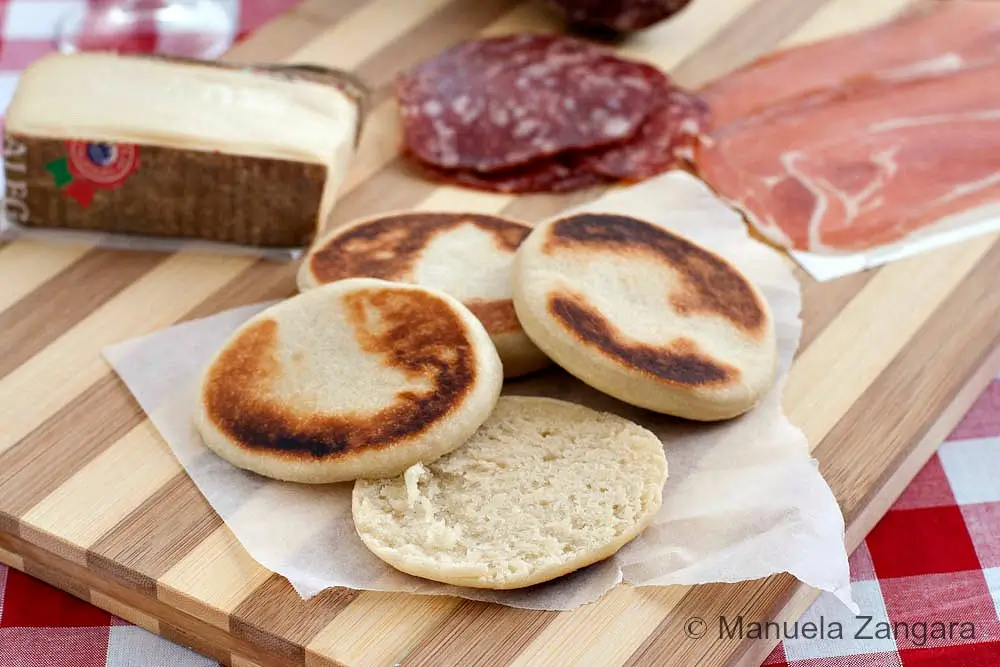
I want to take you to Emilia-Romagna, a true culinary heaven. This is the region where balsamic vinegar, mortadella, prosciutto di Parma and Parmigiano Reggiano are produced, to name only a few of the wonderful foods for which it is known.
Crescentine, also known as tigelle, are a traditional Italian flatbread made in the mountains around Modena. They are usually filled with local cold meats and cheeses. In the past, they were often filled with a paste made from lardo, garlic, and rosemary, known as cunza.
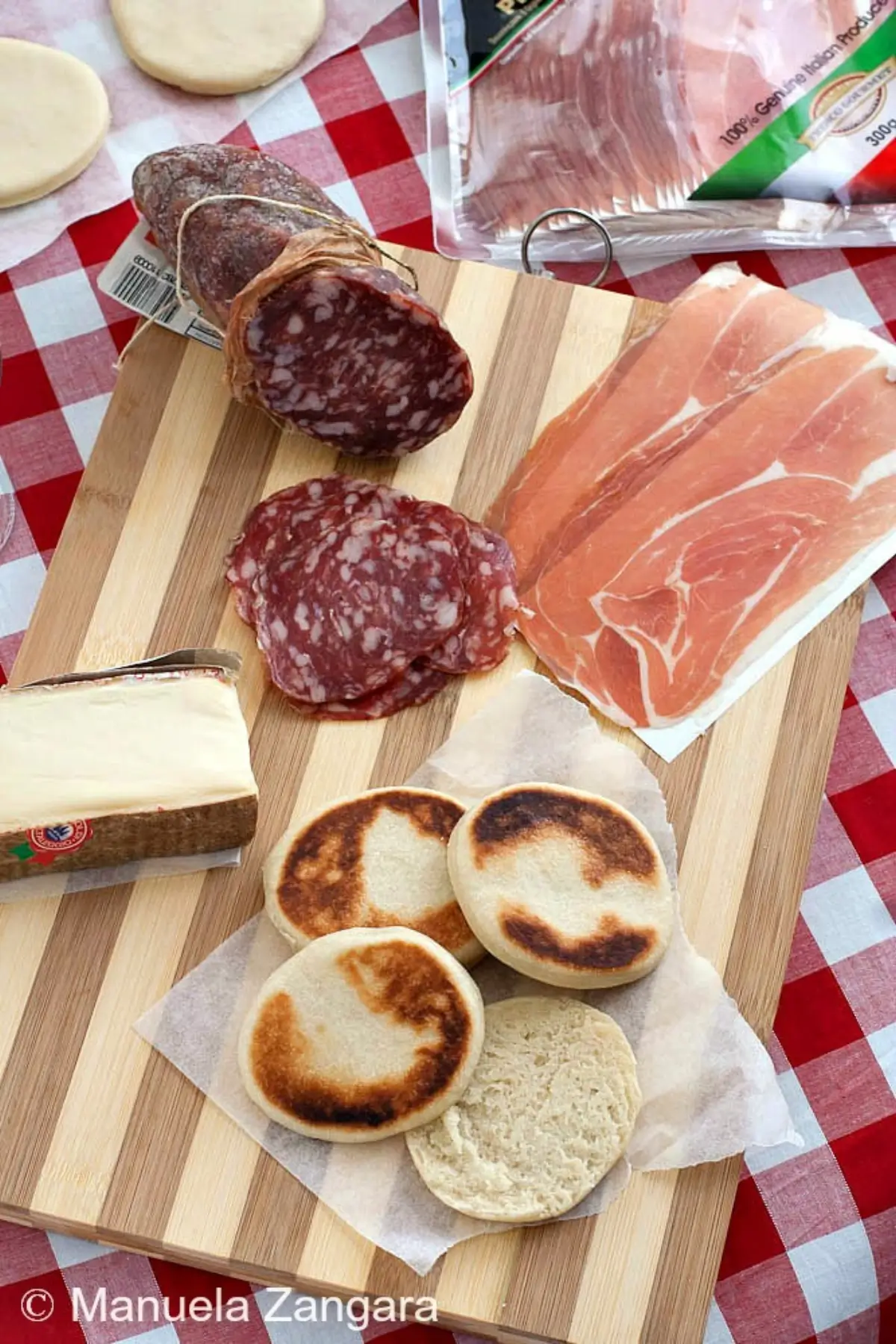
I have shared a similar recipe before, gnocco fritto, but this version is not fried. Traditionally, the dough was cooked between terracotta discs called tigelle, heated over the fireplace, and often stamped with decorative patterns.
These moulds later evolved into cast-iron and aluminum presses used on the stovetop. You can buy these specific pans, or you can cook them in a lightly greased non-stick pan, as I do.
If you enjoy English muffins, you will appreciate tigelle. They are soft inside with a lightly golden surface, perfect for slicing and filling.
This traditional Italian flatbread is easy to make and perfect as an appetiser, lunch, or light dinner. Buon appetito!
Why This Bread Is Worth Making
- Stays soft for a couple of days if stored properly, so it doesn’t feel like a same-day-only bread.
- Bread splits cleanly without tearing, so you don’t end up with a ripped top and fillings falling everywhere.
- Crumb stays soft but not doughy, even when cooked in a simple pan instead of special moulds.
Key Ingredients for Italian Crescentine
Plain Flour
Plain flour gives the dough its shape and keeps the crumb soft but sturdy once cooked. Look for flour with moderate protein, around 10–11%, so the bread stays tender without turning chewy. Strong bread flour can be used, but the texture will be slightly firmer.
Dry Yeast
Yeast gives tigelle their light interior and lift. Check the expiry date before using. When mixed with lukewarm water, it should become slightly frothy within a few minutes, showing it is active.
Lard
Lard gives traditional flavour and keeps the crumb tender as it cooks. Choose fresh, neutral-tasting lard for the cleanest result.
Find the complete list with measurements in the recipe card below.
How to Make Tigelle Bread
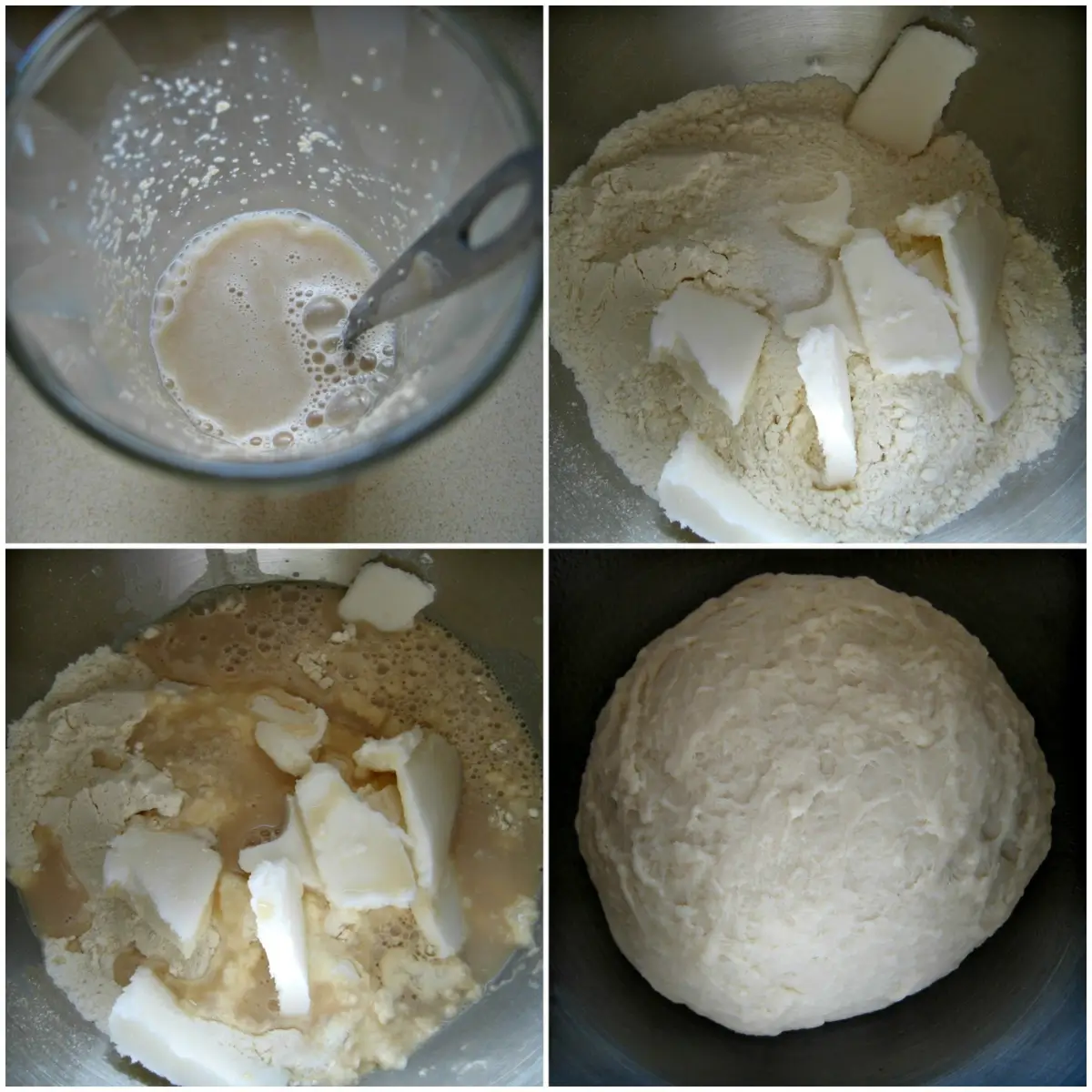
Step 1: Put the sugar and yeast in half a glass of lukewarm water. Mix well and set aside to activate.
Step 2: Put all the remaining ingredients into the bowl of an electric mixer fitted with a hook attachment.
Step 3: Once the yeast has activated, add it to the bowl. Add enough lukewarm water to obtain a smooth, pliable dough. Knead until smooth and elastic.
Step 4: When the dough is ready, shape it into a ball and place it in a warm spot to rise for at least 1 hour.
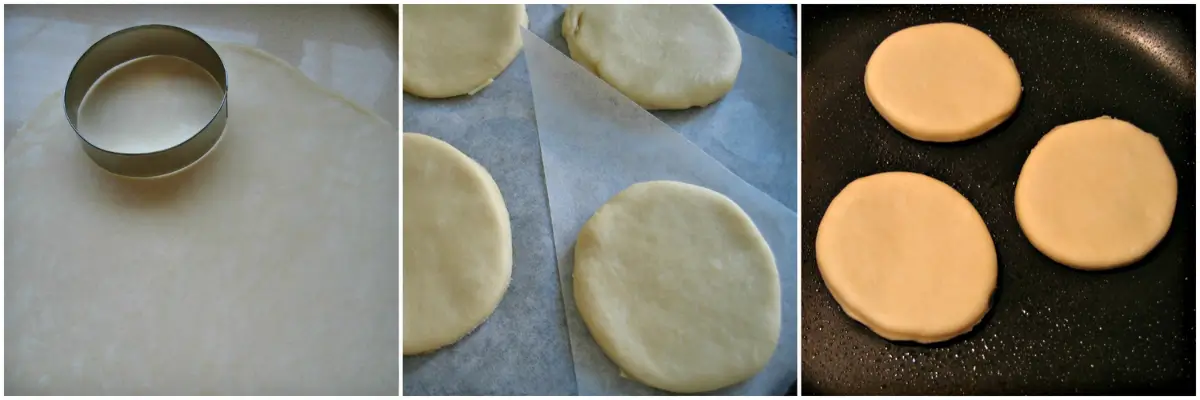
Step 5: Roll the dough into a 0.5 cm – ¼ inch thick sheet and cut out 8 cm – 3 inch discs. Let them rise for another hour in a warm place.
Step 6: Cook them in a non-stick pan sprayed with oil or lightly greased with butter for 3 to 4 minutes per side. After turning them over, cover with a lid to ensure even cooking.
Step 7: Serve hot, sliced in half and filled with Italian cold meats and cheeses such as prosciutto, salami, mortadella, pancetta, lardo, Taleggio, and Gorgonzola.
Frequently Asked Questions
Yes. Mix the ingredients in a large bowl and knead on a clean surface for about 10 to 12 minutes until smooth and elastic.
Yes. You can cook them on a hot griddle instead of a non-stick pan. Lightly grease the surface and cook over medium heat for 3 to 4 minutes per side, adjusting the heat as needed so the centre cooks through without the outside browning too quickly.
Make sure the dough is rolled to about 0.5 cm – ¼ inch and allow the second rise to complete fully before cooking. Proper proofing and moderate heat help create a lighter interior and gentle lift.
Tigelle also works well with thinly sliced cooked ham or lightly grilled Italian sausages cut into small pieces. Pair richer meats with milder cheeses to keep the balance of texture and flavour.
Extra Help from the Kitchen
Weigh the Ingredients – Measuring flour by weight rather than cups keeps the dough consistent from batch to batch. Even small differences in flour quantity can change how soft or firm the tigelle turn out.
Let the Dough Rest Before Rolling – After the first rise, allow the dough to rest for 5 minutes before rolling. This relaxes the gluten and makes it easier to roll evenly without shrinking back.
Test One First – Cook a single tigella before doing the whole batch. This helps you adjust the heat if needed and check that the thickness gives the texture you want.
Seal the Edges When Cutting – Press the cutter down firmly without twisting. Twisting can seal the edges and limit how evenly the tigelle puffs while cooking.
Keep Cooked Tigelle Covered – As they come off the pan, stack them and cover loosely with a clean tea towel. This keeps the crumb soft while you finish cooking the rest.
Variations and Twists
Add Modenese Pesto Montanaro – Spread a spoonful of traditional pesto montanaro made with pork fat, garlic, and rosemary inside warm tigelle before serving. The heat softens the spread and allows it to melt slightly into the crumb.
Serve with Pickles and Vegetables – Offer lightly pickled vegetables or grilled zucchini and peppers alongside filled tigelle. The acidity and char contrast well with richer meats and cheeses.
Make Sweet Tigelle – Once cooked and slightly cooled, fill with a thin layer of hazelnut spread or fruit jam. The soft interior holds sweet fillings surprisingly well.
Use a Cast-Iron Press Pattern – If you own a cast-iron skillet or aluminum tigelle press, cook the dough discs inside it to create the traditional stamped pattern and slightly firmer edges.
Mix in Olive Oil and Herbs – Replace part of the lard with extra virgin olive oil and add finely chopped rosemary to the dough for a lighter profile while keeping the crumb soft.
Storage and Shelf Life
Store Italian Crescentine at room temperature in an airtight container for up to 2 days, keeping them in a cool, dry place away from direct heat. For longer storage, place them in the refrigerator in an airtight container for up to 4 days, although the crumb may firm up more quickly.
For longer storage, freeze fully cooled tigelle in freezer-safe bags or airtight containers for up to 2 months. If stacking, place baking paper between layers to prevent sticking.
Thaw at room temperature inside the sealed container to avoid drying out. Reheat in a dry cast iron skillet over medium heat for a few minutes per side, or warm in the oven at 180°C – 350°F for 5-7 minutes until heated through.
More Traditional Italian Favourites
Tigelle Bread (Italian Crescentine Recipe)
Tigelle Bread, also known as Italian Crescentine, is a traditional flatbread from Emilia-Romagna, cooked on the stovetop and filled with cold meats and cheeses.
Ingredients
- 1 kg – 8 cups plain flour
- 10 g – 2 tsp dry yeast
- 80 g – 5 ½ tbsp lard
- 15 g – 3 tsp salt
- 1 tsp sugar
- lukewarm water – enough to form a smooth, pliable dough
Instructions
-
Put the sugar and yeast in half a glass of lukewarm water. Mix well and set aside to activate.
-
Put all the remaining ingredients into the bowl of an electric mixer fitted with a hook attachment.
-
Once the yeast has activated, add it to the bowl. Add enough lukewarm water to obtain a smooth, pliable dough. Knead until smooth and elastic.
-
When the dough is ready, shape it into a ball and place it in a warm spot to rise for at least 1 hour.
-
Roll the dough into a 0.5 cm – ¼ inch thick sheet and cut out 8 cm – 3 inch discs. Let them rise for another hour in a warm place.
-
Cook them in a non-stick pan sprayed with oil or lightly greased with butter for 3 to 4 minutes per side. After turning them over, cover with a lid to ensure even cooking.
-
Serve hot, sliced in half and filled with Italian cold meats and cheeses such as prosciutto, salami, mortadella, pancetta, lardo, Taleggio, and Gorgonzola.

Love travelling as much as cooking?
Many of the recipes I share are inspired by places I’ve visited around the world. On Travel with Manu you’ll find destination guides, itineraries and travel inspiration to help you plan your next adventure.












These look delicious.
The recipe is good for Tigelle, however the info you have is incorrect. Crescentine and Tigelle are very different. Crescentine are more like the fried gnocco you have pictures of.
In Emilia Romagna the two are completely different things. Tigelle are only ever called tigelle.
I just searched the Internet again to try to find a recipe for Sompanelle. I came across a site that does them. They of course refer them by different names. They call them Borlengo or Zampaelle. I must be misspelling it when typing Sompanelle. I emailed you a picture of the type of irons we use to cook the Zampaelle and Crescentine on. Below is the link to the Zampaelle recipe for anyone interested.
https://en.m.wikipedia.org/wiki/Borlengo
The recipe shown above is the one I use with my “iron”
I have found on other websites that the “irons” that we cook the “Crescentine” on are referred to as “Cotte”. Have you made a similar food called Sompanelle? If so, would you please share a recipe?
Hi BB
Yes, the iron for the Crescentine/Tigelle has different names depending on the area where they are made.
Unfortunately, I have never heard of Sompanelle… any idea about the city/region where they were originally made in Italy? That might help to find the recipe.
I am following up on a lead I located in Ladd, IL, will let you know what I find.
Thank you, I am actually from a town next to Ladd. I’m not surprised that you linked it to that area as this is one of the few places i have seen it. I wish I had written my Grand Mother in Laws recipe for Sompanelle down when I had the chance. I tried a recipe that I find online but it wasn’t really a great success.
Lane, do you use 2 iron and are they the same as the ones that I described in my initial post? What do you fill them with?
I have found on other websites that the “irons” that we cook the “Crescentine” on are referred to as “Cotte”. Have you made a similar food called Sompanelle? If so, would you please share a recipe?
I am reposting this since I forgot to click the button to recieve follow up comments. If possible, please delete my first message. Thanks!
My husband of 34 years comes from an Italian family. We started dating when I was 14 and he was 16 so I had the wonderful privilege of pretty much growing up in his family too. Fortunately I was interested enough to learn how to make the foods that were passed down through the generations and am enjoying teaching them to our children too. One of the foods that you refer to as Gnocco Fritto, we call Pasta Fritta or Pasta Fritt. I have learned through searching the internet that some bread names from Italy seem to be interchangeable with more than one type of bread. Our Pasta Fritta is the same as your Gnocco Fritto. We also make something called Casanti or Casanta. You refer to this bread as Crescentine. I have found many websites that make the Casanti (Crescentine) in the clay disks referred to as Tigelle. We have a different version of cooking them. We use what we call “Irons”. They are thin, round, flat, cast iron circles, about 10 to 12 inches across, with a long handle, about 2 plus feet long. It is one solid piece. We use 2 of these irons to cook the casanti. We coat just one side of the Irons with Olive Oil and put it on the stove (oiled side up, away from the flame). We then roll a ball of bread dough and place it on the iron. We immediately place the other oiled iron on top of the ball of dough and the other Iron, handles together. We cook the Casanti (Crescentine) on the stove top until the bottom is brown, then we flip it over and cook the other side. We also use a heavy antique clothing iron to press down on the top iron to help flatten the ball of dough. We dont fill the Casanti with meats like you do. Instead, we use a mixture of pork salt, garlic, rosemary and others that I cant think of right now, blended smoothly together. We spread this buttery mix on the warm, cooked, cut open Casanti and sprinkle it with grated asiago cheese. Close it back up and enjoy. They are delicious. I have found very very few sites that call these Casanti and I have only found one site that showed a picture of them being cooked with the same type of Irons that we use.
Oh, I so miss going up into the hills outside Bologna and sitting outdoors with friends eating tigelle and crescentine (or gnocchi fritti, as they are sometimes called)! I should find a way to make these for my friends in New York.
these look so delicious Manu 🙂
I’d never seen these but they look so darn good. Oh my, they go straight to my “to bake” list!
I think your flour quantity is about double what is actually needed for 20 Tigelle to be made. Here is the recipe I use from the mfg. of my Tigelle in Italy:
Before you can eat amazingly delicious tigelle, you have to make the dough. The quantity for this recipe makes about 20 tigelle.
Ingredients for tigelle dough:
2 teaspoons of dry active yeast
1 cup warm water (some people prefer to use warm milk)
pinch of sugar
pinch of flour
3 1/4 cups flour
2 tablespoons of olive oil
2 tsp salt
In a small bowl, combine the warm water, yeast, pinch of flour and salt. Stir gently, and let rest for about 10 minutes, or until the mixture becomes bubbly.
You can make the dough by hand, I prefer to use my stand mixer. In the mixing bowl, combine the flour, olive oil, salt, and the yeast mixture. Mix first with the paddle attachment, then use the dough hook at medium speed, until the dough becomes nice and smooth and elastic. Knead by hand for a few minutes, forming it into a ball shape. Then lightly oil your mixing bowl, and coat your dough. Cover the mixing bowl with a cloth, and allow the dough to rise for at least 2 hours.
Once your dough has risen significantly, punch it down. Then divide the dough into twenty balls. They should be about 1 1/2 inches in diameter. Then, using your rolling pin, roll them into discs about the size of an English Muffin. They should be about 3 1/2 inches in diameter, and about 1 cm thick. At this point, let them rise another 45 minutes to an hour.
Hi Lane!
Thank you so much for your comment (it had ended up in the Spam folder :-()! I fixed it… the recipe is indeed for 40 Tigelle! I had made 1/2 the above dose for my family and had written “20” in my notes… I re-checked it and the above recipe makes 40! THANK YOU so much for pointing that out! 🙂
Thank you Manu – I really enjoy making these and am so glad I was able to get a four cavity Tigelle mold from Italy to use. If someone can figure out how to navigate Ebay in Italy I have seen seven cavity molds for sale. There is a learning curve to using the mold, getting the temp just right so they cook completely and do not get over done on the outside (burn).
DELICIOUS!! YUM
I could do with some of this for lunch right now!