

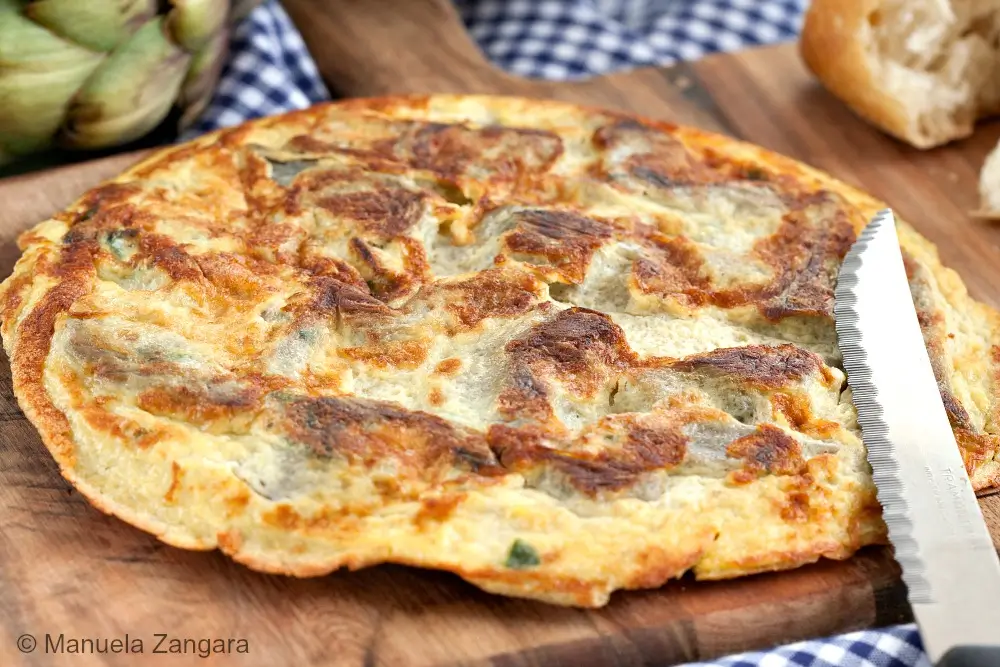
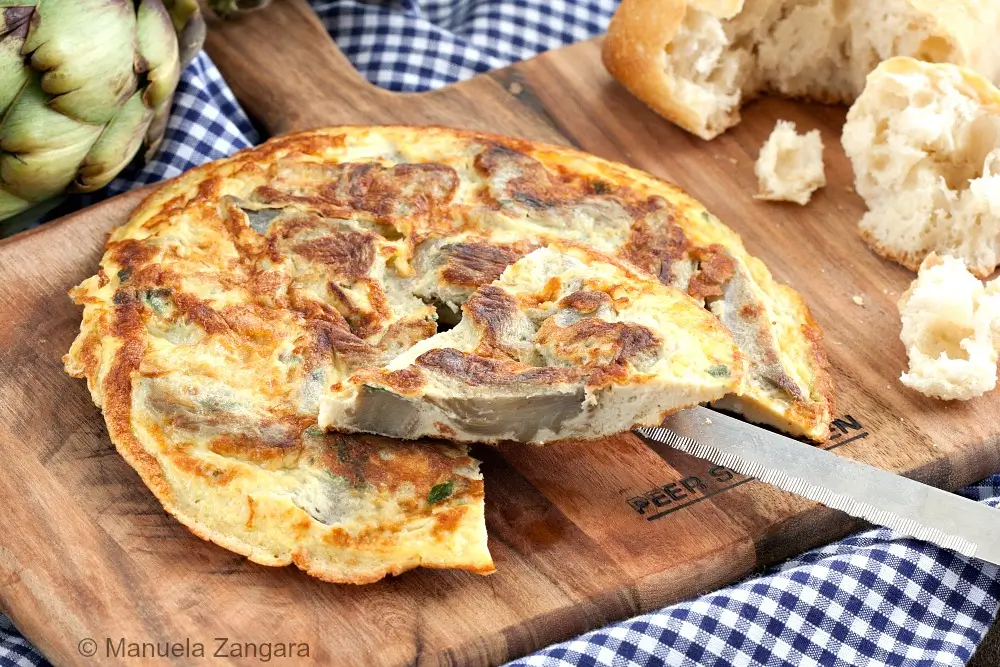
Fluffy eggs, delicate artichokes, and lightly melted cheese in this Artichoke Frittata create layers of tender, melt-in-your-mouth texture with fresh parsley and gentle seasoning.
While growing up, Saturday lunch was usually a frittata at my place. My mum has always loved frittata, and it was a good weekly break from our pasta, fish, and meat meals.
I used to go to school on Saturdays and would come home at about 1:30 PM as hungry as if I had not eaten in years. Frittata was not my favourite lunch. I would gobble it up in two minutes and still feel hungry.
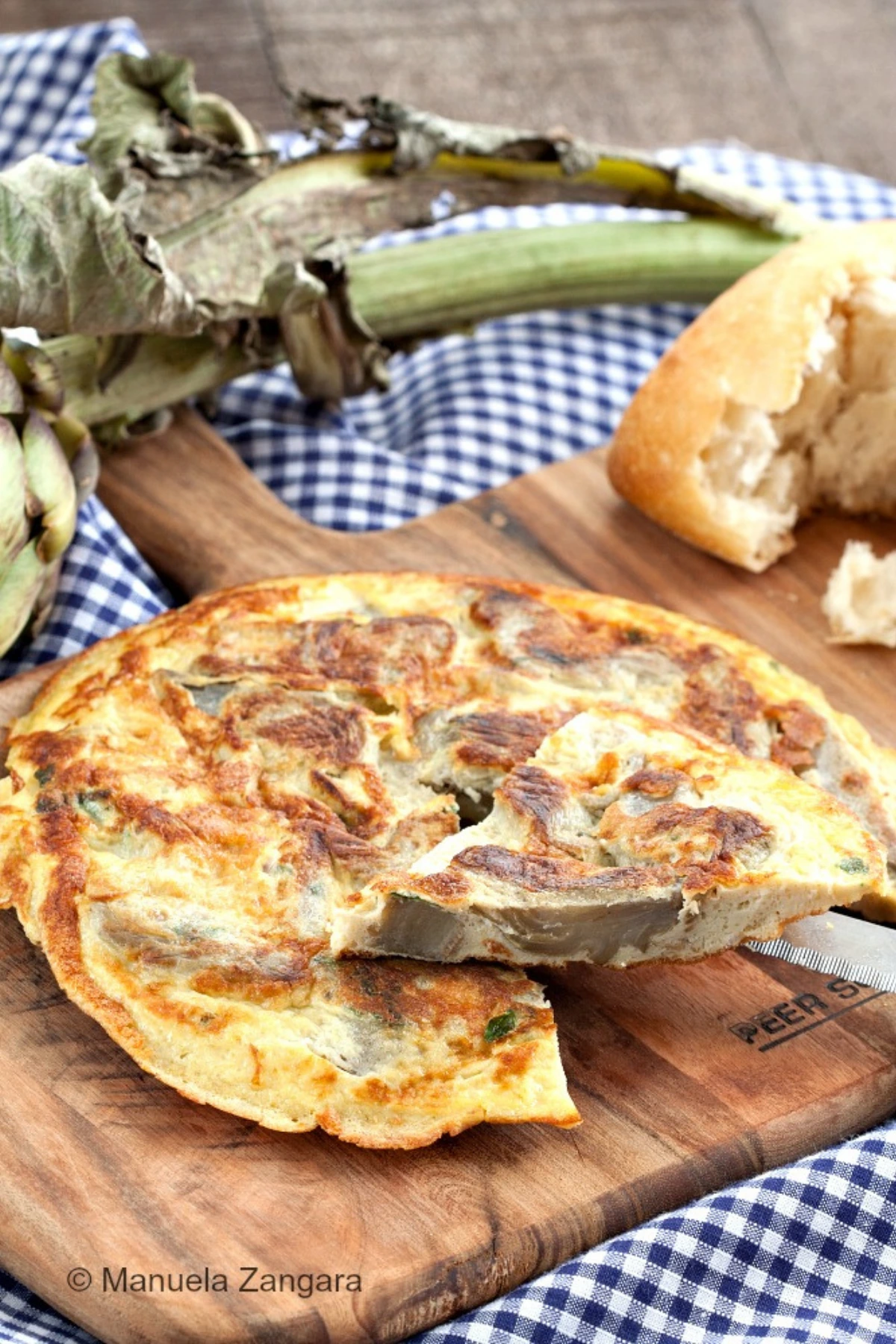
Anyhow, it was only later in life that I learnt how to appreciate frittata and omelettes. This artichoke frittata is made with tender cooked artichokes folded into fluffy eggs with Parmigiano Reggiano and parsley. It is very easy to make, uses simple and budget-friendly ingredients, and tastes delicious.
I love this artichoke version. It makes a great lunch idea or a quick and scrumptious appetiser. Enjoy!
Why We Love Frittata with Artichoke
- Works equally well for a casual lunch or a light dinner, making it practical for different mealtimes.
- Keeps well at room temperature, which is handy if you’re serving it for Easter, picnics, or other gatherings.
- Maintains a tender, soft centre that melts in your mouth while the lightly browned edges give a delicate savoury crunch.
Key Ingredients for Artichoke Frittata
Artichokes
Choose fresh or pre-trimmed artichokes with tightly closed leaves and pale green colour. They provide a gentle, earthy flavour with a slight sweetness and a firm but tender texture that holds up in the frittata.
Parmigiano Reggiano
Nutty and savoury, with a subtly grainy texture that blends into the eggs. Use finely grated, high-quality cheese to blend smoothly into the eggs and add balanced flavour.
Parsley
Flat-leaf parsley has a clean, mild herbal taste and delicate leaf texture that contrasts lightly with the creamy eggs and tender artichokes.
Milk
Whole milk or 2% milk adds subtle creaminess and a slightly richer flavour. It helps maintain a soft, tender texture in the frittata, and cream can be used for a slightly denser, silkier finish.
Find the complete list with measurements in the recipe card below.
How to Make Artichoke Frittata
Step 1: Clean and slice the artichokes, then cook them, covered, with 1 tablespoon of extra virgin olive oil, a pinch of salt, and a little water. When they are soft, turn off the heat and set aside.
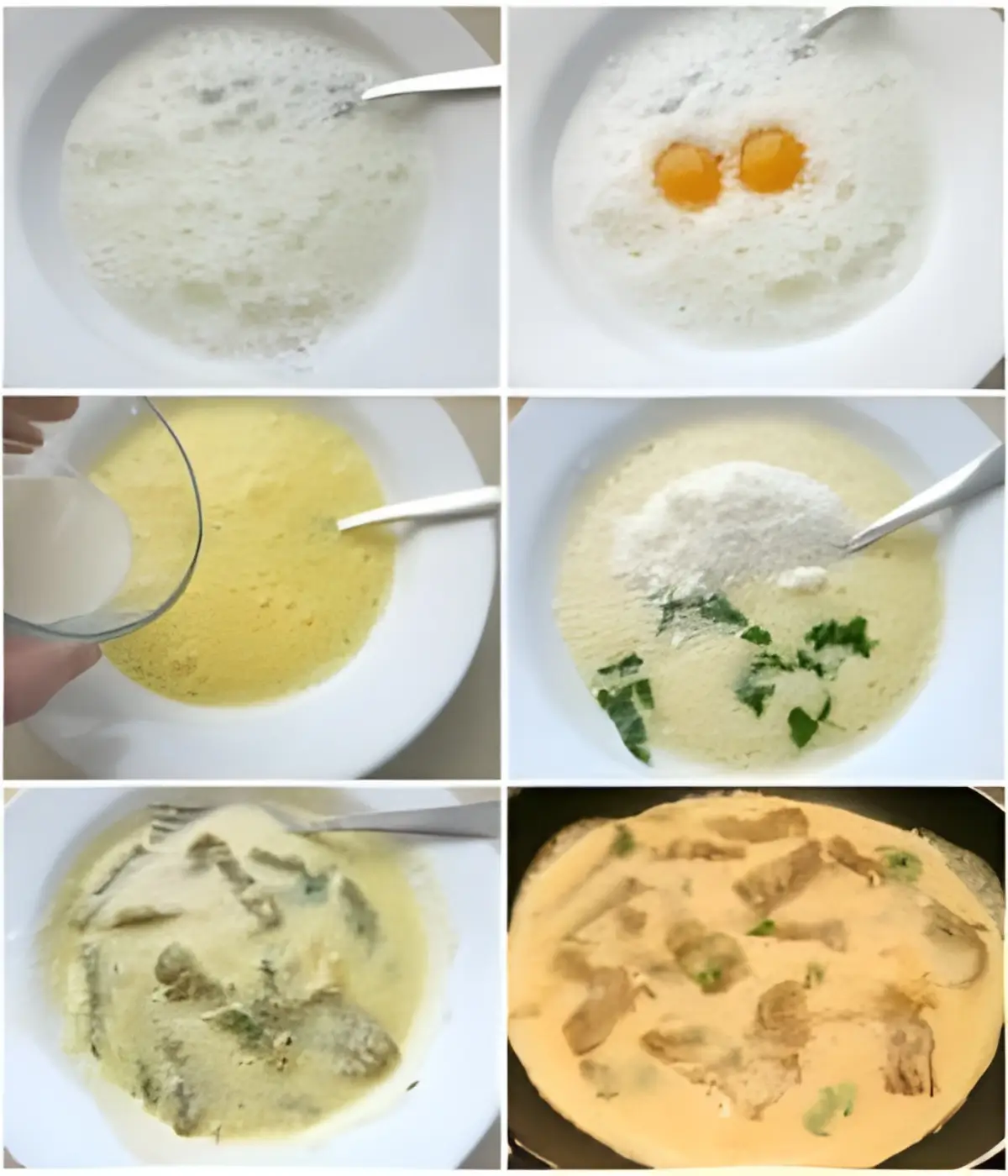
Step 2: In the meantime, whisk the egg whites until fluffy.
Step 3: Add the yolks and milk, and continue whisking until combined.
Step 4: Add the Parmigiano Reggiano and mix well.
Step 5: Season with salt and pepper to taste, then add the parsley and cooked artichokes. Mix until evenly combined.
Step 6: Put 1 tablespoon of vegetable oil in a non-stick frying pan and, when hot, pour in the egg and artichoke mixture. Cook over low heat until golden on one side.
Step 7: Place a plate over the frying pan and carefully flip the pan upside down to turn the frittata onto the plate.
Step 8: Gently slide the frittata back into the frying pan and cook the other side until golden and fully set. Transfer to a serving plate.
Frequently Asked Questions
Yes, well-drained frozen or jarred artichoke hearts work fine. Pat them dry and trim any tough edges before adding to prevent extra moisture in the frittata.
Aged Pecorino Romano or Grana Padano can be substituted. Both provide a similar nutty, salty flavour that blends well with the eggs.
The edges should be fully set and starting to pull away from the sides of the pan, while the centre should still be slightly jiggly or wet on top.
Place a flat plate slightly larger than your pan over the top. Hold the plate firmly against the pan, flip it over in one swift motion, then carefully slide the frittata back into the pan to finish cooking the other side.
Extra Help from the Kitchen
Slice Artichokes Uniformly – Cut the artichokes into similar-sized pieces so they cook evenly and distribute consistently throughout the frittata.
Pat Artichokes Dry – After cooking, gently pat the artichokes with a paper towel to remove excess moisture. If using frozen or jarred artichoke hearts, drain artichoke hearts thoroughly first. This helps the frittata set properly and avoids a watery texture.
Whisk Eggs Thoroughly – Beat the eggs until slightly frothy before adding other ingredients. This traps air, creating a lighter, more tender frittata.
Handle Artichokes Carefully – Artichokes can stain hands. Use gloves or rub with lemon juice, and soak them in cold water with lemon juice before cleaning.
Check Pan Size – Use a pan that matches the quantity of eggs. A too-large pan can make the frittata thin and prone to drying, while a smaller pan produces a thicker, more uniform texture.
Variations and Twists
Add Green Onions and Cheddar – Fold in chopped green onions with shredded sharp cheddar cheese to brighten the flavour and add gentle sharpness.
Combine with Spinach and Cherry Tomatoes – Mix drained artichoke hearts with fresh spinach and halved cherry tomatoes for a Mediterranean‑style twist that adds colour, garden flavour, and lightly tangy juiciness.
Include Prosciutto for a Salty Bite – Stir in bite‑sized prosciutto strips with the artichokes and eggs to introduce a salty, savoury layer.
Use Frozen or Jarred Artichokes – Substitute fresh artichokes with well‑drained frozen or jarred artichoke hearts when fresh ones aren’t available. Pat them dry before adding to the eggs to prevent extra moisture, and trim any tough edges to keep the texture consistent with fresh artichokes.
Add Garden Vegetables with Mild Herbs – Fold in lightly sautéed zucchini ribbons, diced red bell pepper, and thinly sliced potatoes, with a sprinkle of mild herbs for extra flavour and texture. If adding a lot, make sure the bottom is golden and set before flipping so the eggs stay firm.
Storage and Shelf Life
Store leftover frittatas in an airtight container at room temperature for up to two hours after cooking. For longer storage, refrigerate in a sealed container for 3–5 days at or below 4 °C – 40 °F. To freeze, wrap the frittata in plastic wrap and place it in a freezer-safe container for up to 3 months.
Thaw in the refrigerator for several hours or overnight, then reheat gently in a frying pan over low heat until warmed through without overcooking.
More Savoury Brunch and Egg-Based Dishes
Artichoke Frittata Recipe
Fluffy eggs, delicate artichokes, and lightly melted cheese in this Artichoke Frittata create layers of tender, melt-in-your-mouth texture with fresh parsley and gentle seasoning.
Ingredients
- 3 artichokes
- 1 tbsp – 15 ml extra virgin olive oil
- 4 eggs
- ¼ cup – 60 ml milk
- 5 tbsp – 25 g Parmigiano Reggiano – finely grated
- 1 tbsp – 5 g continental parsley – finely chopped
- salt and black pepper – to taste
- vegetable oil
Instructions
-
Clean and slice the artichokes, then cook them, covered, with 1 tablespoon of extra virgin olive oil, a pinch of salt, and a little water. When they are soft, turn off the heat and set aside.
-
In the meantime, whisk the egg whites until fluffy.
-
Add the yolks and milk, and continue whisking until combined.
-
Add the Parmigiano Reggiano and mix well.
-
Season with salt and pepper to taste, then add the parsley and cooked artichokes. Mix until evenly combined.
-
Put 1 tablespoon of vegetable oil in a non-stick frying pan and, when hot, pour in the egg and artichoke mixture. Cook over low heat until golden on one side.
-
Place a plate over the frying pan and carefully flip the pan upside down to turn the frittata onto the plate.
-
Gently slide the frittata back into the frying pan and cook the other side until golden and fully set. Transfer to a serving plate.
Recipe Notes
You can serve the frittata warm as a main course or at room temperature as an appetiser. Cut it into small cubes to serve as finger food or an aperitivo with a glass of wine.

Love travelling as much as cooking?
Many of the recipes I share are inspired by places I’ve visited around the world. On Travel with Manu you’ll find destination guides, itineraries and travel inspiration to help you plan your next adventure.












Leave a Reply