

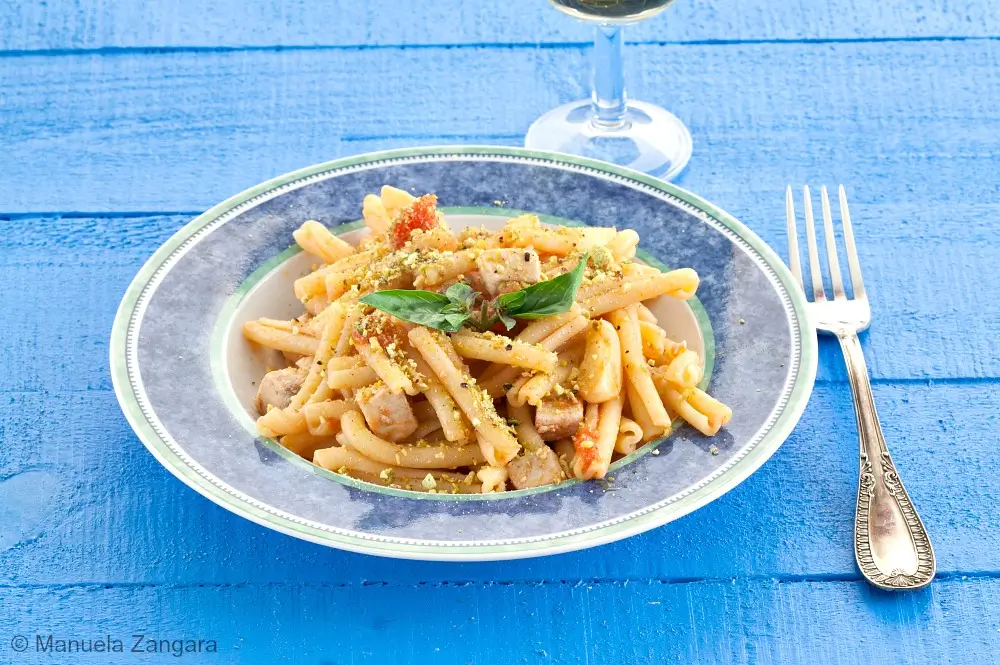
Seared swordfish, olive oil, tomatoes, basil, and crunchy pistachio crumbs come together in Swordfish and Pistachio Pasta, a simple pasta dish inspired by classic Sicilian cooking.
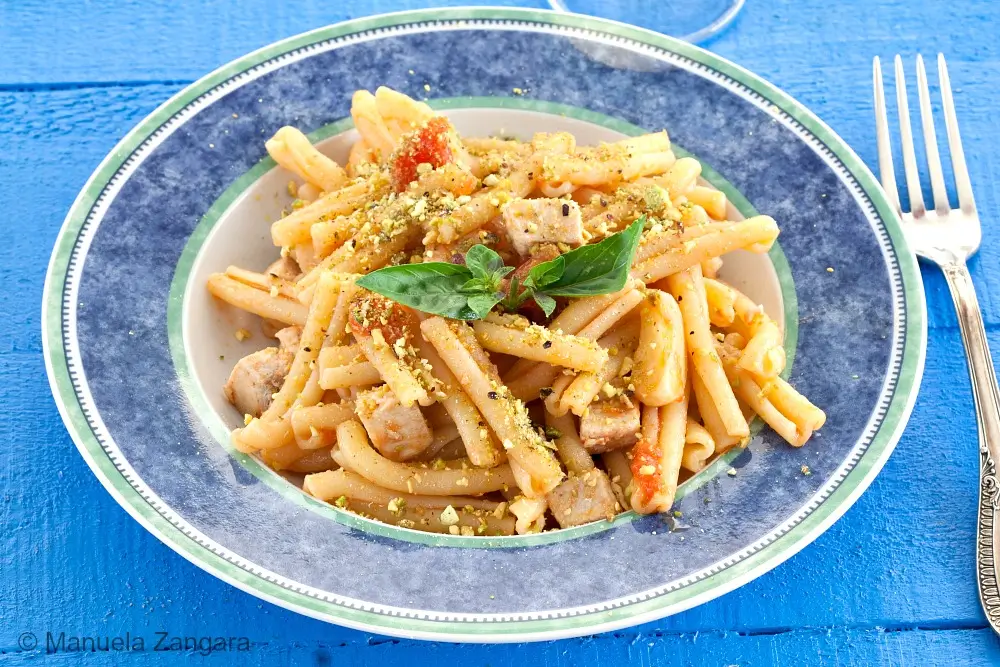
Pasta, finally. You know that, even though I am Italian, I don’t share pasta recipes as much as I’d like. The main reason is simple. I don’t like to take pictures of pasta. There, I said it.
When I take shots for my blog, I don’t like to be rushed. I prefer having the time to take, and retake, as many photos as possible, often from different angles.
But since my family and I actually eat all the dishes you see on this site, pasta makes things tricky. Like all true Italians, we don’t eat cold or reheated pasta. It just doesn’t cut it. We have ours freshly made and steaming hot.
So taking photos becomes a very stressful exercise, with a table full of hungry eyes staring at me and silently asking are-you-done-yet. Anyhow, I really had to share this recipe with you, because it is absolutely delicious and I didn’t want to be selfish and keep it all to myself.
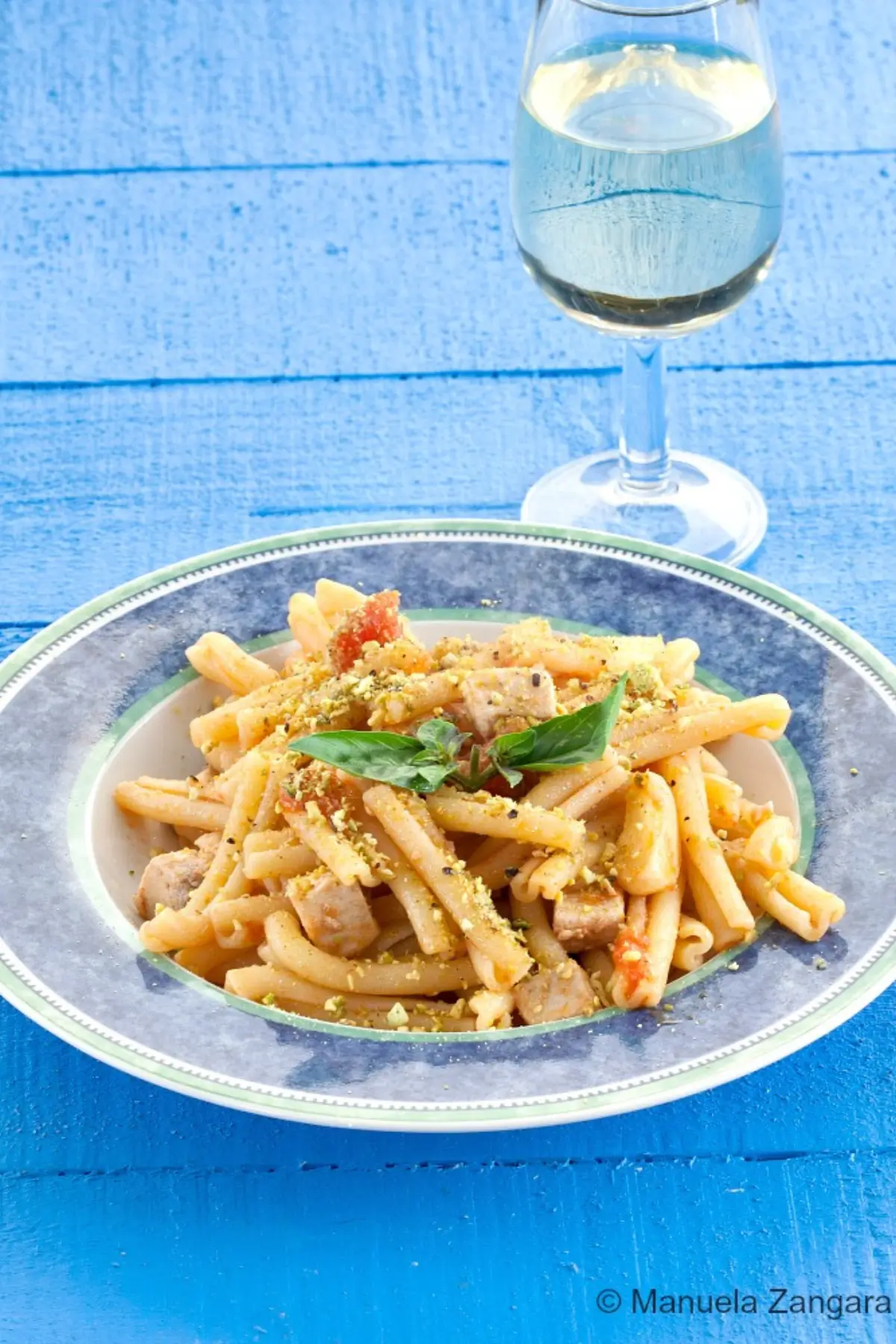
This pasta has all the flavours of Sicily. Swordfish, tomatoes, extra virgin olive oil, basil, and pistachios. And it is scrumptious! The texture and flavour the pistachio crumbs give to the final dish make all the difference, so make sure not to skip them. They are a great substitute for grated cheese.
Buon appetito!
What Makes This Pasta a Favourite
- Keeps swordfish tender and juicy by using short cooking times and simple pan work.
- Comes together smoothly from start to finish without complicated timing or last-minute stress.
- Pairs easily with vegetables, salads, or bread without needing extra planning.
Key Ingredients for Swordfish Pasta
Swordfish
Swordfish has a firm texture that cooks well over fairly high heat and stays juicy when seared quickly. Look for flesh that is pale and glossy, with no dark patches.
Pistachios
Pistachios add a pleasant crunch and a gentle savoury note at the end. Unsalted pistachios are the best choice, as they let you control the seasoning and keep the balance right when used in place of grated cheese.
Tomatoes
A small amount of diced tomatoes softens into the sauce, adding moisture and a light acidity without turning it into a tomato pasta. Fresh tomatoes are ideal when ripe, while good-quality tinned tomatoes are a practical option the rest of the year.
Find the complete list with measurements in the recipe card below.
How to Make Swordfish and Pistachio Pasta
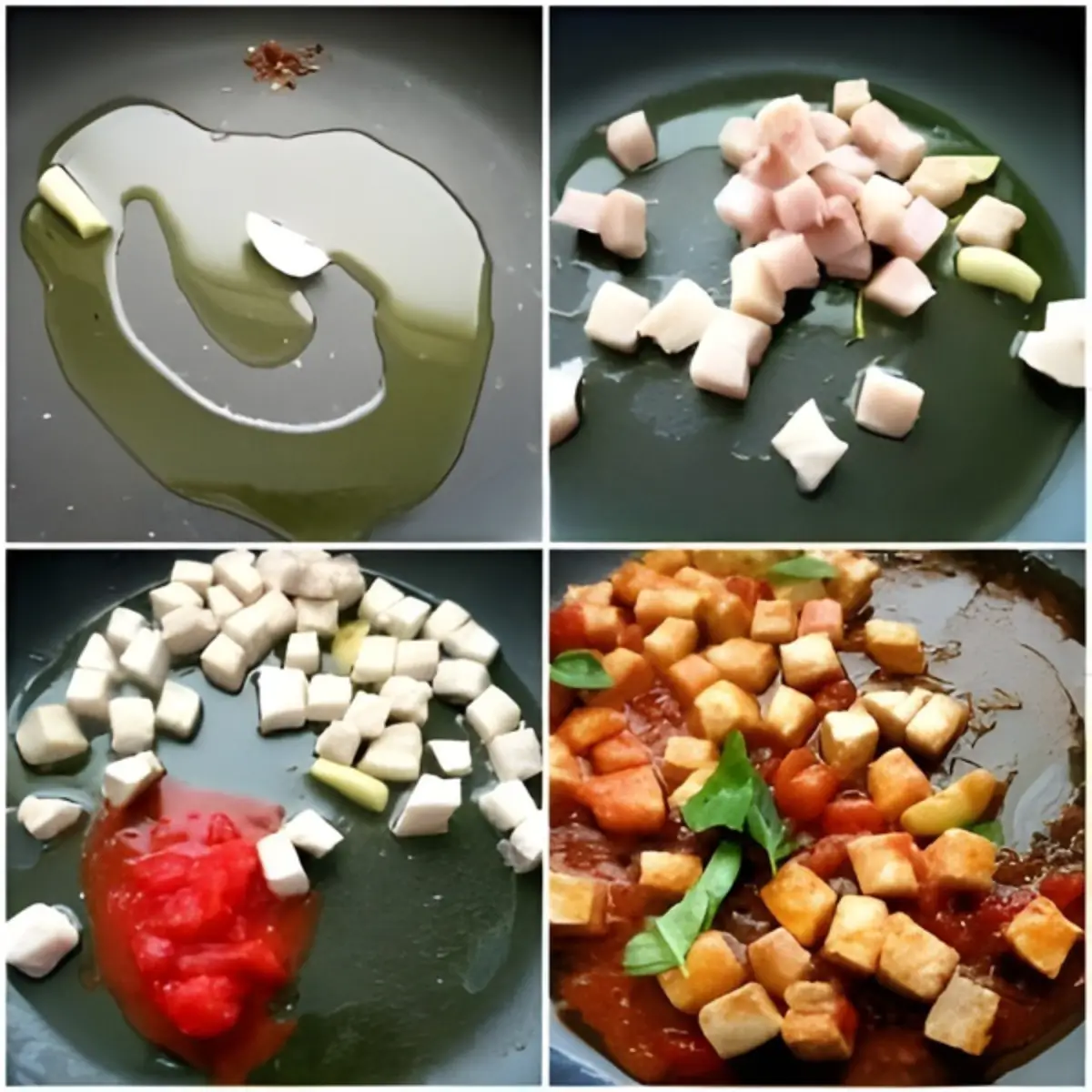
Step 1: Cube the swordfish into 2.5 cm – 1-inch pieces and set aside.
Step 2: Sauté the halved garlic clove and the chilli flakes in the extra virgin olive oil for 1 minute.
Step 3: Add the cubed swordfish and brown it evenly on all sides.
Step 4: Add the diced tomatoes and salt and cook on low heat for 5 minutes. Add a little water if needed to prevent the sauce from drying out, then turn off the heat.
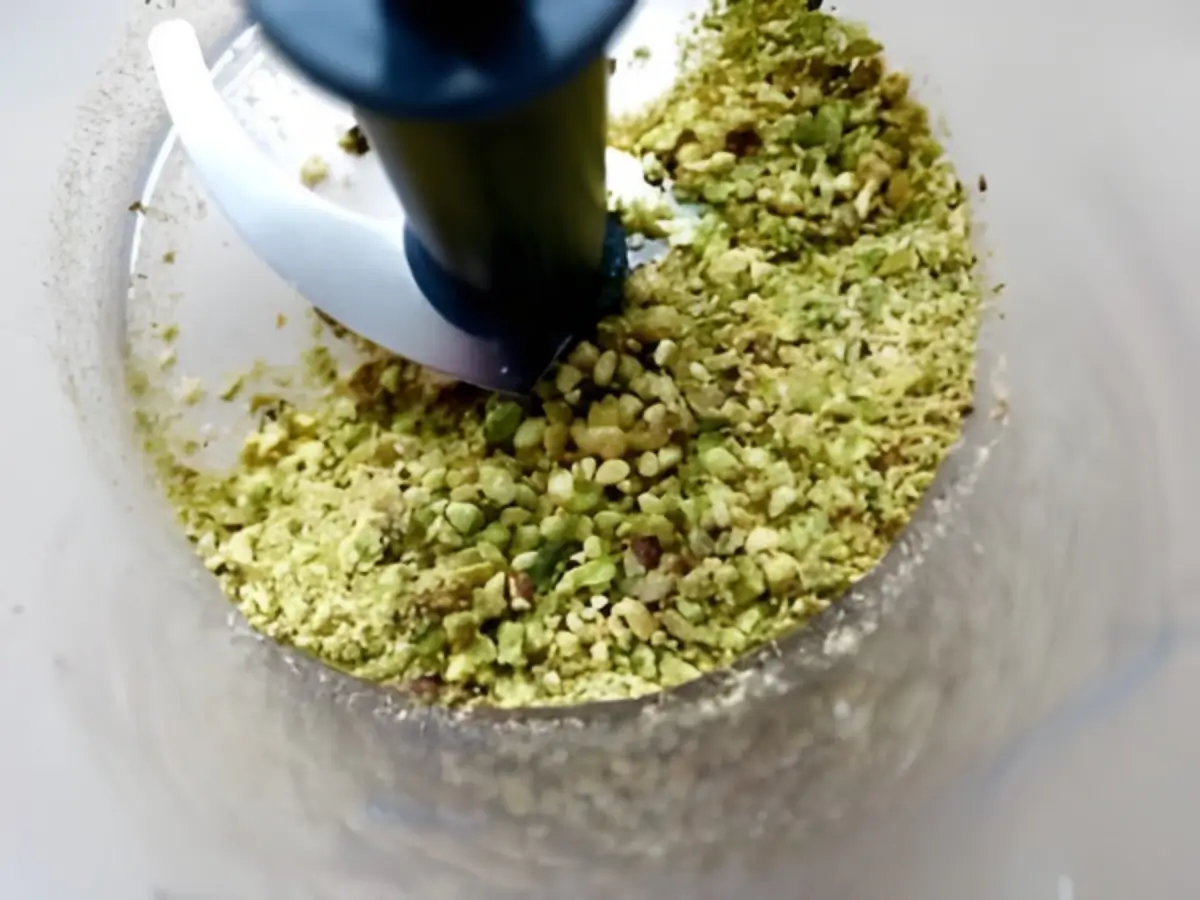
Step 5: Roughly blend the pistachios and set aside.
Step 6: Cook the pasta following the steps for cooking pasta al dente. Drain it 1 minute before it is fully cooked, as it will finish cooking with the sauce. Reserve a ladle of the cooking water.
Step 7: Add the drained pasta to the frying pan with the swordfish sauce, then add the remaining extra virgin olive oil and basil. Mix well over low heat for 1–2 minutes, adding a little cooking water if needed to keep the sauce moist.
Step 8: Serve topped with the pistachio crumbs.
Frequently Asked Questions
Almonds are a good alternative and give a similar crunch. Use whole almonds, chop them coarsely, and keep the quantity the same.
Asparagus, green beans, or finely sliced fennel work well. Cook them briefly so they soften without adding too much liquid to the sauce.
Good-quality chopped tinned tomatoes work well when fresh tomatoes lack flavour. Choose ones with firm pieces and use the same amount.
Serve it with a simple green salad dressed with olive oil and lemon, lightly grilled vegetables, or crusty bread.
Extra Help from the Kitchen
Use a Wide Pan – Allow the swordfish to brown quickly rather than steam. Proper surface contact improves texture and keeps the pieces intact.
Salt the Swordfish at the Last Moment – Season the fish just before it goes into the pan. Early salting can draw out moisture and affect how it cooks.
Watch the Pistachio Texture – Aim for uneven, coarse crumbs rather than a fine grind. A breadcrumb-like texture adds contrast, while finer crumbs mix into the pasta and become less noticeable.
Balance the Sauce with Pasta Water – Add cooking water a little at a time when finishing the pasta. The starch helps the olive oil coat the pasta evenly without turning greasy.
Rest the Pan Briefly Before Serving – Let the pasta sit off the heat for about 30 seconds before plating. This short pause allows the sauce to settle and cling better to the pasta.
Variations and Twists
Add Toasted Breadcrumbs and White Wine Finish – Add a splash of dry white wine after browning the swordfish and let it reduce briefly before adding the tomatoes. Finish the pasta with a small handful of toasted breadcrumbs alongside the pistachio crumbs for extra texture.
Use Cherry Tomatoes and Butter – Replace the diced tomatoes with halved cherry tomatoes and add a small knob of butter while cooking the fish. The butter softens the tomatoes and gives the sauce a rounder finish.
Include Lemon Zest and Fresh Herbs – Mix finely grated lemon zest with the pistachio crumbs and add extra chopped herbs such as parsley or chives at the end.
Serve with Artisan Pasta Shapes – Swap casarecce or spaghetti for fusilli or another short, twisted pasta. These shapes catch the sauce, fish, and crumbs well and work smoothly with the same timing.
Add Capers for Salty Notes – Stir in a tablespoon of rinsed capers when adding the tomatoes. The capers bring a gentle salty contrast that pairs well with swordfish and pistachios.
Storage and Shelf Life
Store Pistachio Pasta leftovers in an airtight container in the refrigerator for up to 2–3 days once fully cooled. Seafood pasta is always best eaten fresh, as the texture of the swordfish can change over time. Freezing is possible but not recommended, as the fish may lose its firmness once thawed.
Reheat gently in a frying pan over low heat with a small splash of water, stirring carefully until heated through.
Traditional Pasta Recipes You’ll Love
Swordfish and Pistachio Pasta Recipe
Seared swordfish, olive oil, tomatoes, basil, and crunchy pistachio crumbs come together in Swordfish and Pistachio Pasta, a simple pasta dish inspired by classic Sicilian cooking.
Ingredients
- 4 tbsp extra virgin olive oil – divided
- 300 g – 10 oz. swordfish – cubed into 2.5 cm – 1 inch pieces
- 1 garlic clove – halved
- ½ tsp chilli flakes
- 3 tbsp tomatoes – diced
- Salt to taste
- 2 tbsp basil leaves – chopped
- 55 g – 2 oz. pistachios
- 350 g – 12 oz. pasta – casarecce or spaghetti
Instructions
-
Cube the swordfish into 2.5 cm – 1-inch pieces and set aside.
-
Sauté the halved garlic clove and the chilli flakes in the extra virgin olive oil for 1 minute.
-
Add the cubed swordfish and brown it evenly on all sides.
-
Add the diced tomatoes and salt and cook on low heat for 5 minutes. Add a little water if needed to prevent the sauce from drying out, then turn off the heat.
-
Roughly blend the pistachios and set aside.
-
Cook the pasta following the steps for cooking pasta al dente. Drain it 1 minute before it is fully cooked, as it will finish cooking with the sauce. Reserve a ladle of the cooking water.
-
Add the drained pasta to the frying pan with the swordfish sauce, then add the remaining extra virgin olive oil and basil. Mix well over low heat for 1–2 minutes, adding a little cooking water if needed to keep the sauce moist.
-
Serve topped with the pistachio crumbs.

Love travelling as much as cooking?
Many of the recipes I share are inspired by places I’ve visited around the world. On Travel with Manu you’ll find destination guides, itineraries and travel inspiration to help you plan your next adventure.











Fish and I have a love/hate relationship. I love it, it hates me but pistachios with pasta wants me to head to the kitchen and start cooking.
This is the cuisine that is near and dear to my heart. Love swordfish dishes and anything the reminds me of Sicily and Southern Italy . The pistachios bring complex texture to the dish . Love it. Adding to my recipe cache. Thanks Manu!