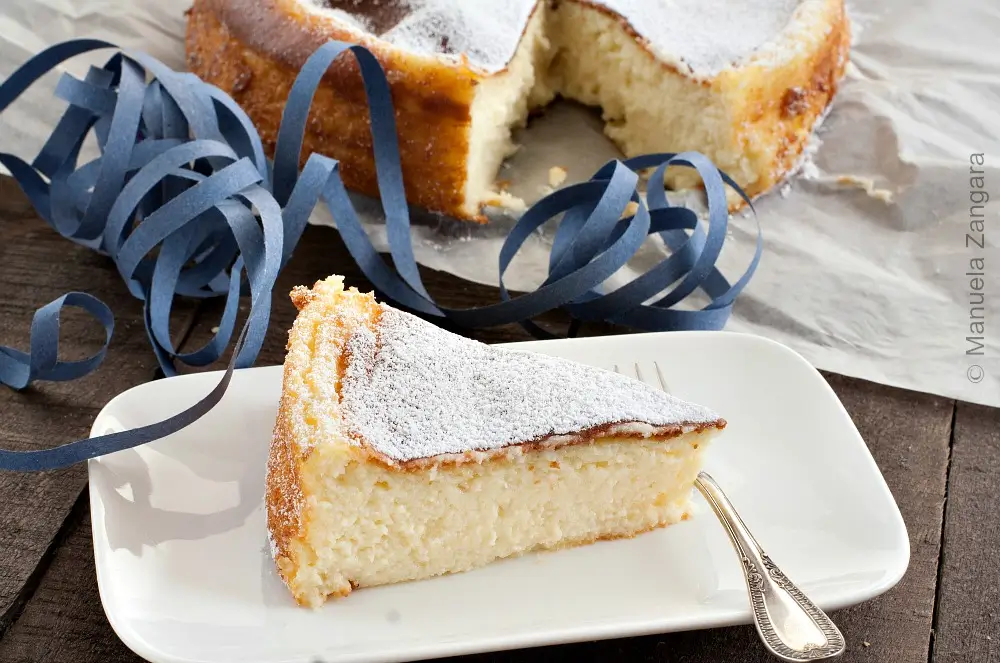
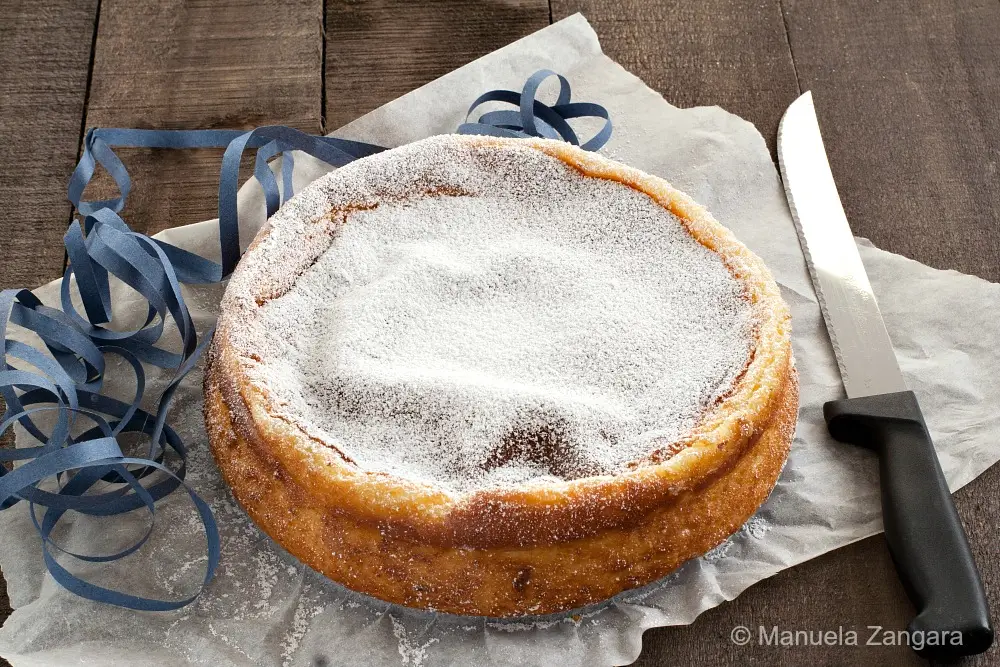
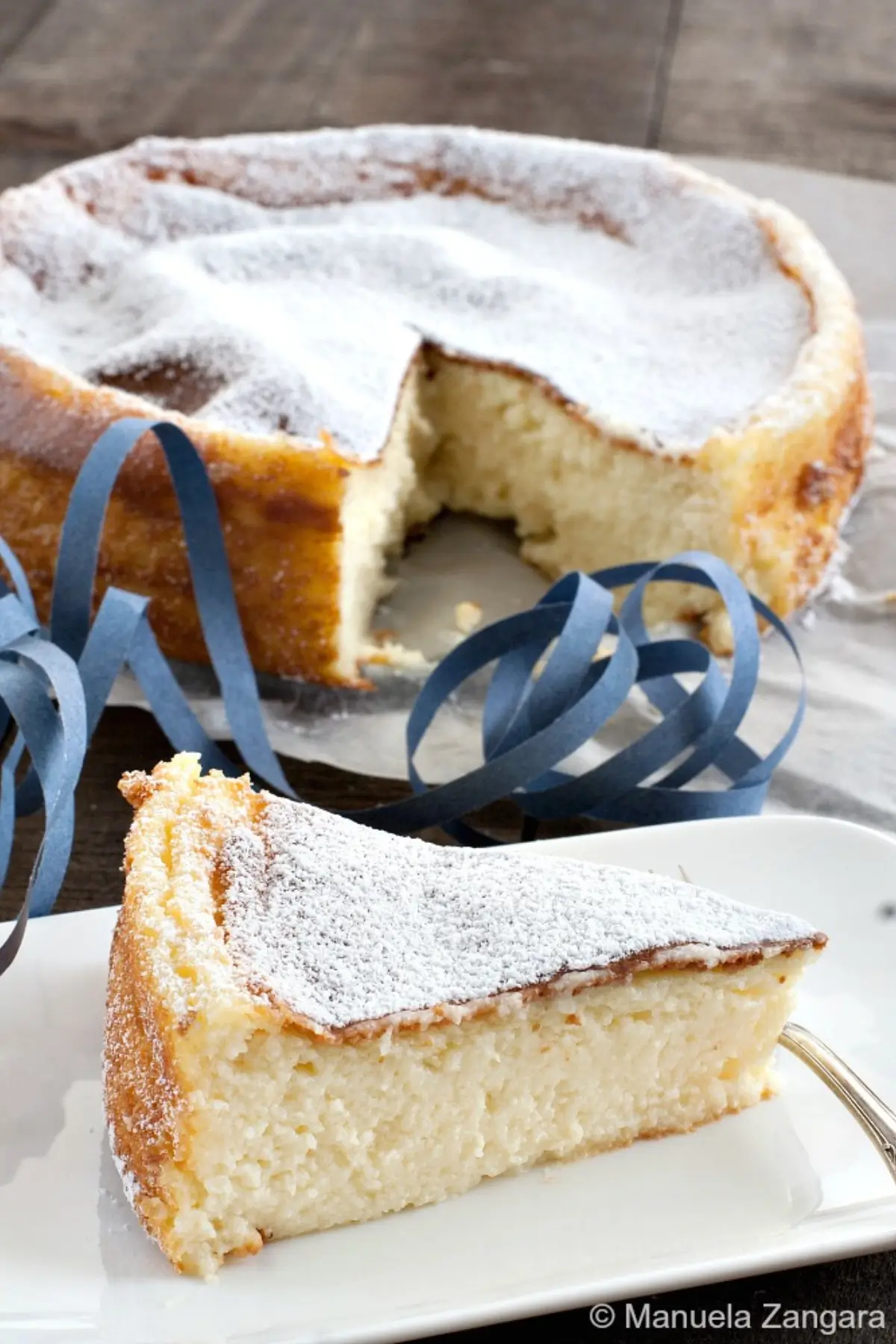
Soft and lightly scented with citrus, Migliaccio is a traditional Neapolitan semolina cake baked until golden with a smooth, creamy texture.
Mardi Gras is the last day of Carnevale in Italy. Carnevale is one of the festivities I miss the most. As a child, I loved going around the streets in my town all dressed up.
I played pranks and threw coloured confetti at my friends. The best time of all was the parade of the floats, and we used to have so much fun.
It also helped that Carnevale always happens around my birthday, so I’d have dressing-up parties to celebrate.
Another thing I love about Carnevale is the food. As it happens just before Lent, a time when traditionally Catholics eat less or at least give up some of the richest foods, the food is always decadent and often fried.
I’ve already shared a few typical recipes on the blog, including Chiacchiere, which I make every year for my kids, Tortelli, Ravioli Dolci, and Bomboloni. All fried.
I’d like to share something a bit different, a cake called Migliaccio that is typical of Naples and the surrounding areas.
It’s very similar to a baked cheesecake in consistency, and it’s made with ricotta and semolina instead of flour. It’s very moist and creamy, and it has a subtle lemon taste.
Try it and let me know! Buon Carnevale, everyone!
Reasons to Make Migliaccio
Key Ingredients for Migliaccio Cake
Ricotta
Ricotta gives the cake its creamy texture and mild dairy flavour. Use whole-milk ricotta for the best richness, and drain it briefly if it looks watery.
Milk
Keeps the cake moist and tender. Its mild dairy flavour softens the wheat taste of the semolina and helps balance the richness of the ricotta and eggs.
Semolina
Semolina gives Migliaccio its characteristic structure and slightly dense yet smooth texture. It also adds a delicate wheat flavour that pairs well with the ricotta and lemon. Fine semolina produces the smoothest result, while coarse semolina can make the cake feel grainy.
Lemon Peel
Adds fresh citrus aroma and a bright flavour that pairs well with the ricotta and eggs. Choose an unwaxed lemon if possible, since the peel goes directly into the mixture.
Find the complete list with measurements in the recipe card below.
How to Make Migliaccio
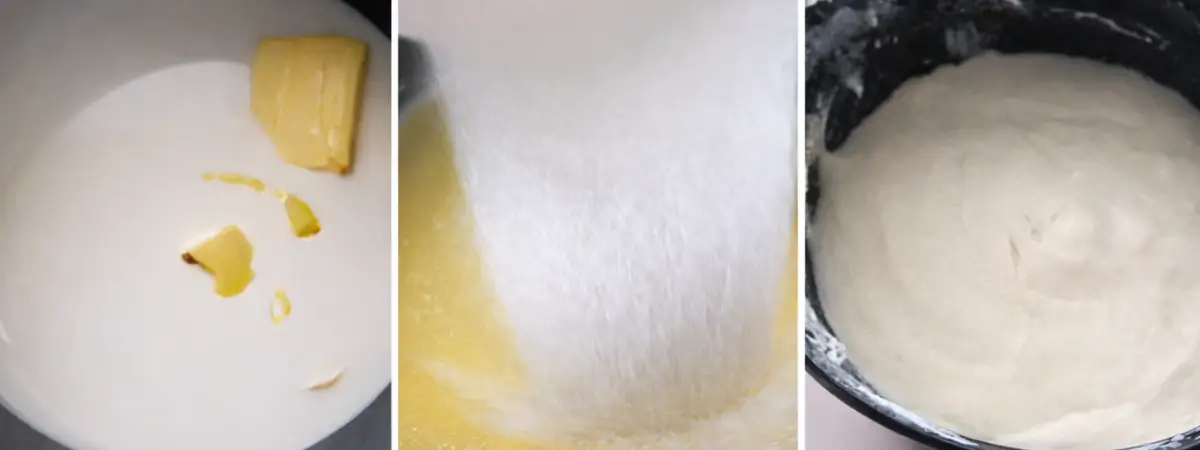
Step 1: Put the milk, water, butter, salt, and lemon peel in a pot and bring to a boil.
Step 2: Remove the lemon peel and add the semolina while stirring continuously.
Step 3: Cook the semolina for 10 minutes, stirring constantly. If lumps form, use a stick mixer to remove them. Let the mixture cool slightly.
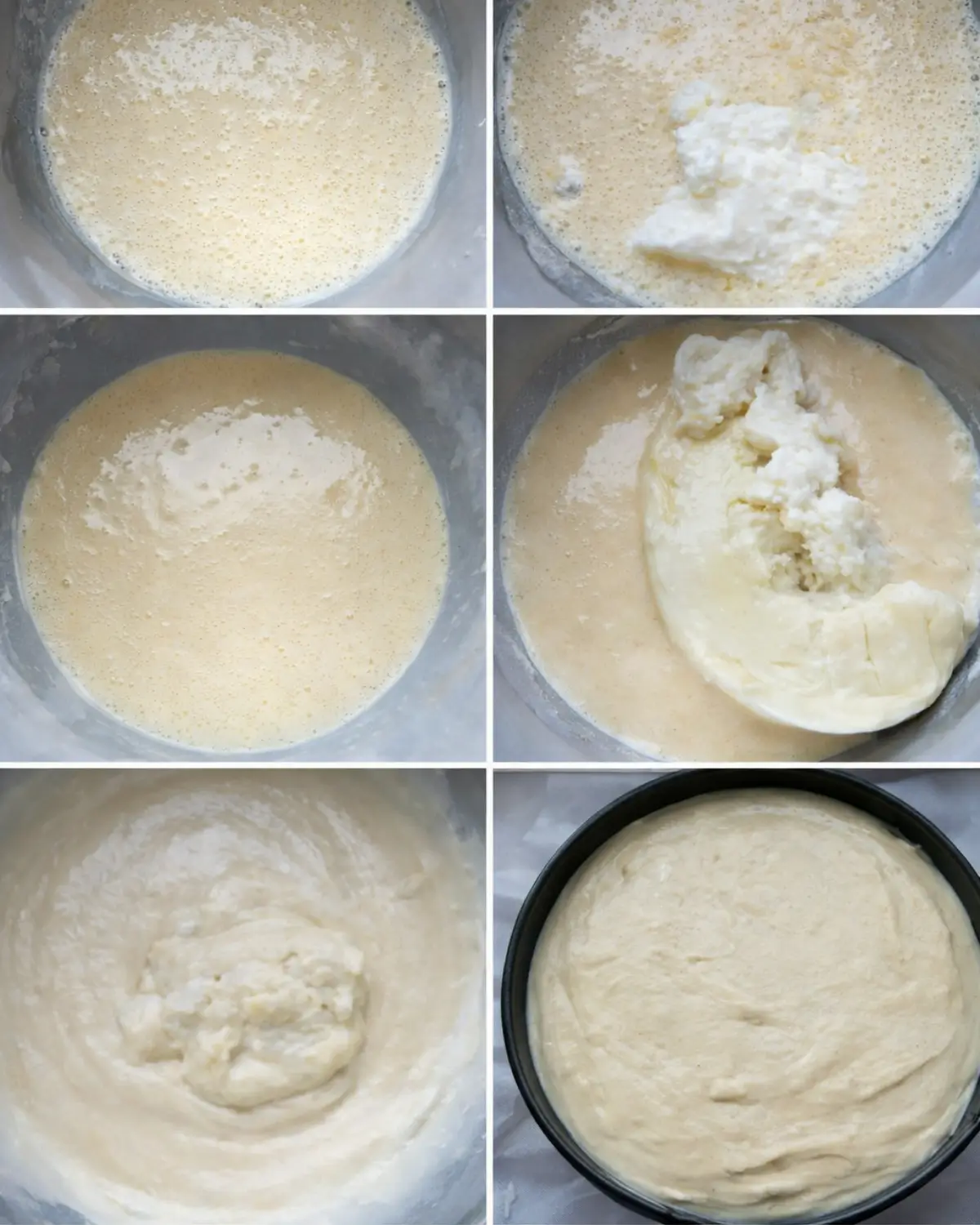
Step 4: In the meantime, whisk the eggs with the sugar until pale. Whisk in the ricotta and vanilla extract. Stir in the limoncello if you’d like a hint of citrus, then mix until smooth.
Step 5: Add the lukewarm semolina to the ricotta mixture and whisk until smooth and well combined.
Step 6: Pour the batter into a greased 22 or 23 cm – 9 inch round springform pan.
Step 7: Bake in a preheated oven at 180°C – 355°F for 60 minutes. It will be slightly wobbly, like a cheesecake.
Step 8: Let it cool completely, then unmould, dust with icing sugar, and serve.
Frequently Asked Questions
Yes. Limoncello is optional, and the cake will still have plenty of flavour from the lemon peel and vanilla. If you prefer, you can replace it with a teaspoon of extra vanilla extract or simply leave it out.
Traditionally, Migliaccio is finished with a dusting of icing sugar. Fresh berries, whipped cream, or grated lemon zest can also be served with each slice as a simple garnish.
Whole milk is the best choice because it gives the cake a creamier texture and fuller flavour. Semi-skimmed milk can also be used, but the texture will be slightly lighter. Avoid skimmed milk, as it may make the cake less tender.
The edges should be set and lightly golden while the centre remains slightly soft. A gentle shake of the pan should show only a small movement in the middle.
Yes. A regular round cake pan works if it is well greased and lined with baking paper. A springform pan simply makes it easier to remove the cake.
Extra Help from the Kitchen
Drain the Ricotta Well – If the ricotta looks watery, place it in a fine mesh strainer set over a bowl for 20–30 minutes before mixing the batter. Draining the excess whey helps the cake bake with a smoother texture and keeps it from turning too soft.
Grease and Line the Pan – Butter the springform pan well, then line the base with baking paper so the cake releases easily after cooling. If excess butter collects in the pan, lightly blot it with a paper towel before pouring in the batter.
Tap the Pan Before Baking – Once the batter is in the pan, gently tap the pan on the counter once or twice. This helps release trapped air bubbles and gives the surface a smoother finish.
Cover if the Top Browns Too Quickly – If the surface starts to brown before the centre finishes baking, loosely place a sheet of foil over the pan. This allows the cake to finish baking without darkening too much on top.
Slice with a Warm Knife – Run a knife under hot water, wipe it dry, then slice the cake. A warm blade cuts through the soft interior more neatly and keeps the slices tidy.
Variations and Twists
Fold in Chocolate Chips – Fold 80–100 g – 3 – 3½ oz dark chocolate chips into the batter before pouring it into the pan. Allow the semolina mixture to cool to lukewarm first so the chips soften gently during baking rather than melting completely into the batter.
Stir in Candied Citrus Fruits – Mix finely chopped candied orange or lemon peel into the ricotta mixture before combining the batter. The small pieces spread the flavour of citrus fruits and a gentle sweetness throughout the cake.
Whisk in Cinnamon – Blend a small pinch of ground cinnamon with the sugar and eggs before bringing the batter together. The warm spice blends naturally with the lemon and vanilla flavours.
Use Orange Zest – Replace the lemon peel with finely grated orange zest or combine both for a layered citrus flavour. Orange contributes a softer citrus taste and gentle sweetness to the cake.
Add Raisins – Soak a small handful of raisins before mixing them into the batter so they bake up plump and tender. Limoncello also works well for soaking and gives the raisins a gentle citrus flavour that complements the lemon in the cake.
Storage and Shelf Life
Store Migliaccio in an airtight container once it has cooled completely. Because it contains ricotta and eggs, it’s best kept in the refrigerator after the first day.
You can leave it at room temperature for up to one day if the kitchen is cool. Keep Migliaccio in the fridge for up to 3 to 5 days, and you may find the texture even better the next day.
If you’d like to store it longer, wrap individual slices well and freeze them for up to 2 to 3 months. Thaw the slices in the fridge overnight and let the cake come back to room temperature before serving.
Classic Italian Desserts to Try Next
Migliaccio Recipe
Ingredients
- 500 ml – 2 cups milk
- 500 ml – 2 cups water
- 50 g – 3 ½ tbsp butter
- peel of 1 lemon
- 1 pinch of salt
- 200 g – 1 ⅔ cups semolina
- 4 eggs
- 300 g – 1 ½ cups granulated sugar
- 350 g – 12 oz ricotta
- 2 tsp vanilla extract
- 1 tbsp limoncello – optional
- icing sugar – to decorate
Instructions
- Put the milk, water, butter, salt, and lemon peel in a pot and bring to a boil.
- Remove the lemon peel and add the semolina while stirring continuously.
- Cook the semolina for 10 minutes, stirring constantly. If lumps form, use a stick mixer to remove them. Let the mixture cool slightly.
- In the meantime, whisk the eggs with the sugar until pale. Whisk in the ricotta and vanilla extract. Stir in the limoncello if you’d like a hint of citrus, then mix until smooth.
- Add the lukewarm semolina to the ricotta mixture and whisk until smooth and well combined.
- Pour the batter into a greased 22 or 23 cm – 9 inch round springform pan.
- Bake in a preheated oven at 180°C – 355°F for 60 minutes. It will be slightly wobbly, like a cheesecake.
- Let it cool completely, then unmould, dust with icing sugar, and serve.













This was excellent! What a great recipe and so easy! My semolina got very thick also, quickly, but no matter, I mixed it all up together and it was just delicious!!
I wish I could post a pic. Not that there’s much left now anyway, lol
Thanks so much!!
This cake is absolutely amazing! I love Italian food. Thank you for the recipe!
Yeah! I am so happy you liked it!! 🙂
Whoops! Fine or course ground semolina?
Hi Terry! In Italy we have only one kind of semolina… it’s more similar to the fine version you find abroad, so that’s what I use. 🙂 Enjoy!
What type of semolina to use? Fine or course bring?
Should the texture be cakey or more wet and dense? It was kind of wet and moist and crumbly and less
like a regular cake. Can you tell me how it’s supposed to be?
It’s perfect! It’s supposed to be wet and moist… sort of like a baked cheesecake. It sounds like you got it perfectly right! I hope you enjoyed it!
I wanted to make this a couple days before a Christmas party, does it keep well?
Hi Maribel
Yes, you can make it a couple of days before. It keeps well at room temperature, unless it’s very hot – in that case, you can put it in the fridge.
when I added the semolina to the water and milk, it became very thick very fast – no way I could stir it for 10 minutes – did I do something wrong?
Hi Roberto, Not sure why that happened, maybe the semolina was coarser than the one I used. Anyhow, it shouldn’t matter, you should still be able to bake it if it’s not too lumpy. If you make it again using the same semolina, stir it just until smooth, then transfer it to the cake tin.
The same thing happened to me, it got thick right away
Just tried this recipe last night and substituted all-purpose flour for the semolina, it came out tasting amazing but not as thick looking, which is probably due to me not using the semolina. Still, it was so tasty, light and creamy. Family and friends loved it!!!!
Hi Manu, this looks so good, but I am gluten intolerant and wondering if I could substitute a finely ground polenta for the semolina…any thoughts?
Hi Anne!
Yesss you can make it with fine corn flour. The method is the same. 🙂 Let me know how it comes out!
Hi Manuela… I truly love your recipes, your presentation, the pictures (they make me drool) and the fact that you’re so giving, humble and sweet makes me get inspired by you… I had a query, I’m a vegetarian and that means I don’t eat and work with eggs… So is there any chance I can prepare this cake by substituting 4 eggs? If so, please help me out… Eagerly awaiting your response…
Hi! Thanks!!! I haven’t tried it myself, but I have read some people do make it eggless. They use 50 grams more of semolina and then 3 tablespoons of cornstarch dissolved in 6 tablespoons of water (added to the ricotta cream). Let me know how it comes out! 🙂
Omg! This looks beyond amazing! I can almost feel the texture from the photograph. Just lovely… If only u lived in India. Sigh!
Aww…why was it so much more fun before than this world of gadgets and virtual stuff?! But thanks for the memories, you are able to share this cake that’s another new and perfect match for our afternoon cuppa!
Julie & Alesah
Gourmet Getaways xx
Any possibility of putting your recipe on a printable 1 page like so many other recipe sites? It would make it even better. Keep up the good work.
Hi Louise! Thanks! There is a print button in the recipe box below the recipe picture (on the right hand side). If you click on it, it will open the print page in a new window, but without the Printer box. Click anywhere inside the recipe to open the print formatting options window. The reason why my recipes often need more than 1 page is because I have step by step pictures in them. I have already asked my plugin developer to add the option to print without images, so hopefully that will come soon. 🙂