

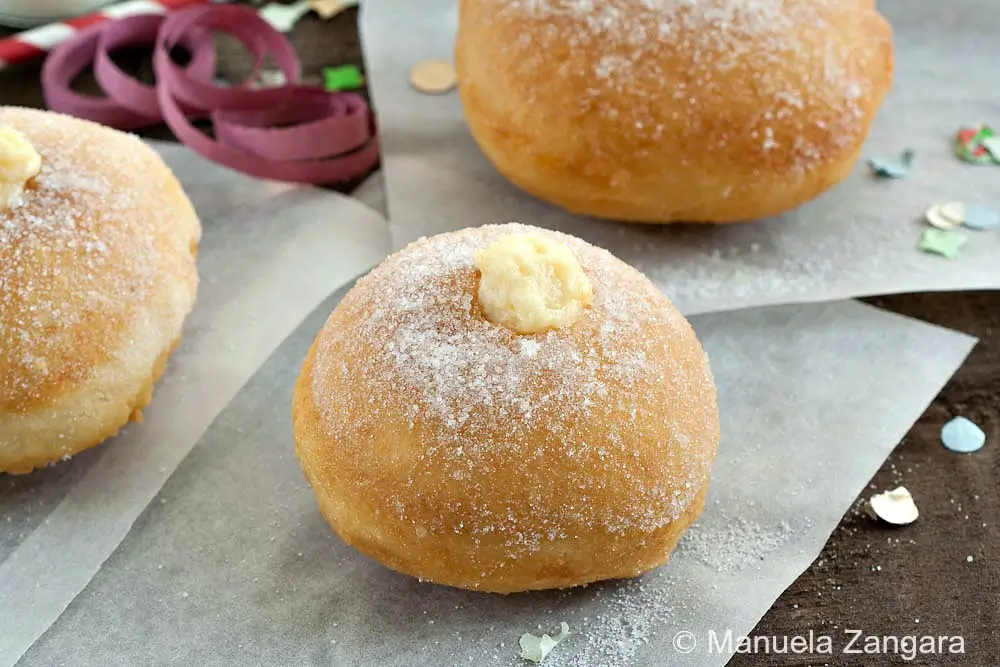
Soft dough, creamy filling, and a light sugar coat make Bomboloni alla Crema such a satisfying treat. Whip up a batch and taste how good homemade can be.
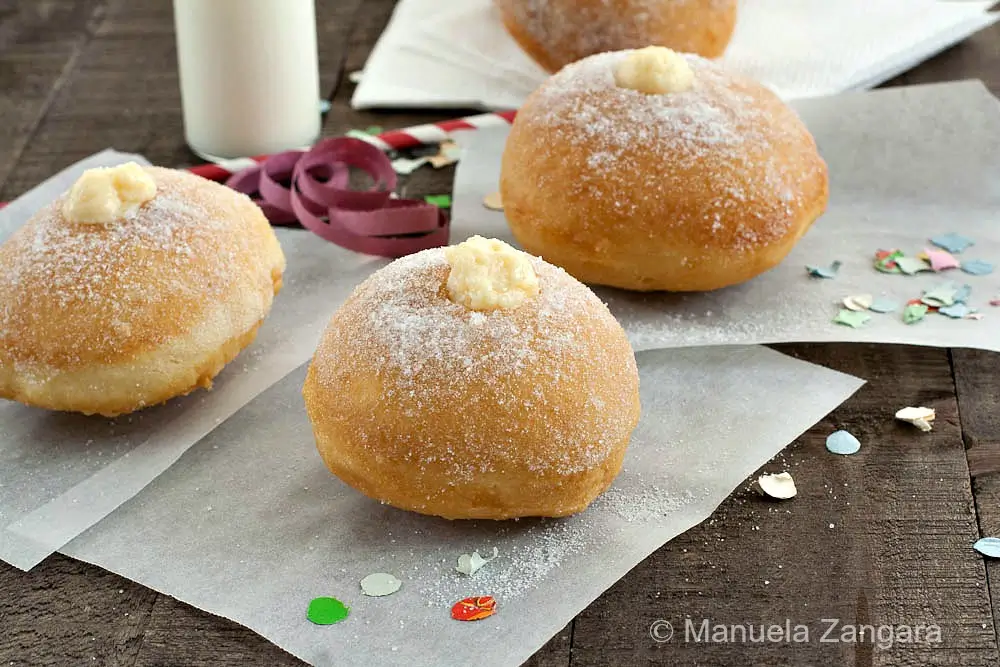
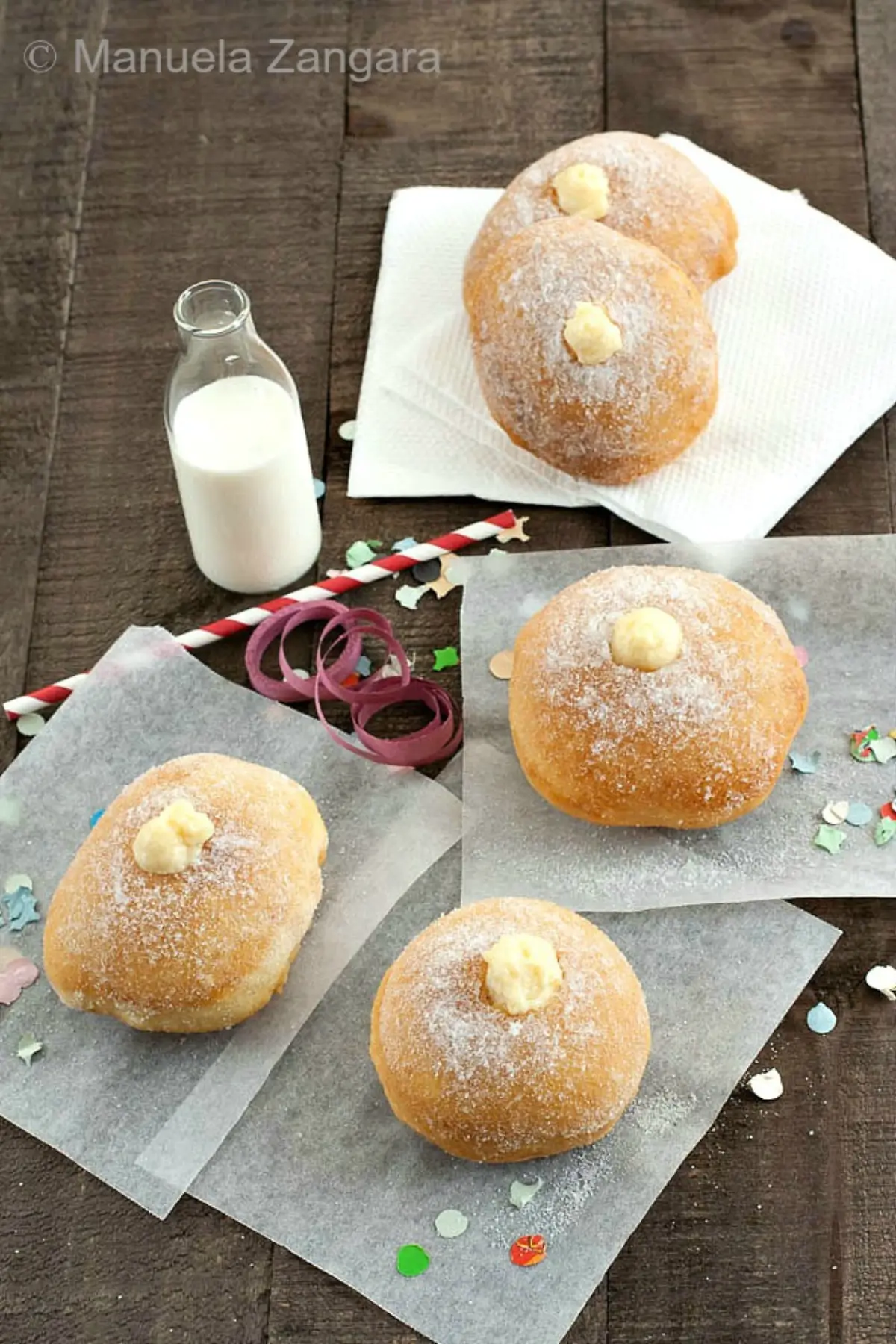
Happy Mardi Gras, everyone! As promised in my last post about Ravioli di Carnevale, I am back with another delicious treat that suits this time of the year, Bomboloni alla Crema, Italian doughnuts filled with pastry cream.
To be truthful, Italians eat Bomboloni all year round, although Carnevale tends to bring more fried sweets to the table, so these feel especially fitting now. These doughnuts are my all-time favourite, and I love them exactly like this, filled with crema pasticcera.

There is nothing better than biting into a warm, airy, light, spongy doughnut with a sugary crust. Finding smooth, silky cream inside makes it even more satisfying.
I also enjoy the fact that they are not overly sweet. The dough has very little sugar, which works well once it is coated in superfine sugar. Doughnuts that are too sweet have never appealed to me. These stay well-balanced, so you can taste both the dough and the filling.
When I was a child, I used to buy Bomboloni at the bakery near my house after school. They felt comforting and homey, and they were always such a treat. Since I cannot find them here in Sydney, I make my own.
I first discovered this recipe in my friend Grace’s book. For those who do not know her, Grace blogs at La mia Vita Dolce and creates the most amazing Italian sweets. They are all the real deal. Her book is highly recommended and, if you enjoy Italian desserts as much as I do, it is a must-have.
When I made Grace’s Bomboloni for the first time, I was blown away by the flavour. They tasted just like the ones I loved as a child. They brought back many sweet memories with every bite, and I found it very hard to stop eating them.
I have made them many times since then, and they are always a huge hit. The doughnuts come out soft, airy, light, and the filling is simply irresistible. You need to make them understand.
Happy Carnevale, my friends, have fun and eat well.
Reasons to Make Bomboloni alla Crema
- Silky crema pasticcera brings a smooth, rich filling that pairs well with the gentle sweetness of the dough.
- Portion size works well for sharing with friends or family, especially during festive days.
- Dough freezes well after the first rise, which helps when planning ahead for gatherings.
Key Ingredients for Bomboloni
Crema Pasticcera
Egg yolks and sugar create a smooth, rich base, while flour thickens the custard, and milk keeps it light enough to pipe. The cream adds a soft contrast to the dough. Choose fresh eggs for better flavour and colour.
Milk
Warm milk supports the yeast and helps the dough rise evenly, giving a soft texture after frying. Whole milk works well here because it adds a fuller taste to the finished bomboloni.
Butter
Butter gives the dough tenderness and helps create a soft bite once fried. Use unsalted butter with a mild aroma so the lemon zest and vanilla stay at the forefront.
Find the complete list with measurements in the recipe card below.
How to Make Bomboloni alla Crema
Crema Pasticcera
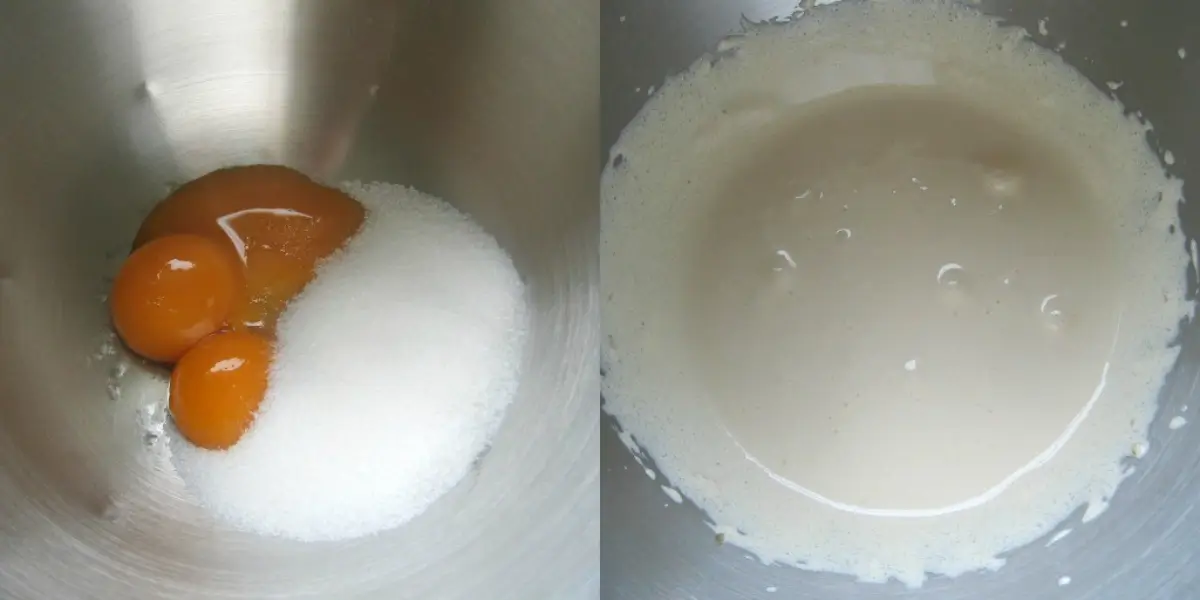
Step 1: Using an electric mixer, whip the egg yolks with the sugar until pale, white, and fluffy.
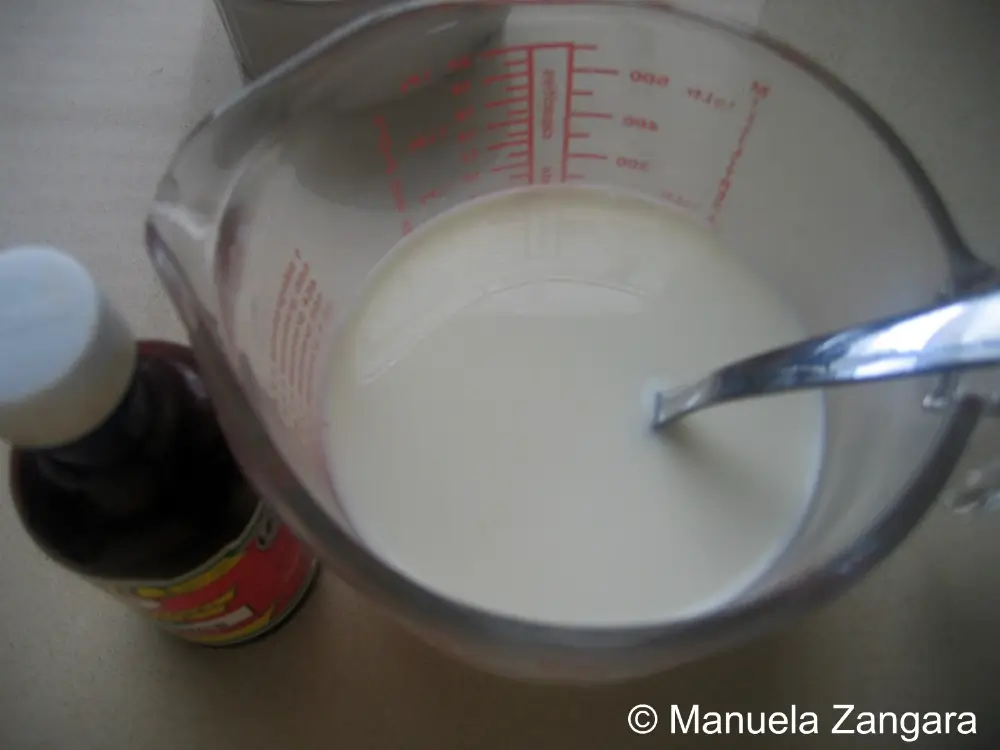
Step 2: Add the vanilla extract to the milk.
Step 3: Slowly pour the milk into the egg mixture while whipping continuously.
Step 4: Add the sifted flour and whip until smooth and well combined.
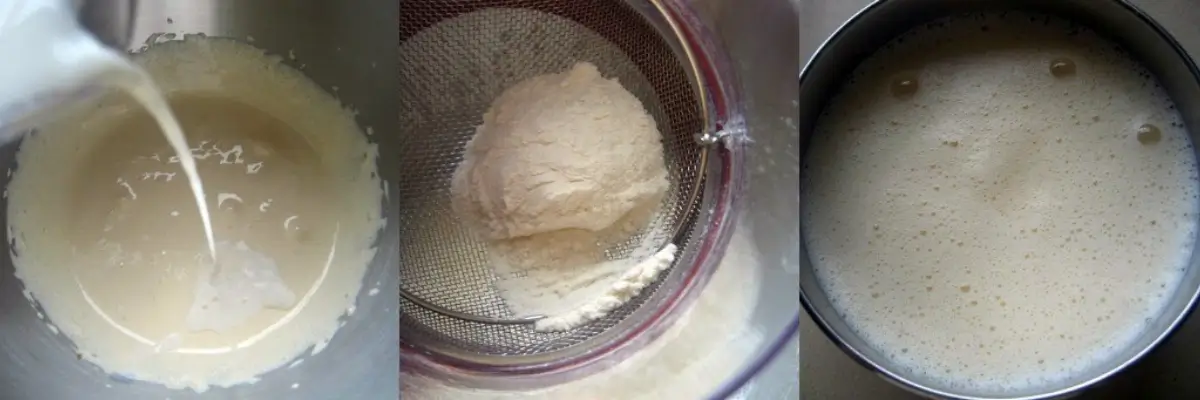
Step 5: Transfer the mixture to a pot, place it over the heat, and bring it to a boil.
Step 6: Simmer for a few minutes, stirring constantly with a whisk, until the cream thickens.

Step 7: Transfer the cream to a bowl and cover it with cling wrap, pressing the wrap directly onto the surface to prevent a skin from forming.
Step 8: Let the cream cool completely before using it.
Bomboloni
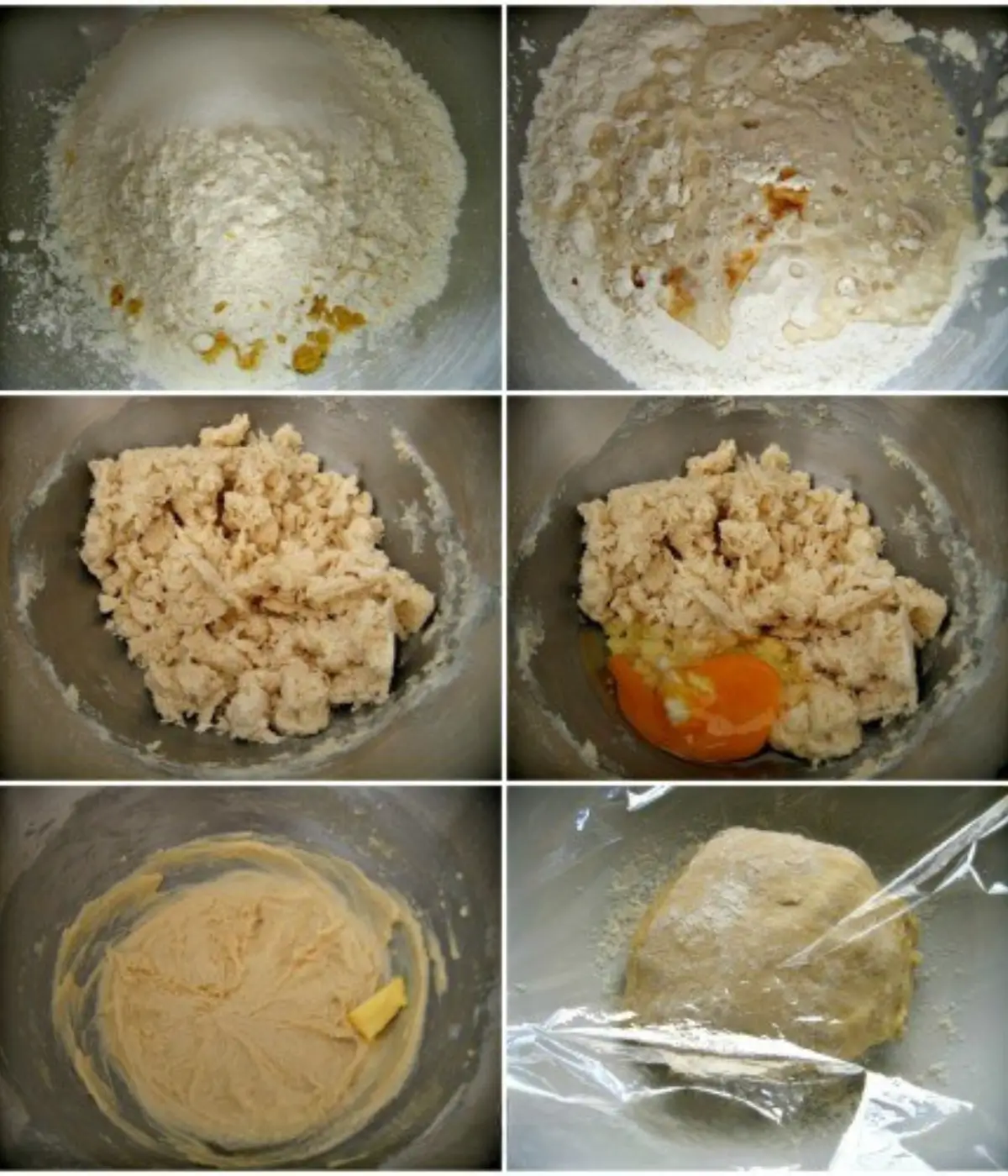
Step 1: Put the flours, sugar, instant yeast, vanilla extract (or vanilla bean seeds), lemon zest, and salt in the bowl of an electric mixer fitted with the paddle attachment. Mix to combine.
Step 2: Pour in the warm milk and quickly knead it into the dry ingredients.
Step 3: Add the eggs all at once and knead until a rough ball of dough forms.
Step 4: Gradually add the butter, one piece at a time, fully incorporating each piece before adding the next.
Step 5: Knead until the dough becomes smooth and elastic (not sticky), about 10 to 15 minutes.
Step 6: Shape the dough into a ball, return it to the bowl, cover with plastic wrap, and leave to rise in a warm place for 1½ to 2 hours – or until doubled in volume.
Step 7: While the dough is proofing, cut square sheets of baking paper about 11 cm – 4.5 inches. You will use these to rest the cut dough rounds on.
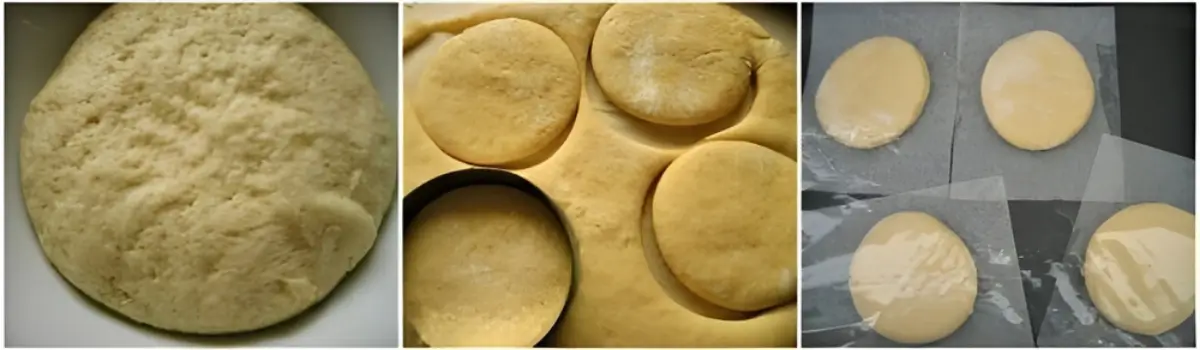
Step 8: When the dough has doubled in volume, transfer it to a clean, floured surface.
Step 9: Roll the dough out to a thickness of about 1 cm – slightly less than ½ inch.
Step 10: Using a cookie cutter or glass, cut out rounds about 7 cm to 7½ cm – 2¾ to 3 inches in diameter, keeping the cuts as close together as possible.
Step 11: Gather the leftover dough, knead briefly to bring it together, return it to the bowl, cover, and leave to rise again in a warm place until doubled. This takes about ½ hour. Roll it out and cut more rounds. Continue until all the dough is used.
Step 12: Place the dough rounds on a deep baking tray lined with the prepared baking paper sheets sprayed lightly with vegetable oil.
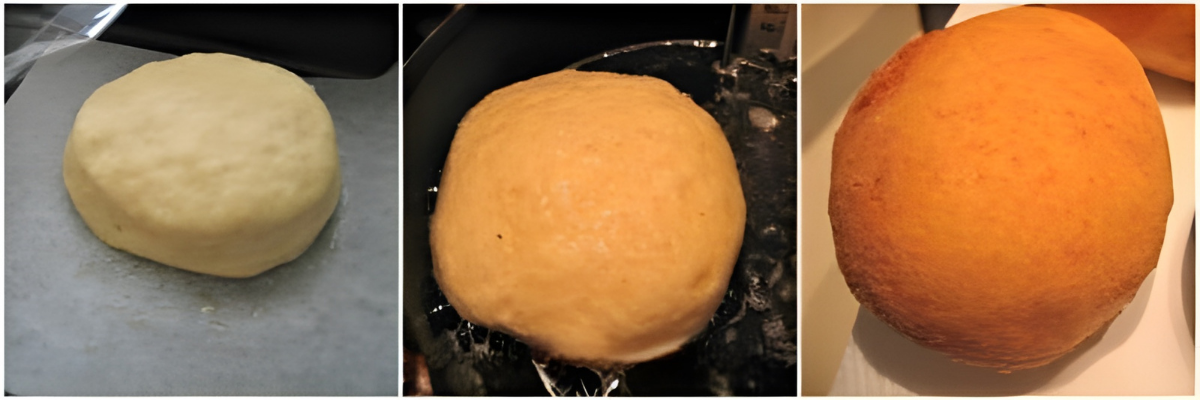
Step 13: Cover the tray with plastic wrap and leave the rounds to rise in a warm place until doubled in volume. They should look full of air.
Note: Rising time is about 1½ to 2 hours. A deep tray helps prevent the tops from sticking to the plastic wrap. If they stick, they may deflate when you remove them.
Step 14: Heat the sunflower oil in a large pot over medium heat to between 160°C and 170°C – 320°F to 340°F (keep an eye on the temperature so the oil stays steady and the bomboloni fry evenly without absorbing excess oil).
Step 15: Prepare two large plates. Line one with 3 to 4 layers of paper towel for draining, and dust the other with a light layer of caster sugar for rolling.
Step 16: Carefully transfer each bombolone into the hot oil by dipping it in with the baking paper. Remove the paper after a few seconds, then continue frying as usual. This method keeps the dough from deforming and keeps the bomboloni fluffy.
Step 17: Fry four to six bomboloni at a time until golden on both sides. This takes 3 to 5 minutes.
Step 18: Remove the bomboloni with a slotted spoon, drain on the paper towels, and immediately roll them in caster sugar until evenly coated.
To Assemble
Step 1: While the bomboloni are still warm, fill them with Crema Pasticcera.
Step 2: Transfer the Crema Pasticcera to a large pastry bag fitted with a ½ cm to 1 cm – ¼ inch to ½ inch plain round tip.
Step 3: Use a sharp paring knife to make a small hole in the centre of the top of each bombolone.
Step 4: Insert the pastry tip into the hole and pipe the cream until the bombolone feels heavy and a mound of pastry cream forms on top.
Step 5: Bomboloni are best enjoyed on the day they are made. Serve immediately.
Frequently Asked Questions
No. You can knead by hand for 10–15 minutes until the dough becomes smooth, elastic, and slightly tacky. A wooden spoon helps bring the dough together before you transfer it to the bench for kneading.
Technically, yes, but frying gives the signature light, airy dough and crisp exterior. Baking tends to produce a denser, bread-like result and changes the texture significantly.
Use a neutral oil such as sunflower and heat it to 160–170 °C – 320–340 °F. Drop a small piece of dough in the oil; gentle bubbling shows the temperature is right.
Yes. Bread flour alone works, though the dough may feel slightly firmer because of the higher protein content. Knead until smooth and elastic to help the dough relax before rising
Extra Help from the Kitchen
Keep the Dough Bowl Warm – Place the covered bowl on a folded kitchen towel to maintain a steady temperature during the rise, especially in cooler kitchens.
Test Oil Temperature with a Small Dough Piece – Drop a tiny pinch of dough into the oil before frying. Gentle, steady bubbles confirm the oil is within the ideal range.
Use a Bench Scraper for Clean Transfers – Slide a bench scraper under each paper square to move shaped rounds without compressing the dough.
Chill the Piping Bag Briefly – Rest the filled piping bag in the fridge for 5–10 minutes to help the crema pasticcera firm up for smoother filling.
Rotate Bomboloni in the Oil Gently – Nudge each piece with chopsticks or a skimmer to prevent uneven colouring and to help the dough rise evenly in the oil.
Variations and Twists
Chantilly / Diplomat-Cream Bomboloni – Fold an equal amount of whipped cream into the cooled crema pasticcera to create a lighter filling with a softer texture.
Chocolate-Pastry-Cream Bomboloni – Mix 80–100 g – 3–3.5 oz melted dark chocolate into the warm crema pasticcera before cooling. The chocolate enriches the cream and keeps it smooth for piping.
Citrus-Zest Bomboloni – Add the zest of one extra lemon or orange to the dough or to the crema pasticcera to give a brighter aroma with a gentle citrus note.
Jam-Filled Bomboloni – Pipe 1–2 teaspoons apricot, strawberry or raspberry jam into each bombolone to create a brighter, fruit-based option with a simple finish.
Chocolate-Glazed Bomboloni – Dip the cooled, filled bomboloni into melted chocolate to create a smooth coating with a richer flavour.
Storage and Shelf Life
Store cream-filled bomboloni in an airtight container in the refrigerator and use within 3–4 days. Keep unfilled bomboloni at room temperature in an airtight container for 1–2 days and fill them only when ready to serve.
Freeze plain unfilled dough or unfilled fried bomboloni by wrapping well and storing for up to 2–3 months. Thaw dough overnight in the fridge before shaping and frying.
Thaw fried but unfilled bomboloni at room temperature before filling. Warm unfilled bomboloni in a low oven at 150°C – 300°F for a few minutes to refresh the texture before adding the crema pasticcera.
More Classic Sweets You May Enjoy
Bomboloni alla Crema Recipe
Soft dough, creamy filling, and a light sugar coat make Bomboloni alla Crema such a satisfying treat. Whip up a batch and taste how good homemade can be.
Ingredients
Crema Pasticcera
- 500 ml – 2 cups milk
- 50 g – about ¼ cup flour – sifted
- 6 egg yolks
- 150 g – ½ cup + 2 tbsp sugar
- 1 tsp vanilla extract
Bomboloni
- 250 g – 2 cups bread flour
- 250 g – 2 cups Italian “00” flour OR all-purpose flour
- 50 g – about ¼ cup caster superfine sugar
- 8 g – 1 packet instant yeast
- seeds from 1 vanilla bean OR 1 tsp vanilla extract
- zest of 1 lemon
- pinch of salt
- 250 ml – about 8½ oz warm milk – between 40°C and 43°C – 105°F and 110°F
- 3 large eggs
- 50 g – 3½ tbsp unsalted butter – cut into 4 pieces, softened
- vegetable spray
- sunflower oil – for frying
- caster superfine sugar – extra, for rolling
Instructions
Crema Pasticcera
-
Using an electric mixer, whip the egg yolks with the sugar until pale, white, and fluffy.
-
Add the vanilla extract to the milk.
-
Slowly pour the milk into the egg mixture while whipping continuously.
-
Add the sifted flour and whip until smooth and well combined.
-
Transfer the mixture to a pot, place it over the heat, and bring it to a boil.
-
Simmer for a few minutes, stirring constantly with a whisk, until the cream thickens.
-
Transfer the cream to a bowl and cover it with cling wrap, pressing the wrap directly onto the surface to prevent a skin from forming.
-
Let the cream cool completely before using it.
Bomboloni
-
Put the flours, sugar, instant yeast, vanilla extract (or vanilla bean seeds), lemon zest, and salt in the bowl of an electric mixer fitted with the paddle attachment. Mix to combine.
-
Pour in the warm milk and quickly knead it into the dry ingredients.
-
Add the eggs all at once and knead until a rough ball of dough forms.
-
Gradually add the butter, one piece at a time, fully incorporating each piece before adding the next.
-
Knead until the dough becomes smooth and elastic (not sticky), about 10 to 15 minutes.
-
Shape the dough into a ball, return it to the bowl, cover with plastic wrap, and leave to rise in a warm place for 1½ to 2 hours – or until doubled in volume.
-
While the dough is proofing, cut square sheets of baking paper about 11 cm – 4.5 inches. You will use these to rest the cut dough rounds on.
-
When the dough has doubled in volume, transfer it to a clean, floured surface.
-
Roll the dough out to a thickness of about 1 cm – slightly less than ½ inch.
-
Using a cookie cutter or glass, cut out rounds about 7 cm to 7½ cm – 2¾ to 3 inches in diameter, keeping the cuts as close together as possible.
-
Gather the leftover dough, knead briefly to bring it together, return it to the bowl, cover, and leave to rise again in a warm place until doubled. This takes about ½ hour. Roll it out and cut more rounds. Continue until all the dough is used.
-
Place the dough rounds on a deep baking tray lined with the prepared baking paper sheets sprayed lightly with vegetable oil.
-
Cover the tray with plastic wrap and leave the rounds to rise in a warm place until doubled in volume. They should look full of air.
Note: Rising time is about 1½ to 2 hours. A deep tray helps prevent the tops from sticking to the plastic wrap. If they stick, they may deflate when you remove them.
-
Heat the sunflower oil in a large pot over medium heat to between 160°C and 170°C – 320°F to 340°F (keep an eye on the temperature so the oil stays steady and the bomboloni fry evenly without absorbing excess oil).
-
Prepare two large plates. Line one with 3 to 4 layers of paper towel for draining, and dust the other with a light layer of caster sugar for rolling.
-
Carefully transfer each bombolone into the hot oil by dipping it in with the baking paper. Remove the paper after a few seconds, then continue frying as usual. This method keeps the dough from deforming and keeps the bomboloni fluffy.
-
Fry four to six bomboloni at a time until golden on both sides. This takes 3 to 5 minutes.
-
Remove the bomboloni with a slotted spoon, drain on the paper towels, and immediately roll them in caster sugar until evenly coated.
To Assemble
-
While the bomboloni are still warm, fill them with Crema Pasticcera.
-
Transfer the Crema Pasticcera to a large pastry bag fitted with a ½ cm to 1 cm – ¼ inch to ½ inch plain round tip.
-
Use a sharp paring knife to make a small hole in the centre of the top of each bombolone.
-
Insert the pastry tip into the hole and pipe the cream until the bombolone feels heavy and a mound of pastry cream forms on top.
-
Bomboloni are best enjoyed on the day they are made. Serve immediately.

Love travelling as much as cooking?
Many of the recipes I share are inspired by places I’ve visited around the world. On Travel with Manu you’ll find destination guides, itineraries and travel inspiration to help you plan your next adventure.











how many does this make
Ciao Manu,
Che bella ricetta! Grazie. Ti faro’ sapere se la provo fare.
Sono americana ma ho visuto quattro anni in italia. Mi fa piacere trovare la ricetta per i bomboloni, che ricordo di aver mangiato a volte quando stavo a Roma.
Ciao Susannah!
Grazie mille per il messaggio! Sono molto contenta che ti piaccia la ricetta dei bomboloni (io li adoro!).
Complimenti per il tuo italiano, sei bravissima! <3
may I use 500grams of all purpose flour in the absence of bread flour?
Yes, you can definitely use all purpose flour for this recipe, I often do. 🙂
Hi Manuela,
I tried this recipe today and when I cut the dough into circle shape they hold nice shape but when I put it into proofing they became a big circle with thickness less than 1 cm, not like your picture. What did I do wrong?
Please let me know.
Thank you in advance.
Regards,
Hi Diana
It sounds like there was a problem with the yeast. Did the dough double in volume before you rolled it? Did you leave it to proof for a second time after cutting the rounds? Maybe the air temperature was too cold/humid and it interfered with the proofing?
Just yesterday I was on the cooking channel’s website and found a video about Bomboloni. Looks like I’m meant to have these in my life!
Good Morning Manuela,
Your bomboloni look amazing! One of the things I enjoy about food blogging is being able to share family favourites but what I enjoy even more is when others enjoy them as much as we do, I’m so happy that you and your family enjoyed them!
Hi Bea. If you could send me an email (graces @ gracessweetlife.com) with your mailing address it would be my pleasure to send you a signed copy.
I was wondering if there is any way to get a signed copy of G race’s cookbook? I would love to have one if at all possible. Please let me know. Thanks for sharing this recipe and cookbook!
Perfetto!
i love bomboloni. they look great!
Thank you ever so much for giving not only the metric measurements, but the others also. I was so excited to see the recipe and extra excited that I would be able to make it without spending the day translating the measurements.
Yum, more fried goodness! And I couldn’t agree more, I dislike sweets that are too sweet. Balance is key. These remind me a bit of a deep fried treat that we used to enjoy for St. Joseph’s Day in Rome, called bignè di san Giuseppe. They were wonderful.
I also dislike sweets that have too much sugar. I love crostoli, I make them often.
How many does this make?
Buon martedì grasso! I just posted a picture of carnival treats with streamers and confetti… how funny! I love bomboloni!!!