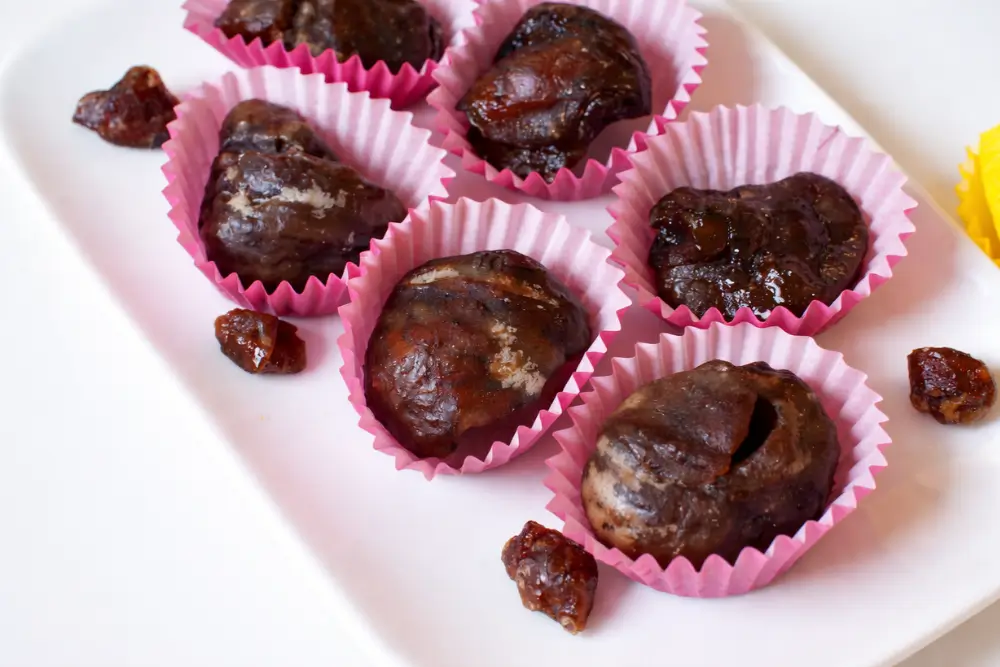
Soft, glossy Marrons Glacés with a delicate vanilla scent and gentle sweetness, slowly infused in syrup, perfect for serving at Christmas or alongside coffee after a special meal.
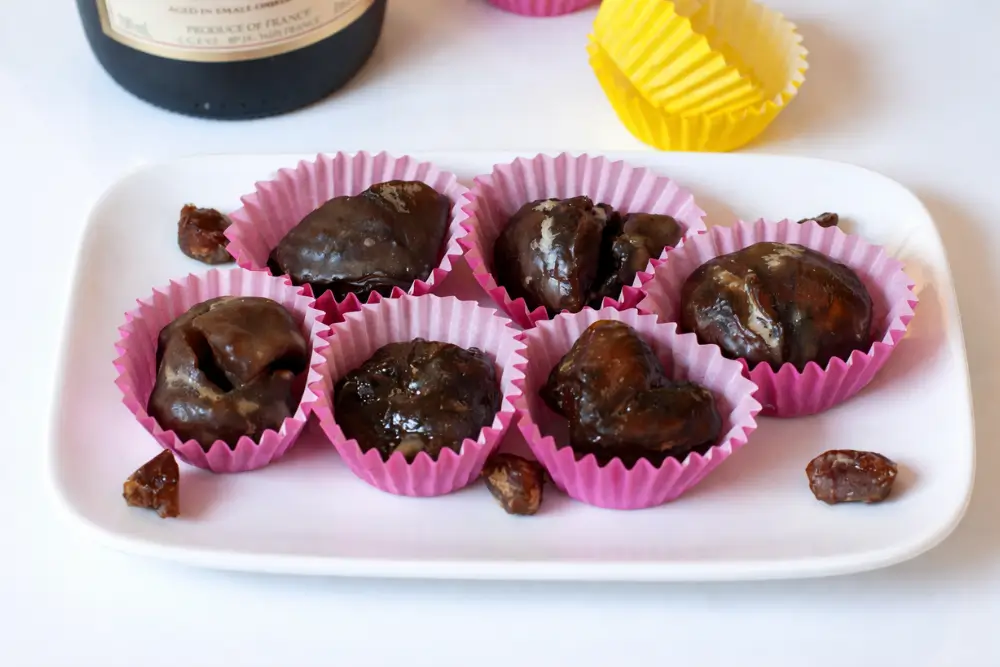
Whenever I think of marrons glacés, I think of Christmas. They aren’t Italian, as you’d probably guess from the name.
These little chestnut sweets are a very common treat during Christmas in Italy.
I’m a big fan of chestnuts in general. I really enjoy chestnut sweets of all kinds. But coming across marrons glacés here in Sydney isn’t that easy.
And when you do find them, they’re quite expensive. So I decided to try making my own.
Making marrons glacés is actually quite simple. The only challenge is finding the right chestnuts. They need to be large and of good quality. Otherwise, they won’t hold their shape during the process.
I have to say, I haven’t found perfect chestnuts yet. The ones available here aren’t very big. They also tend to be quite brittle. Because of this, they often break while cooking.
I also tried using pre-cooked chestnuts. But those were quite small as well.
Even so, the flavour turned out exactly as it should. Sweet, soft, and delicate. They disappeared in minutes.
You can serve them at Christmas. Or use them to make Mont Blanc or my Easy Meringue Pie.
What Are Marrons Glacés?
Marrons glacés are whole chestnuts slowly candied in sugar syrup until soft, glossy, and gently sweet. The name is French and translates to “candied chestnuts.”
They come from France, where they’ve long been a festive treat, especially around Christmas. The chestnuts are carefully peeled and soaked in syrup over a few days, which gives them a smooth texture and a light glaze.
They’re not overly sweet and have a more delicate flavour, with a warm, nutty taste. These candied chestnuts are usually enjoyed on their own or given as gifts in elegant boxes.
Why You’ll Love These Candied Chestnuts
- Easy to portion individually, which makes it practical for serving guests or packing as gifts.
- Can be made in advance for holidays without last-minute stress in the kitchen.
- Keeps well in the fridge compared to many fresh desserts that need to be eaten immediately.
Key Ingredients for Marrons Glacés
Chestnuts
Chestnuts give the final texture and flavour, becoming soft and slightly creamy after soaking in syrup. I used the largest fresh chestnuts I could find, even if they weren’t perfect. Look for ones that feel heavy with smooth shells, as they’re less likely to break during cooking.
Brown Sugar
Adds a deeper sweetness with a light caramel flavour as the syrup develops. Dark brown sugar works well if you want a slightly richer taste, while regular brown sugar keeps it more balanced.
Vanilla Extract
Vanilla adds a gentle aroma that rounds out the sweetness. A good quality extract makes a difference, or you can use a vanilla bean for a more natural flavour.
Find the complete list with measurements in the recipe card below.
How to Make Marrons Glacés
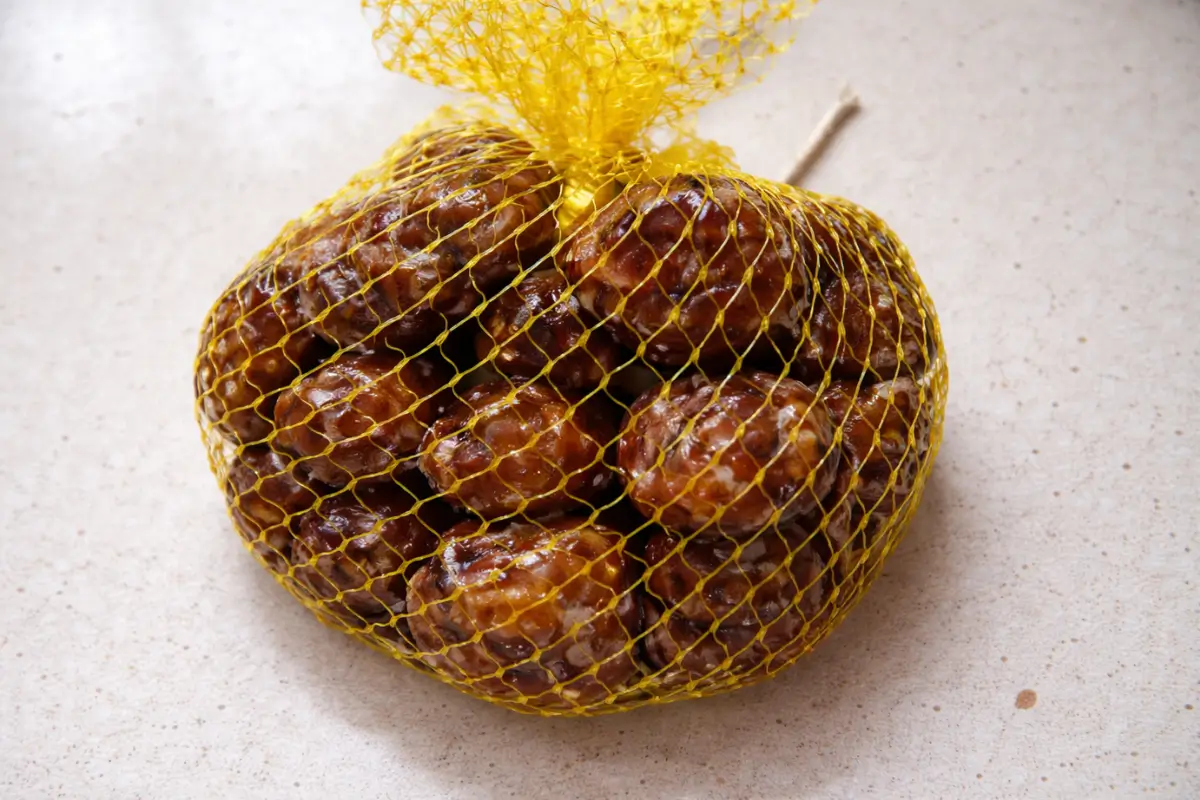
Step 1: Place the peeled chestnuts in a mesh bag to help keep them intact during cooking and make them easier to lift out of the syrup. Set aside.
Step 2: Put the brown sugar, water, and vanilla extract in a pot and bring to a boil. Let the syrup boil for 4 to 5 minutes, then add the chestnuts. Boil for 1 minute, then turn off the heat. Weigh the chestnuts down with a small plate or similar weight. Cover the pot and leave them to steep for 24 hours.
Step 3: The next day, remove the chestnuts and set them aside. Reheat the syrup and bring it to a boil. Simmer for 4 to 5 minutes, then return the chestnuts and simmer for 3 minutes. Turn off the heat, weigh them down again, cover, and leave them to steep for another 24 hours.
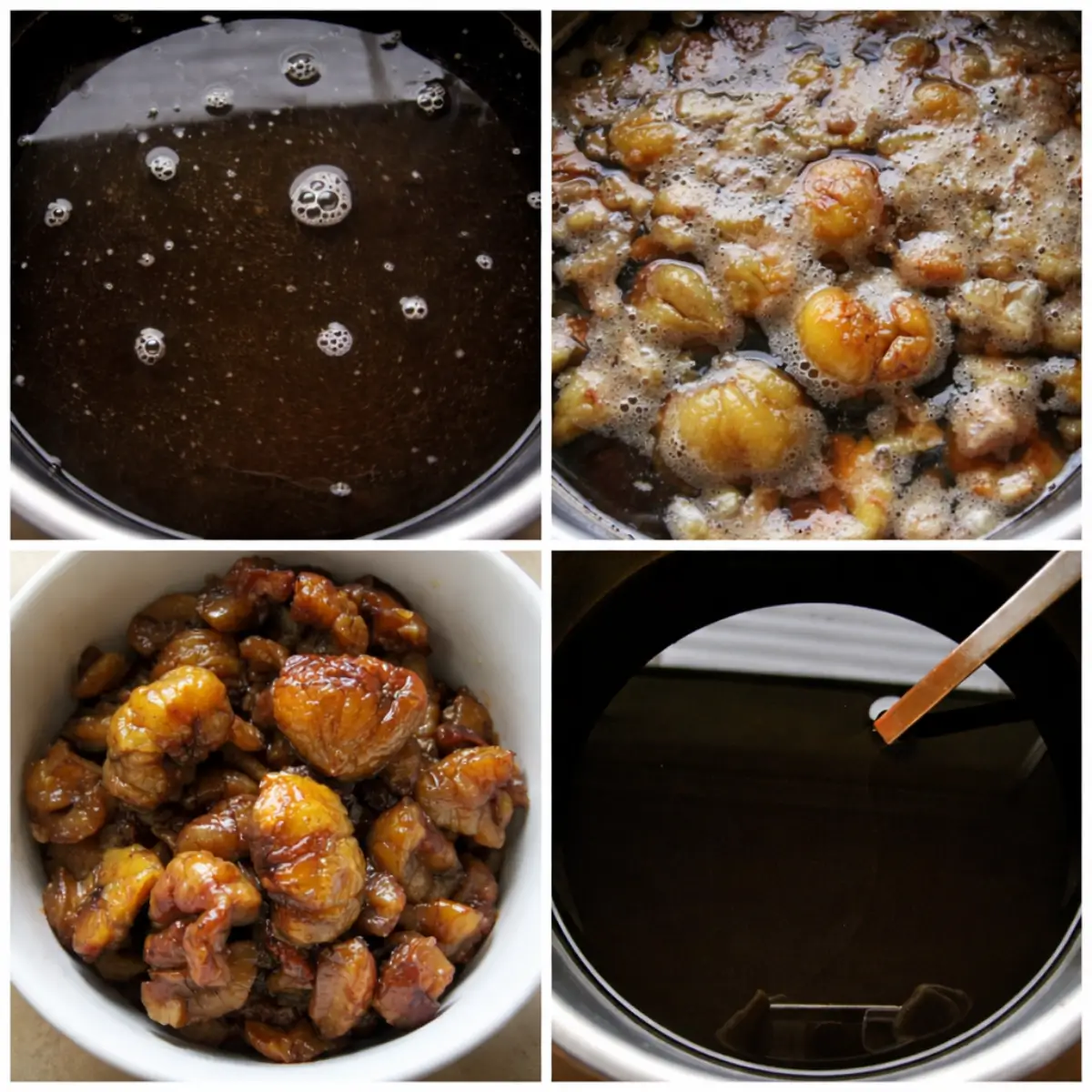
Step 4: Repeat this process daily until the chestnuts look glazed and glossy. This usually takes about 4 days.
Step 5: When ready, drain the marrons glacés and place them on a wire rack to dry slightly.
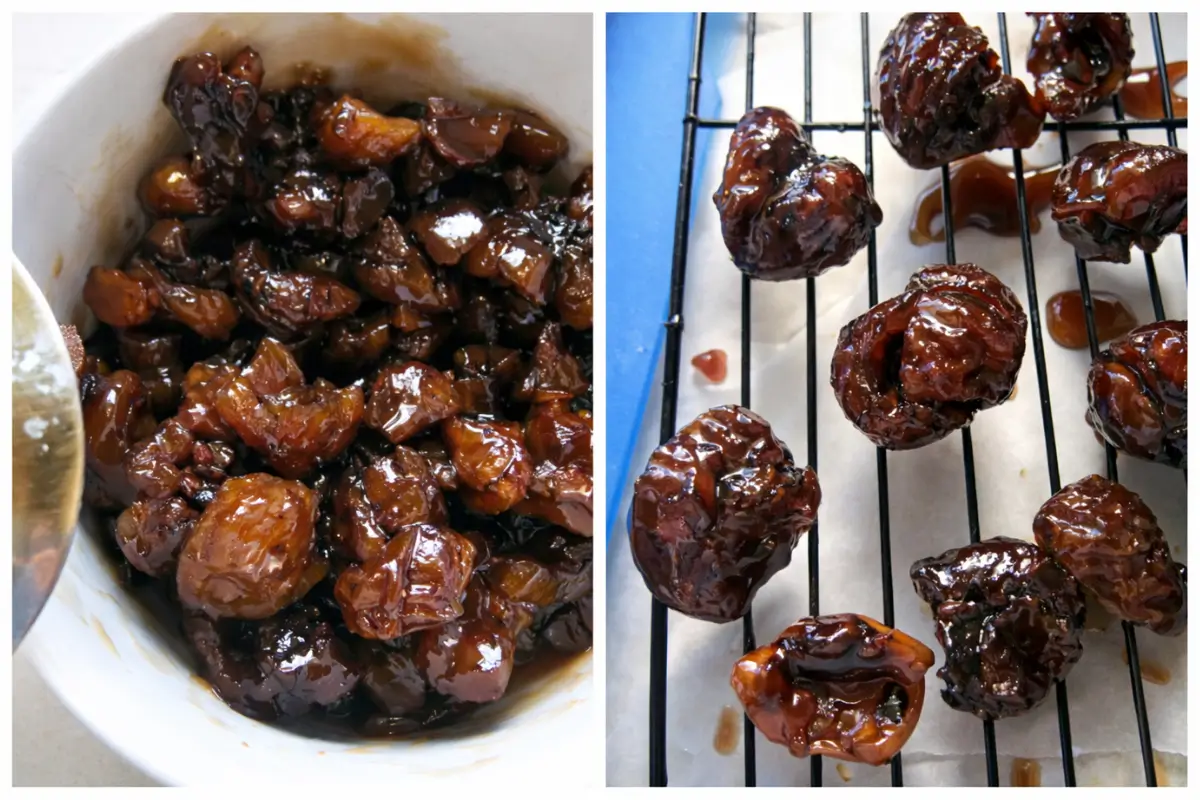
Step 6: Mix icing sugar with a little water to form a light glaze, then coat the marrons evenly. Leave them to dry on the wire rack for 24 hours before eating or storing in an airtight container.
Frequently Asked Questions
Yes, but with caution. They are softer and more fragile, so they can break more easily during the simmering and steeping process. Handle them gently when transferring, as they won’t hold their shape as well as fresh chestnuts.
The glossy finish develops gradually as the chestnuts absorb the syrup over each reheating and resting cycle. Give them enough time and repeat the process fully so the glaze builds up evenly.
You can, but it becomes harder to handle the chestnuts during repeated cooking. The bag helps keep them intact and makes lifting easier.
They should look glossy and feel soft but still hold their shape. The syrup should be well absorbed after the final soaking stage.
No, dried chestnuts are not suitable for this recipe. Even after soaking, they don’t return to the same texture as fresh chestnuts and tend to break down during the simmering and steeping process.
Extra Help from the Kitchen
Test Chestnuts Before Starting – Cut open 1–2 raw chestnuts to check freshness. If they look dry or have gaps inside, they won’t hold their shape well during the process.
Keep Chestnuts Fully Submerged – Make sure the chestnuts remain fully covered with syrup at every stage. If they are exposed, they can dry out and become firm. Add a little water if needed to keep them soft.
Handle the Bag Gently – When lifting the mesh bag, support it from underneath instead of pulling from the top to avoid breaking the chestnuts.
Avoid Overcrowding the Pot – Use a wide pot so the chestnuts can sit in a single layer. This allows for more even cooking and lowers the chance of splitting.
Let Them Dry Properly – After the final glaze, give them enough space on the rack so air can circulate. This helps the outer coating set without becoming sticky.
Variations and Twists
Add Rum – Add a small amount of rum during the final syrup stage to deepen flavour without changing the method.
Use Vanilla Bean Instead of Extract – Replace vanilla extract with a split vanilla pod and let it steep in the syrup for a more rounded flavour.
Swap Brown Sugar for White Sugar – Replace brown sugar with white sugar for a lighter, more classic finish, closer to traditional French-style marrons glacés.
Skip the Final Glaze – Leave the marrons glacés without the icing sugar coating for a more traditional look with a natural glossy finish from the syrup.
Storage Information
Store marrons glacés in an airtight container in a cool, dry place for up to 3–5 days at room temperature.
For longer storage, keep them in the fridge at around 4–6°C for up to 1–2 weeks, making sure they are well sealed to prevent drying.
They can be frozen for up to 1 month, although the texture may change slightly. Wrap them well or place them in a sealed container to protect them. Thaw slowly in the fridge before serving.
Avoid reheating, as this can cause the chestnuts to break and affect their texture.
Other Chestnut-Based Treats and Desserts You May Like
Marrons Glacés Recipe (Candied Chestnuts)
Equipment
Ingredients
- 1 kg – 2.2 lbs large chestnuts – peeled
- 2 litres – 8 cups water
- 2 kg – 4.4 lbs brown sugar
- 1 tsp vanilla extract
- icing sugar – for glazing
Instructions
- Place the peeled chestnuts in a mesh bag to help keep them intact during cooking and make them easier to lift out of the syrup. Set aside.
- Put the brown sugar, water, and vanilla extract in a pot and bring to a boil. Let the syrup boil for 4 to 5 minutes, then add the chestnuts. Boil for 1 minute, then turn off the heat. Weigh the chestnuts down with a small plate or similar weight. Cover the pot and leave them to steep for 24 hours.
- The next day, remove the chestnuts and set them aside. Reheat the syrup and bring it to a boil. Simmer for 4 to 5 minutes, then return the chestnuts and simmer for 3 minutes. Turn off the heat, weigh them down again, cover, and leave them to steep for another 24 hours.
- Repeat this process daily until the chestnuts look glazed and glossy. This usually takes about 4 days.
- When ready, drain the marrons glacés and place them on a wire rack to dry slightly.
- Mix icing sugar with a little water to form a light glaze, then coat the marrons evenly. Leave them to dry on the wire rack for 24 hours before eating or storing in an airtight container.
Notes
- If using raw (unpeeled) chestnuts, score them on the flat side, cutting halfway through the shell until you reach the flesh. Boil them for 10 minutes, then turn off the heat. Peel them while still hot, as they become harder to peel once cooled. Keep the remaining chestnuts in the hot water while you work. Remove both the outer shell and the inner skin.
- I like the look of marrons glacés without the icing sugar glaze, as they look shinier. However, if you’re not going to eat them straight away, I suggest coating them with the glaze, as it helps keep them softer.
- They keep fresh for only a few days, so it’s best not to make too many, though mine always disappear quite quickly!

Love travelling as much as cooking?
Many of the recipes I share are inspired by places I’ve visited around the world. On Travel with Manu you’ll find destination guides, itineraries and travel inspiration to help you plan your next adventure.











Actually marrons glaces are a Northern Italian (Piedmont region) and Southern French specialty. Both areas are chestnut growing areas. Marroni is the type of chestnut used for this sweet treat.
Dear Sir/Madam
How can I prevent my marrons glace from drying out? I would like them to come out tender rather than dry. Where in the process do I go wrong?
Please, advice. The most important tip for me is to keep the chestnuts from drying out and becoming very hard.
Thank you so much,
Sam
I thought making marrons glacés was a really complex, lengthy procedure. Well, lengthy it is but easier than I thought… Do you think one could buy dried chestnuts and soak them?