

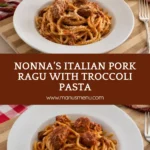
Slow-cooked pork ribs and sausage give Nonna’s Italian Pork Ragu with Troccoli Pasta a rich, hearty flavour that pairs well with fresh homemade Troccoli alla Chitarra.
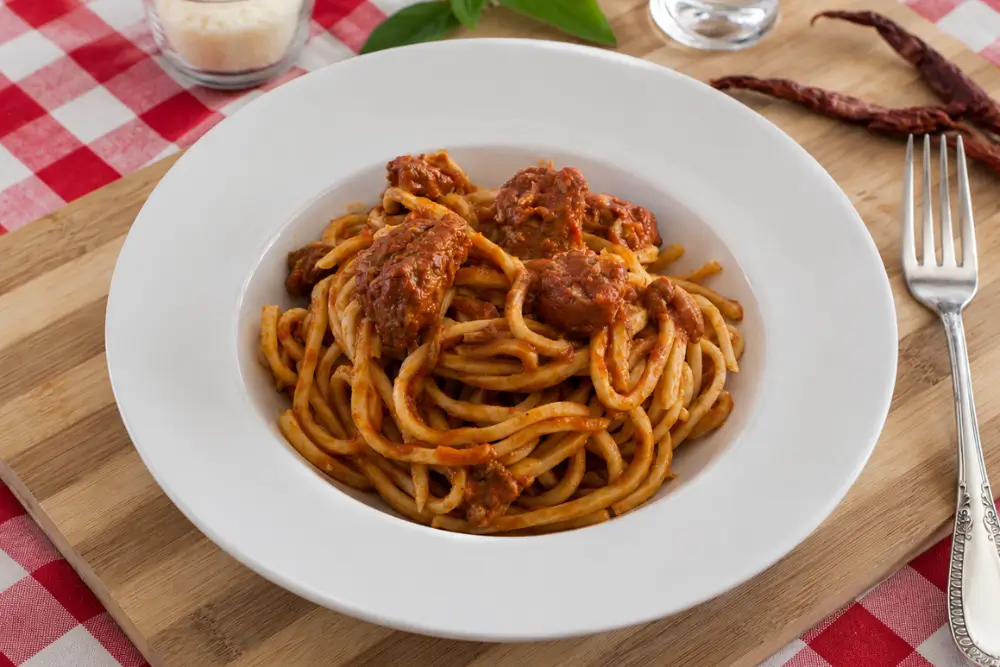
This Nonna’s Italian Pork Ragu with Troccoli Pasta recipe is very dear to me. Pork ragù is a traditional Italian meat sauce slowly simmered with tomato, pork, and sausage until rich and thick, and this was my grandmother Maria’s speciality.
I learnt how to make this from my grandmother, and it quickly became my favourite among all the delicious dishes she prepared. She always cooked this Pork Ragu whenever I visited her in Palermo.
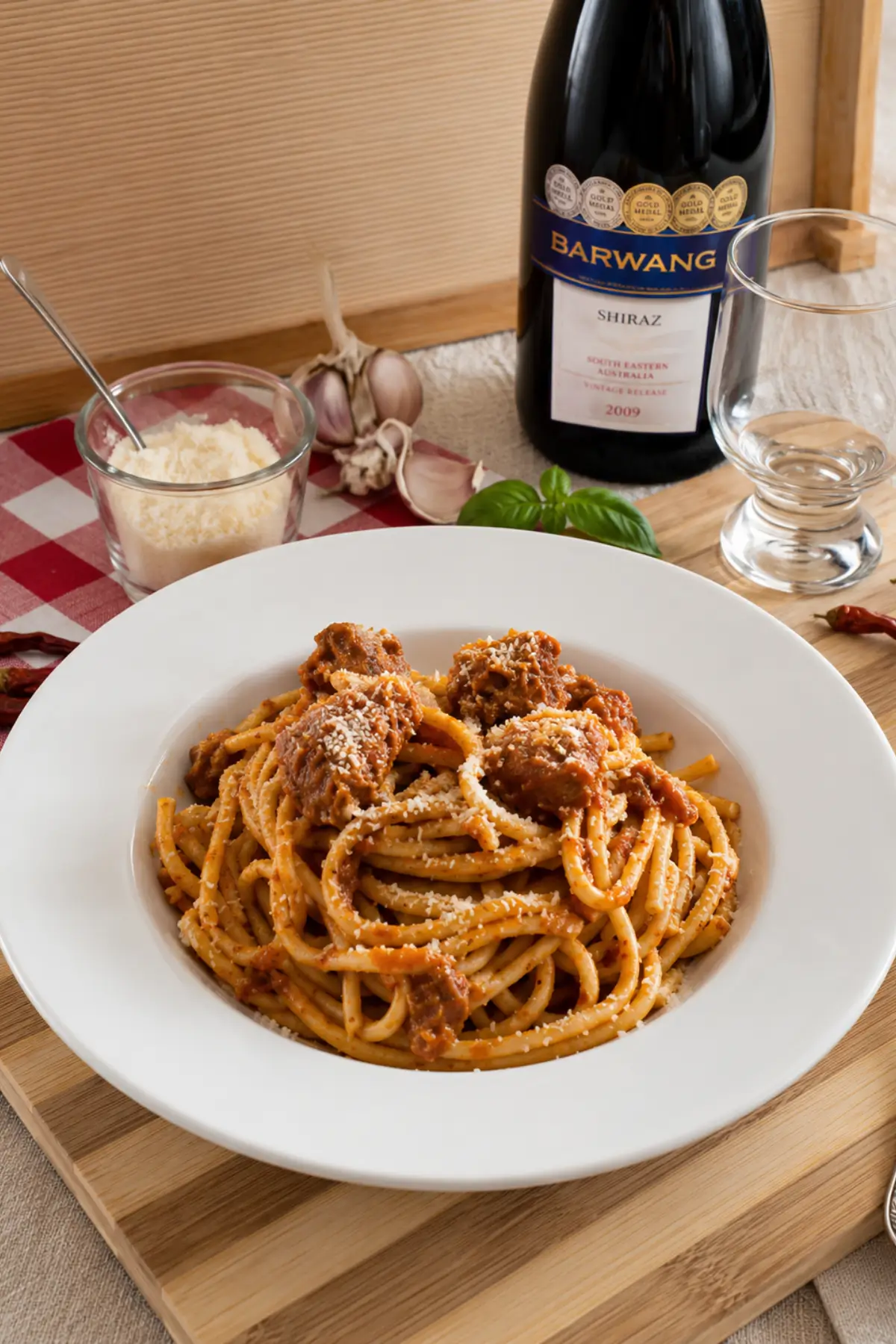
I also incorporated my aunt Stella’s pasta-making skills into this recipe. Years ago, she gifted me a chitarra, and I still love serving homemade Troccoli alla Chitarra with this sauce.
This is a hearty, traditional dish where the sauce is served with pasta first, while the meat can be enjoyed the following day.
Personally, I like mixing some of the meat through the pasta as well. This Pork Ragu with Troccoli Pasta is traditional Italian comfort food, perfect for slow family lunches around the table. Buon appetito!
Why We Love This Homemade Ragu
- Large batches make this recipe particularly good for family gatherings or weekend meals.
- Extra meat served separately turns one pot of ragù into a second meal the next day.
- Fresh pasta gives the dish a softer and slightly chewier texture than dried pasta.
Key Ingredients for Pork Ragu with Troccoli Pasta
Sicilian Pork Sausage with Fennel
I like using my homemade Sicilian fennel sausage because the seasoning blends naturally into the sauce and gives the ragù a softer, richer texture.
Troccoli
Troccoli has a slightly chewy texture and holds the rich pork ragù exceptionally well, especially when freshly made using a chitarra.
Tomato Paste
Tomato paste gives the ragù a deeper tomato flavour and thick, rich texture with a slightly sweeter finish. Good quality tomato paste also gives the sauce a darker colour and fuller consistency.
Pecorino Romano Rind
Pecorino Romano rind adds savoury depth and a lightly salty finish to the ragù. It also gives the sauce a richer, silkier texture.
Chilli Flakes
Chilli flakes add gentle warmth to the ragù and help cut through the richness of the pork. Use more or less, depending on how much heat you prefer in the sauce.
Find the complete list with measurements in the recipe card below.
How to Make Pork Ragu
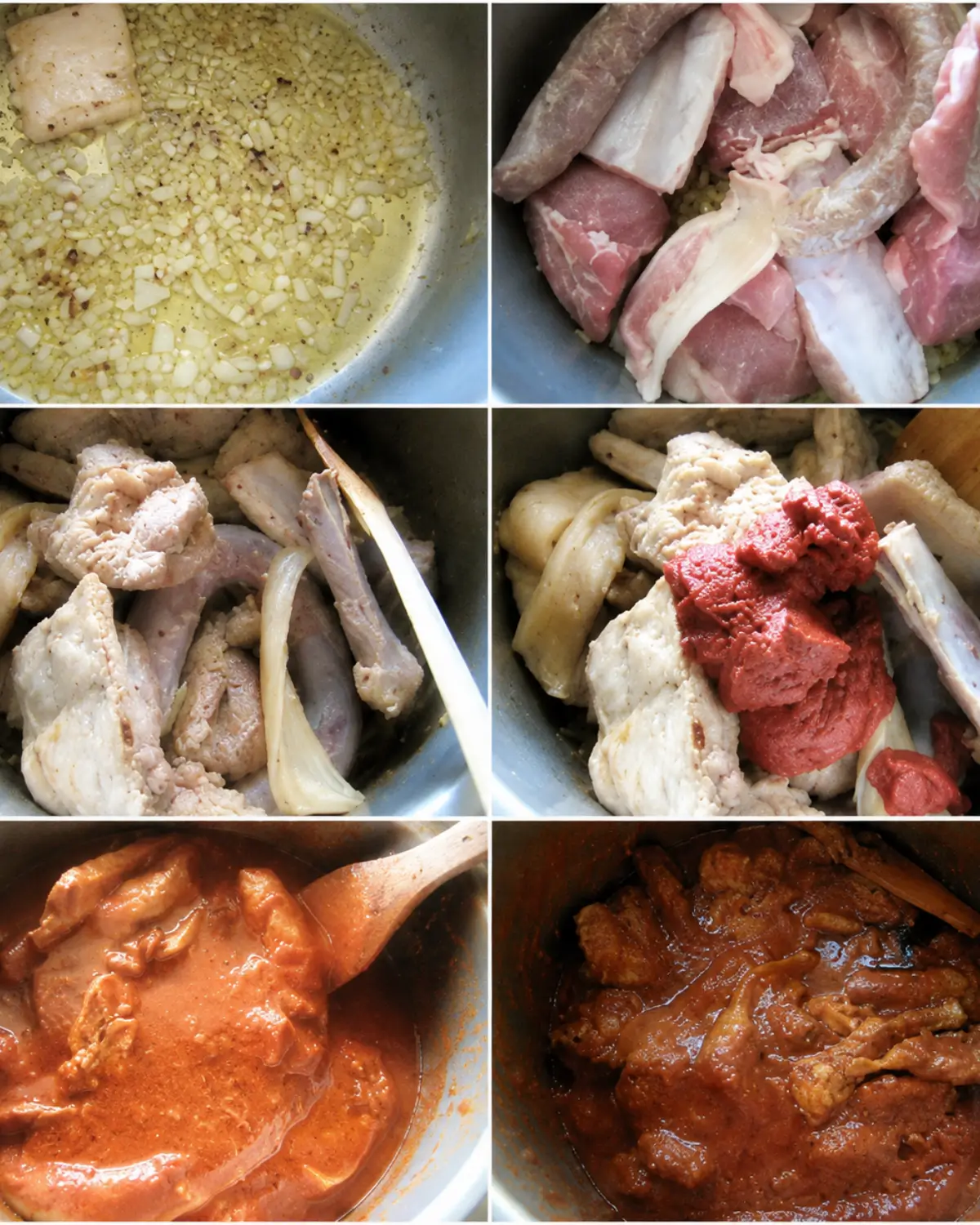
Step 1: In a large pot, sauté the chopped onion, garlic, chilli flakes, and cleaned Pecorino Romano rind in extra virgin olive oil. Stir continuously to prevent the cheese from sticking to the bottom of the pot.
Step 2: Once the onion has softened, add the meat and brown it thoroughly.
Step 3: Stir in the tomato paste, tomato purée, and estratto until well combined. Add enough water to fully cover the meat, then season with salt to taste.
Step 4: Cover the pot with a lid and simmer over a low heat on the stovetop for about 1 ½ hours, or until the sauce has thickened and the meat is tender enough to fall off the bone. Set aside.
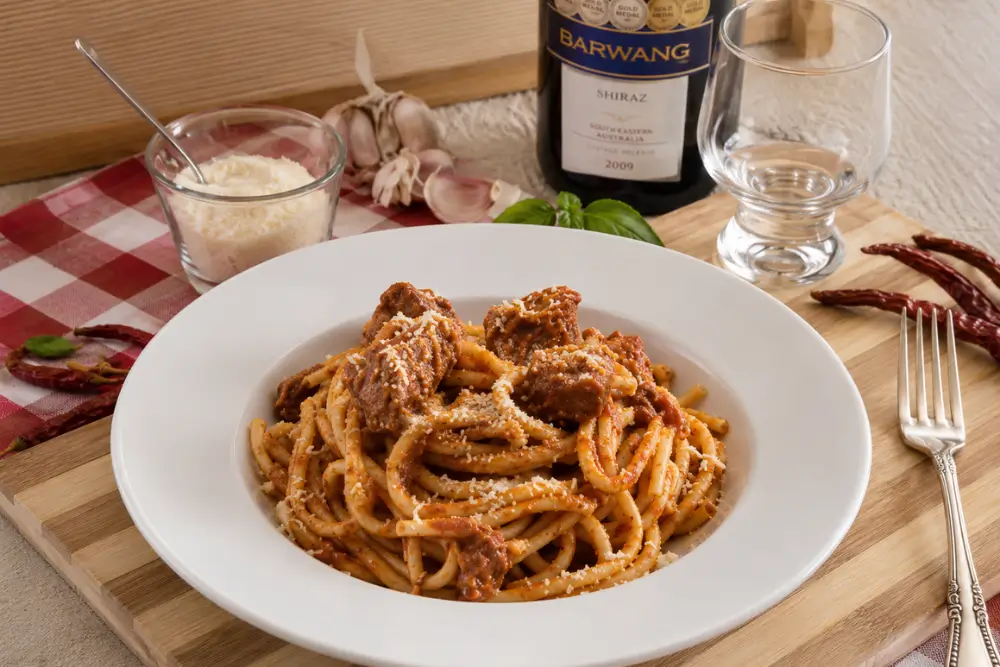
Step 5: Cook the Troccoli until al dente, then drain and toss with the pork ragù and some of the meat until evenly coated.
Note: Fresh pasta cooks very quickly and doesn’t have an exact cooking time. Taste it frequently while cooking to make sure it remains slightly firm.
Step 6: Serve hot, topped with a generous sprinkling of Pecorino Romano cheese.
Frequently Asked Questions
Fresh tagliatelle, pappardelle pasta, or spaghetti alla chitarra all work very well with this type of pork ragù because they hold thick sauces particularly well.
Yes. You can add small amounts of carrot, celery, or mushrooms for a slightly sweeter and more rounded sauce. Keep the quantities modest.
You can use finely grated Pecorino Romano, Parmigiano Reggiano rind, or Grana Padano rind instead. Finely grated Pecorino Romano is also traditionally served over the finished pasta.
Serve it with a simple green salad, grilled vegetables, creamy polenta, or crusty Italian bread for a more traditional Italian-style meal. A generous sprinkling of Pecorino Romano also pairs particularly well with the rich pork ragù.
Yes. Brown the meat and sauté the onion, garlic, chilli flakes, and Pecorino Romano rind first, then transfer everything to a slow cooker and cook on low until the pork becomes tender. The sauce may need reducing slightly at the end before serving with the Troccoli.
Extra Help from the Kitchen
Choose a Heavy Pot – Use a heavy-bottomed pot or Dutch oven to help the ragù maintain a gentle simmer throughout cooking. Thin pots tend to catch more easily during long cooking times, especially with tomato-based sauces.
Toss with Tongs – Use tongs to toss the Troccoli gently through the ragù without breaking the fresh pasta. Tongs also help coat the pasta more evenly with the sauce and meat.
Break Up the Sausage – Separate the sausage into smaller pieces while browning for a finer texture throughout the sauce.
Reserve Pasta Water – Keep a small amount of pasta water before draining the Troccoli in case the ragù needs loosening before serving. Fresh pasta releases starch quickly, which helps the sauce coat the pasta more smoothly.
Remove the Pecorino Rind – Lift out the Pecorino Romano rind before serving if it hasn’t fully softened into the sauce. Some parts of the rind may remain firm after simmering.
Shred the Rib Meat – Pull the pork from the ribs using two forks before tossing the pasta for better distribution through the ragù. This also makes the sauce easier to serve and eat with fresh pasta.
Variations and Twists
Deglaze with Red Wine – Pour in a small splash of dry red wine before adding the tomato ingredients for a deeper and slightly richer ragù flavour often found in Tuscan-style pork sauces.
Swap in Pork Shoulder – Replace the pork rashers with pork shoulder or short ribs for a thicker ragù with more shredded meat throughout the sauce.
Include Aromatics – Simmer rosemary, sage, or bay leaves with the ragù for a deeper and more savoury flavour common in many central and southern Italian pork sauces. Finish with fresh parsley before serving if preferred.
Finish with Cream – Stir a small splash of cream into the ragù before serving for a smoother and slightly richer sauce texture.
Storage and Shelf Life
Store leftover Nonna’s Italian Pork Ragu in an airtight container in the fridge for up to 3 days. If freezing, allow the ragù to cool completely before transferring it to freezer-safe containers, where it will keep well for up to 3 months.
Thaw overnight in the fridge before reheating gently over low heat with a small splash of water if the sauce has thickened. Troccoli is best cooked fresh, as homemade pasta tends to soften considerably after freezing and reheating.
Homemade Italian Sauces and Ragù Recipes
- Cavatelli al Ragù di Maiale
- Tagliatelle alla Bolognese
- Low FODMAP Ragù Bianco
- Ziti with Neapolitan Meat Ragout
- Spaghetti with Homemade Tomato Sauce
Nonna’s Italian Pork Ragu with Troccoli Pasta Recipe
Ingredients
- 1 garlic clove – chopped
- 1 medium onion – chopped
- 1 tsp chilli flakes
- 3 tbsp extra virgin olive oil
- 1 piece pecorino romano crust – cleaned
- 8 pork rashers
- 8 pork rinds from the rashers
- 1 small rack of pork ribs – cut in pieces
- 250 g – 9 oz Sicilian pork sausage with fennel
- 280 g – 10 oz tomato paste
- 150 g – 5 oz tomato purée
- 1 tbsp estratto or triple tomato concentrate or more tomato paste
- salt – to taste
- water
- 500 g – 1 lb troccoli
- more finely grated pecorino romano – to serve
Instructions
- In a large pot, sauté the chopped onion, garlic, chilli flakes, and cleaned Pecorino Romano rind in extra virgin olive oil. Stir continuously to prevent the cheese from sticking to the bottom of the pot.
- Once the onion has softened, add the meat and brown it thoroughly.
- Stir in the tomato paste, tomato purée, and estratto until well combined. Add enough water to fully cover the meat, then season with salt to taste.
- Cover the pot with a lid and simmer over a low heat on the stovetop for about 1 ½ hours, or until the sauce has thickened and the meat is tender enough to fall off the bone. Set aside.
- Cook the Troccoli until al dente, then drain and toss with the pork ragù and some of the meat until evenly coated.Note: Fresh pasta cooks very quickly and doesn’t have an exact cooking time. Taste it frequently while cooking to make sure it remains slightly firm.
- Serve hot, topped with a generous sprinkling of Pecorino Romano cheese.

Love travelling as much as cooking?
Many of the recipes I share are inspired by places I’ve visited around the world. On Travel with Manu you’ll find destination guides, itineraries and travel inspiration to help you plan your next adventure.












Leave a Reply