

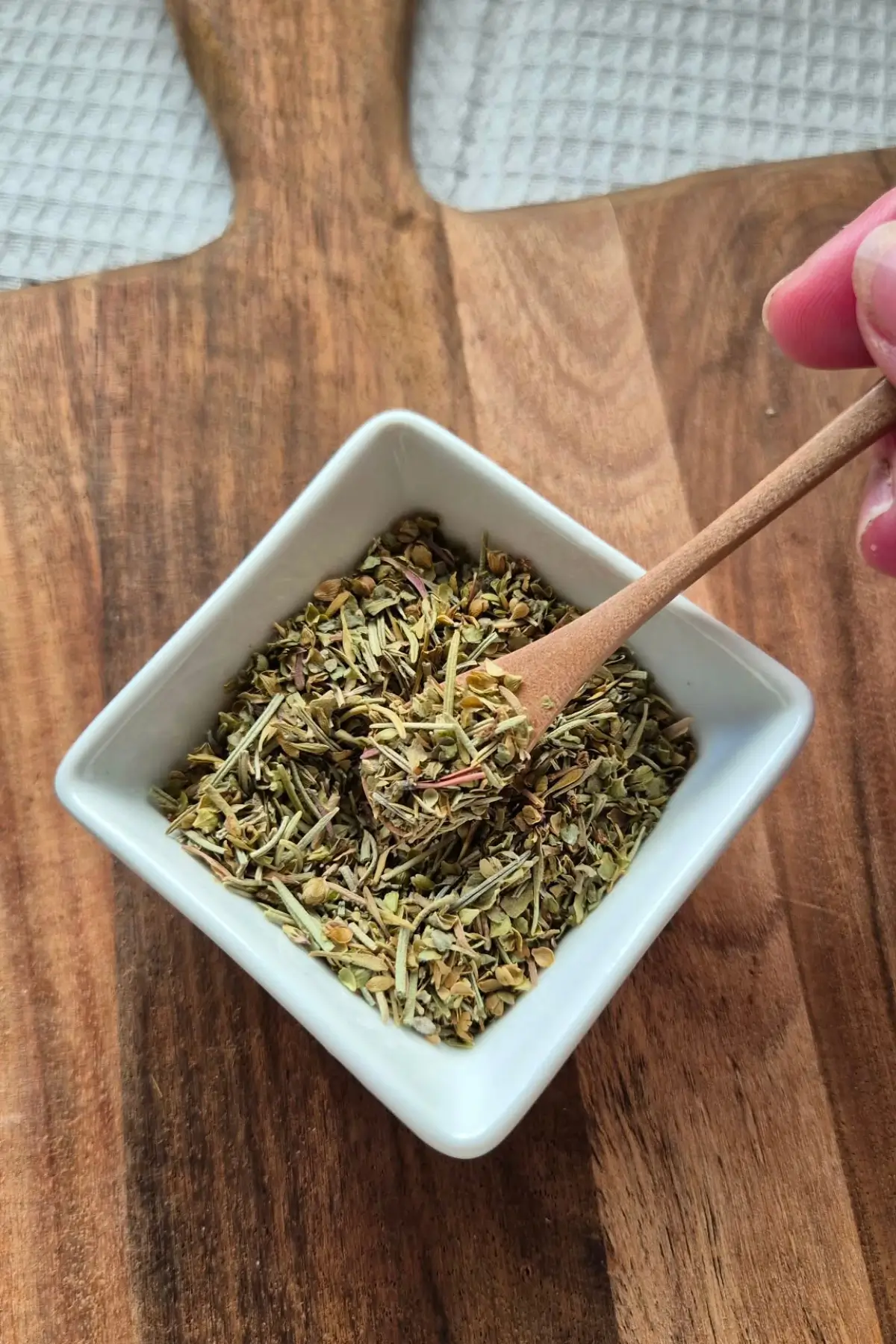
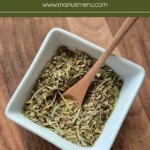
Dried herbs with earthy, savoury notes create Herbes de Provence, a traditional French seasoning blend often used with vegetables, meats, potatoes, and sauces.
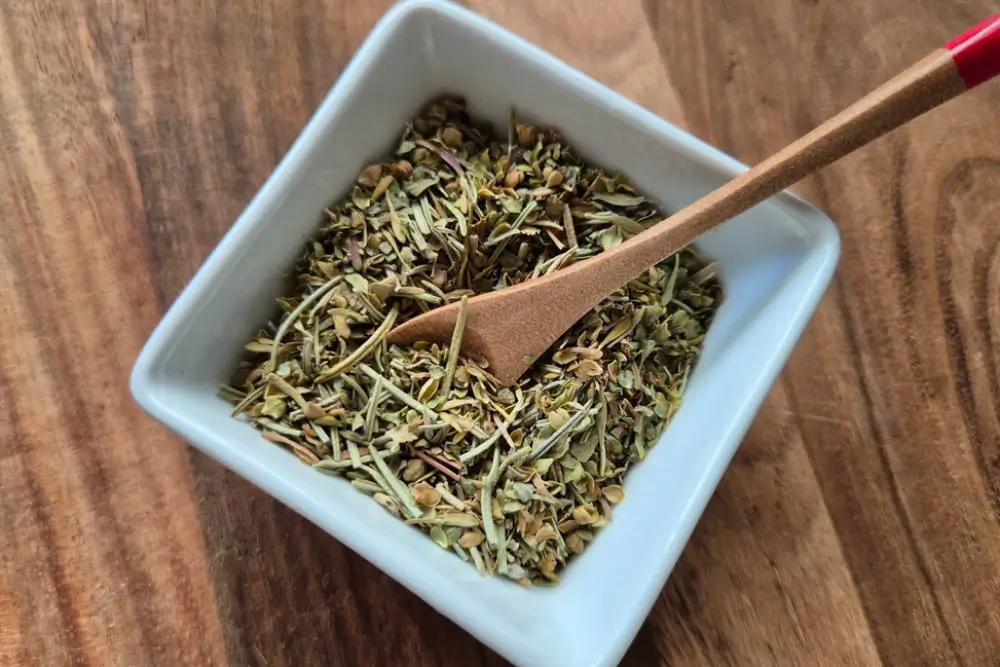
Some of my favourite food memories from the south of France come from holidays spent in Provence, where dishes were often seasoned with fragrant dried herbs. Those meals introduced me to Herbes de Provence, a classic French herb blend that I still keep in my kitchen.
Made with a simple combination of dried thyme, rosemary, oregano, and marjoram, Herbes de Provence is an easy way to add flavour to vegetables, meats, and other savoury dishes. A spoonful is often all you need to season a dish without reaching for several different herb jars.
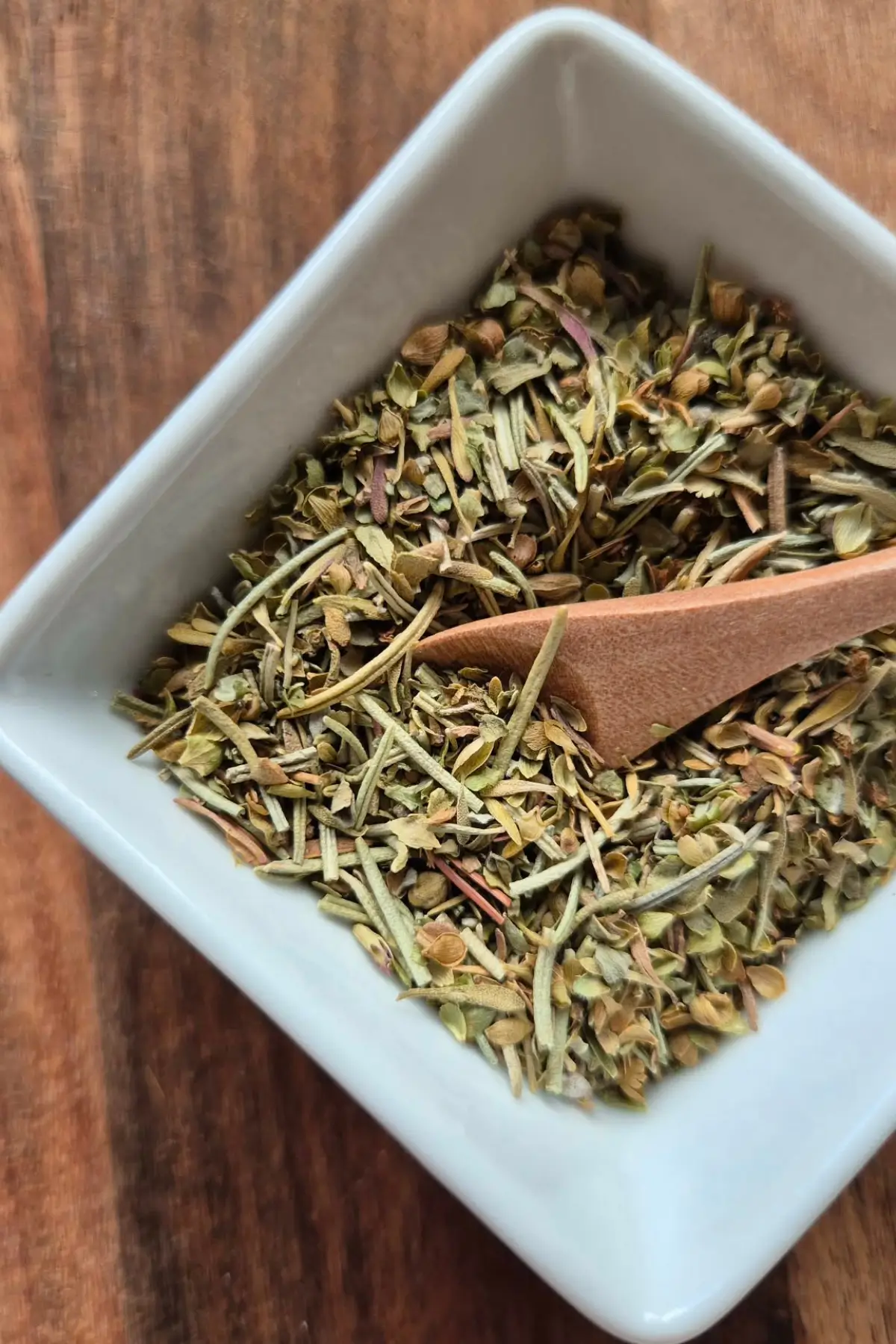
I like making my own blend because it’s quick to prepare and allows me to adjust the balance of herbs to suit my taste. This blend combines thyme, rosemary, oregano, and marjoram.
I use marjoram in place of the more traditional savoury because it’s easier to find and works very well in the mix.
If you enjoy keeping homemade seasoning blends on hand, this is a great one to start with. It’s simple, versatile, and useful in all kinds of everyday cooking.
Reasons to Make Your Own Herbes de Provence
- Keeping a jar on hand means there’s always a simple way to season vegetables, meats, and potatoes.
- Small batches help maintain freshness while giving you the flexibility to make more whenever needed.
- Homemade blends give you complete control over the balance of herbs without relying on shop-bought seasoning mixes.
Key Ingredients for Herbes de Provence
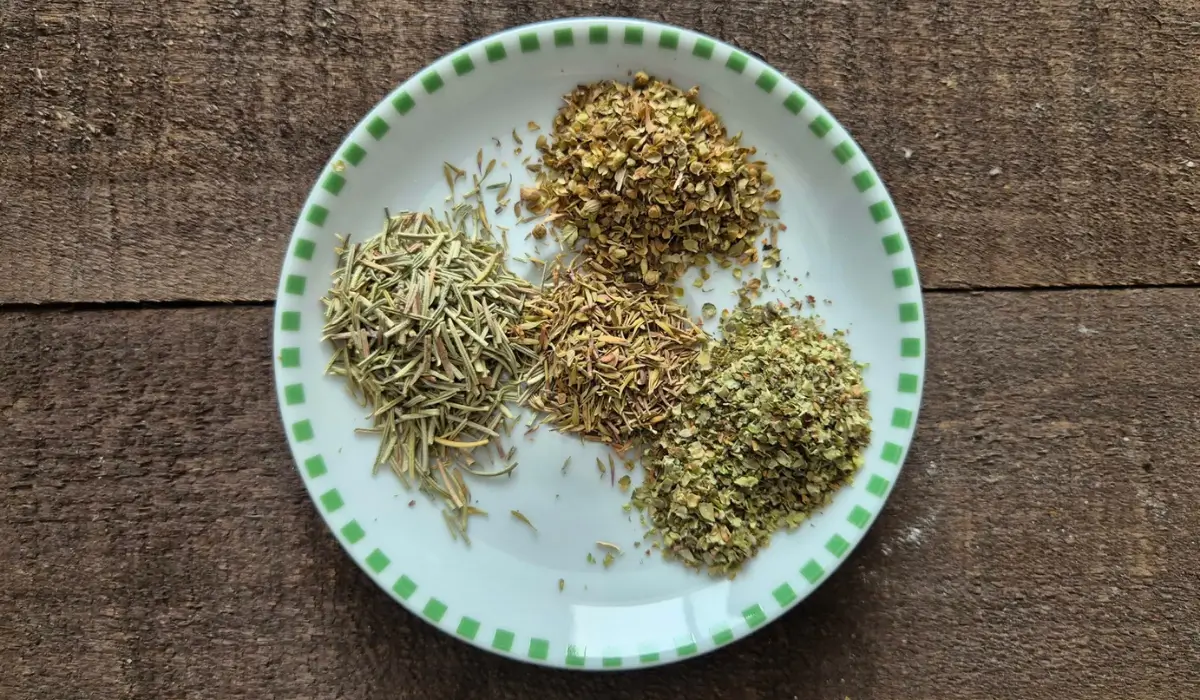
Dried Thyme
Thyme gives the blend its earthy, savoury flavour and is one of the herbs most commonly associated with Herbes de Provence. For the best flavour, choose dried thyme with a noticeable scent when opened.
Dried Rosemary
Rosemary adds depth and a slightly pine-like flavour. If the rosemary needles are particularly large, crush them lightly before mixing for a more even blend.
Dried Marjoram
Marjoram contributes gentle sweetness and subtle herbal notes. It pairs well with thyme and rosemary and makes a practical substitute for savoury, which can be difficult to find in some areas.
Dried Oregano
Oregano adds a slightly peppery, herbaceous flavour that complements the other herbs in the blend. Mediterranean oregano is a good choice if available, although standard dried oregano works perfectly well.
Find the complete list with measurements in the recipe card below.
How to Make Herbes de Provence
Step 1: Combine the dried thyme, rosemary, marjoram, and oregano in a small bowl or container with a lid.
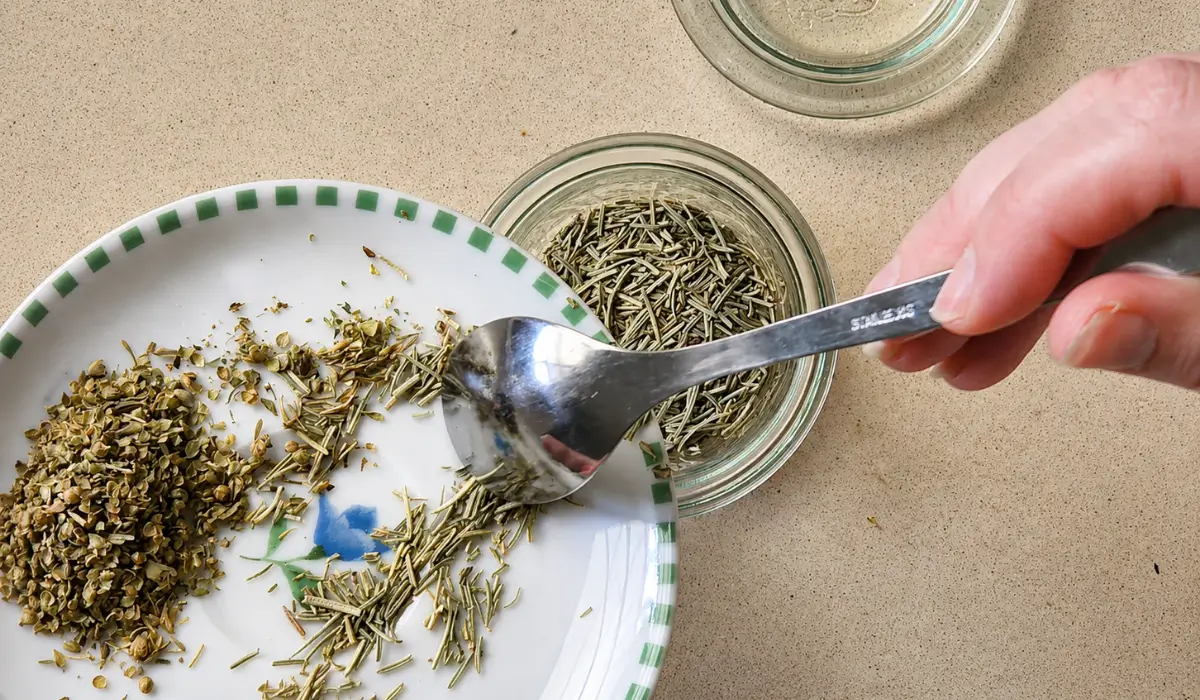
Step 2: Stir or shake until evenly blended.
Step 3: Transfer the herb mixture to a small jar with a tight-fitting lid.
Step 4: Store in a cool, dry place until ready to use.
Frequently Asked Questions
Herbes de Provence is a French herb blend traditionally made with dried herbs such as thyme, rosemary, oregano, and savoury or marjoram. It’s commonly used to season vegetables, meats, potatoes, and other savoury dishes.
Yes. Savoury is often included in traditional Herbes de Provence blends and can be used in the same quantity as marjoram.
No. The herbs can be used as they are. If you prefer a finer blend, pulse them briefly in a spice grinder or mortar and pestle.
Yes. Some versions include a small amount of culinary lavender. Use it sparingly, as a little goes a long way.
It works well with roasted vegetables, potatoes, chicken, lamb, fish, soups, sauces, marinades, and salads.
Extra Help from the Kitchen
Use a Funnel – Transfer the herb blend into the storage jar with a small funnel to avoid spills and wasted herbs.
Check Herb Freshness – Open each herb container and smell the contents before mixing. Replace any herbs with little aroma, as older herbs can lose flavour over time.
Crush Large Rosemary Pieces – Rub larger rosemary needles lightly between your fingers before mixing. Smaller pieces distribute more evenly throughout the blend.
Choose a Glass Jar – Store the blend in a glass container rather than plastic when possible. Glass won’t absorb herb oils or retain odours from previously stored ingredients.
Variations and Twists
Use Lavender – Mix ¼ tsp culinary lavender with the dried herbs for a French-style blend. Use a small amount because lavender has a distinct floral taste.
Replace Marjoram with Savoury – Swap the marjoram for dried savoury for a more traditional mixture. Savoury is common in Herbes de Provence, while marjoram remains a practical substitute when savoury is harder to find.
Include Basil – Use 1 tsp dried basil for a softer herbal flavour. Basil pairs well with thyme, rosemary, oregano, and marjoram.
Try Fennel Seeds – Use ¼ to ½ tsp crushed fennel seeds for a light anise note. Crush the seeds before mixing for a more even blend.
Use Tarragon – Mix ½ tsp dried tarragon with the other dried herbs for a gentle anise-like flavour. It pairs well with poultry, fish, vegetables, and other savoury dishes seasoned with Herbes de Provence.
Storage and Shelf Life
Store Herbes de Provence in an airtight jar or spice container in a cool, dry cupboard away from direct sunlight and heat.
For the best flavour, use the blend within 6 to 12 months. The herbs may remain usable beyond this period, but their flavour and aroma will gradually diminish over time.
Condiments and Spice Blends to Try Next
- Mostarda Mantovana
- Macadamia Dukkah
- Low FODMAP Curry Spice Mix
- Homemade Mayonnaise
- Low FODMAP Mustard Mayo
Equipment
Ingredients
- 2 tbsp dried thyme
- 2 tbsp dried rosemary
- 2 tsp dried marjoram or savoury
- 1 ½ tsp dried oregano
Instructions
- Combine the dried thyme, rosemary, marjoram, and oregano in a small bowl or container with a lid.
- Stir or shake until evenly blended.
- Transfer the herb mixture to a small jar with a tight-fitting lid.
- Store in a cool, dry place until ready to use.
Notes
- If the rosemary needles are particularly large, chop them slightly before mixing for a more even blend.
- In France, savoury (sarriette) is traditionally included in Herbes de Provence, but it can be difficult to find. Marjoram is a practical alternative and is more widely available.
- Store the blend in an airtight container away from heat and direct sunlight. For the best flavour, use it within 6 to 12 months.
This post may contain affiliate links. If you purchase through these links, I may earn a small commission at no extra cost to you.

Love travelling as much as cooking?
Many of the recipes I share are inspired by places I’ve visited around the world. On Travel with Manu you’ll find destination guides, itineraries and travel inspiration to help you plan your next adventure.













Leave a Reply