

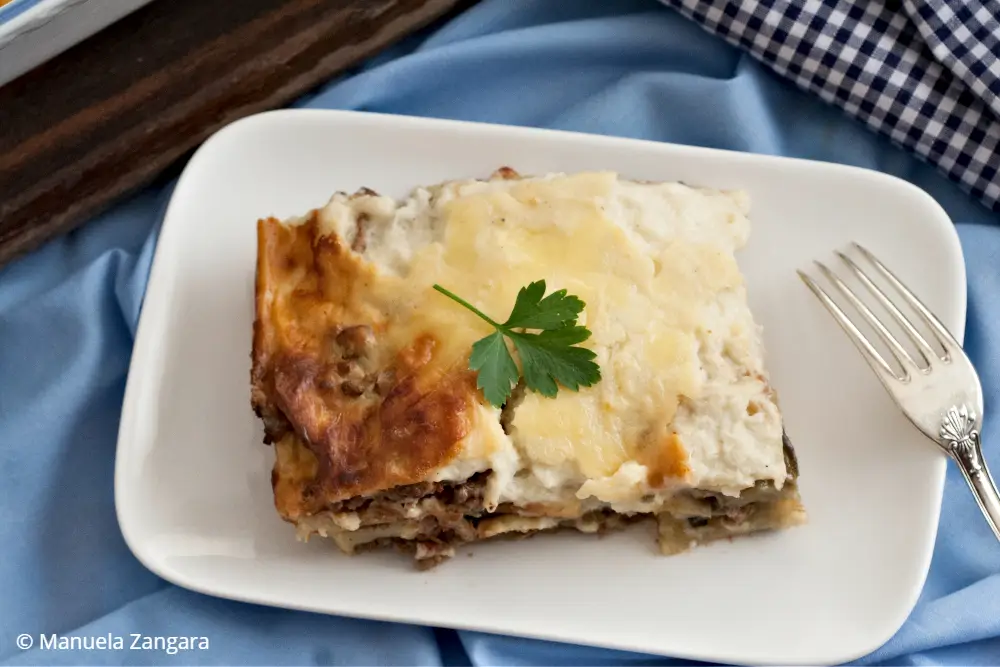
When you want a hearty oven bake, Low FODMAP Moussaka brings a layer of eggplant slices and potatoes with beef in tomato, oregano and cinnamon, topped with creamy béchamel.
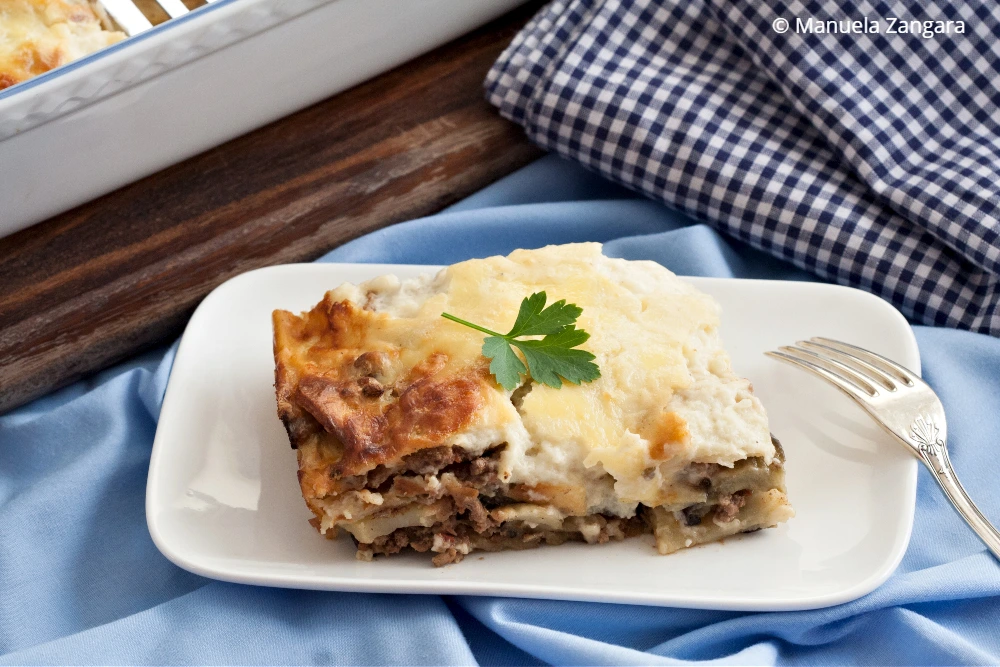
Moussaka is a traditional Greek dish. However, this recipe has been adapted for the low FODMAP diet, and it’s lighter than my traditional Greek moussaka.
This means it’s also lower in calories and can be enjoyed by people who have tummy issues as well as those who simply want to eat healthier food.
It’s gluten-free as well, which makes it a win-win, especially considering how amazing this moussaka tastes.
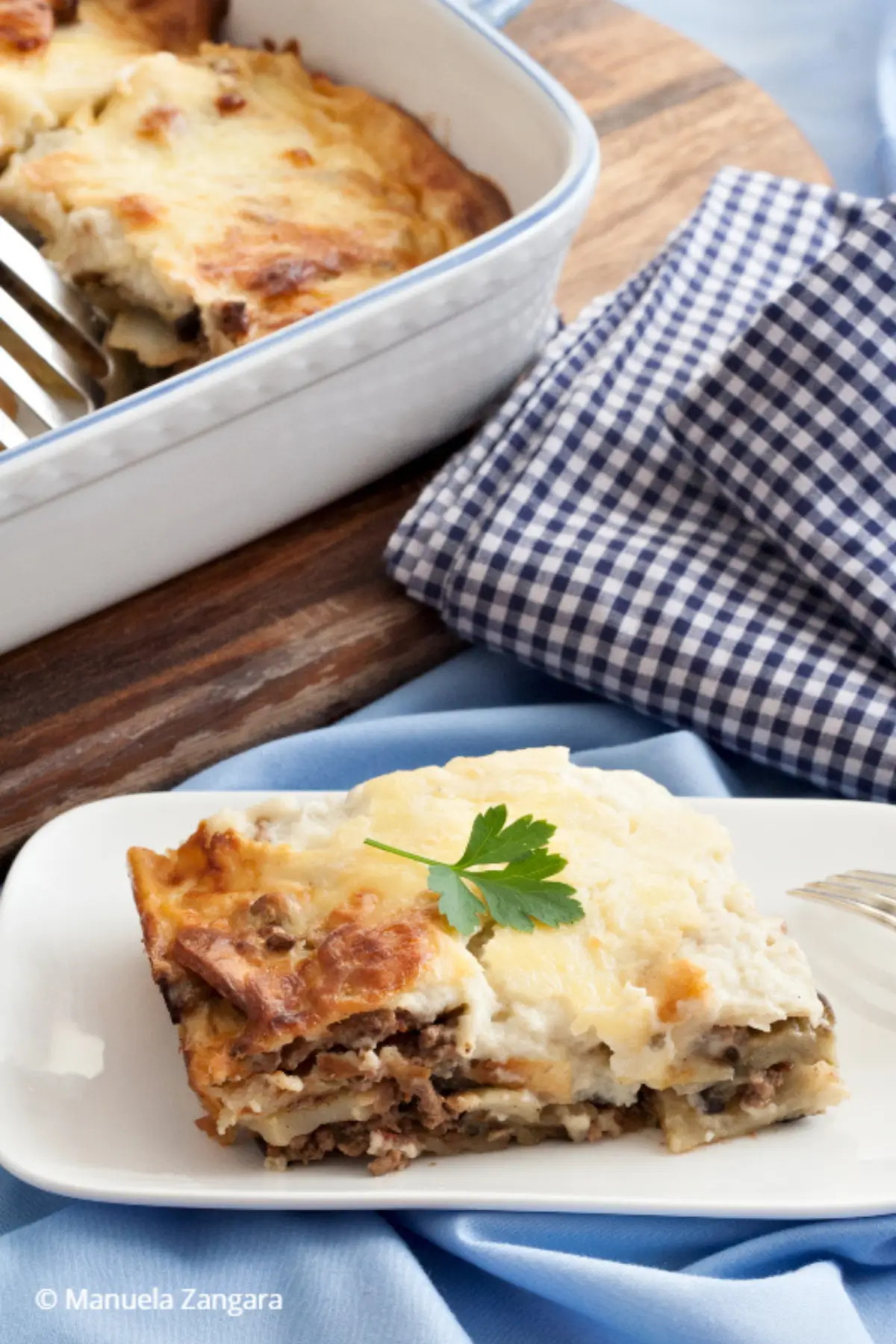
But what is moussaka exactly? The concept is very similar to lasagne.
However, instead of pasta, there are lots of yummy vegetables hidden between the meat and the cheese sauces. This also makes it a great way to get fussy kids to eat their vegetables.
It’s definitely a complete meal, so you’ll only need a simple salad to serve alongside it for dinner.
I fell in love with this dish at first bite and have eaten it many times since then. It does take a little time to make, but it’s absolutely worth the effort.
Reasons to Make Baked Moussaka with Potatoes and Beef
- Gives you a golden top layer that lightly browns in the oven and looks inviting straight from the dish.
- Makes good use of eggplant and potatoes in a way that feels substantial and satisfying.
- Adds variety to your dinner rotation when you want something layered and baked instead of pan-cooked.
Key Ingredients for Low FODMAP Moussaka
Beef Mince
Beef mince gives the dish its hearty, savoury flavour and pairs well with oregano, cinnamon, and tomato. Choose mince with around 10–15% fat for better flavour and juicier results.
Eggplant
Creates the soft vegetable layers typical of moussaka and readily absorbs the flavours of the meat sauce and herbs. Look for firm eggplants with smooth, glossy skin and a slightly heavy feel for their size.
Oregano and Cinnamon
Oregano and cinnamon give moussaka its distinctive Greek flavour. Oregano adds a Mediterranean herb aroma, while cinnamon brings gentle warmth that deepens the meat sauce.
Fresh Tomato
Adds gentle acidity and natural sweetness, which balance the richness of the meat. Fully ripe tomatoes produce the best flavour.
Lactose-Free Milk
Lactose-free milk keeps the béchamel creamy while remaining suitable for sensitive stomachs. Whole lactose-free milk gives the sauce a richer texture than lighter versions.
Find the complete list with measurements in the recipe card below.
How to Make Low FODMAP Moussaka
Meat Sauce
Step 1: Purée the fresh tomato and set it aside.

Step 2: Put the chopped spring onion tops and garlic-infused olive oil in a frying pan and cook for 1 minute.
Step 3: Add the mince and break up any lumps with a spoon. Brown the meat well over medium-high heat. Once browned, add the wine and let the alcohol evaporate over higher heat.
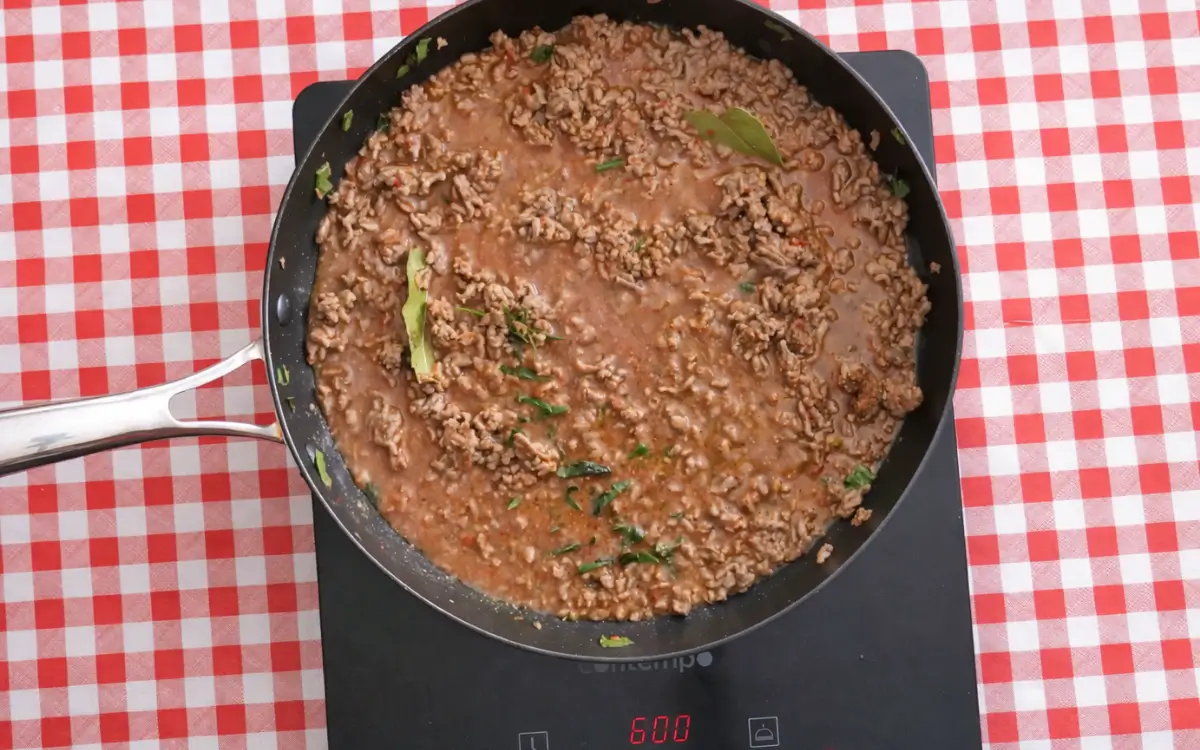
Step 4: Stir in the tomato purée, salt, bay leaves, rosemary, oregano, and cinnamon. Mix well, add a glass of water, cover, and cook over low heat until the sauce thickens.
Step 5: When ready, stir in the parsley and set aside.
Vegetables
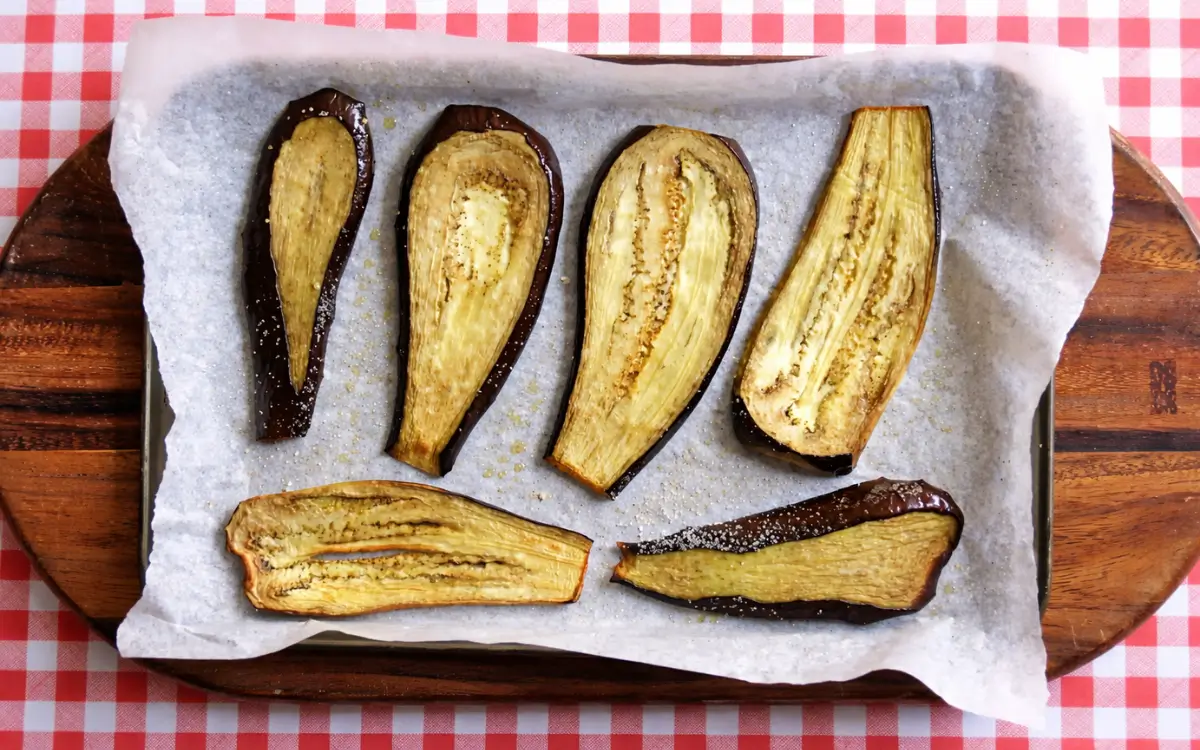
Step 1: Slice the eggplant into 1 cm – ½ inch thick slices and the potatoes into ½ cm – ¼ inch thick slices.
Step 2: Arrange the eggplant and potato slices on an oven tray lined with baking paper. Spray with olive oil, sprinkle with salt, and bake in a preheated oven at 200°C – 395°F for about 20 minutes, or until golden and cooked through.
Cheese Béchamel
Step 1: Heat the lactose-free milk and set aside.
Step 2: Heat the extra virgin olive oil in a medium-sized pot. Add the flour and stir well with a wooden spoon or whisk until smooth and lump-free.
Step 3: Gradually pour in the hot lactose-free milk, stirring continuously. Add salt and nutmeg, then cook for about 5 minutes, or until thickened.
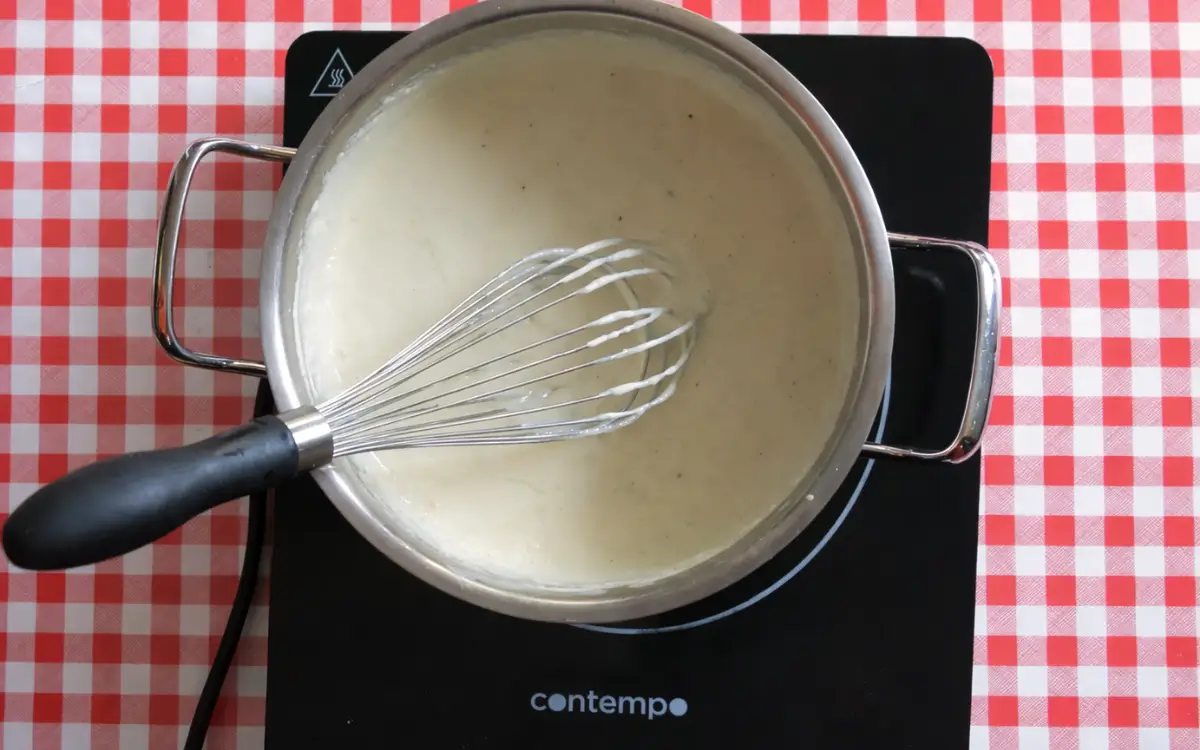
Step 4: Add the lactose-free cheese and stir until completely melted.
Step 5: Turn off the heat and cover the pot to prevent a skin from forming. Let the sauce cool slightly. Lightly beat the egg, add it to the sauce, and stir well. Set aside.
Assembling
Step 1: Layer the vegetables and meat sauce in an ovenproof dish.
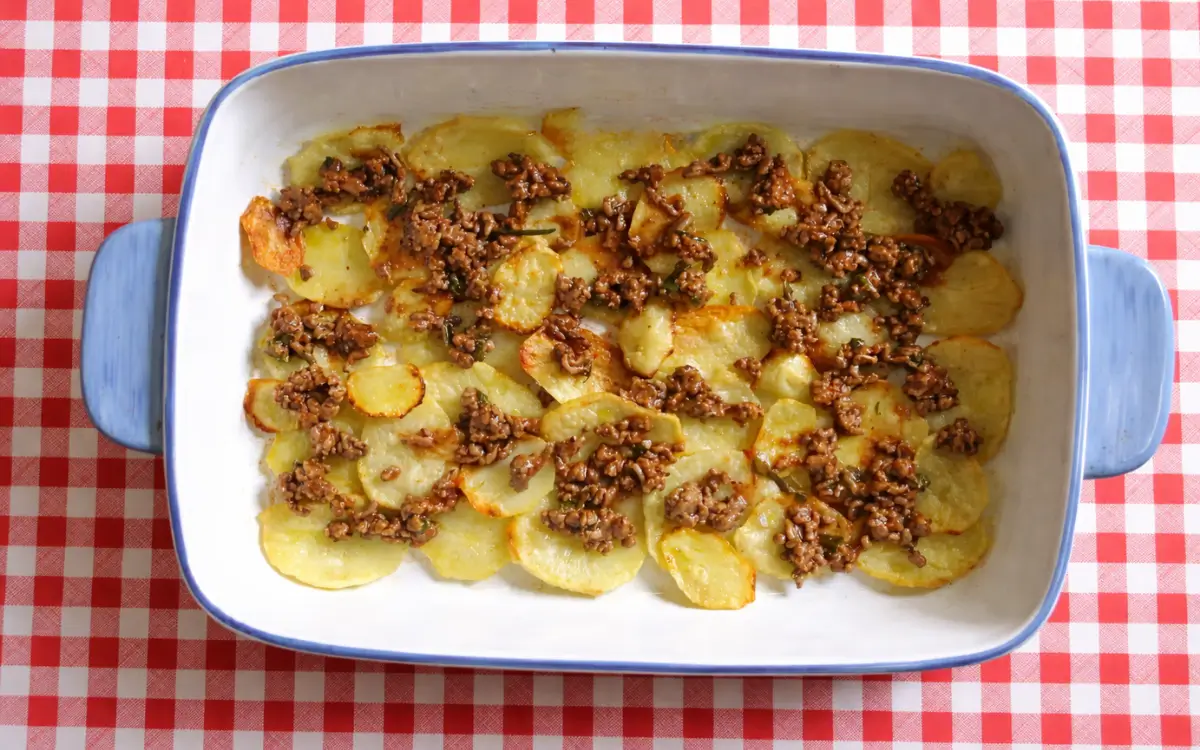
Step 2: Spread the cheese béchamel evenly over the top and sprinkle the remaining lactose-free cheese on top.
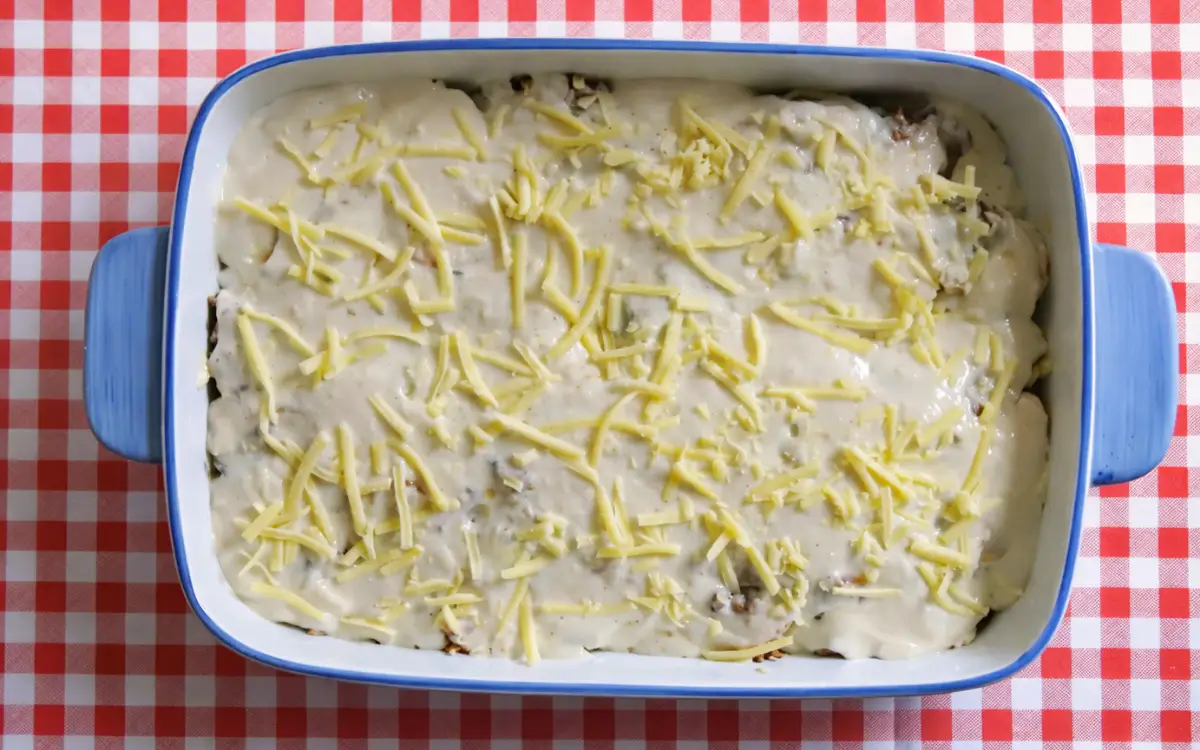
Step 3: Bake in a preheated fan-forced oven at 180°C – 355°F for 20 minutes, or until golden and heated through. Slice and serve.
Frequently Asked Questions
The top should be golden brown and lightly bubbling around the edges. A knife inserted into the centre should come out hot, showing the layers are heated through.
Yes. Canned lentils work well as long as they are drained and rinsed thoroughly before adding them to the tomato and spice mixture. This helps remove excess salt and keeps the texture balanced in the finished dish.
Waxy or medium-starch potatoes such as Yukon Gold are ideal because they hold their shape and slice neatly once baked. Avoid very floury potatoes like Russet if you want firmer layers, as they can become softer and more crumbly.
Yes. Zucchini or roasted capsicum can be layered with the eggplant and potatoes and remain suitable for a low FODMAP serving. If using pumpkin, choose a low FODMAP variety and keep portions moderate. Pick vegetables that roast well and don’t release excess moisture to keep the layers firm once baked.
Extra Help from the Kitchen
Slice Vegetables Evenly – Keep eggplant and potato slices similar in thickness so the layers cook at the same rate. Uneven slices can lead to firmer potatoes or very soft eggplant in some areas.
Pat Eggplant Slices Dry – Eggplant can hold surface moisture after slicing. Patting the slices lightly with kitchen paper helps them roast better and keeps the layers from becoming watery.
Drain Excess Fat from the Beef – If the mince releases a lot of fat while browning, spoon off the excess before adding the tomato. This keeps the finished moussaka lighter and prevents greasy layers.
Use a Wide Spatula for Serving – A broad spatula supports the full slice when lifting it from the dish. This keeps the layers intact and makes serving much easier.
Variations and Twists
Replace Beef with Lamb or a Lamb-Beef Mix – Swap all or part of the beef mince for lamb to give the sauce a richer, more traditional Greek flavour. Lamb pairs especially well with oregano and cinnamon.
Add a Zucchini Layer – Include thinly sliced zucchini between the eggplant and potato layers. Zucchini bakes at a similar rate and adds another soft vegetable layer.
Use Sweet Potato Instead of Regular Potato – Substitute sweet potato for some or all of the standard potatoes for a slightly sweeter flavour and softer texture. Slice them evenly so they cook at the same rate as the eggplant.
Make a Vegetarian Lentil Moussaka – Replace the beef mince with cooked brown or green lentils simmered in the same tomato and spice mixture. Lentils provide body and absorb the herbs well.
Add a Light Herb Breadcrumb Topping – Mix gluten-free breadcrumbs with chopped parsley and a little lactose-free cheese, then sprinkle over the béchamel before baking. This creates a lightly textured golden top.
Storage and Shelf Life
Store leftover baked Low FODMAP Moussaka in an airtight container in the refrigerator for up to 3–4 days. Let the dish cool slightly after cooking, but do not leave it at room temperature for longer than 2 hours before refrigerating.
For longer storage, freeze portions in well-sealed freezer containers for up to 2–3 months. Thaw overnight in the refrigerator before reheating. Warm slices in the oven at 180°C – 350°F until heated through.
Layered and Baked Dishes to Try Next
Low FODMAP Moussaka Recipe
Equipment
Ingredients
Meat Sauce
- 1 tbsp garlic-infused olive oil
- 4 spring onions – green tops only, chopped
- 500 g – 1 lb beef mince
- 100 ml – ⅓ cup white wine
- 250 g – 9 oz fresh tomatoes – puréed
- 1 ½ tsp dried oregano
- ¾ tsp ground cinnamon
- 2 bay leaves
- 1 sprig rosemary
- 1 tbsp parsley – chopped
- salt – to taste
Cheese Béchamel
- 30 ml – 2 tbsp extra virgin olive oil
- 60 g – 2 oz low FODMAP gluten-free flour
- 500 ml – 2 cups lactose-free milk
- 1 tsp salt
- ½ tsp ground nutmeg
- 50 g – 1 ¾ oz lactose-free cheese
- 1 egg – lightly beaten
To Assemble
- 900 g – 2 lb potatoes – sliced
- 550 g – 1 ¼ lb eggplant – sliced
- salt – to taste
- oil spray
- 50 g – 1 ¾ oz lactose-free cheese
Instructions
Meat Sauce
- Purée the fresh tomato and set it aside.
- Put the chopped spring onion tops and garlic-infused olive oil in a frying pan and cook for 1 minute.
- Add the mince and break up any lumps with a spoon. Brown the meat well over medium-high heat. Once browned, add the wine and let the alcohol evaporate over higher heat.
- Stir in the tomato purée, salt, bay leaves, rosemary, oregano, and cinnamon. Mix well, add a glass of water, cover, and cook over low heat until the sauce thickens.
- When ready, stir in the parsley and set aside.
Vegetables
- Slice the eggplant into 1 cm – ½ inch thick slices and the potatoes into ½ cm – ¼ inch thick slices.
- Arrange the eggplant and potato slices on an oven tray lined with baking paper. Spray with olive oil, sprinkle with salt, and bake in a preheated oven at 200°C – 395°F for about 20 minutes, or until golden and cooked through.
Cheese Béchamel
- Heat the lactose-free milk and set aside.
- Heat the extra virgin olive oil in a medium-sized pot. Add the flour and stir well with a wooden spoon or whisk until smooth and lump-free.
- Gradually pour in the hot lactose-free milk, stirring continuously. Add salt and nutmeg, then cook for about 5 minutes, or until thickened.
- Add the lactose-free cheese and stir until completely melted.
- Turn off the heat and cover the pot to prevent a skin from forming. Let the sauce cool slightly. Lightly beat the egg, add it to the sauce, and stir well. Set aside.
Assembling
- Layer the vegetables and meat sauce in an ovenproof dish.
- Spread the cheese béchamel evenly over the top and sprinkle the remaining lactose-free cheese on top.
- Bake in a preheated fan-forced oven at 180°C – 355°F for 20 minutes, or until golden and heated through. Slice and serve.
Notes

Love travelling as much as cooking?
Many of the recipes I share are inspired by places I’ve visited around the world. On Travel with Manu you’ll find destination guides, itineraries and travel inspiration to help you plan your next adventure.










Leave a Reply