

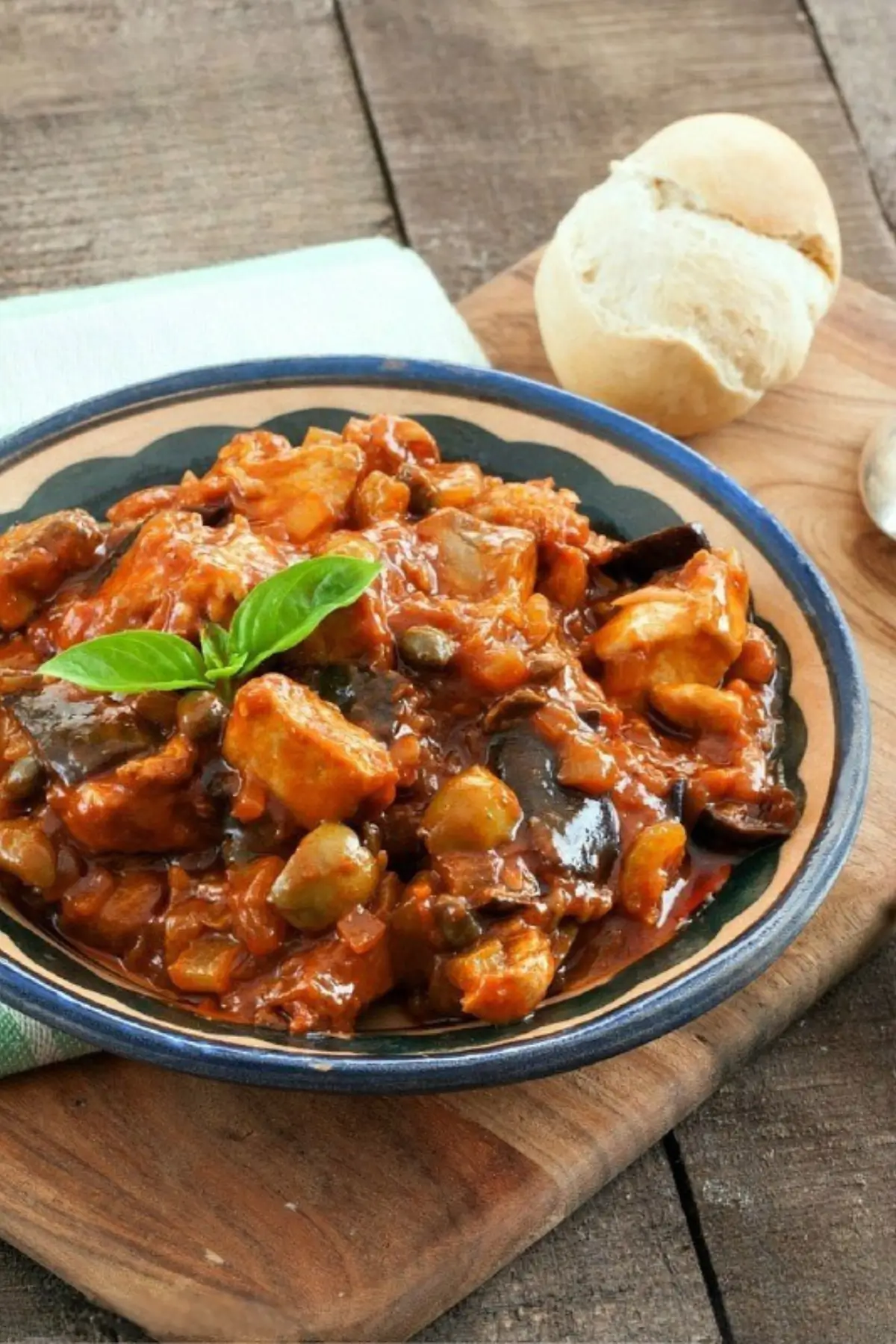
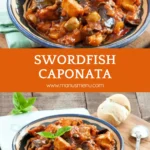
A Sicilian classic with a seafood twist, Swordfish Caponata blends tender eggplant and firm fish in a rich sweet and sour tomato glaze.
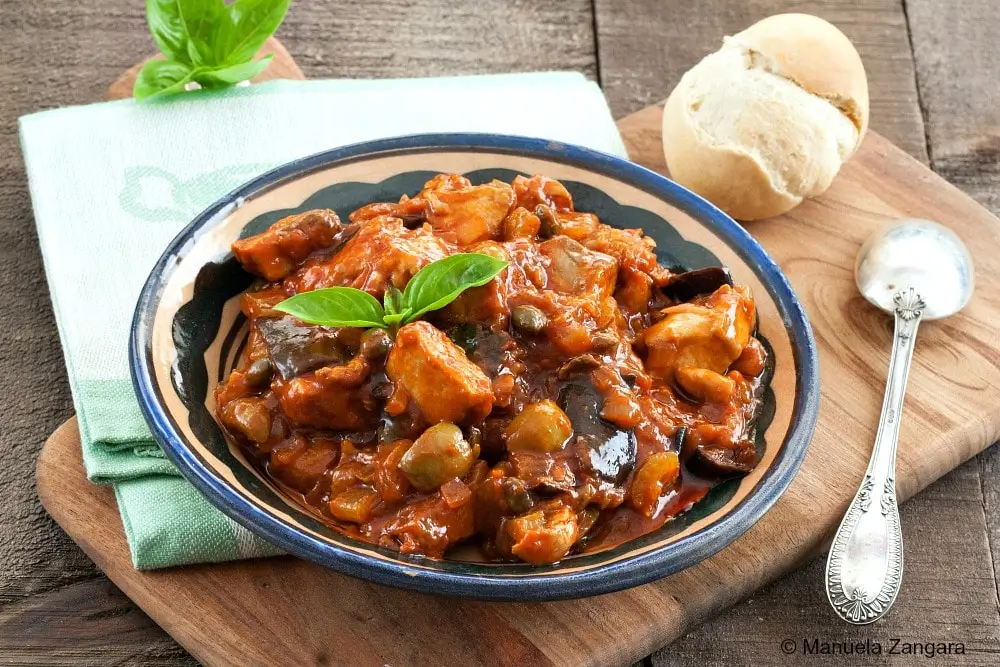
This recipe is a variation of one of the most popular Sicilian dishes, Caponata. This Swordfish Caponata has all the ingredients of the original dish, including eggplant, olives, and capers, with the addition of swordfish.
Caponata can be described as a cooked salad made up of fried eggplant and other vegetables, gently brought together in a sweet and sour sauce.
This recipe follows the same tradition and works perfectly as either an appetiser or a main dish.
We usually enjoy it in summer, when eggplants are at their best, and it is best served at room temperature or even cold.
Make sure to serve it with some warm bread like my Ciabatta or, even better, with traditional Sicilian bread known as Cabbuci. The combination is irresistible, believe me. Enjoy!
Why We Love Swordfish Caponata
- A versatile dish that works well with crusty bread, grilled vegetables, or simple greens.
- Leftovers improve overnight, which makes it worth preparing in a slightly larger batch.
- Sweet and sour flavours stay balanced and keep the dish interesting even after several servings.
Key Ingredients for Caponata with Swordfish
Swordfish
Firm, meaty swordfish holds its shape in the pan and gives the dish substance without falling apart. Choose slices with tight, pale pink flesh and no dark edges. The surface should look moist and fresh.
Eggplant
Eggplant brings softness and absorbs the sweet and sour flavours while keeping a gentle bite. Look for smooth, glossy skin and fruit that feels heavy for its size. Smaller eggplants usually have fewer seeds and a milder taste.
Red Wine Vinegar
Red wine vinegar gives caponata its signature sweet and sour balance. A well-balanced vinegar with moderate acidity works best. White wine vinegar can be used for a lighter flavour and colour.
Capers and Green Olives
Capers and green olives add savoury contrast to the sweetness. Choose firm olives with a pleasant briny aroma. Castelvetrano olives offer a milder taste, while standard green olives give a sharper finish.
Find the complete list with measurements in the recipe card below.
How to Make Swordfish Caponata
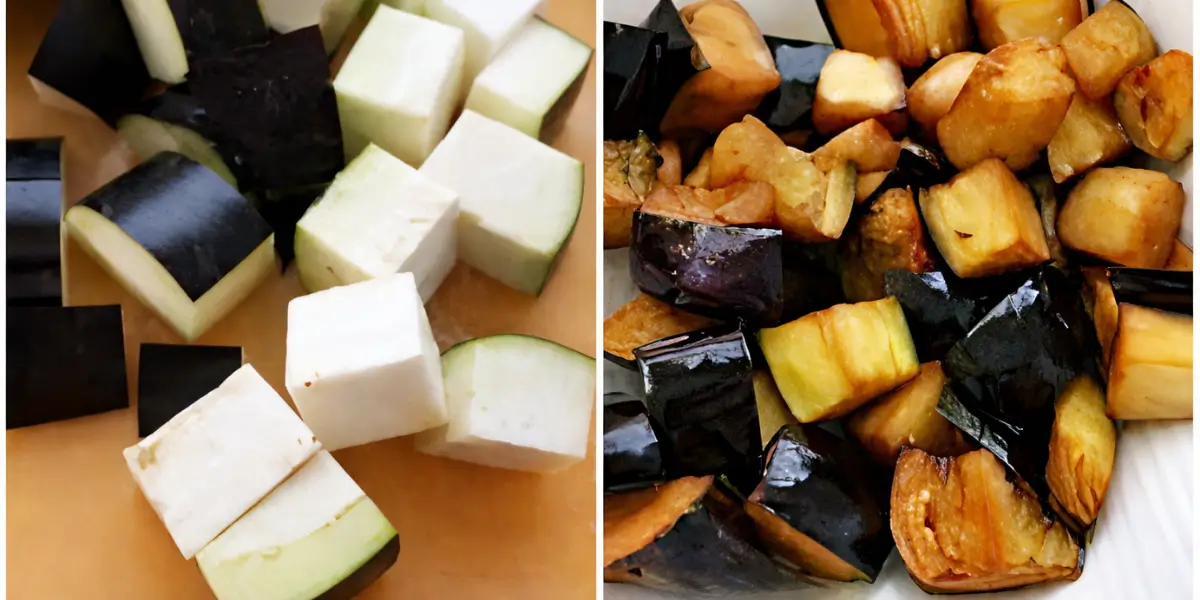
Step 1: Cut the eggplant and swordfish into 3 × 3 cm – 1.2 × 1.2 inch cubes.
Step 2: Put the cubed eggplant in a bowl with cold salted water and soak for 30 minutes. Drain well, pat dry, and deep fry in hot vegetable oil until golden. Transfer to a plate lined with kitchen paper to drain the excess oil.
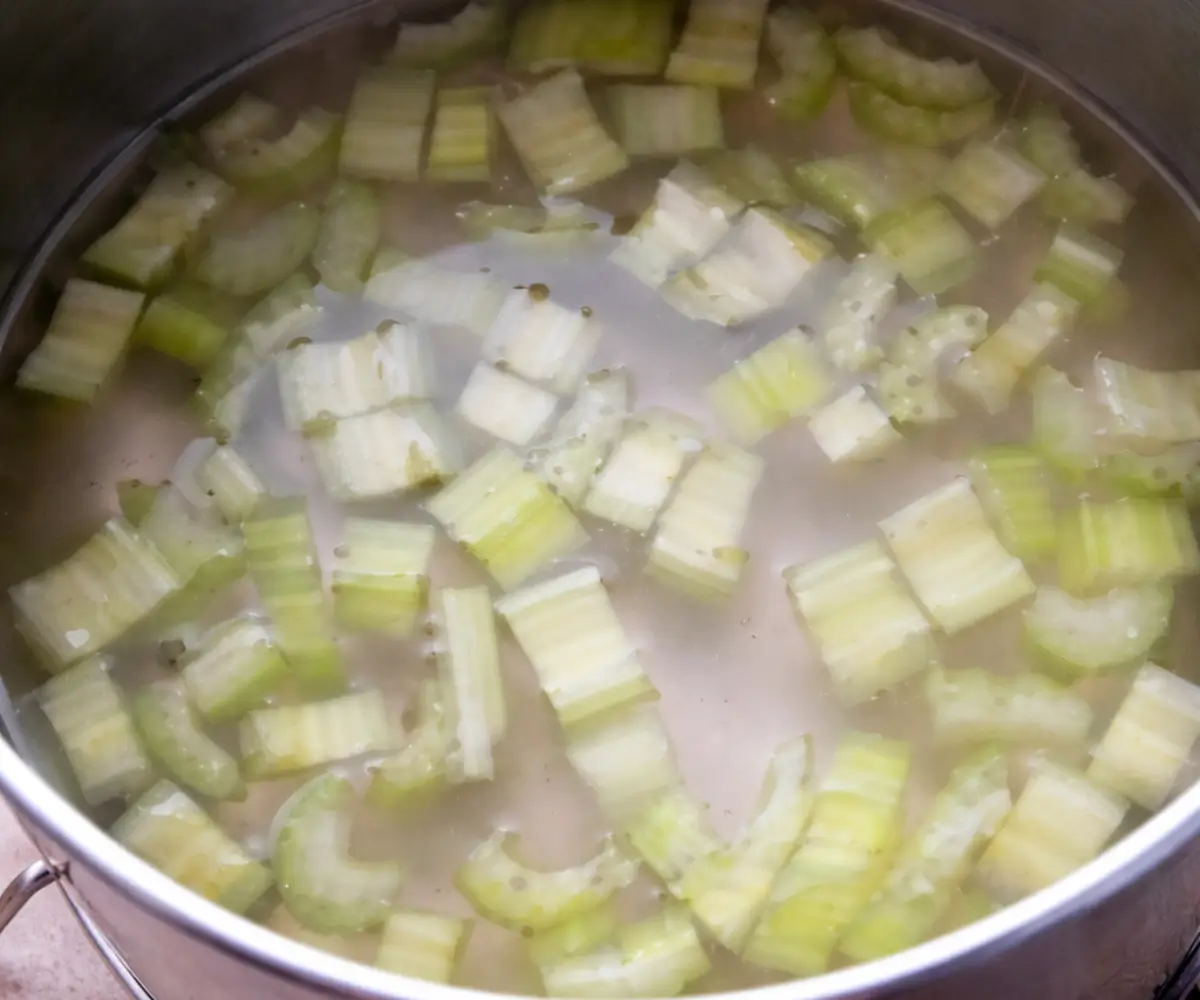
Step 3: Blanch the chopped celery in salted boiling water. Set aside.
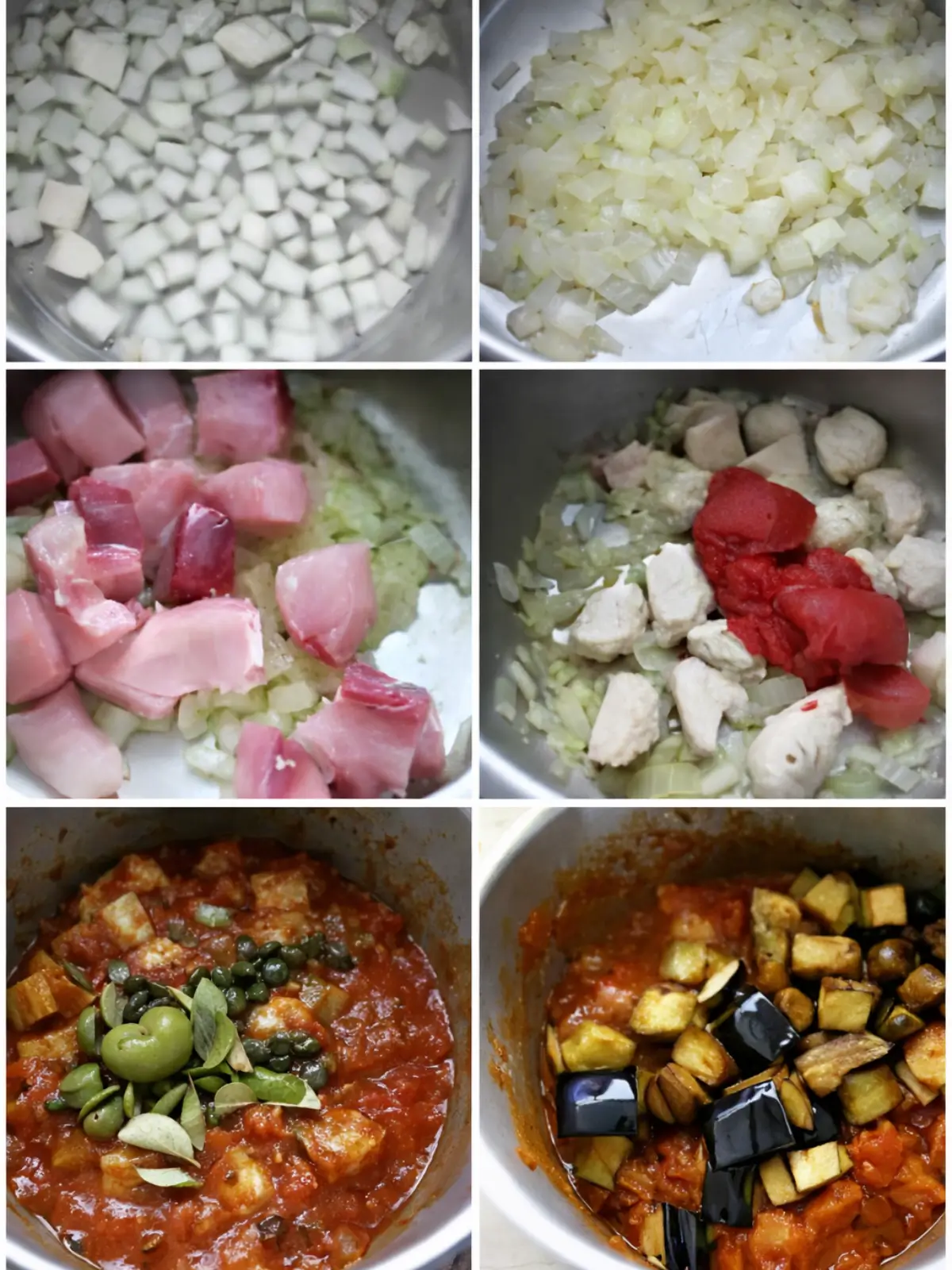
Step 4: Chop the onion and place it in a frying pan. Add ½ glass of water and cook until the water has evaporated. Then add 3 tbsp of extra virgin olive oil and sauté for 1–2 minutes.
Step 5: Add the cubed swordfish and brown it well on all sides.
Step 6: Add the tomato concentrate, capers, olives, and blanched celery, along with a little of the reserved celery cooking water. Cook for about 5 minutes, or until the fish is cooked through.
Step 7: Add the fried eggplant cubes and mix gently to combine.
Step 8: Dissolve the sugar in the vinegar and add it to the caponata. Cook for a few minutes over medium-high heat, then turn off the heat and allow it to cool.
Step 9: Serve with warm cabbuci.
Frequently Asked Questions
Yes, as long as it is fully thawed in the fridge and patted dry before cooking. Removing excess moisture helps the fish brown properly and prevents the sauce from becoming watery.
Cook the swordfish just until it turns opaque and feels firm when pressed. Removing it from the heat at this stage keeps the flesh moist and tender, as it will continue cooking slightly while resting.
Frying gives the eggplant proper texture and flavour. Skipping this step will result in a softer, less defined consistency.
Finish with a few torn basil leaves, chopped flat-leaf parsley, or a small spoonful of toasted pine nuts. Add a light drizzle of good extra virgin olive oil just before serving for a glossy finish and extra aroma.
Extra Help from the Kitchen
Fry Eggplant in Batches – Fry the eggplant in small batches rather than filling the pan. Leave space between the cubes so the oil stays hot and the surfaces turn evenly golden.
Allow at Least One Hour Resting Time – Let the caponata sit at room temperature for at least one hour before serving. This resting time allows the sweet and sour balance to settle properly.
Taste the Vinegar Strength Before Using – Vinegar acidity varies by brand. If it smells very sharp, reduce it slightly before adding or adjust the sugar a little to keep the balance steady.
Trim Any Dark Edges from Swordfish – Dark muscle near the skin can taste stronger. Removing it gives a more delicate flavour in the finished dish.
Use Freshly Opened Tomato Paste – Older paste from an open tube can taste metallic. Fresh paste gives a deeper, fuller tomato flavour.
Variations and Twists
Add Raisins and Honey for Sweet Contrast – Replace the sugar with honey and add 2–3 tablespoons of soaked raisins with the olives and capers. Expect a softer sweetness with small fruity bursts throughout the caponata.
Serve Pan-Seared White Fish on the Caponata – Use cod or hake instead of swordfish for a milder, flakier character. White fish keeps the dish lighter while still working well with the sweet and sour balance.
Include Toasted Pine Nuts for Crunch – Stir in 2 tablespoons toasted pine nuts near the end. Their nutty flavour and light crunch contrast nicely with the tender eggplant.
Incorporate Bell Peppers for Extra Colour – Add diced red or yellow bell peppers with the onions. They bring gentle sweetness and a firmer texture to the mixture.
Use Balsamic Vinegar for a Deeper Finish – Replace part of the red wine vinegar with balsamic vinegar. This creates a darker glaze and a rounder sweetness once reduced.
Storage and Shelf Life
Store Swordfish Caponata in an airtight container in the fridge for up to 3–4 days. It can sit at room temperature for up to 2 hours during serving.
For longer storage, freeze in a sealed freezer-safe container for up to 2 months. Thaw overnight in the fridge.
Warm gently in a pan over low heat if preferred, avoiding prolonged reheating so the fish remains tender. This dish is best served at room temperature or slightly chilled, and it often tastes even better the next day after resting.
Explore More Traditional Italian Dishes
Swordfish Caponata Recipe
Ingredients
- 4 eggplants
- 400 g – 14 oz swordfish
- 15 green olives – pitted and halved
- 2 tbsp capers – rinsed
- 3 tbsp extra virgin olive oil
- 140 g – 5 oz concentrated tomato paste
- 2 large onions – chopped
- 3 celery stalks – chopped
- 150 ml – 5 fl oz red wine vinegar
- 1 tbsp sugar
- salt – to taste
Instructions
- Cut the eggplant and swordfish into 3 × 3 cm – 1.2 × 1.2 inch cubes.
- Put the cubed eggplant in a bowl with cold salted water and soak for 30 minutes. Drain well, pat dry, and deep fry in hot vegetable oil until golden. Transfer to a plate lined with kitchen paper to drain the excess oil.
- Blanch the chopped celery in salted boiling water. Set aside.
- Chop the onion and place it in a frying pan. Add ½ glass of water and cook until the water has evaporated. Then add 3 tbsp of extra virgin olive oil and sauté for 1–2 minutes.
- Add the cubed swordfish and brown it well on all sides.
- Add the tomato concentrate, capers, olives, and blanched celery, along with a little of the reserved celery cooking water. Cook for about 5 minutes, or until the fish is cooked through.
- Add the fried eggplant cubes and mix gently to combine.
- Dissolve the sugar in the vinegar and add it to the caponata. Cook for a few minutes over medium-high heat, then turn off the heat and allow it to cool.
- Serve with warm cabbuci.
Notes

Love travelling as much as cooking?
Many of the recipes I share are inspired by places I’ve visited around the world. On Travel with Manu you’ll find destination guides, itineraries and travel inspiration to help you plan your next adventure.












Leave a Reply