

Swap your usual stew for something more traditional, Italian Rabbit Stew cooks rabbit with simple ingredients into a rich, savoury meal.
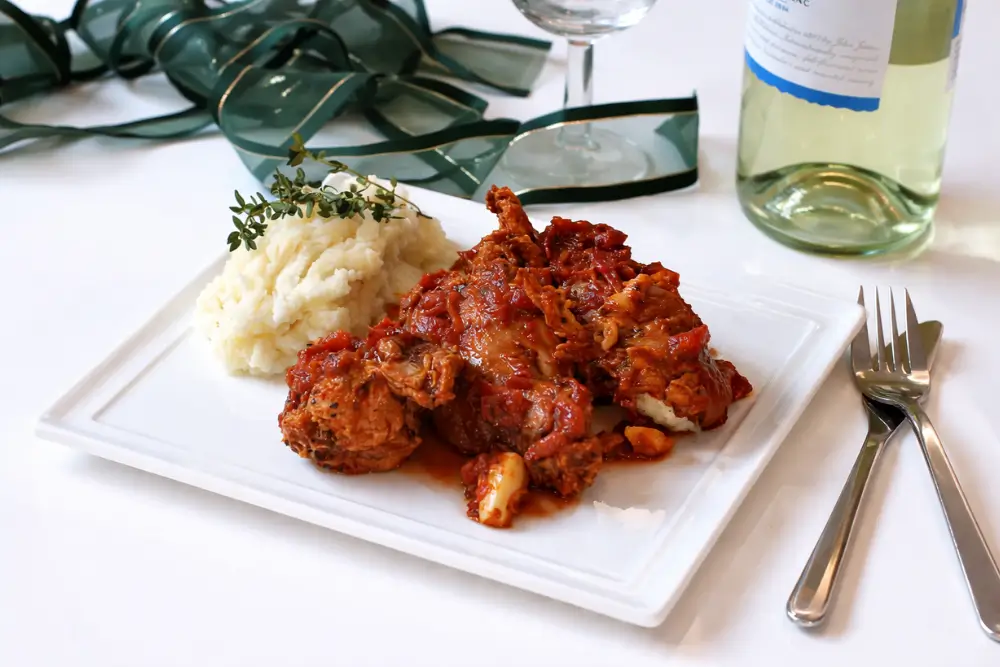
This is my favourite way to cook and eat rabbit, a simple Italian stew made with tomatoes, oregano, and a hint of vinegar that gives the sauce a gentle tang.
When I was a child, I’d choose this dish over chicken any time. I know rabbit is an unusual meat in many countries around the world, but it’s quite common in Italy.
If you can find rabbit where you live, give it a try, as it’s really tasty. If not, this is also a great way to cook chicken.
This recipe came to my mum from her aunt Franca, which is where the name comes from, and it’s become a staple for us. It’s easy to make, and I love the slight tanginess the vinegar brings to the sauce. Oregano pairs really well with rabbit.
This dish is a keeper, and it’s great served with some simple mashed potatoes, just the way my mum would serve it. Buon appetito!
Reasons to Make Aunt Franca’s Rabbit Recipe
- Uses a short ingredient list and keeps shopping simple without extra trips or specialty items.
- Pairs with common sides like mashed potatoes, bread, or vegetables and keeps the meal simple.
- Stores well in the refrigerator and freezer and makes planning ahead easier.
Key Ingredients for Italian Rabbit Stew
Rabbit
Rabbit meat brings a delicate, slightly rich flavour and becomes tender as it cooks slowly. Choose light-coloured meat for a milder taste and softer texture.
Diced Tomatoes
Give mild sweetness and break down into a soft, slightly thick sauce. Ripe fresh tomatoes or good-quality canned ones improve both flavour and texture.
Red Wine Vinegar
Sharpens the sauce with a light tang and balances the richness. A smoother vinegar blends more evenly into the stew.
Find the complete list with measurements in the recipe card below.
How to Make Italian Rabbit Stew
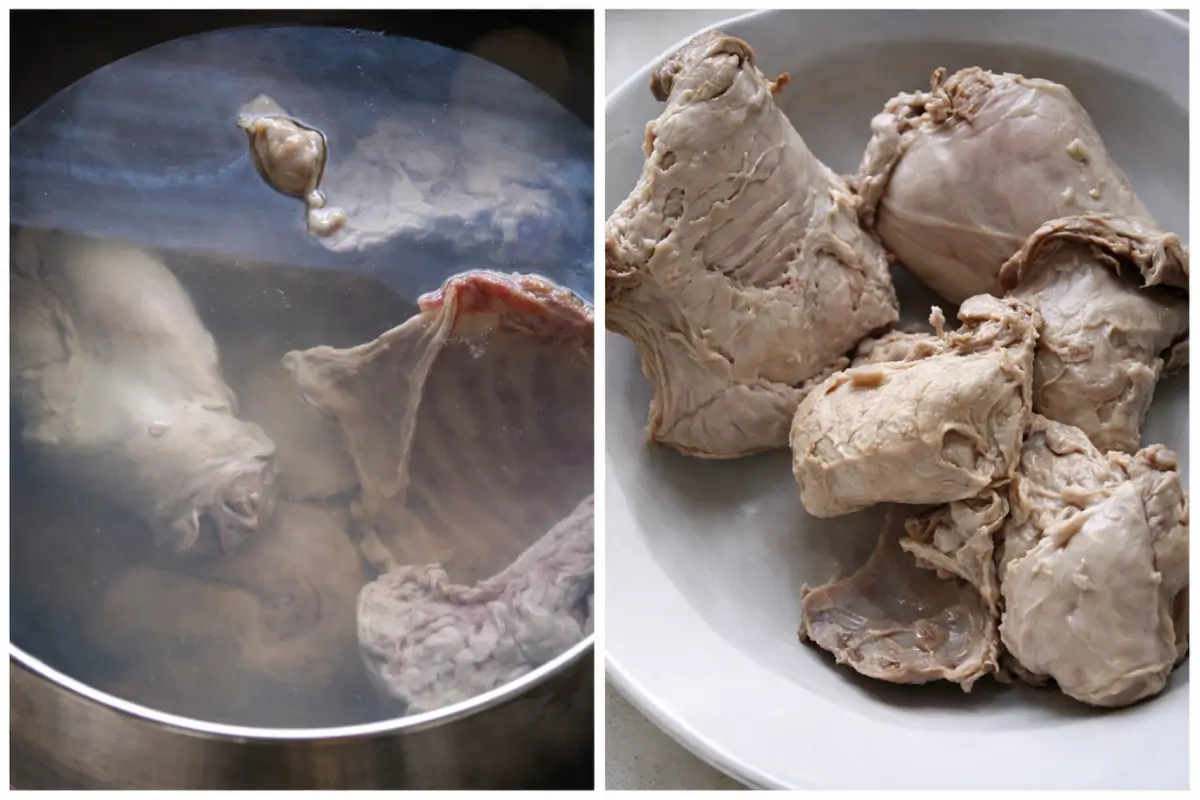
Step 1: Bring a pot of water to a boil. Turn off the heat, add the rabbit pieces, and leave for 30 minutes. Drain well, and pat dry to reduce any strong taste.
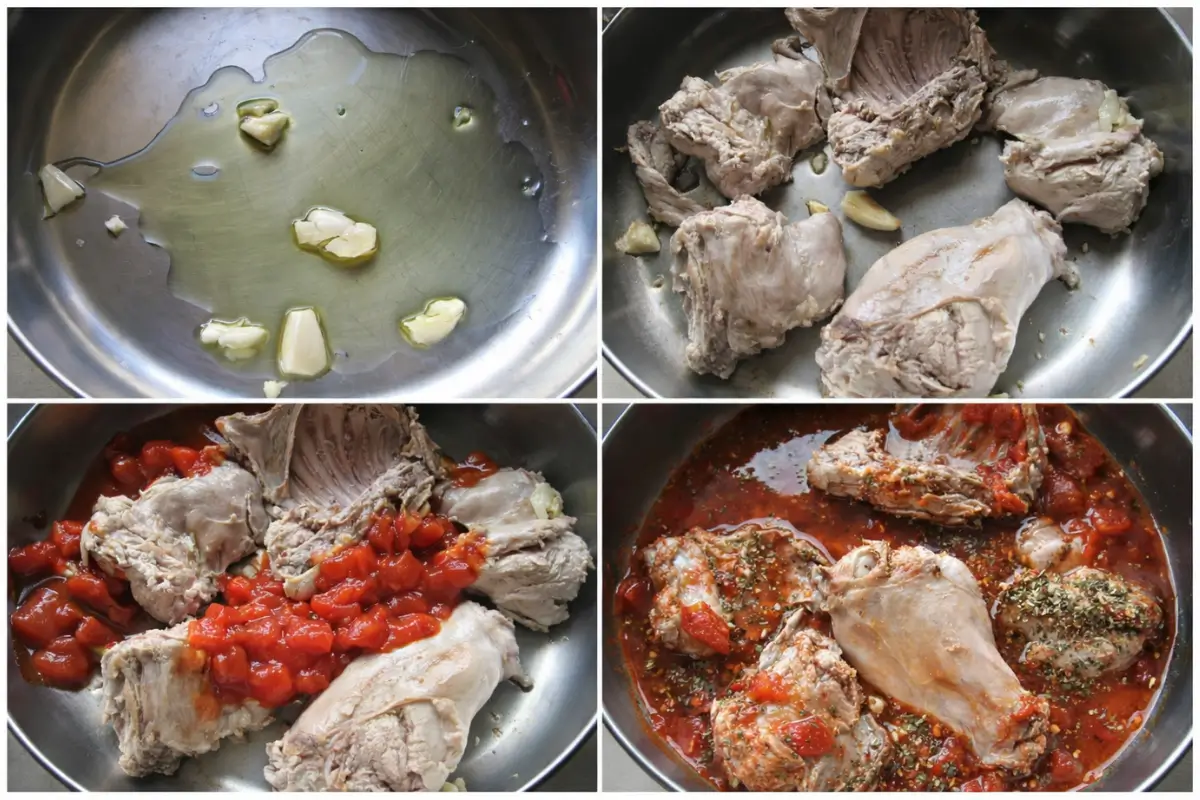
Step 2: Heat the extra virgin olive oil with the crushed garlic in a pan over medium heat. Sauté for 1 minute.
Step 3: Add the rabbit pieces and mix well to coat evenly.
Step 4: After 1 minute, add the tomatoes, salt, and white wine. Stir and sauté for a couple of minutes.
Step 5: Add the oregano and vinegar. Mix well to combine.
Step 6: Cook on low heat, partially covered, until the rabbit is cooked through and the sauce thickens.
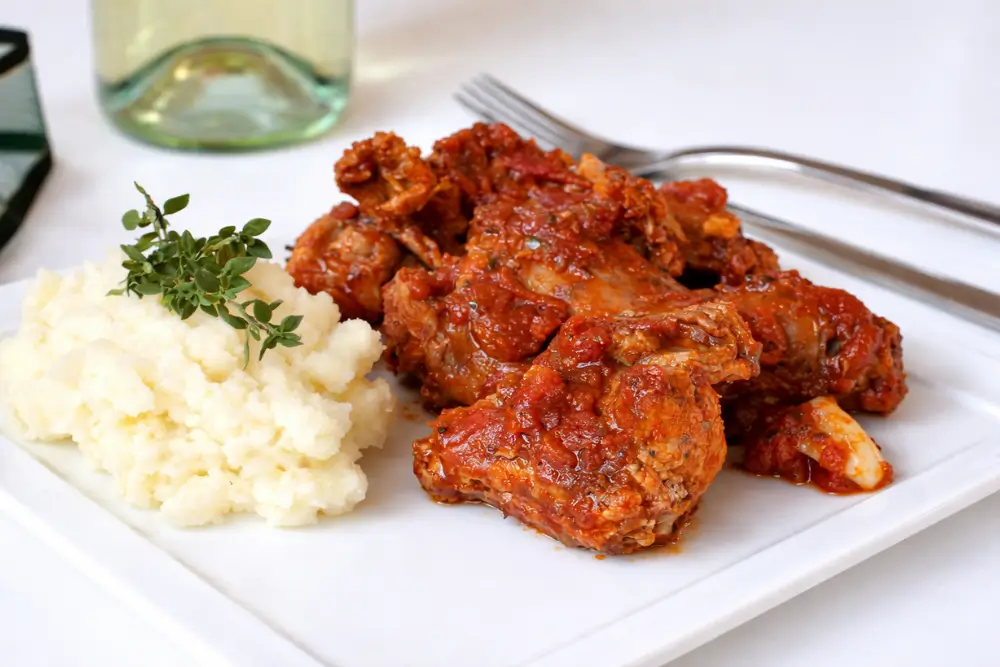
Step 7: Serve warm with mashed potatoes on the side.
Frequently Asked Questions
Yes, chicken works well with the same ingredients and method. Bone-in pieces such as thighs or drumsticks are best, as they stay tender during simmering and absorb the sauce properly.
The meat should feel tender when pierced with a fork and start to pull away from the bone. The sauce should also be slightly thickened and coat the meat evenly.
Yes, you can leave out the wine and replace it with a small amount of light stock or water. The stew will still cook the same way, but the sauce will have a slightly less rounded flavour. A small splash of vinegar at the end can help balance it if needed.
You can serve it with mashed potatoes, crusty bread, or soft polenta, as these absorb the sauce well. A simple green salad on the side helps balance the richness of the dish.
Yes, you can use frozen rabbit, but it should be fully thawed in the refrigerator before cooking. This helps it cook evenly and prevents excess water from thinning the sauce. Pat it dry well before using.
Extra Help from the Kitchen
Dry the Rabbit Thoroughly After Soaking – Pat the rabbit completely dry before cooking so the sauce reduces properly and doesn’t become diluted.
Let the Wine Cook Off Briefly – Allow the wine to simmer for a minute before adding other ingredients so the alcohol evaporates and the flavour softens.
Adjust the Vinegar at the End – Taste the sauce near the end and add a small splash if needed to keep the tang balanced and well integrated.
Keep the Heat Low and Steady – Maintain a gentle simmer to keep the meat tender and allow the sauce to develop gradually.
Finish with the Lid Off if Needed – Remove the lid towards the end of cooking to help the sauce reduce and coat the rabbit more evenly.
Variations and Twists
Swap In Different Herbs – Replace oregano with sprigs of rosemary or other herbs such as thyme or sage for a deeper herbal flavour and a stronger herbal finish in the sauce.
Rabbit Cacciatore – Add sliced peppers and chopped onion to the pan with the tomatoes, then simmer as usual. They soften into the stew, bringing natural sweetness and giving the sauce a fuller body with a slightly chunkier texture.
Add Vegetables – Add vegetables such as mushrooms, celery, potatoes, or carrots during cooking. They soften in the sauce, deepen the savoury flavour, and give the stew a thicker, more textured finish.
Pour In Red Wine Instead – Red wine creates a deeper, richer sauce with a darker colour and a more rounded, robust flavour.
Storage and Shelf Life
Store the Italian Rabbit Stew in an airtight container in the refrigerator for up to 3 days. It should be cooled and refrigerated within 2 hours of cooking and not left at room temperature beyond that.
For longer storage, freeze it in a sealed container for up to 2 to 3 months. Thaw overnight in the refrigerator before reheating. Reheat gently on the stove over low heat until hot throughout, adding a small splash of water if the sauce has thickened too much.
More Hearty Meat Dishes to Try
- Rabbit with Black Olive Tapenade
- Pollo alla Cacciatora
- Lamb and Artichoke Stew
- Italian Sausages in Tomato Sauce
- Chicken with Black Olive Tapenade
Italian Rabbit Stew (Aunt Franca’s Rabbit Recipe)
Ingredients
- 500 g – 1.1 lb rabbit – cleaned and cut into pieces
- 2 garlic cloves – crushed
- 2 tbsp extra virgin olive oil
- 50 ml – 1.7 oz white wine
- ½ tbsp oregano
- 150 g – 5.3 oz diced tomatoes
- 30 ml – 1 oz red wine vinegar
- salt – to taste
Instructions
- Bring a pot of water to a boil. Turn off the heat, add the rabbit pieces, and leave for 30 minutes. Drain well, and pat dry to reduce any strong taste.
- Heat the extra virgin olive oil with the crushed garlic in a pan over medium heat. Sauté for 1 minute.
- Add the rabbit pieces and mix well to coat evenly.
- After 1 minute, add the tomatoes, salt, and white wine. Stir and sauté for a couple of minutes.
- Add the oregano and vinegar. Mix well to combine.
- Cook on low heat, partially covered, until the rabbit is cooked through and the sauce thickens.
- Serve warm with mashed potatoes on the side.
This post may contain affiliate links. If you make a purchase through these links, I may earn a small commission at no extra cost to you.

Love travelling as much as cooking?
Many of the recipes I share are inspired by places I’ve visited around the world. On Travel with Manu you’ll find destination guides, itineraries and travel inspiration to help you plan your next adventure.











Pinned. Like the idea of the vinegar in the tomato sauce.
Have to try this version. My family rabbit recipes are for eggplant rabbit and pan roasted, but nothing with red sauce.
I love rabbit… in Portugal it is as common as Chicken…. great recipe!
The humble ‘wabbit’ has been on my menus since childhood! Absolutely love your simple recipe . . . have this marvellous butcher a couple of kms up the road who has REAL calves liver and tongue and sweetbreads and honeycomb tripe! Bet he has lovely rabbits too – see on Friday! This DOES look terrific 🙂 !
Aunt Franca’s Rabbit does conjure up images of a lovely little pet rabbit but they are such a pest here in New Zealand and yet only a few people eat them – I am not sure why.
I like Frank’s story above.
Delicious! I absolutely adore rabbit but I normally have it confit. I love this lighter take on it.
Here in the US, rabbit is available but remains “controversial”. I remember making rabbit once for a group of friends. (The recipe was actually pretty similar to your Aunt Franca’s.) I didn’t tell them what I was eating until afterwards. The rabbit was huge hit and when the time came for the big “reveal” they all laughed. All but one, that is. She never spoke to me again!