

Perfect with polenta or lentils, Homemade Verzini are rustic Northern Italian sausages made with freshly ground pork, red wine, and a delicate blend of spices.

After successfully making Salame Cotto, my own pork sausages, and cotechino, I decided it was finally time to make verzini too. These traditional Northern Italian sausages are leaner than many other Italian sausages, and they’re surprisingly simple to make. Their main characteristic is their size. They’re usually about 5 cm thick and 10 to 12 cm long.
As you may know, I was born and brought up in Milan. Food-wise, Milan is famous for risotto, especially Risotto alla Milanese made with saffron, ossobuco, cotoletta, panettone, and cassoeula.
I’ve already shared recipes for many of Milan’s most well-known dishes. Cassoeula, however, was always missing. The reason was simple. I could never find proper Verzini sausages outside Italy, even though they’re an essential part of the dish.

Since I’d already had success making other Italian cured meats and sausages at home, I decided to start making verzini myself, too. I only had regular sausage casings in my kitchen when I made this batch, so mine turned out slightly thinner than traditional verzini.
Still, I was very happy with the result! The flavour tasted exactly like the sausages I remember eating in Milan growing up.
If you enjoy regional Italian recipes and traditional home-style cooking, this is definitely one to try. And if you’re planning to make cassoeula, these sausages are an essential part of the dish. Enjoy, and don’t forget to check out my other Regional Italian recipes!
Why We Love This Traditional Verzini
- Freshly made sausages have a softer texture and a more natural flavour than many shop-bought ones.
- Smaller links make these sausages useful for both large family meals and casual weeknight dinners.
- Homemade verzini freeze well, which makes larger batches practical for future meals.
Key Ingredients for Homemade Verzini
Pork Scotch Fillet
Pork scotch fillet, also called pork neck or pork collar, gives the sausages structure and a rich, meaty texture while staying tender after cooking. Choose well-marbled pork for better flavour and a softer texture once ground.
Pork Rashers
Pork rashers, similar to fatty pork belly strips, add enough fat to keep the filling moist and soft. Removing the skin helps the mixture grind more evenly and blend smoothly with the leaner pork.
Red Wine
Red wine adds depth and gentle acidity to the filling. A dry red wine works best, especially lighter Italian-style reds with a softer flavour. Infusing the wine with garlic softens the garlic flavour and spreads it evenly through the sausages.
Cinnamon Powder
Cinnamon adds subtle warmth often found in Northern Italian sausage recipes. Only a small amount is needed to round out the seasoning.
Find the complete list with measurements in the recipe card below.
How to Make Homemade Verzini
Step 1: Remove the garlic cloves from the wine and set the wine aside.
Step 2: Roughly chop the pork scotch fillet and pork rashers.
Step 3: Grind the pork scotch fillet and pork rashers using a 0.5 cm – 0.2 inch diameter grinder.
Step 4: Place the ground meat into a large bowl. Add the salt, garlic-infused wine, cinnamon powder, coriander powder, mace powder, and freshly ground black pepper. Knead well until the mixture becomes sticky and evenly combined.
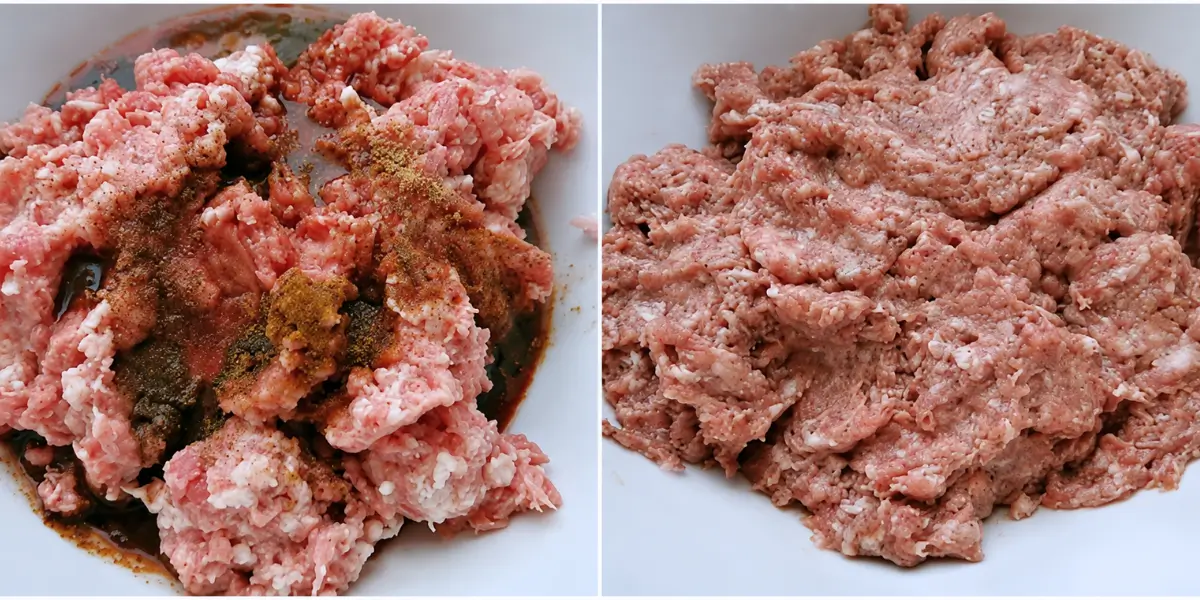
Step 5: Stuff the meat mixture into the casing and tie knots every 10 to 12 cm – 4 to 5 inches.
Step 6: Let the verzini rest uncovered at 20° to 25°C (68°F – 77°F) for 24 hours before cooking or freezing them.

Frequently Asked Questions
Yes, though the texture and shape will be different. You can shape the filling into small sausage patties or logs and cook them directly in a frying pan.
Dry red wines with a mild flavour work best for verzini. Chianti, Barbera, or other lighter Italian-style reds are good options.
A meat grinder and sausage stuffer make the process easier and give the most traditional texture. If needed, you can use pre-ground pork and a piping bag for small homemade batches.
A combination of lean pork and fatty pork gives the best texture. Pork scotch fillet and pork rashers work well together because they create a balanced filling that stays moist without becoming too fatty. Pork shoulder can also be used, though it’s best combined with a smaller amount of extra pork fat or rashers.
Extra Help from the Kitchen
Chill the Wine Before Mixing – Cold wine helps keep the pork mixture firm while mixing and stuffing. A cooler filling is easier to handle and helps keep the sausage texture firmer.
Prick Air Bubbles with a Needle – Small air pockets inside the casing can create uneven sausages. Use a clean needle to release trapped air before resting the links.
Test the Seasoning First – Cook a small spoonful of the filling in a frying pan before stuffing the casings. This gives you a chance to adjust the salt or spices before making the full batch.
Dry the Casings Before Stuffing – Pat the rinsed casings lightly with a paper towel before filling them. Too much surface water can make the casings slippery and harder to handle during stuffing.
Work in Small Batches – Keep part of the meat mixture refrigerated while stuffing the first sausages. Colder meat stays firmer and moves through the stuffer more easily.
Variations and Twists
Use White Wine – Replace the red wine with the same amount of dry white wine for a lighter flavour. The rest of the recipe and measurements can stay exactly the same.
Spicy Verzini – Mix ½ tsp of red pepper flakes into the dry spices before combining them with the pork. The extra heat works particularly well with lentils or polenta.
Fold in Fresh Parsley – Add a small handful of finely chopped fresh parsley to the meat mixture during mixing. It gives the sausages a fresher finish without changing the texture.
Use More Pork Shoulder – Replace the pork scotch fillet with 1 kg – 2.2 lbs of pork shoulder and reduce the pork rashers to 200 g – 7 oz. This keeps enough fat in the mixture for soft, juicy sausages.
Try Ground Turkey – Replace the pork with pre-ground turkey for a leaner sausage. Skip the grinding step completely and mix the filling gently to keep the texture lighter.
Storage and Shelf Life
Store uncooked verzini sausages in an airtight container in the refrigerator at 0°C to 4°C – 32°F to 39°F for up to 2 days after the resting stage. Fresh sausages are highly perishable, so they should be refrigerated promptly after preparation.
For longer storage, freeze them in freezer-safe bags or airtight containers for up to 3 months. Thaw the sausages overnight in the refrigerator before cooking. Reheat cooked verzini gently in a frying pan or simmer them slowly in sauce or stew until heated through.
More Traditional Homemade Sausage Recipes
- Homemade Sicilian Pork Sausage with Fennel
- Italian Sausages in Tomato Sauce
- Homemade Spanish Chorizo
- Homemade Cotechino
Homemade Verzini Recipe
Equipment
Ingredients
- 800 g – 1.75 lb pork scotch fillet
- 400 g – 14 oz pork rashers – skin removed
- 20 g – 1 tbsp salt
- 115 ml – ½ cup red wine – infused with 2 smashed garlic cloves for at least 1 hour
- ½ tbsp freshly ground black pepper
- ¼ tsp cinnamon powder
- ¼ tsp coriander powder
- ¼ tsp mace powder
- edible sausage or thin salami casings – soaked in tepid water for at least 20 minutes and rinsed
Instructions
- Remove the garlic cloves from the wine and set the wine aside.
- Roughly chop the pork scotch fillet and pork rashers.
- Grind the pork scotch fillet and pork rashers using a 0.5 cm – 0.2 inch diameter grinder.
- Place the ground meat into a large bowl. Add the salt, garlic-infused wine, cinnamon powder, coriander powder, mace powder, and freshly ground black pepper. Knead well until the mixture becomes sticky and evenly combined.
- Stuff the meat mixture into the casing and tie knots every 10 to 12 cm – 4 to 5 inches.
- Let the verzini rest uncovered at 20° to 25°C (68°F – 77°F) for 24 hours before cooking or freezing them.
Notes
This post may contain affiliate links. If you purchase through these links, I may earn a small commission at no extra cost to you.

Love travelling as much as cooking?
Many of the recipes I share are inspired by places I’ve visited around the world. On Travel with Manu you’ll find destination guides, itineraries and travel inspiration to help you plan your next adventure.

















Thanks for the great information. I’m in Colorado, US. I could use some clarification on the pork cuts. Scotch fillet sounds like Boston butt. As far as I know are strips of bacon. Are they cured, smoked, or raw pork belly slices?
Hi Frederick
Sorry for the late reply! Yes, Boston butt seems like the right cut. Rashers would be sliced raw pork belly. Hope it helps! 🙂
Soooo impressed! Brava