

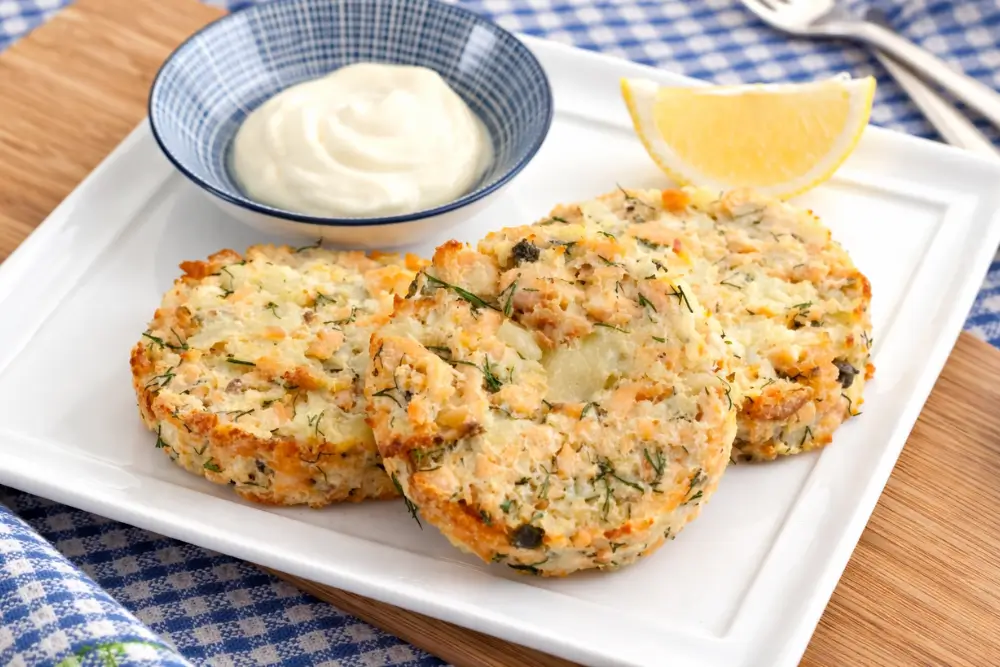
Crisp on the outside with a soft centre, Low FODMAP Salmon Cakes combine flaked salmon, mashed potato, and dill into an easy baked dish.
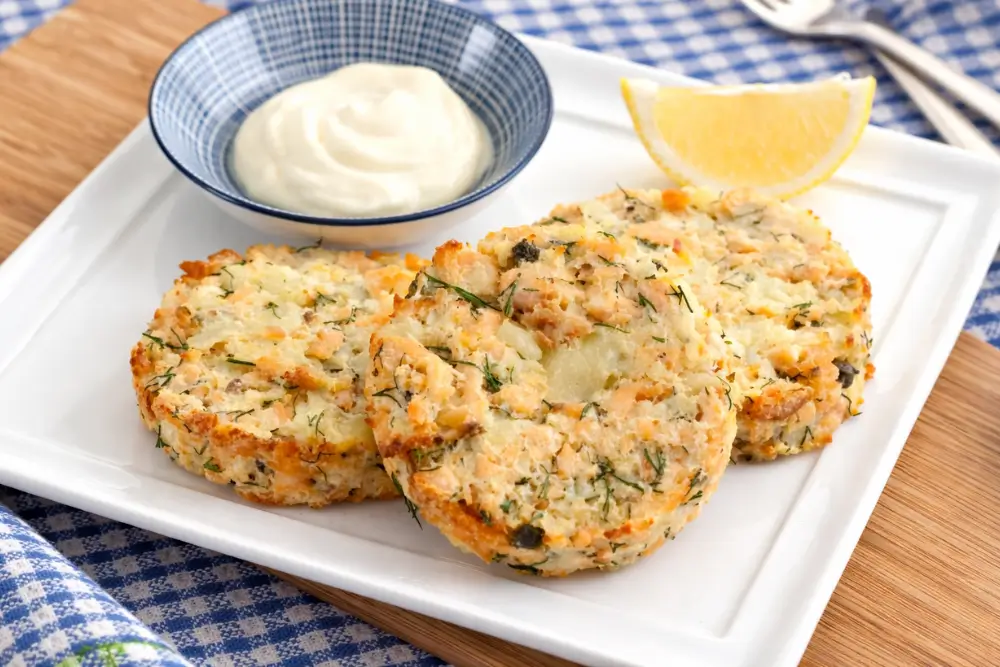
I must admit I’m not a huge seafood lover. However, I eat fish at least twice a week, so I’m always looking for different ways to serve it to the family and keep things interesting.
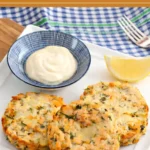
These Low FODMAP Salmon Cakes are one of those recipes I come back to often. They’re simple to prepare, easy to shape, and bake into soft, tender patties with a light golden crust.
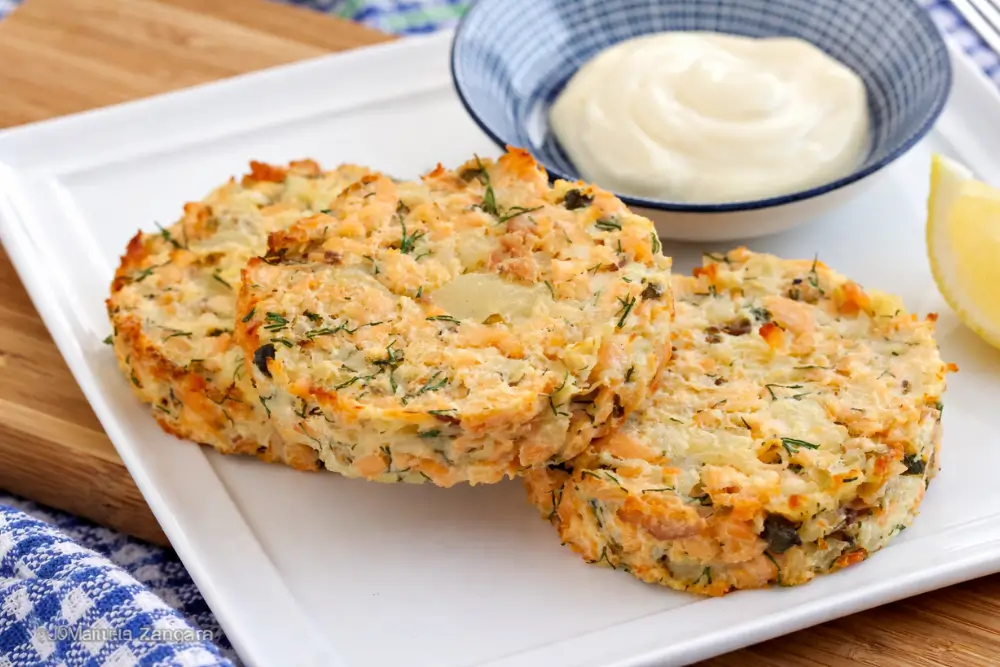
This version keeps things light and low FODMAP, without losing flavour or texture. The mashed potato keeps the inside moist, while the outside holds together well.
What makes these patties stand out for me is the flavour combination. Dill and salmon have always worked well together in my kitchen.
It’s a pairing I first noticed during a trip to Norway as a teenager, where a simple plate of steamed salmon and potatoes tasted completely different with the addition of dill. Capers add a light, briny note that works well with the salmon.
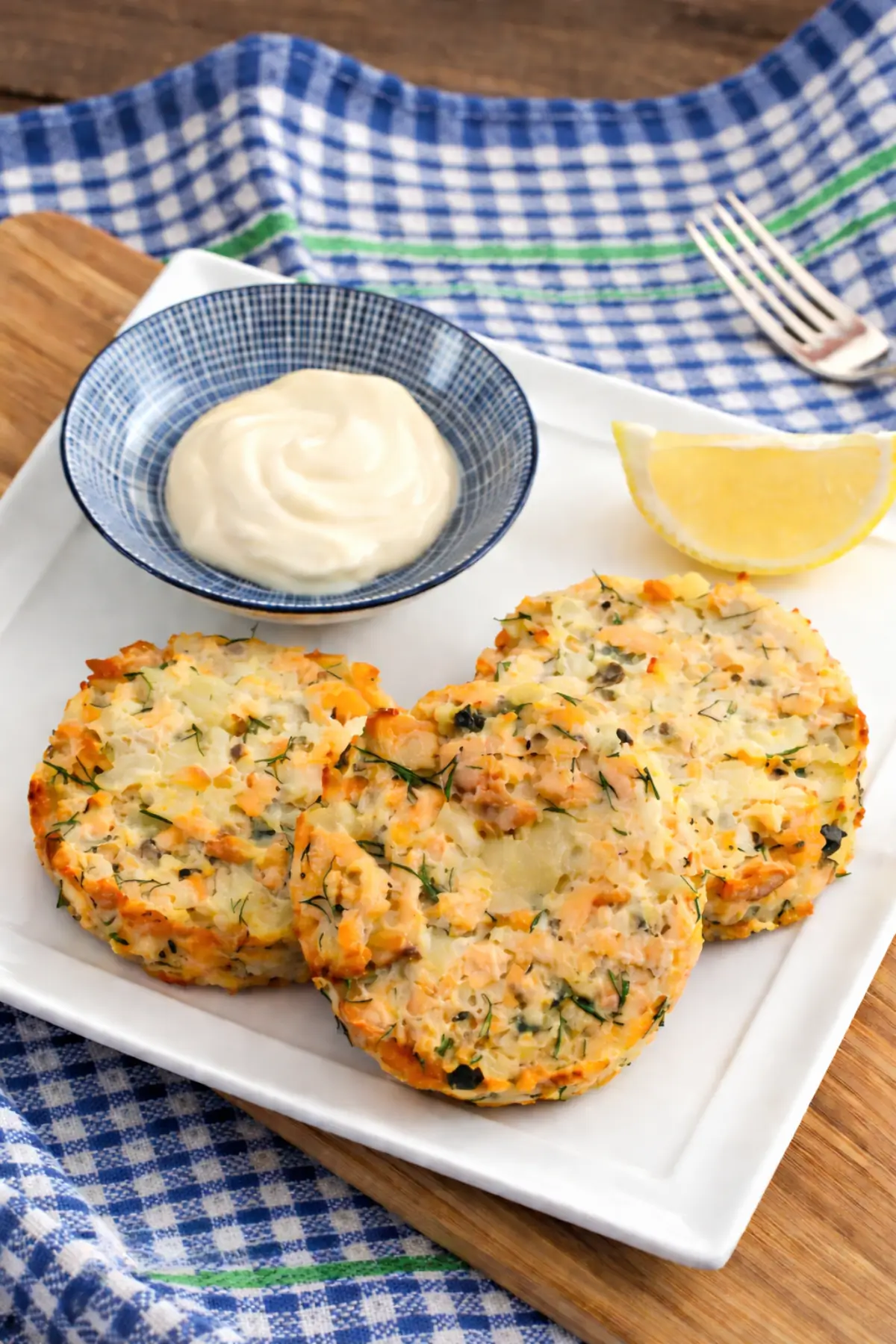
These salmon cakes are very versatile. You can serve them as an appetiser, as a main with a side, or even inside a burger.
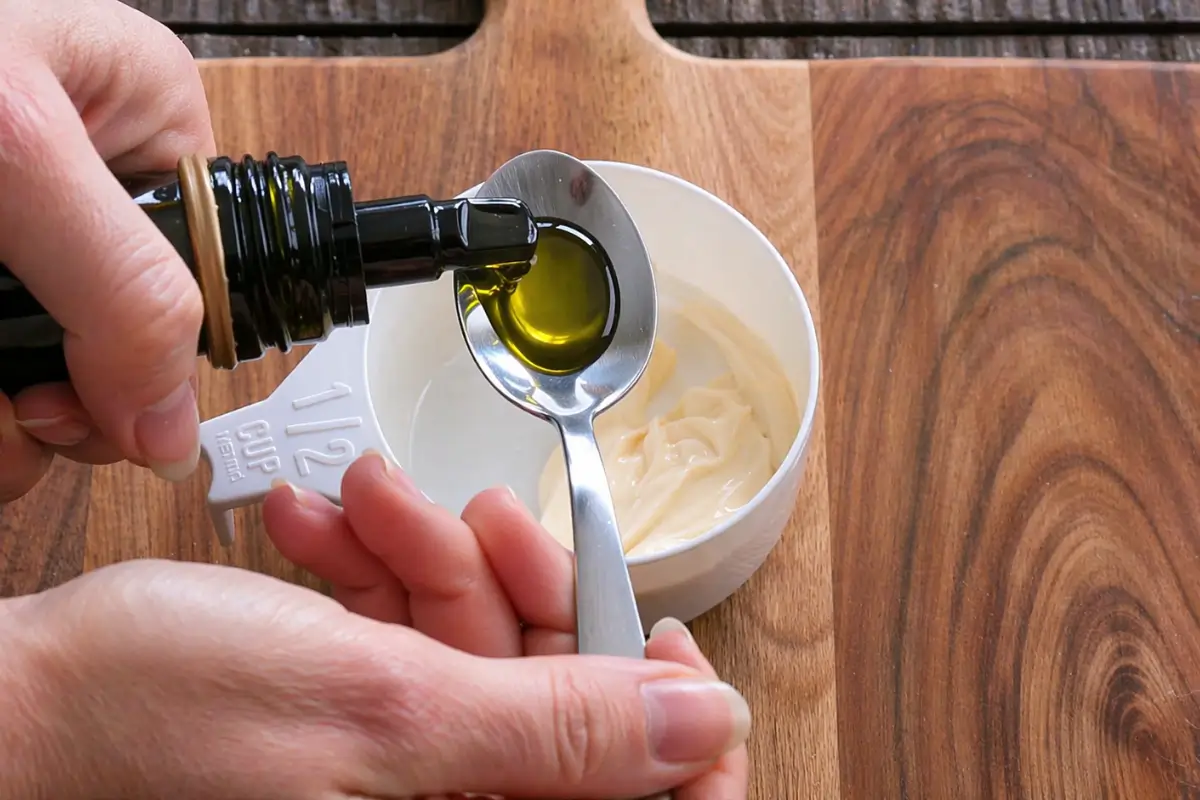
The aioli comes together quickly and stays Low FODMAP when made with suitable mayonnaise and garlic-infused olive oil. It adds a smooth, creamy finish alongside the salmon.
Reasons to Make Homemade Salmon Cakes
- Flexible enough to turn into a salmon burger, appetiser, or plated meal depending on what you need.
- Pairs easily with salads, rice, or vegetables and doesn’t need complicated sides.
- Makes a lighter alternative to meat-based patties without feeling like a compromise.
Key Ingredients for Low FODMAP Salmon Cakes
Salmon
Salmon gives the cakes their soft, flaky texture and rich flavour once baked. Fresh salmon fillets work best, especially skinless pieces, as they cook evenly and break apart easily.
Potato
Potato keeps the mixture soft and light, helping the cakes stay tender inside. Floury types like Russet or Yukon Gold mash smoothly and blend well with the salmon.
Dill
Dill adds a fresh, slightly grassy flavour that pairs naturally with fish. Fresh dill has a more delicate taste, though dried can be used in smaller amounts.
Capers
Bring a salty, briny note that contrasts with the salmon. They add small pockets of flavour throughout each bite.
Homemade Low FODMAP Aioli
The aioli is made with low FODMAP mayonnaise, I use Hellmann’s, combined with garlic-infused olive oil and lemon juice. It’s smooth and creamy with a light garlic note and adds richness while keeping the flavour well balanced.
Find the complete list with measurements in the recipe card below.
How to Make Low FODMAP Salmon Cakes
Salmon Cakes
Step 1: Grease a piece of foil. Place the salmon in the centre, season lightly with salt, and fold to seal into a tight parcel.
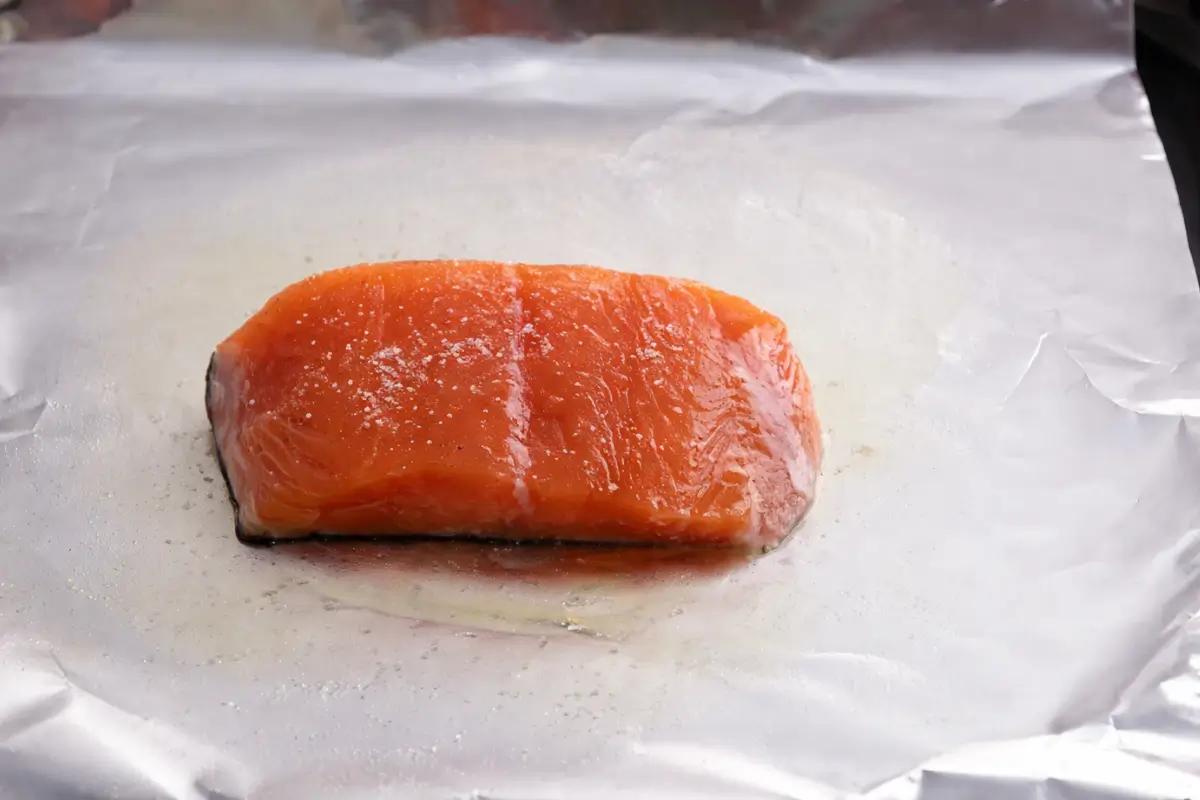
Step 2: Cook in a preheated oven at 180°C – 355°F for 15–20 minutes, or until just cooked through. Set aside to cool slightly.
Step 3: In a large mixing bowl, mash the boiled potatoes until smooth.
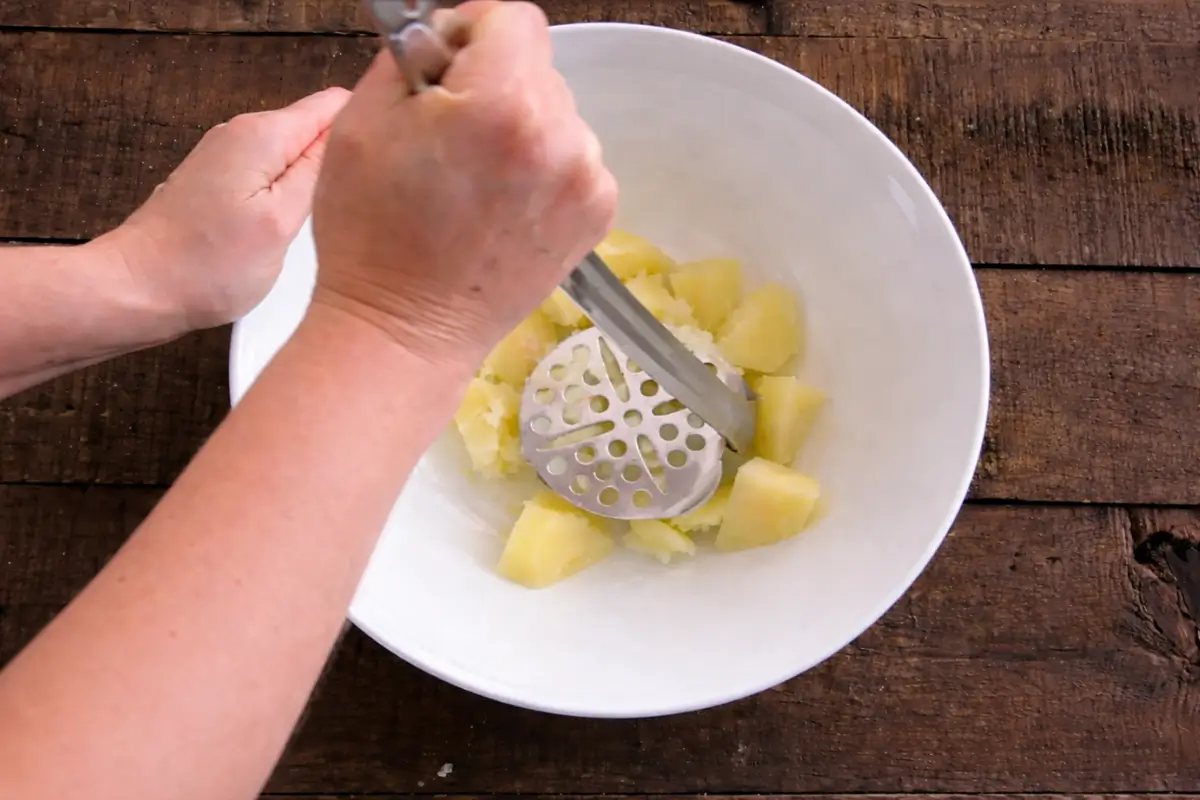
Step 4: Shred the cooked salmon and add it to the bowl.
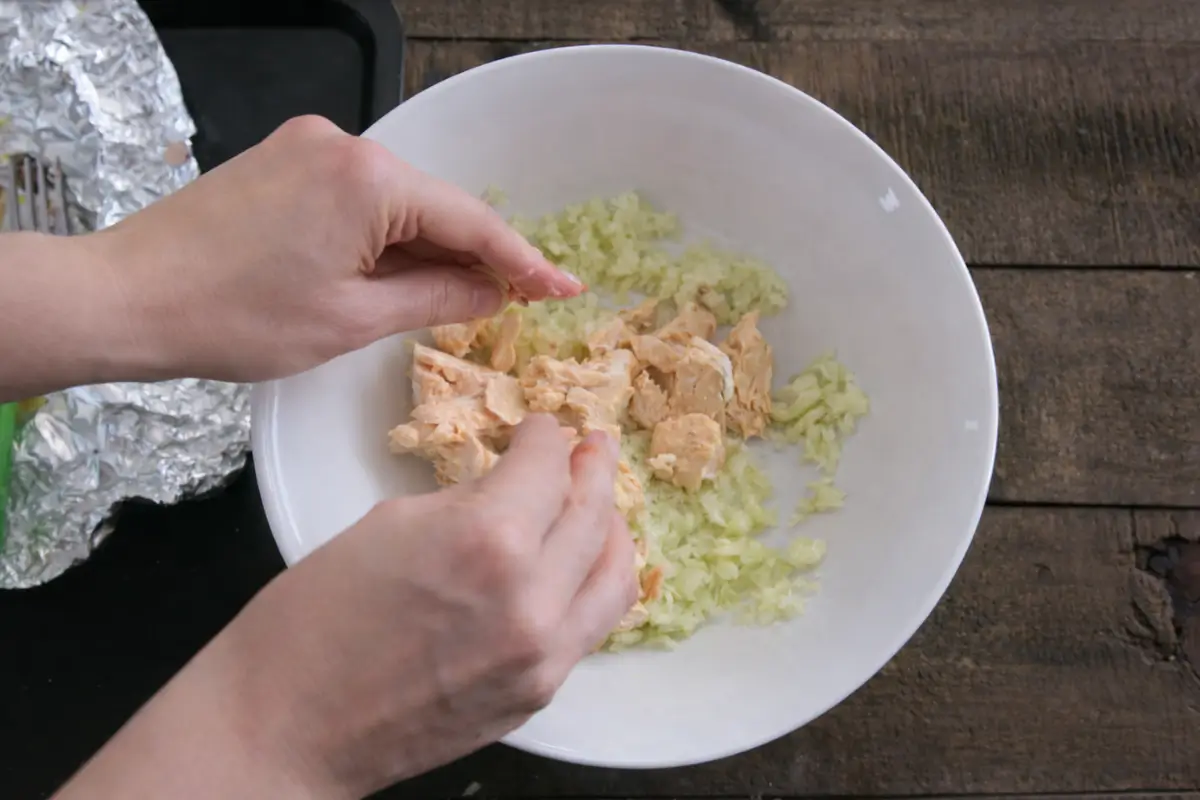
Step 5: Add the remaining salmon cake ingredients. Mix with a fork until evenly combined.
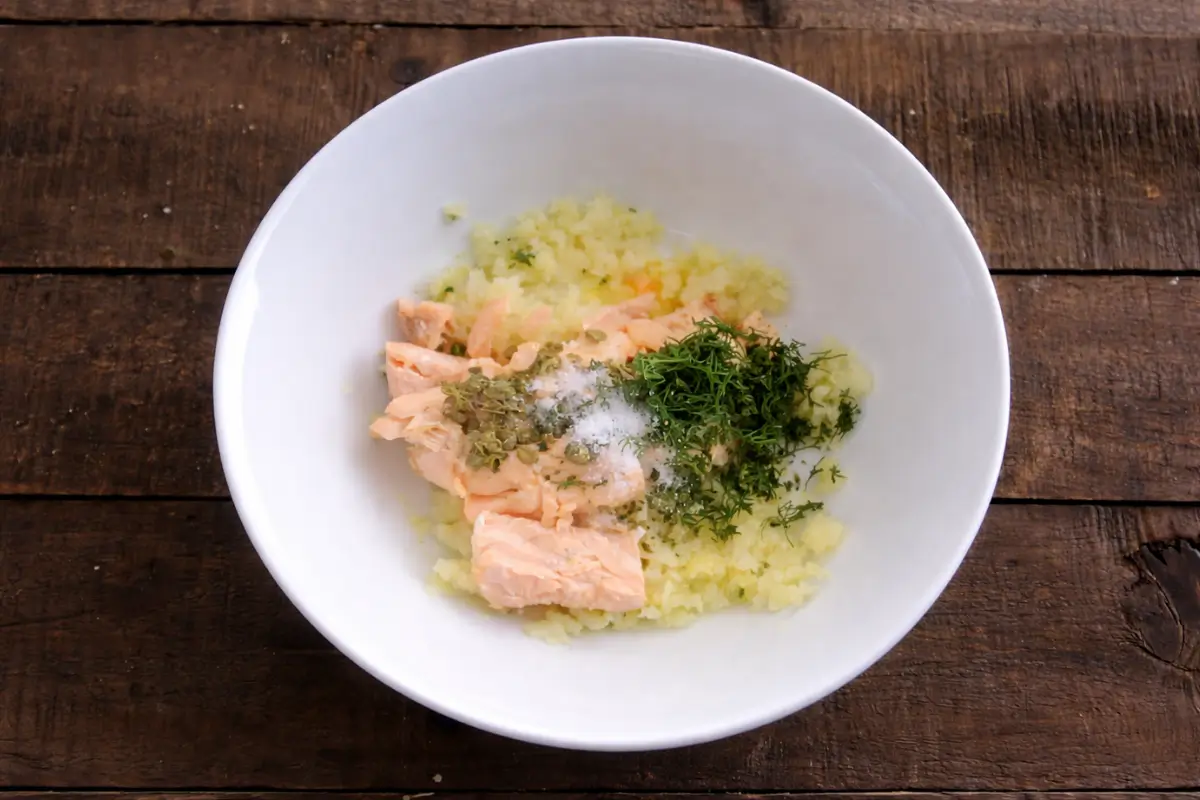
Step 6: Shape into mini patties, about 7.5 cm – 3 inches in diameter, and place them on a baking tray lined with baking paper.
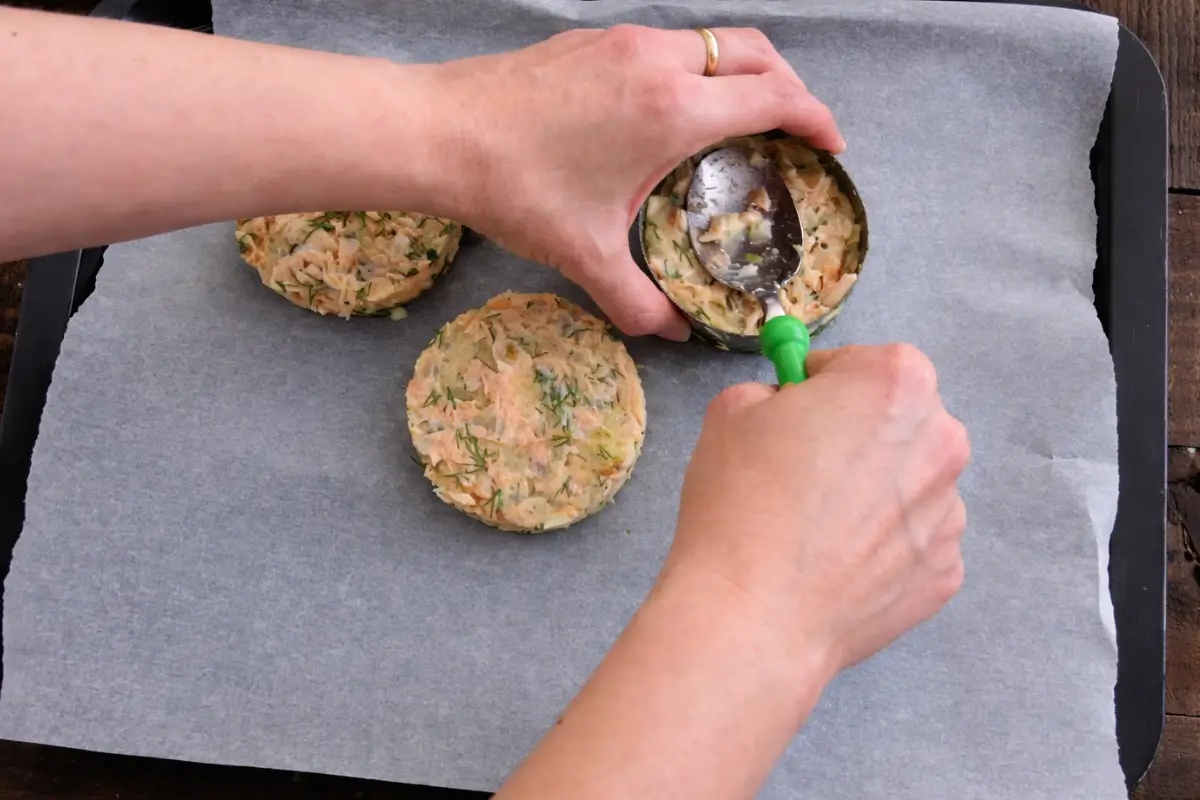
Step 7: Bake in a preheated oven at 180°C – 355°F for 25–30 minutes, or until golden brown. Flip the salmon patties halfway through the cooking time.
Low FODMAP Aioli
Step 1: Add all the ingredients to a small bowl and mix until smooth and well combined.
Step 2: Serve the salmon cakes warm with the aioli and lemon wedges on the side.
Frequently Asked Questions
Yes, canned salmon works well. Drain it thoroughly and remove any large bones before mixing to avoid excess moisture.
Make sure the mixture is well combined and not too wet. If needed, chill it briefly or mix in a small amount of mashed potato. This keeps the patties firm and prevents them from falling apart during baking.
You can mix in ingredients like Dijon mustard, lemon zest, chopped chives, or parsley. Capers already add a briny note, and a small amount of low FODMAP breadcrumbs can be included if you want a firmer texture.
They should be lightly golden on the outside and feel firm when gently pressed. The centre should be hot all the way through.
Extra Help from the Kitchen
Dry the Salmon Before Cooking – Pat the salmon dry with a paper towel before seasoning. Too much surface moisture can make the mixture softer than expected.
Let the Mixture Firm Slightly Before Shaping – If the mixture feels too soft, place it in the fridge for 10–15 minutes. It becomes easier to handle and holds its shape better when formed.
Use Damp Hands for Shaping – Lightly damp hands make shaping quicker and less messy. The mixture won’t cling, and the patties come out smoother.
Flatten Evenly for Consistent Cooking – Keep the patties the same thickness. Uneven shaping can lead to dry edges while the centre finishes cooking.
Let Them Rest Briefly After Baking – Leave the patties on the tray for a few minutes once out of the oven. They settle slightly and are easier to move without breaking.
Variations and Twists
Stir In Dijon Mustard – Mix in up to 1 tbsp Dijon mustard for a sharper savoury note that pairs well with dill and lemon. Check the label to avoid garlic or onion powders.
Fold in Lemon Zest – Add 1–2 tsp finely grated lemon zest for a more fragrant citrus note without adding extra moisture. It keeps the patties firm.
Swap Dill for Chives and Parsley – Replace dill with 1–2 tbsp chopped chives and parsley for a softer herbal finish.
Mix Through Low FODMAP Breadcrumbs – Add 2–3 tbsp low FODMAP breadcrumbs if the mixture feels too soft. Choose gluten-free options without ingredients like honey or inulin.
Finish With a Dill Sauce Instead of Aioli – Combine 2–3 tbsp low FODMAP mayonnaise, such as Hellmann’s, or lactose-free yogurt with fresh dill for a lighter, tangier sauce.
Storage and Shelf Life
Store the salmon cakes in an airtight container in the fridge for up to 3 days. They shouldn’t be left at room temperature for extended periods.
For freezing, place the cooked and cooled patties in a single layer before transferring them to a sealed container. They will keep well for up to 2 months while maintaining good texture.
Thaw overnight in the fridge before reheating. Reheat in the oven at 180°C – 355°F until warmed through to help keep their texture.
More Delicious Ways to Enjoy Salmon
- Salmon Sliders with Aioli
- Warm Salmon and Potato Salad
- Lemongrass Salmon Skewers
- Salmon Sashimi with Ponzu
- Salmon Confit with Aioli
Low FODMAP Salmon Cakes Recipe
Ingredients
Salmon Cakes
- 340 g – 2 ¼ cups salmon
- ½ cup potato – boiled and mashed
- 2 tbsp dill – chopped
- 1 tbsp lemon juice
- 2 tbsp capers – drained
- 1 egg – beaten
- ¾ tsp sea salt
- lemon wedges – for serving
Low FODMAP Aioli
- 1 ½ tbsp low FODMAP mayonnaise – I use Hellmann’s
- ½ tsp garlic-infused olive oil
- ½ tsp lemon juice
Instructions
Salmon Cakes
- Grease a piece of foil. Place the salmon in the centre, season lightly with salt, and fold to seal into a tight parcel.
- Cook in a preheated oven at 180°C – 355°F for 15–20 minutes, or until just cooked through. Set aside to cool slightly.
- In a large mixing bowl, mash the boiled potatoes until smooth.
- Shred the cooked salmon and add it to the bowl.
- Add the remaining salmon cake ingredients. Mix with a fork until evenly combined.
- Shape into mini patties, about 7.5 cm – 3 inches in diameter, and place them on a baking tray lined with baking paper.
- Bake in a preheated oven at 180°C – 355°F for 25–30 minutes, or until golden brown. Flip the salmon patties halfway through the cooking time.
Low FODMAP Aioli
- Add all the ingredients to a small bowl and mix until smooth and well combined.
- Serve the salmon cakes warm with the aioli and lemon wedges on the side.
This post may contain affiliate links. If you make a purchase through these links, I may earn a small commission at no extra cost to you.

Love travelling as much as cooking?
Many of the recipes I share are inspired by places I’ve visited around the world. On Travel with Manu you’ll find destination guides, itineraries and travel inspiration to help you plan your next adventure.






This can be a huge concept! Shepherd’s pie is loved by my spouse, but I am a buff, yet this variation I can easily get driving!