

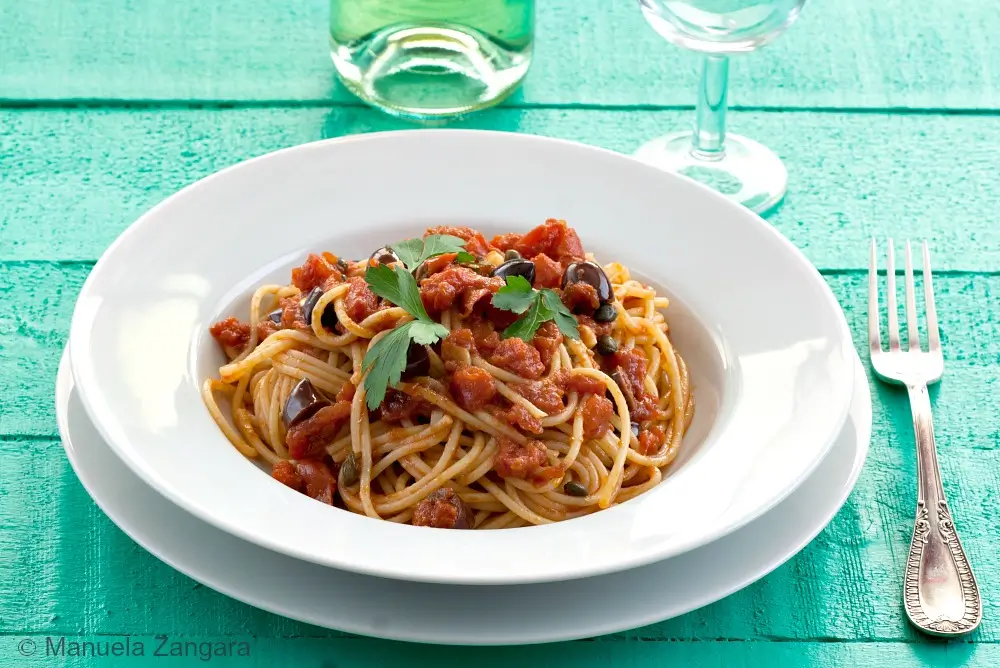
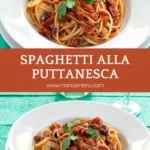
Briny olives and capers give Spaghetti alla Puttanesca its unmistakable flavour, ideal for a relaxed date night and done in 20 minutes.
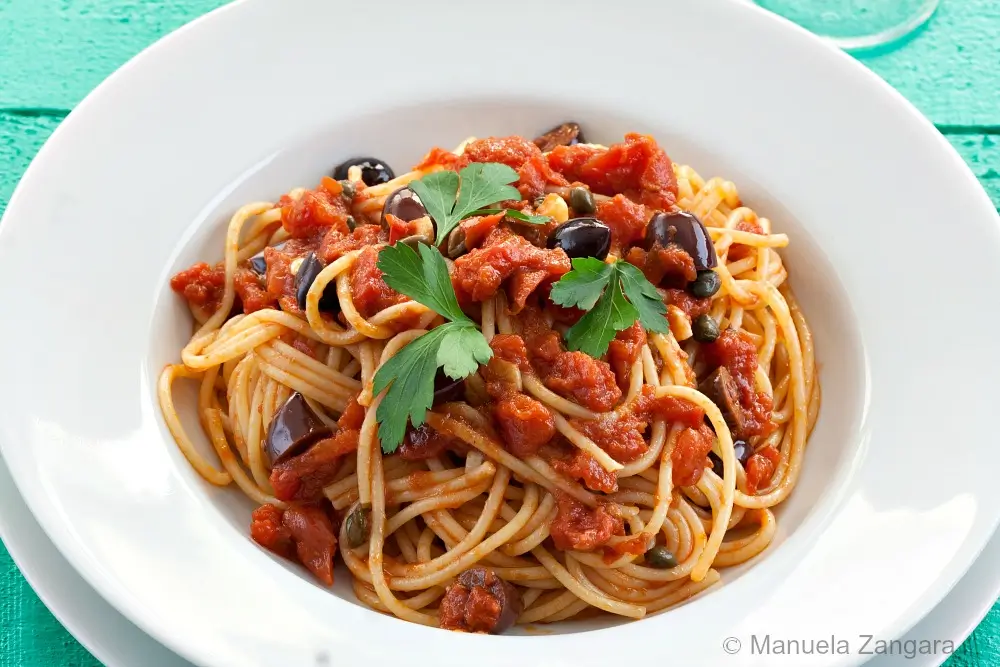
Finally, a pasta dish again! I can’t believe I haven’t published a pasta recipe in a while. When we were living in Italy, we used to eat pasta once a day, almost every day.
Yes, that’s the way Italians do it. After moving to Australia, we don’t eat it quite as often, but I still love cooking pasta, and it remains my go-to dish for busy days, especially during the week.
This recipe is a true classic of Italian cuisine. It’s very famous across Italy and originates from the regions of Campania and Lazio, where Naples and Rome are located. The name literally translates to “spaghetti in the style of a whore.”
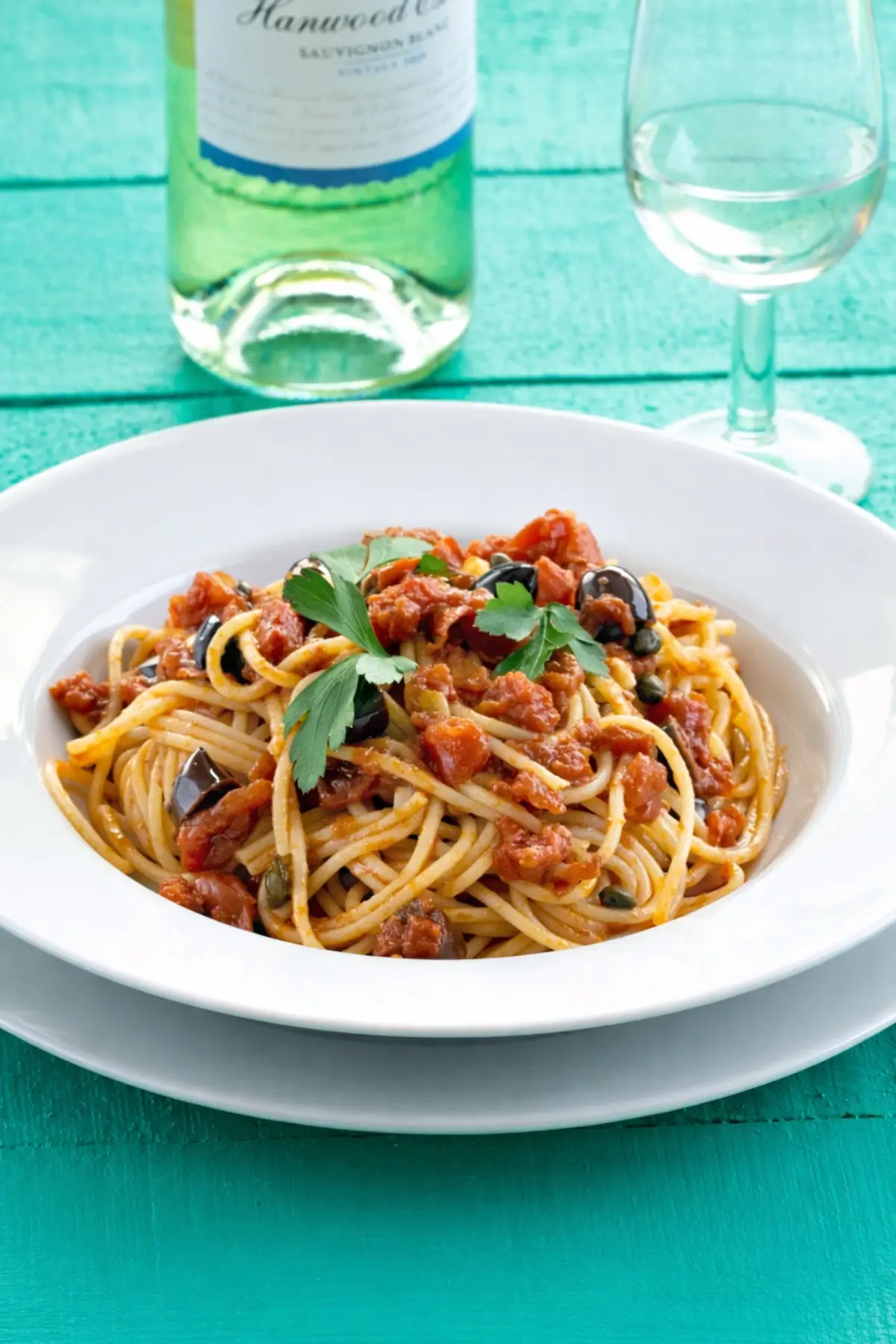
In Italian, we also use the word puttanata, which derives from puttana, to describe something of little value.
The name of this dish is believed to come from this second meaning. It’s prepared with simple ingredients most people already have in their fridge or pantry, often leftovers.
It’s a very quick and easy recipe, perfect when you need something ready in a little time. It’s also one of those dishes Italians prepare for a spaghettata.
There’s another curious term. A spaghettata is a quick meal, usually made with spaghetti but not always, put together at the last minute for unexpected guests.
This recipe is always well-received because it’s rich and satisfying, and it’s vegetarian, which makes it suitable for many people.
I’m sure this will become a useful recipe for busy times, so bookmark it and come back to it whenever you need a reliable pasta dish. Enjoy, and don’t forget to explore my other Regional Italian Recipes.
Why We Love Homemade Puttanesca
- Made with classic pantry staples, it saves you from last-minute supermarket runs.
- Spaghetti alla Puttanesca is a quick dish that saves dinner on busy evenings.
- One-pan sauce keeps things simple and stress-free in the kitchen on pasta night.
Key Ingredients for Spaghetti alla Puttanesca
Tomatoes
Tomatoes give the sauce its thickness and natural sweetness. Good quality tinned tomatoes, especially San Marzano, have balanced sweetness and acidity, while fresh tomatoes should be ripe and peeled for a smoother result.
Anchovies
Anchovies contribute savoury richness and natural saltiness. Anchovy fillets packed in oil have a milder flavour and softer texture compared to heavily salted versions.
Black Olives
Black olives bring a salty bite and slight bitterness, which contrast with the sweetness of the tomatoes. Kalamata or Gaeta olives are excellent choices because they have firm flesh and a full, rounded taste.
Capers
Capers add sharpness and a pleasant tang that lifts the sauce. Small capers tend to have a more delicate texture and balanced saltiness.
Find the complete list with measurements in the recipe card below.
How to Make Spaghetti alla Puttanesca
Step 1: Put the extra virgin olive oil, chopped garlic, chilli flakes, and anchovies in a pan. Sauté over medium heat for a couple of minutes, breaking up the anchovies with a wooden spoon until they dissolve. Make sure the garlic doesn’t burn, or the sauce will become bitter.
Step 2: As soon as the anchovies have dissolved, add the tomatoes, black olives, and capers.
Note: If using fresh tomatoes, add a splash of water if needed to help the sauce cook properly.
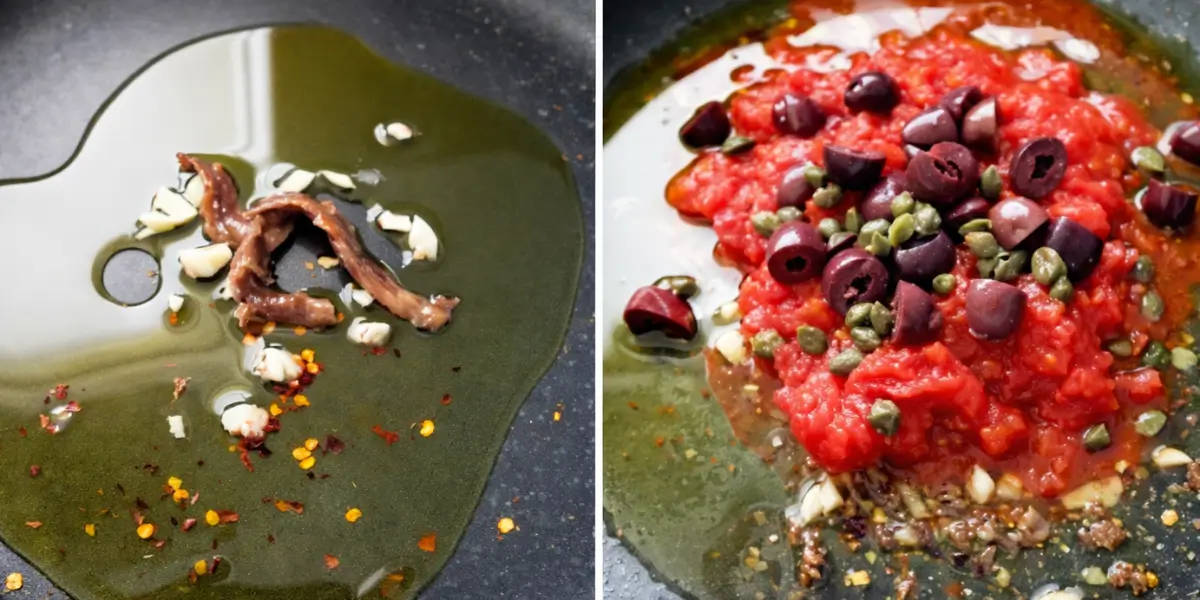
Step 3: Cook for 10–15 minutes over low heat, then turn off the heat.
Step 4: In the meantime, cook the pasta until al dente. Drain it 1 minute before fully cooked, as it will finish cooking with the puttanesca sauce.
Step 5: Add the drained pasta to the frying pan with the sauce. Add the chopped parsley and toss over low heat for 1–2 minutes.
Step 6: Serve immediately and eat hot.
Frequently Asked Questions
Yes, as long as they are fully ripe and peeled. Outside tomato season, good-quality tinned tomatoes often give better flavour.
Yes. Rinsing removes excess brine and keeps the sauce from becoming too salty once the anchovies and olives are added.
Fresh parsley is traditional, but torn basil leaves, a pinch of oregano, or some fresh thyme also work well. A drizzle of extra virgin olive oil or a grating of lemon zest can add freshness at the end.
Yes. Long pasta such as linguine or bucatini works particularly well, as it holds the sauce evenly along each strand. Short shapes like penne are possible, though long pasta is more traditional for this dish.
Extra Help from the Kitchen
Use Whole Peeled Tomatoes and Crush by Hand – If using tinned whole tomatoes, crush them by hand instead of buying pre-diced. This gives better texture and avoids the slightly metallic taste diced tomatoes can sometimes have.
Slice Olives Slightly Thicker – Cutting olives into thicker slices helps them keep their bite in the finished dish and prevents them from disappearing into the sauce.
Balance Acidity at the End – If the tomatoes taste slightly sharp, add a very small pinch of sugar to round the flavour rather than adding more salt.
Finish with a Drizzle of Raw Olive Oil – A small drizzle of extra virgin olive oil over the plated pasta adds freshness and a smooth finish without changing the structure of the sauce.
Use Freshly Chopped Parsley Only – Chop parsley just before adding it so it keeps its bright taste and colour. Pre-chopped parsley loses aroma quickly and can taste flat.
Variations and Twists
Add Tuna – Stir in a small tin of good quality oil-packed tuna after adding the tomatoes for a heartier sauce that still keeps the classic olive and caper flavour.
Include Onion – Cook a small, finely diced yellow onion in the olive oil before adding the garlic and anchovies for a slightly sweeter and deeper flavour.
Use Fresh Cherry Tomatoes – Replace part of the tinned tomatoes with halved cherry tomatoes for a fresher tomato taste and added texture.
Mix Pasta Shapes – Substitute spaghetti with bucatini or linguine for a slightly different texture while keeping the sauce intact.
Storage and Shelf Life
Store Spaghetti alla Puttanesca leftovers in an airtight container in the refrigerator for up to 3–4 days. The sauce on its own can also be refrigerated for the same period if kept sealed properly.
For longer storage, freeze the sauce only in a well-sealed container for up to 3 months, as cooked pasta can lose its texture once thawed.
Thaw overnight in the fridge and reheat gently in a frying pan over low heat with a small splash of water to loosen the sauce if needed.
Spaghetti alla Puttanesca Recipe
Ingredients
- 370 g – 13 oz spaghetti
- 3 tbsp extra virgin olive oil
- 5 –6 anchovy fillets
- 1 garlic clove – chopped
- 1 tsp chilli flakes – to taste
- 500 g – 1 lb tomatoes – fresh or tinned, peeled and diced
- 100 g – ½ cup black olives – sliced
- 1 tbsp capers – rinsed
- 2 tbsp parsley – chopped
- salt – to taste
Instructions
- Put the extra virgin olive oil, chopped garlic, chilli flakes, and anchovies in a pan. Sauté over medium heat for a couple of minutes, breaking up the anchovies with a wooden spoon until they dissolve. Make sure the garlic doesn’t burn, or the sauce will become bitter.
- As soon as the anchovies have dissolved, add the tomatoes, black olives, and capers. Note: If using fresh tomatoes, add a splash of water if needed to help the sauce cook properly.
- Cook for 10–15 minutes over low heat, then turn off the heat.
- In the meantime, cook the pasta until al dente. Drain it 1 minute before fully cooked, as it will finish cooking with the puttanesca sauce.
- Add the drained pasta to the frying pan with the sauce. Add the chopped parsley and toss over low heat for 1–2 minutes.
- Serve immediately and eat hot.

Love travelling as much as cooking?
Many of the recipes I share are inspired by places I’ve visited around the world. On Travel with Manu you’ll find destination guides, itineraries and travel inspiration to help you plan your next adventure.











Thanks for clearing up the origins of the name. Makes total sense for a dish that is made up of humble (but delicious) ingredients. Pasta is also my go-to dish. When my kids are hungry and I’m short on time – it’s pasta night. Thanks for sharing this gorgeous dish Manuela.
Your puttanesca looks delicious, Manuela, now please pass me a fork xox
What a gorgeous puttanesca! You photo makes me want to devour it all, even if I’m trying to lower my carb intake… very hard for those of us of Italian extraction!