

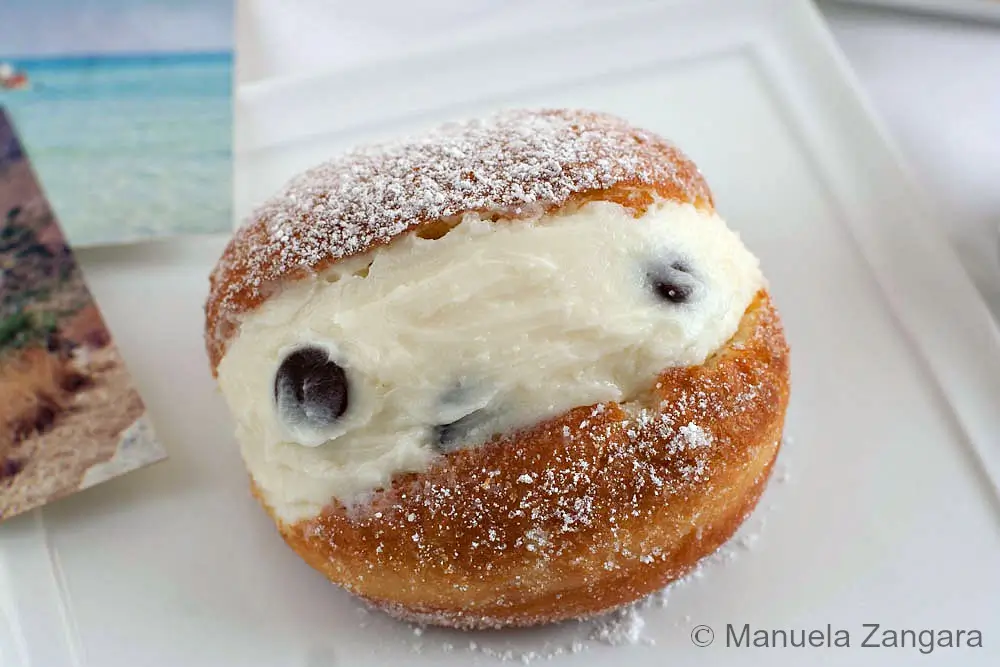
Crisp and golden on the outside, light and airy inside, Ricotta Graffe are Sicilian-style filled doughnuts with a cool, creamy centre that melts straight into the warm dough.
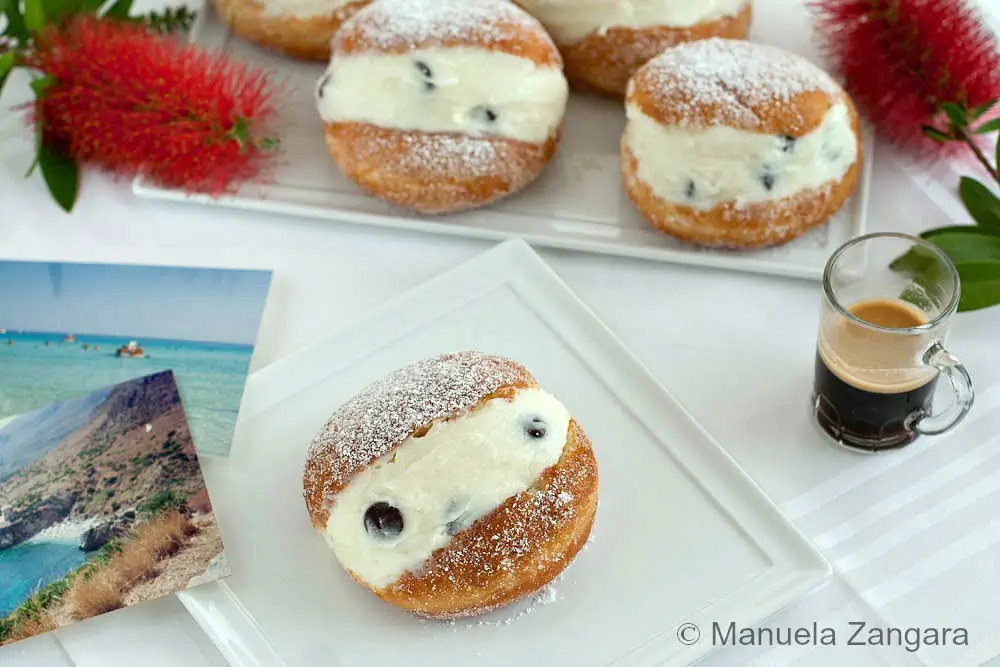
This Ricotta Graffe recipe comes from the Sicilian town of Trapani, where my mother was born. In Italy, graffe are one of the many fried sweets prepared for Carnevale, a festive time of the year in late winter, usually February, when bakeries fill their windows with trays of golden treats before Lent begins.
These are similar to, but not the same as, the more famous Neapolitan graffe, whose dough includes potatoes.
In Trapani, graffe are more like doughnuts, fried and then filled with the same sweet ricotta cream used for cannoli, sfinci di San Giuseppe, pesche dolci, cassata, and many other Sicilian treats.
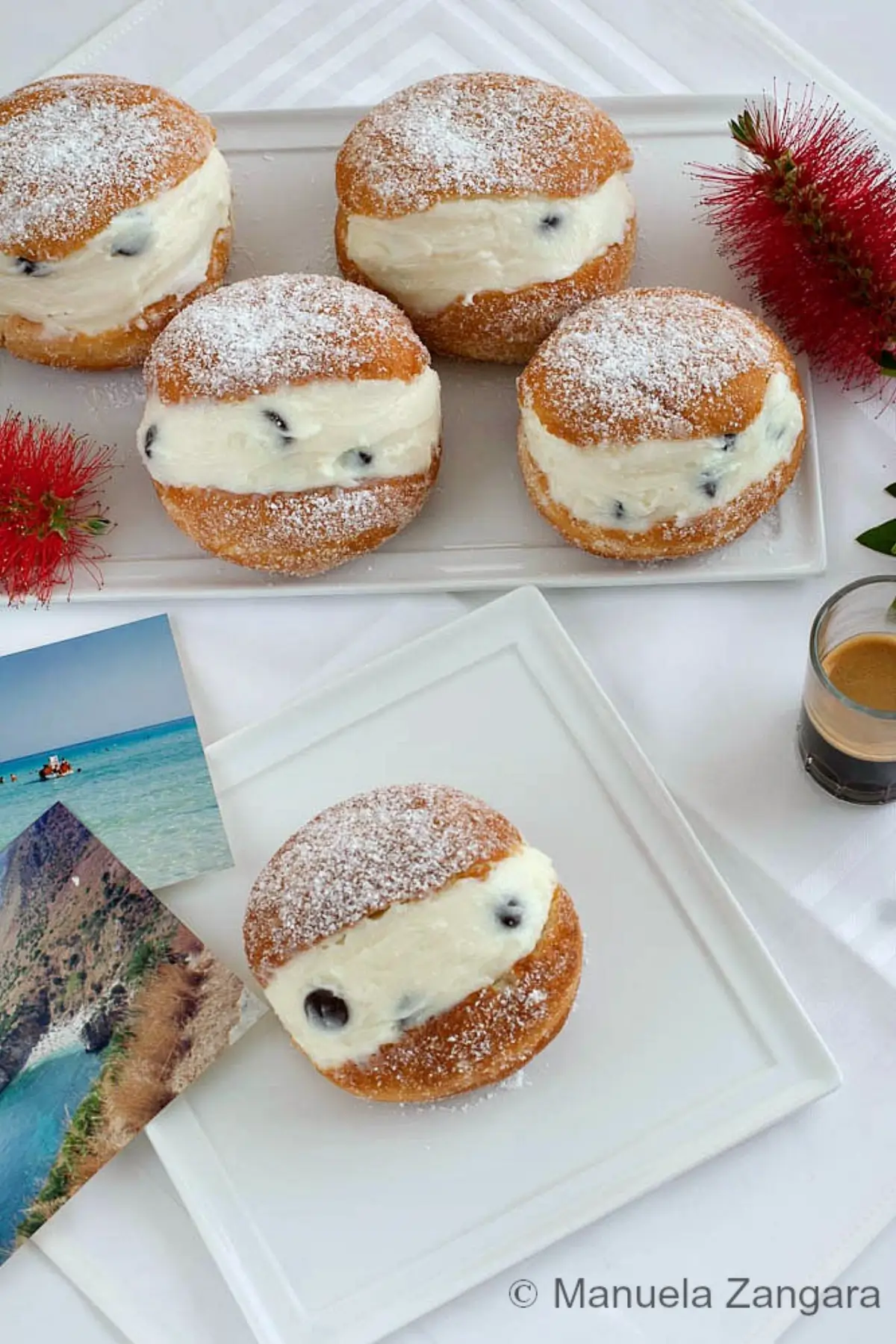
They’re traditionally made with sheep’s milk ricotta, but if you can’t find it where you live, don’t worry, neither can I. Simply substitute it with good-quality cow’s milk ricotta.
These doughnuts are soft and airy and almost melt in your mouth. I recommend eating them warm, when the contrast between the tender dough and the cool ricotta filling is at its best.
Enjoy them, and don’t forget to explore my other Regional Italian recipes!
Why We Love This Graffe with Ricotta
- Soft texture makes them easy to eat and surprisingly hard to stop at just one.
- Suits special occasions like Easter, when trays of homemade fried sweets are shared and enjoyed.
- Warm and cool contrast makes them especially enjoyable when freshly served.
Key Ingredients for Graffe
Ricotta
Gives the filling its creamy texture and helps it stay smooth when piped. Sheep’s milk ricotta has a slightly deeper flavour, but good cow’s milk ricotta works just as well. Choose one that feels firm rather than watery, and drain it if needed.
Flour
Plain flour gives the dough enough strength to rise properly and fry into a light, airy crumb. Bread flour can make the graffe slightly chewy, so regular plain flour is the better choice.
Lard
Melts into the dough and keeps the crumb soft once fried. It gives that traditional tender texture. Unsalted butter can be used instead, though the finish will be slightly different.
Dry Yeast
Helps create those small air pockets inside the dough. Always check that it’s fresh, as weaker yeast can leave the graffe dense.
Find the complete list with measurements in the recipe card below.
How to Make Ricotta Graffe
Ricotta Filling
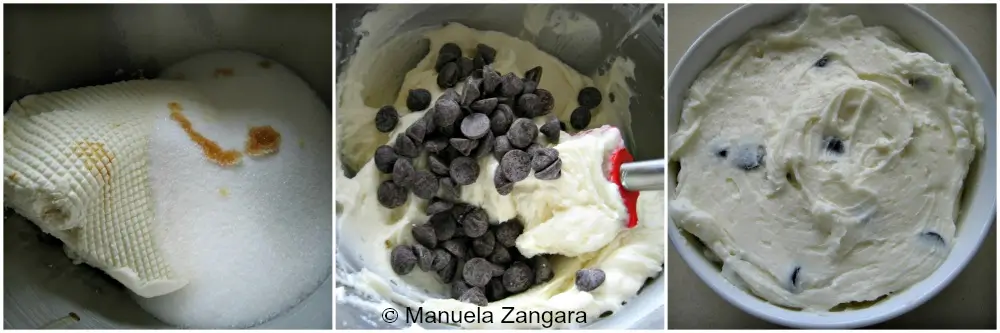
Step 1: Place all the ingredients, except the chocolate chips, in the bowl of an electric mixer and whisk until smooth and creamy.
Step 2: Fold in the chocolate chips. Cover and refrigerate the filling for at least 2 hours to firm up.
Graffe
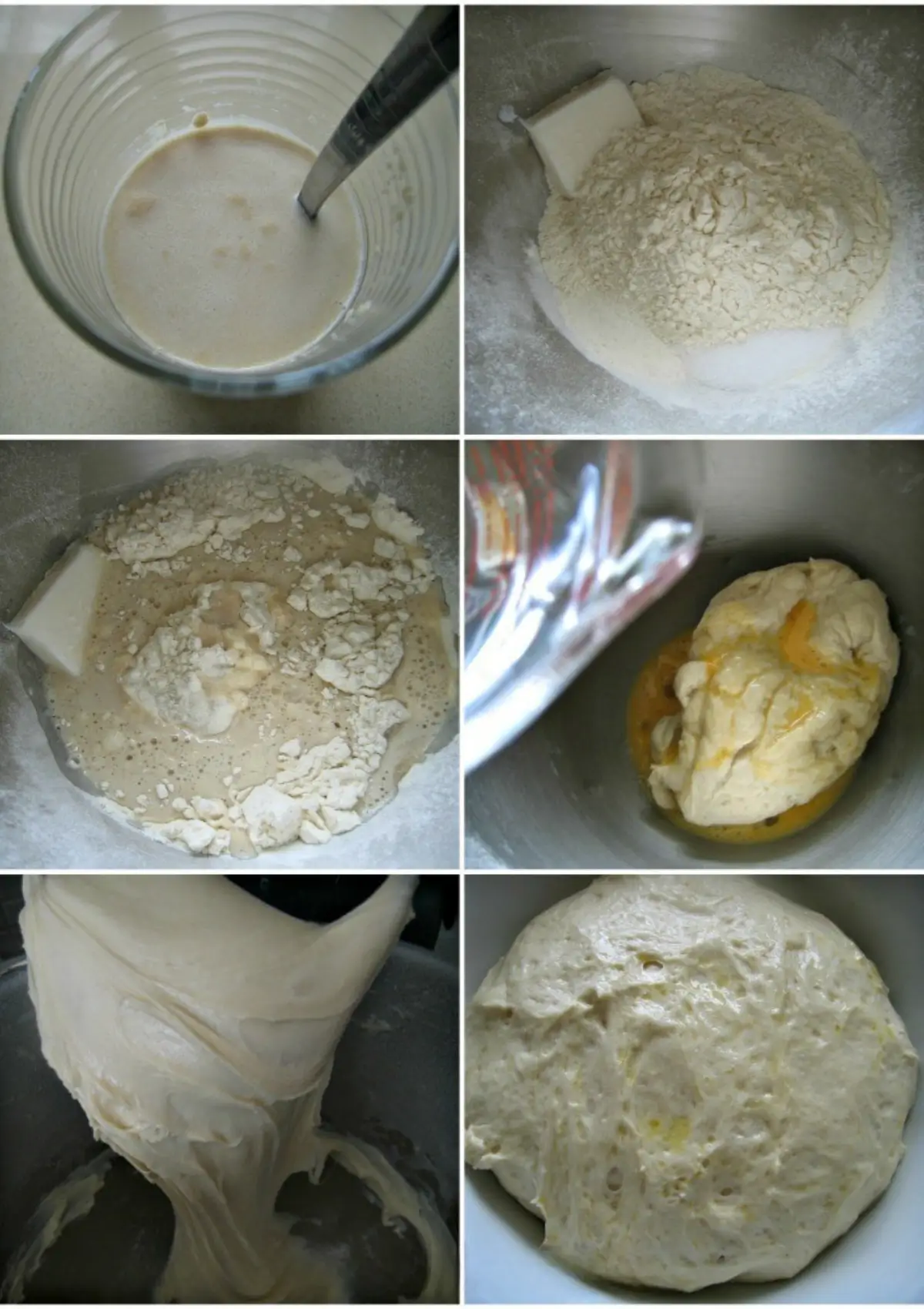
Step 1: Dissolve the yeast and half of the sugar in the lukewarm water. Set aside until frothy.
Step 2: Sift the flour into the bowl of an electric mixer fitted with the hook attachment. Add the remaining sugar, lard, and salt to the flour. Pour in the activated yeast mixture and knead the dry ingredients together until the dough begins to come together.
Step 3: Replace the hook with the paddle attachment. While mixing, add the egg and enough water to obtain a thick, soft, and sticky dough.
Step 4: Transfer the dough to a lightly greased bowl, cover, and let it rise for 1 hour or until doubled in size.
Step 5: Lightly grease your hands with olive oil and divide the dough into 12 balls about the size of small oranges.
Step 6: Place them on a tray lined with baking paper and let them rise for 30 minutes.
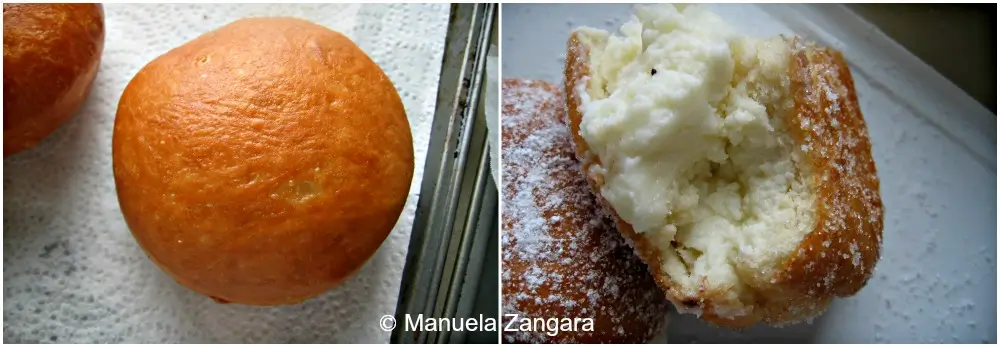
Step 7: Deep fry them at 170°C – 340°F until golden brown. Transfer them to a plate lined with a paper towel to drain excess oil.
Step 8: When lukewarm, cut a slit halfway through each graffa and fill with a generous amount of ricotta cream.
Step 9: Dust with icing sugar and serve.
Frequently Asked Questions
Lard gives the graffe their traditional texture and flavour, but you can replace it with the same amount of unsalted butter. The aroma will be slightly different, though the crumb will remain soft and tender.
Light graffe depend on active yeast and proper rising time. If the yeast is weak or the dough has not fully doubled before shaping, the finished graffe can turn out dense. Check that the yeast is fresh and allow the dough to rise until soft and puffy before frying.
Full-fat ricotta is recommended for a smoother, creamier filling. Low-fat ricotta tends to be thinner and may require extra draining to prevent a loose texture.
Drain the ricotta in a fine-mesh sieve lined with cheesecloth or paper towels for at least 2 hours, or overnight. If short on time, press it gently between paper towels to remove excess moisture before mixing.
Extra Help from the Kitchen
Test the Oil with a Small Piece – Fry a small scrap of dough first to check colour and timing before committing a full batch. It should turn golden in about 2 to 3 minutes without darkening too quickly.
Rest the Dough After Shaping if Needed – If the dough resists shaping or feels tight, let it sit for 5 to 10 minutes before rolling into balls. This relaxes the gluten and makes shaping smoother.
Pipe the Filling from the Side, Not the Top – Insert the piping tip into the side slit and squeeze gently while withdrawing the tip. This distributes the ricotta evenly through the centre instead of leaving it near the opening.
Sieve the Ricotta Cream Before Chilling – If your ricotta has small lumps, press the mixture through a fine sieve before refrigerating. This creates a smoother filling and cleaner piping later.
Cool on a Rack After Draining – After resting briefly on kitchen paper, transfer the graffe to a wire rack. Air circulation underneath prevents condensation and keeps the exterior lightly crisp.
Variations and Twists
Add Citrus Zest to the Filling – A little finely grated lemon or orange zest stirred into the ricotta before chilling gives the cream a brighter aroma and a gentle lift against the chocolate.
Bake Instead of Fry – Arrange the shaped dough balls on a lined tray, brush lightly with oil, and bake at 180°C – 350°F until lightly golden. The texture turns softer and more bread-like, with a delicate crumb.
Add Jam to the Ricotta Cream – Swirl a spoonful of apricot or strawberry jam through the ricotta so faint ribbons of fruit run through each graffa. It adds subtle sweetness and a hint of colour.
Make Smaller Filled Bites – Shape the dough into smaller rounds and fry as little puffs, then fill once cooled slightly. They work well for sharing and feel lighter to serve.
Coat in Citrus Sugar – Rub lemon or orange zest into caster sugar and roll the warm graffe in it instead of dusting with icing sugar for a lightly crisp surface with a fresh citrus scent.
Storage and Shelf Life
Store unfilled graffe at room temperature in an airtight container for up to 24 hours. Freeze completely cooled, unfilled graffe in a sealed freezer-safe container or zip-top bag for up to 1 month.
Thaw at room temperature for 2 to 3 hours until fully defrosted. Reheat in a preheated oven at 160°C – 320°F for 5 to 7 minutes until warmed through, then fill and dust with icing sugar.
Store filled graffe in the refrigerator in an airtight container and consume within 24 hours, as the ricotta filling gradually softens the dough.
Other Delicious Desserts to Try
- Homemade Puff Pastry
- Coffee Crema Catalana
- Homemade Blueberry Jam
- Yuzu Panna Cotta
- Sourdough Cinnamon Muffins
Ricotta Graffe Recipe (Italian Filled Doughnuts)
Crisp and golden on the outside, light and airy inside, Ricotta Graffe are Sicilian-style filled doughnuts with a cool, creamy centre that melts straight into the warm dough.
Ingredients
Ricotta Filling
- 500 g – 1.1 lb ricotta
- 360 g – 12.5 oz sugar
- 1 tsp vanilla extract
- 70 g – 2.5 oz dark chocolate chips
- 1 pinch salt
Graffe
- 500 g – 1.1 lb flour
- 50 g – 1.75 oz lard
- 50 g – 1.75 oz sugar
- 7 g dry – 2 ¼ tsp yeast
- 250 ml water – 1 cup + more to make batter – lukewarm
- 1 egg
- 1 pinch salt
- vegetable oil – for deep frying
- olive oil – for handling the dough
- icing sugar – for dusting
Instructions
Ricotta Filling
-
Place all the ingredients, except the chocolate chips, in the bowl of an electric mixer and whisk until smooth and creamy.
-
Fold in the chocolate chips. Cover and refrigerate the filling for at least 2 hours to firm up.
Graffe
-
Dissolve the yeast and half of the sugar in the lukewarm water. Set aside until frothy.
-
Sift the flour into the bowl of an electric mixer fitted with the hook attachment. Add the remaining sugar, lard, and salt to the flour. Pour in the activated yeast mixture and knead the dry ingredients together until the dough begins to come together.
-
Replace the hook with the paddle attachment. While mixing, add the egg and enough water to obtain a thick, soft, and sticky dough.
-
Transfer the dough to a lightly greased bowl, cover, and let it rise for 1 hour or until doubled in size.
-
Lightly grease your hands with olive oil and divide the dough into 12 balls about the size of small oranges.
-
Place them on a tray lined with baking paper and let them rise for 30 minutes.
-
Deep fry them at 170°C – 340°F until golden brown. Transfer them to a plate lined with a paper towel to drain excess oil.
-
When lukewarm, cut a slit halfway through each graffa and fill with a generous amount of ricotta cream.
-
Dust with icing sugar and serve.
Recipe Notes
Handle the graffe gently when lowering them into the oil to prevent deflating.

Love travelling as much as cooking?
Many of the recipes I share are inspired by places I’ve visited around the world. On Travel with Manu you’ll find destination guides, itineraries and travel inspiration to help you plan your next adventure.











What could I use instead of lard? Crisco?
Hi Mike! You can use butter instead of lard. Just bring it to room temperature, so it is soft like lard. 🙂
Yum. I’m going to try these – but I think I’ll add
some ground cinnamon and cloves to the
ricotta. And cheat and use those small
brioche from haberfield bakery.
Another beautiful recipe, Manuela, thank you for sharing.
I am not sure which I want more…the individual components or the final product!! Delish.