

Flaky pastry wrapped around a creamy yoghurt filling makes Sweet Yogurt Burek a warm, comforting treat with a golden finish you’ll want to slice.
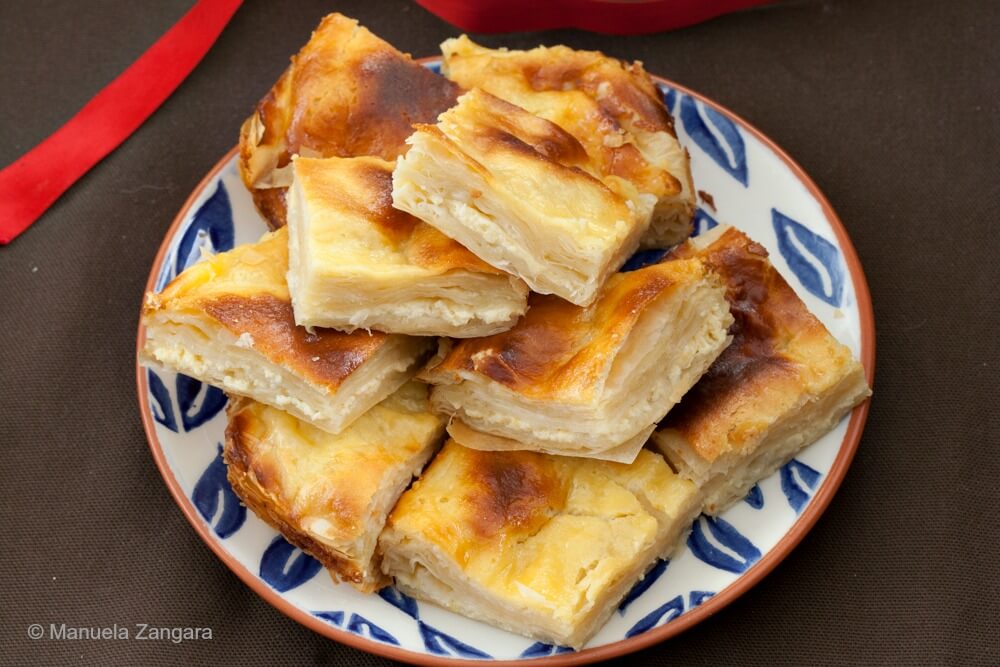
I discovered this by chance. I had some filo pastry in the fridge that begged to be used before drying out, and a bowl of yoghurt close to its expiry date.
I was delighted to bring them together in this delicious Sweet Yogurt Burek.
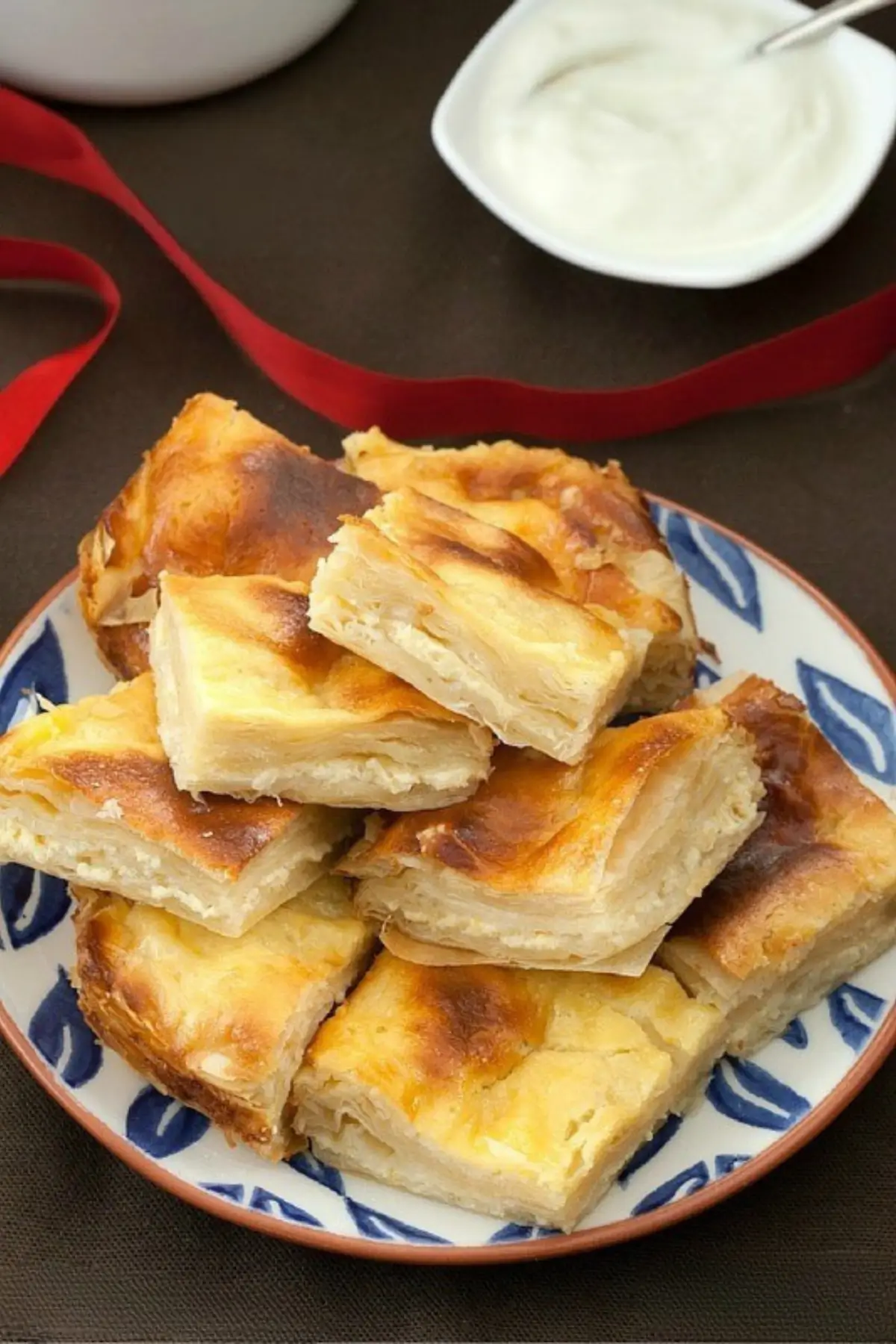
But what is Burek? It is a baked filled pastry made with filo dough, common across the cuisines of the former Ottoman Empire.
There are many variations of Burek, and a little while ago, I shared the Bosnian Burek filled with ground beef and spices.
This burek with yogurt is sweet instead. I love how it relies on simple everyday ingredients, yet the final result tastes amazing. The texture impressed me too.
It is silky, creamy, and slightly chewy, with no crumbliness at all. I find it perfect for a picnic or a barbecue party. Enjoy!
Why We Love Sweet Burek
- Everyday ingredients come together quickly, making it a reliable option mid-week.
- Soft filo layers hold a smooth yoghurt custard that settles into a creamy, sliceable centre.
- Leftover squares taste even better the next day after resting in the fridge.
Key Ingredients for Burek with Yogurt
Filo Pastry
Fresh filo is easiest to work with, but thawed frozen filo works well if the sheets stay soft and unbroken. Choose a brand with thin, even sheets so the layers bake uniformly.
Greek Yoghurt
Creates the smooth, creamy base of the filling. Full-fat yoghurt gives the most reliable set and avoids excess liquid during baking. A thick, strained yoghurt works best for a custard that slices cleanly.
Granulated Sugar
Sweetens the filling and helps the top take on a light golden colour. Fine granulated sugar dissolves quickly, giving the mixture a smoother finish.
Find the complete list with measurements in the recipe card below.
How to Make Sweet Yogurt Burek
Step 1: Line a 20×30 cm – 8×12 inch baking dish with baking paper and set it aside.
Step 2: Beat the eggs with the sugar until the mixture becomes white and fluffy.
Step 3: Add the yoghurt and lemon zest, then continue beating until fully incorporated.
Step 4: Brush each sheet of filo pastry with melted butter, stack them to form 6 layers, and place the stack in the lined baking dish.
Step 5: Pour ⅓ of the yoghurt and egg mixture over the filo layers, then add another 6 sheets of filo pastry brushed with melted butter.
Step 6: Pour another ⅓ of the yoghurt and egg mixture over the filo layers, then add another 6 brushed filo sheets.
Step 7: Pour the remaining ⅓ of the yoghurt and egg mixture over the filo pastry.
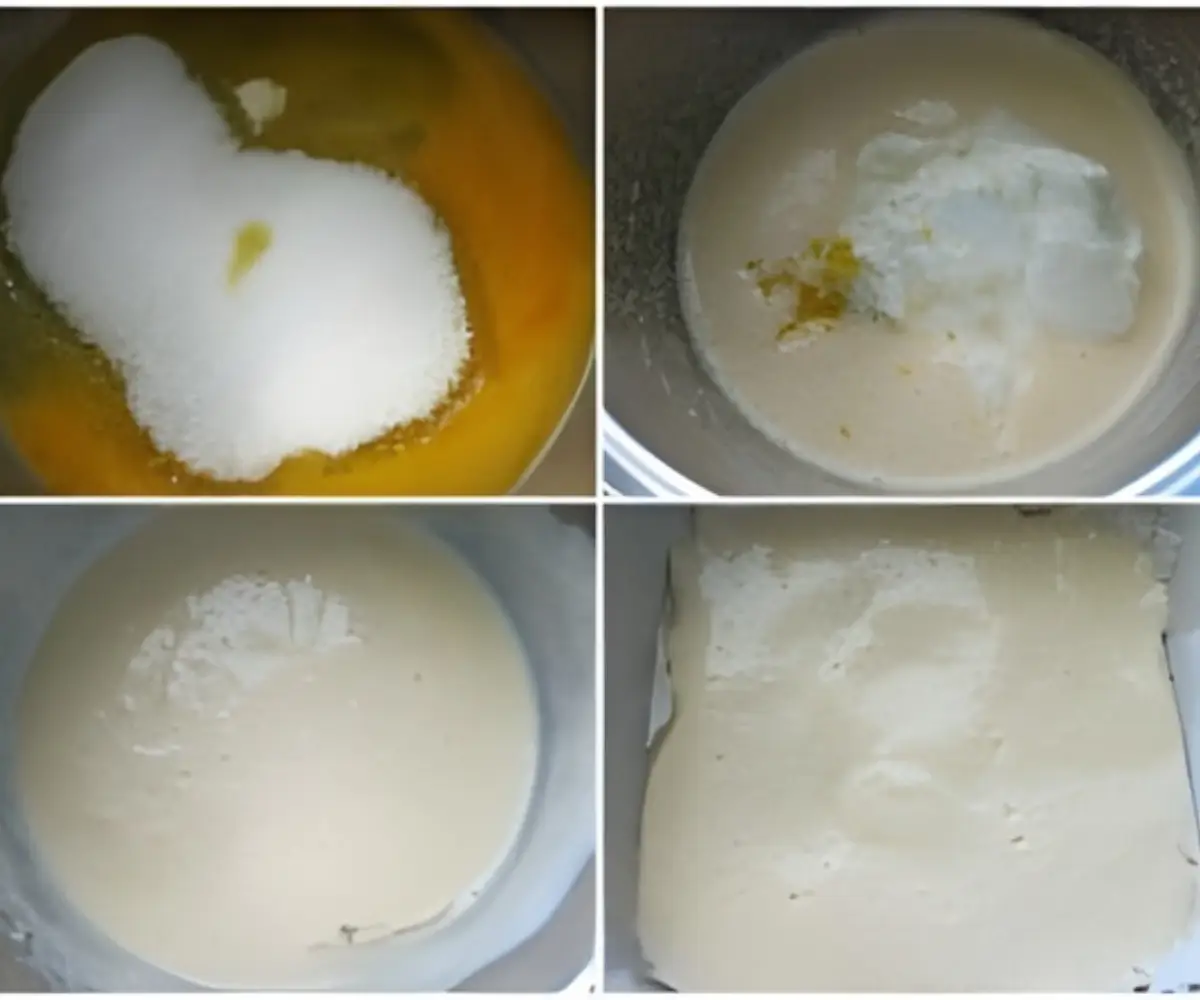
Step 8: Pierce the surface of the pie in several places with a sharp knife to prevent it from rising unevenly.
Step 9: Bake in a preheated oven at 200°C – 390°F until golden brown and cooked through.
Step 10: Allow it to cool, then cut it into squares and serve at room temperature.

Frequently Asked Questions
Yes. Defrost it slowly in the fridge, then rest it on the counter until soft enough to separate. Cold filo tears easily, so bringing it to room temperature keeps the sheets intact while brushing and layering.
The top should be golden, and the centre should feel set when the dish is moved gently. The filling should no longer wobble. Because oven temperatures vary, keep an eye on the surface colour in the last minutes of baking.
Yes. Doubling works if you use a larger baking dish, so the custard thickness stays similar to the original. A deeper layer needs extra baking time, so check the centre before removing it from the oven.
Full-fat yoghurt gives the custard the smoothest finish. Low-fat versions contain more water, which can lead to a looser texture and longer baking time.
Extra Help from the Kitchen
Keep Filo Covered – Filo dries quickly when exposed to air. Keep the unused sheets under a slightly damp cloth or between two sheets of baking paper. This keeps them flexible long enough to brush and stack without tearing.
Brush the Edges Well – When brushing the melted butter, spend a moment coating the edges of each sheet. The centre absorbs butter easily, but the outer sides tend to dry faster in the oven without extra attention.
Level the Filling Before Baking – After pouring the custard mixture, tilt the dish gently from corner to corner. This spreads the filling evenly between the layers so the final bake has a consistent thickness from edge to centre.
Let It Cool Fully – Allow the burek to rest until completely cool. The custard needs time to settle so the slices stay firm and clean. Cutting it while warm leads to soft edges and a messy centre.
Variations and Twists
Add Vanilla and Nutmeg – Add 1 teaspoon vanilla extract to the yoghurt and egg mixture and include a small pinch of ground nutmeg before beating.
Incorporate a Fruit Compote Layer – Spread about 100 g – 3.5 oz raspberries or cherries between the first stack of 6 filo sheets before pouring the first third of the custard mixture.
Swap Lemon Zest for Orange Zest – Replace the lemon zest with the zest of 1 large orange and add ½ teaspoon orange blossom water to the yoghurt mixture.
Add a Thin Layer of Ricotta – Spread about 150 g – 5 oz drained ricotta over the first 6 filo sheets before adding the first third of the yoghurt mixture.
Storage and Shelf Life
Store Sweet Yogurt Burek in an airtight container at room temperature for up to 4 hours. Move any leftovers to the fridge and keep them for 2–3 days. Freezing is possible, although the filo softens once thawed. Freeze individual slices wrapped tightly for up to 1 month.
Thaw overnight in the fridge before serving. To reheat, place slices in the oven at 180°C – 350°F until warmed through.
More Treats from My Kitchen
Sweet Yogurt Burek Recipe
Flaky pastry wrapped around a creamy yoghurt filling makes Sweet Yogurt Burek a warm, comforting treat with a golden finish you’ll want to slice.
Ingredients
- 18 rectangular filo pastry sheets – fresh or thawed
- 850 g – 3 ½ cups Greek yoghurt
- 7 eggs
- 250 g – 1 ¼ cups granulated sugar
- zest of 1 lemon – grated
- 100 g – ½ cup butter – melted, for brushing the filo sheets
Instructions
-
Line a 20×30 cm – 8×12 inch baking dish with baking paper and set it aside.
-
Beat the eggs with the sugar until the mixture becomes white and fluffy.
-
Add the yoghurt and lemon zest, then continue beating until fully incorporated.
-
Brush each sheet of filo pastry with melted butter, stack them to form 6 layers, and place the stack in the lined baking dish.
-
Pour ⅓ of the yoghurt and egg mixture over the filo layers, then add another 6 sheets of filo pastry brushed with melted butter.
-
Pour another ⅓ of the yoghurt and egg mixture over the filo layers, then add another 6 brushed filo sheets.
-
Pour the remaining ⅓ of the yoghurt and egg mixture over the filo pastry.
-
Pierce the surface of the pie in several places with a sharp knife to prevent it from rising unevenly.
-
Bake in a preheated oven at 200°C – 390°F until golden brown and cooked through.
-
Allow it to cool, then cut it into squares and serve at room temperature.

Love travelling as much as cooking?
Many of the recipes I share are inspired by places I’ve visited around the world. On Travel with Manu you’ll find destination guides, itineraries and travel inspiration to help you plan your next adventure.













Hi Manu, I love your website and recipes since stumbling upon it! I tried your Bosnian Burek and it was absolutely delicious. When I was in Bosnia, I had cheese, spinach, and meat varieties of Burek and they had textures much more similar to what you are describing in this recipe (soft and chewy, not crunchy), but I’m not sure how they achieved this! As for this recipe, it looks delicious but I’ve never been a fan of yogurt nor lemon, so do you think it would work with creme patissiere substituted in some fashion? If so, please help with a recipe! 😀