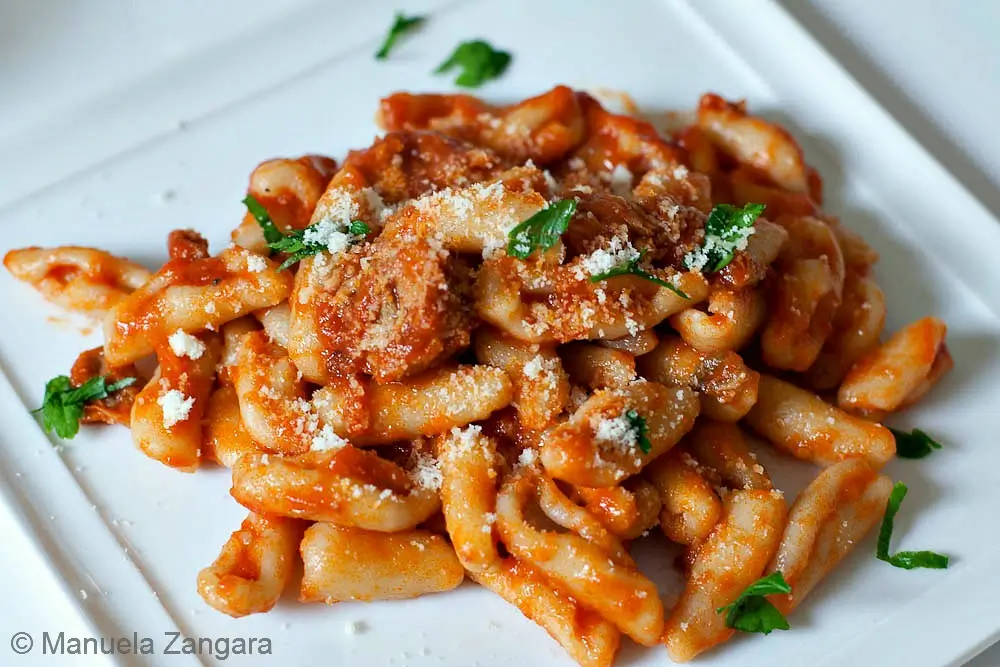
A hearty simmer brings out a rich, rounded taste in Cavatelli al Ragù di Maiale, turning simple ingredients into a warming pasta bowl.
Regional Italian cooking is full of treasures from the smaller Southern areas, and Molise is one of them. This region has a strong pasta tradition and produces wonderful olive oil. It is also home to the coastal town of Termoli.
The dish I’m sharing comes from Molise, though you’ll find similar versions in Puglia, Campania, and Basilicata. Recipes in the South often travel across regions, changing slightly from one family to another, while keeping the same spirit.
Before we begin, a quick word about ragù. It’s a slow-cooked tomato sauce with meat. In the North, it’s usually made with minced meat, while in the South, whole pieces of meat simmer gently until they soften and flavour the tomato base. The best-known version is the ragù from Emilia Romagna, very close to what many people outside Italy call bolognaise.
The ragù I’m using here follows the Southern approach and uses meat pieces. It’s one of my favourites, and one of these days I’ll share my granny’s version, which has always been a family favourite. For now, I hope you enjoy this one as much as we do.
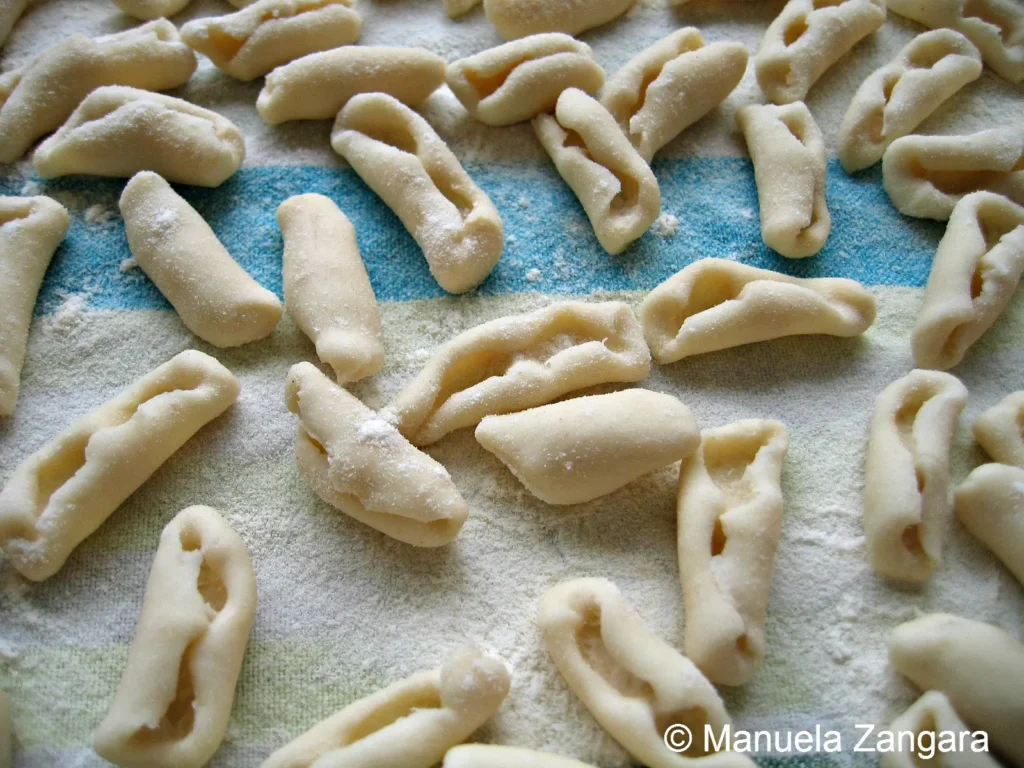
I like serving this sauce with a traditional homemade pasta from the same area called Cavatelli. Its shape holds the sauce well and makes each forkful hearty and satisfying. If you’d like to make your own, have a look at my tutorial. It’s easier than it looks. Enjoy!
Reasons to Make Cavatelli al Ragù
- Ideal for slow Sunday cooking when you want something comforting and easy to manage.
- Works well with fresh homemade pasta or store-bought cavatelli when you are short on time.
- A few everyday ingredients transform into a rich sauce that tastes like it simmered for hours.
Key Ingredients for Cavatelli al Ragù di Maiale
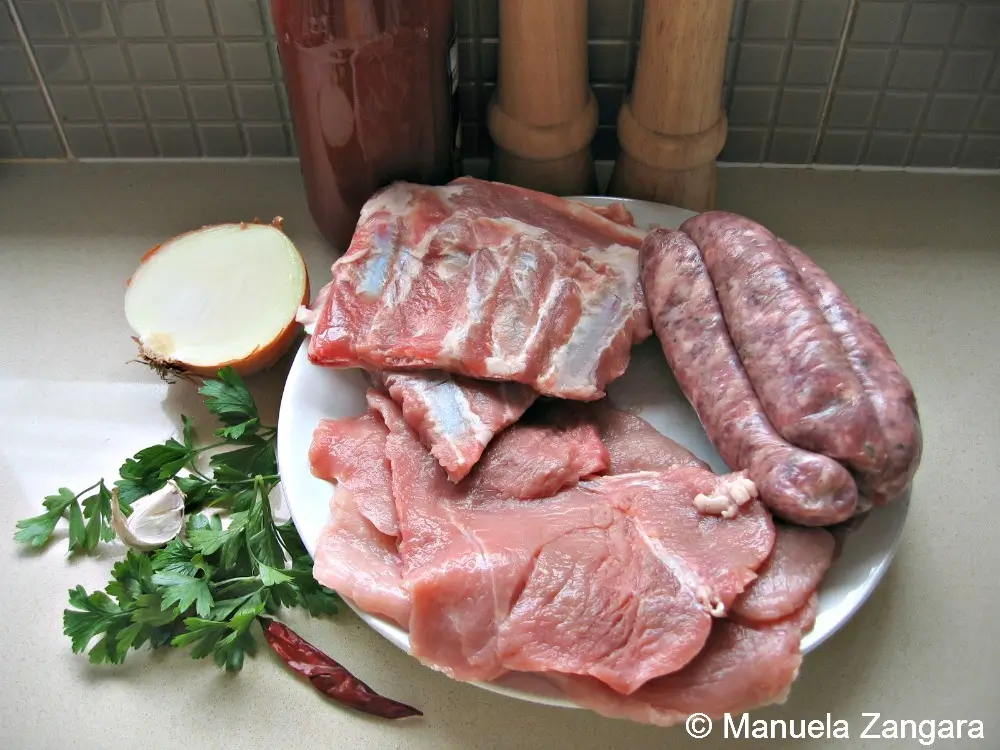
Pork Schnitzels
Rolled with garlic and parsley to form braciole, these pieces slowly release flavour into the sauce and help build a rich base. Choose schnitzels with even thickness so the rolls cook uniformly and stay tender as they simmer.
Italian Pork Sausage
Adds seasoning and body to the sauce, giving depth without extra ingredients. A good-quality pure pork sausage with a balanced spice mix works best and melts gently into the tomato base as it cooks.
Tomato Purée (Passata)
Forms the foundation of the ragù and absorbs flavour from all the meat pieces as it simmers. Smooth passata creates an even sauce that clings well to the pasta.
Find the complete list with measurements in the recipe card below.
How to Make Cavatelli al Ragù di Maiale
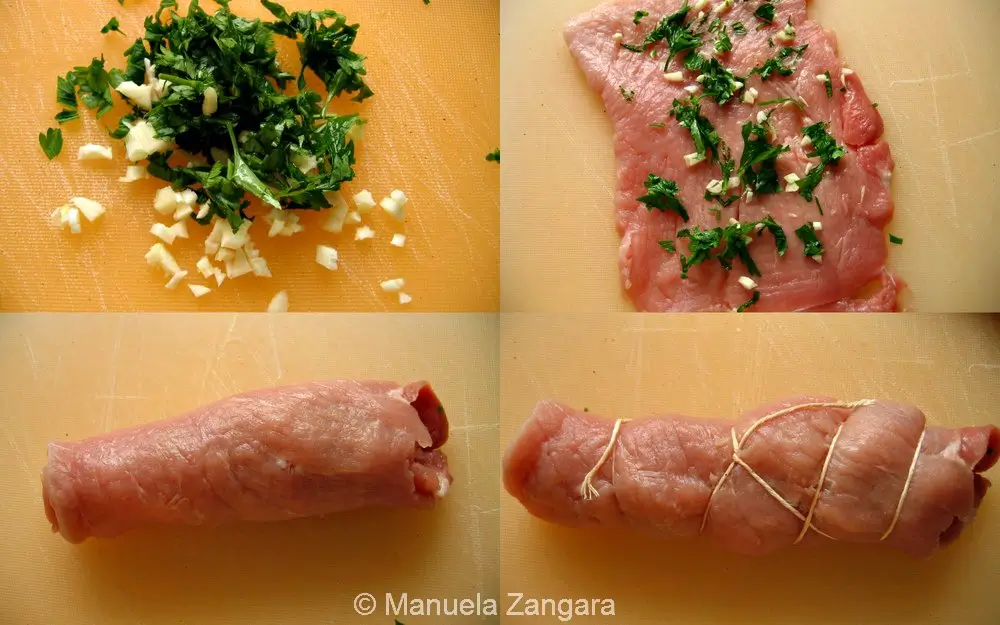
Step 1: Put the chopped garlic and 1 tablespoon of the chopped parsley on the pork schnitzels. Roll them up like a large involtino and tie them with kitchen string to form the braciole. Set them aside.
Step 2: Heat the extra virgin olive oil in a pot. Add the half onion, pork spare ribs, and sausages, then sauté over medium–high heat for a few minutes to lightly brown the meat.
Step 3: Add the chilli, tomato passata, and water, and bring everything to a boil. Add the braciole, season with salt and pepper, cover, and cook over low heat for at least 1 hour. The longer it simmers, the richer the flavour will be, so stir occasionally and add a little water if the sauce becomes too thick.
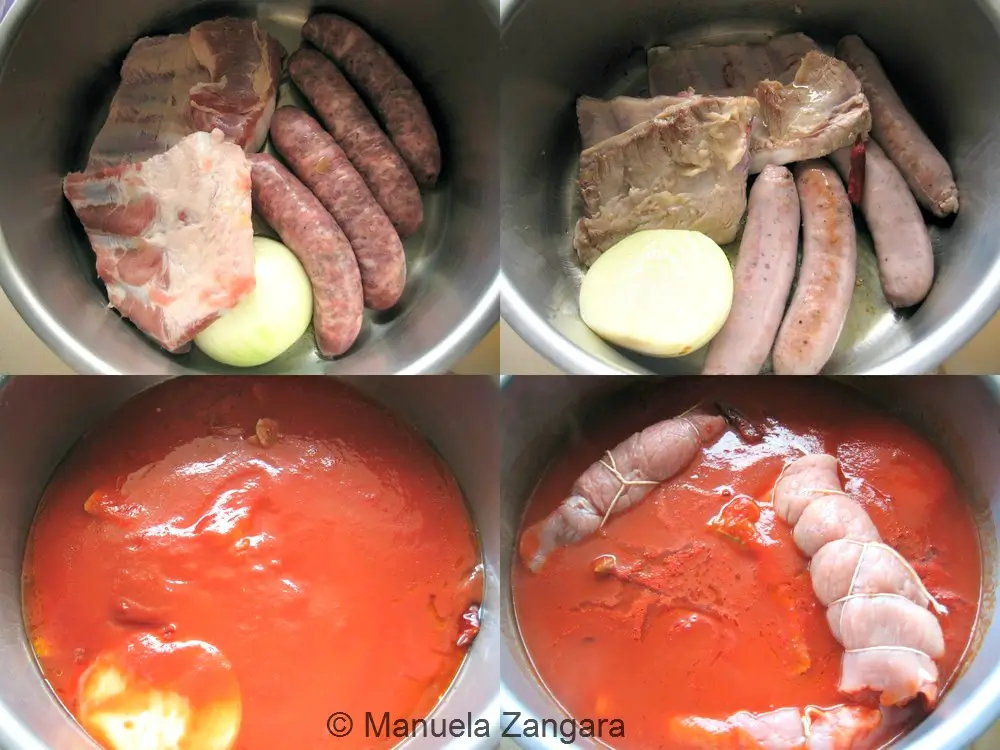
Step 4: When the sauce is ready, remove the meat and set it aside.
Step 5: Cook the cavatelli until al dente.
Note: Fresh pasta does not have a fixed cooking time. The exact timing depends on the thickness of the dough and whether the pasta has dried slightly. The best way to check is to taste it as it cooks. It should remain pleasantly firm.
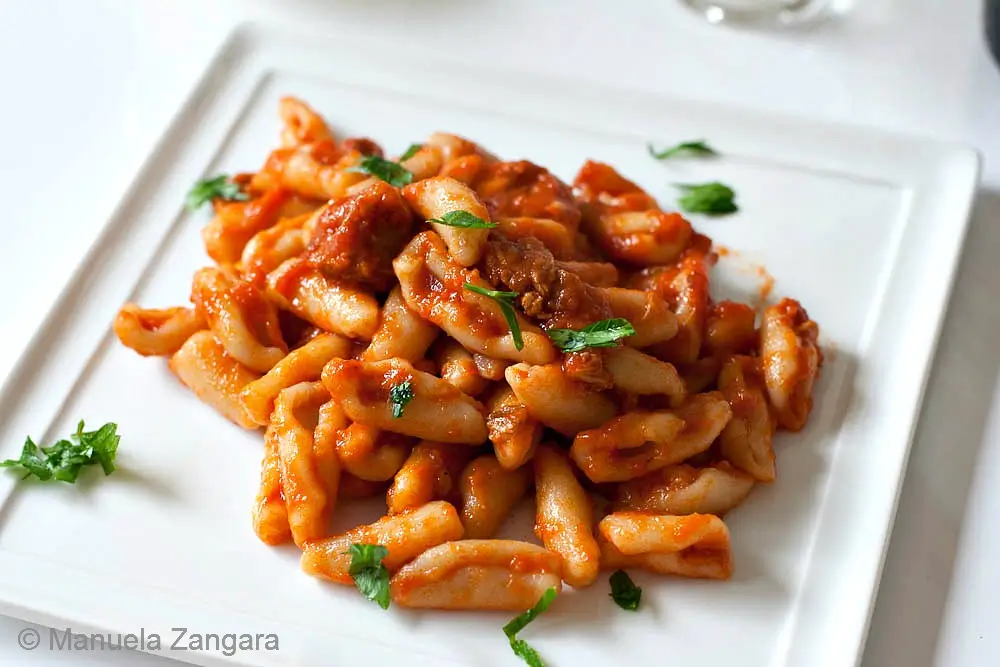
Step 6: Once the pasta is cooked, drain it, transfer it to a frying pan, and add the pork sauce. Sauté over medium heat for about a minute so the flavours come together and the sauce coats the pasta.
Step 7: Serve hot with a generous sprinkle of Pecorino Romano and the remaining chopped parsley.
Frequently Asked Questions
Short shapes that hold sauce work best. Orecchiette, fusilli, small shells, and even strozzapreti pick up the meat nicely if cavatelli aren’t available.
Yes. Beef chuck or stewing beef works well, and you can mix it with pork for a fuller flavour. Lamb shoulder also holds up to slow cooking if you prefer a stronger taste.
Yes. Leave out the chilli or use only a tiny pinch. The ragù still tastes full and balanced because the flavour comes mainly from the meat and tomato base.
Pure pork sausages with light seasoning are the closest match. Avoid heavily spiced or smoked varieties, as they change the character of the sauce.
Extra Help from the Kitchen
Use Whole Garlic Cloves for Infusion – Add one or two whole cloves to the pot at the start and remove them later to give the sauce gentle depth without adding extra chopped garlic.
Let the Sauce Settle Before Tossing – Rest the ragù for 5 to 10 minutes after simmering so the fat settles, and the flavours stabilise before mixing it with the cavatelli.
Keep Sausages in Larger Pieces – Cut sausages into two or three chunks rather than slicing them thinly to keep the texture firm during simmering.
Warm the Serving Bowls – Heat bowls with a splash of hot water before plating so the cavatelli retain their temperature at the table.
Reserve a Ladle of Pasta Water – Add a spoonful of pasta water when sautéing the cavatelli with the sauce to help the ragù cling and to adjust consistency if it thickens.
Variations and Twists
Mixed Meat Ragù – Combine pork with a small amount of beef chuck or stewing beef to create a deeper, more rounded sauce.
Use Sausage Only – Cut Italian pork sausages into large chunks and cook the ragù with sausage as the main meat for simpler prep and strong, natural seasoning.
Reduce Tomato Base – Lower the amount of passata by ⅓ and replace it with water or light stock to let the pork flavour come through more clearly.
Serve with Polenta – Prepare the ragù as written and spoon it over soft polenta instead of pasta. The slow-cooked sauce pairs well with the creamy texture.
Quick Ribs-and-Sausage Ragù – Use only the ribs and sausages and simmer for about 45 minutes for a faster ragù with good depth.
Storage and Shelf Life
Store the ragù in an airtight container in the fridge within two hours of cooking and use it within 3 to 4 days. Keep cooked cavatelli in a separate container in the fridge for 3 to 5 days, as storing the pasta with the sauce softens its texture.
Freeze the ragù on its own for up to 3 to 4 months, then thaw it in the fridge overnight before reheating. Warm the sauce gently until it is thoroughly hot and bubbling. Avoid freezing cooked pasta because it becomes mushy once thawed.
Classic Italian Pasta Dishes
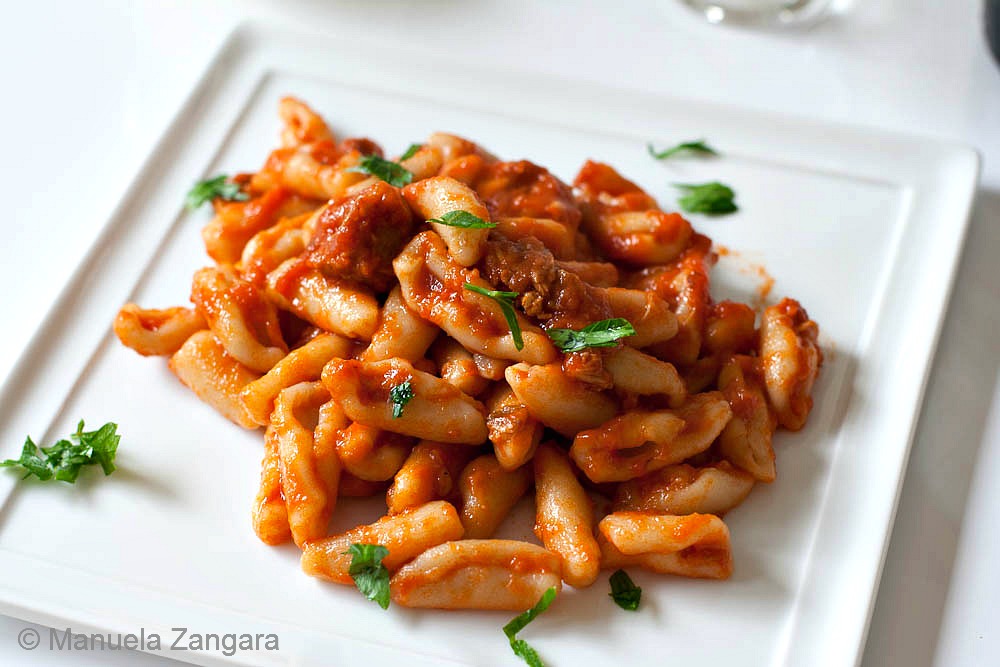
Cavatelli al Ragù di Maiale Recipe
A hearty simmer brings out a rich, rounded taste in Cavatelli al Ragù di Maiale, turning simple ingredients into a warming pasta bowl.
Ingredients
- 1 batch of cavatelli
- 300 g – 10.5 oz pork schnitzels
- 300 g – 10.5 oz Italian pork sausages
- 300 g – 10.5 oz pork spare ribs – trimmed
- 4 tbsp extra virgin olive oil
- ½ onion
- 1 garlic clove – chopped
- 1 dried red chilli OR ½ tsp chilli flakes
- 1 l – ¼ gallon tomato purée (passata)
- 250 ml – 1 cup water
- salt and pepper – to taste
- 1½ tbsp parsley – chopped
- Pecorino Romano – thinly grated, to serve
Instructions
-
Put the chopped garlic and 1 tablespoon of the chopped parsley on the pork schnitzels. Roll them up like a large involtino and tie them with kitchen string to form the braciole. Set them aside.
-
Heat the extra virgin olive oil in a pot. Add the half onion, pork spare ribs, and sausages, then sauté over medium–high heat for a few minutes to lightly brown the meat.
-
Add the chilli, tomato passata, and water, and bring everything to a boil. Add the braciole, season with salt and pepper, cover, and cook over low heat for at least 1 hour. The longer it simmers, the richer the flavour will be, so stir occasionally and add a little water if the sauce becomes too thick.
-
When the sauce is ready, remove the meat and set it aside.
-
Cook the cavatelli until al dente.
Note: Fresh pasta does not have a fixed cooking time. The exact timing depends on the thickness of the dough and whether the pasta has dried slightly. The best way to check is to taste it as it cooks. It should remain pleasantly firm.
-
Once the pasta is cooked, drain it, transfer it to a frying pan, and add the pork sauce. Sauté over medium heat for about a minute so the flavours come together and the sauce coats the pasta.
-
Serve hot with a generous sprinkle of Pecorino Romano and the remaining chopped parsley.
Recipe Notes
Chop some of the cooked meat and mix it with the pasta if you like, especially the sausage. The remaining meat can be served separately or kept for another meal.

Love travelling as much as cooking?
Many of the recipes I share are inspired by places I’ve visited around the world. On Travel with Manu you’ll find destination guides, itineraries and travel inspiration to help you plan your next adventure.









This was a great treat, this presentation!! My grandmother was from Bari, Italy. My grandfather from Naples. They immigrated to Lake Forest, IL.. The fondest memory I have of her is coming to her home and seeing her making my favorite dish, Cavatelli. In true Italian tradition she would “snap out” these little homemade morsels from the dough she made. And the sauce with individual Bracioles made from Flank Steak. Oh, the memories and the tastes!!
Thank You
Rick
Do you have an opinion as to whether or not the formed pasta may be frozen so as to be able to make ahead for a big dinner party?
I don’t usually freeze it, but I know many Italians who do. Simply keep it on a floured tray and put it in the freezer until hard. Then you can put the pasta in a ziploc bag and cook it from frozen. As I said, I haven’t done it with pasta, but I do it regularly with gnocchi. Hope it helps.
This looks fantastic! I just made my first batch of Cavatelli and I’m addicted! http://www.thingsforboys.com/2012/10/home-made-cavatelli-pasta.html
This looks amazing! Pretty pics too!
Manu, open a restaurant – please!
I’d DEFINITELY fly to Australia from the US to go there!!!!!!
LOL you guys are TOOOOOOO sweet!!!! THANKS!!! <3
che fame!!!
Oh. My. Goodness! This looks divine and even though I hate winter, I can’t wait until it gets here so I can make this!! 🙂 great pics, Manu!!
Love your recipe and shall certainly try it! I have not used cavatelli, but it has been very popular on many cookery segments of late. Decidedly hoping not to offend you in any shape, size or form, actually a couple of the fave contestants [at the pointy end of the competition, as they say!] of Masterchef, made this at the Barilla challenge in Italy but a few days ago and got high praise from the MD 🙂 ! Don’t think they used schnitzels, but both other meats were there?! Glad to have your recipe!!!!
hahaha no offence taken! I haven’t been following Masterchef this year… I know it’s bad bad bad for a foodie and I actually love the show, but I am usually putting my little one to bed at that time! I had no idea they had made this! That sounds great actually. My granny’s version includes sausage and ribs and no schnitzels, so it sounds more similar to the Masterchef sauce! 🙂 I need to see if I can watch it online? 🙂
Just to correct myself: the contestants used the ragu in a lasagne dish and the cavatelli was served with a pure Italian tomato one? Masterchef has changed for the better this year methinks! As they promised they have gone back more to the basics and the Friday Masterclasses truly have been helpful to me! [Interesting way of doing risotto last night] A very talented and imaginative nine-some left: try to get to the last couple of Masterclasses at least 🙂 !
How many traditional dishes you italians have got?! Not that I’m complaining..But even reading the recipes they make me hungry.. 😀
I’ve never seen this way of preparing a ragu. It looks absolutely wonderful and can only imagine how flavorful it is.
I love making my own pasta shapes – this is something new for me to try 🙂
wow, this looks SO good. I’ve never made noodley pasta before but I think I could do this. 🙂