


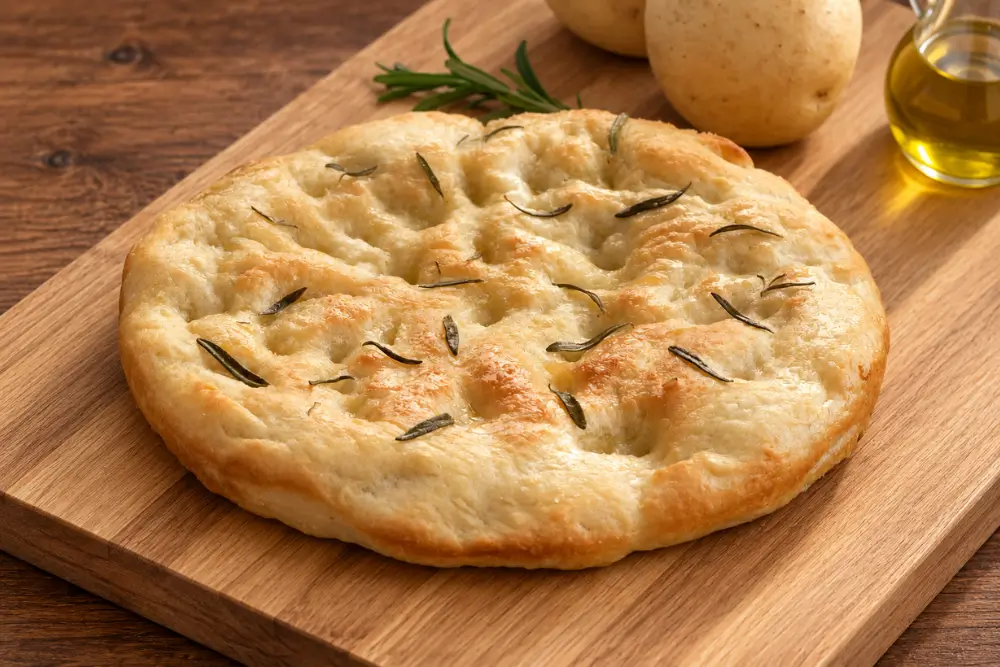
Soft and airy inside with a lightly crisp crust, this Potato Focaccia uses mashed potato in the dough to keep the centre moist and tender.
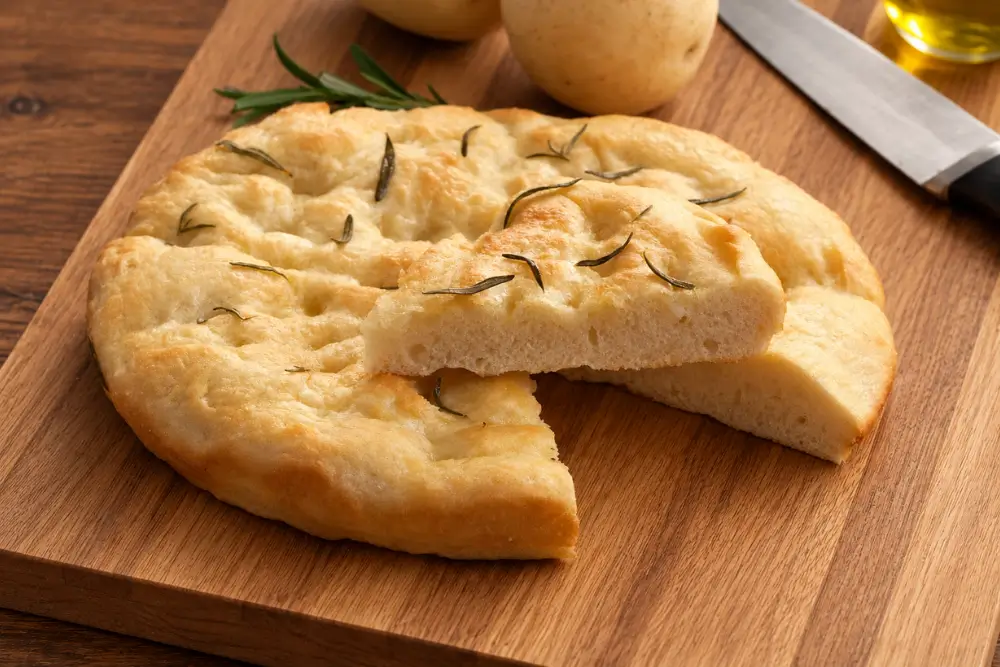
If you like focaccia with a soft, airy centre and a lightly crisp crust, adding mashed potato to the dough is worth trying. The potato keeps the bread moist and tender, but you can’t actually taste it once the focaccia is baked.
It still tastes like traditional focaccia, with extra virgin olive oil, rosemary, and salt on top.
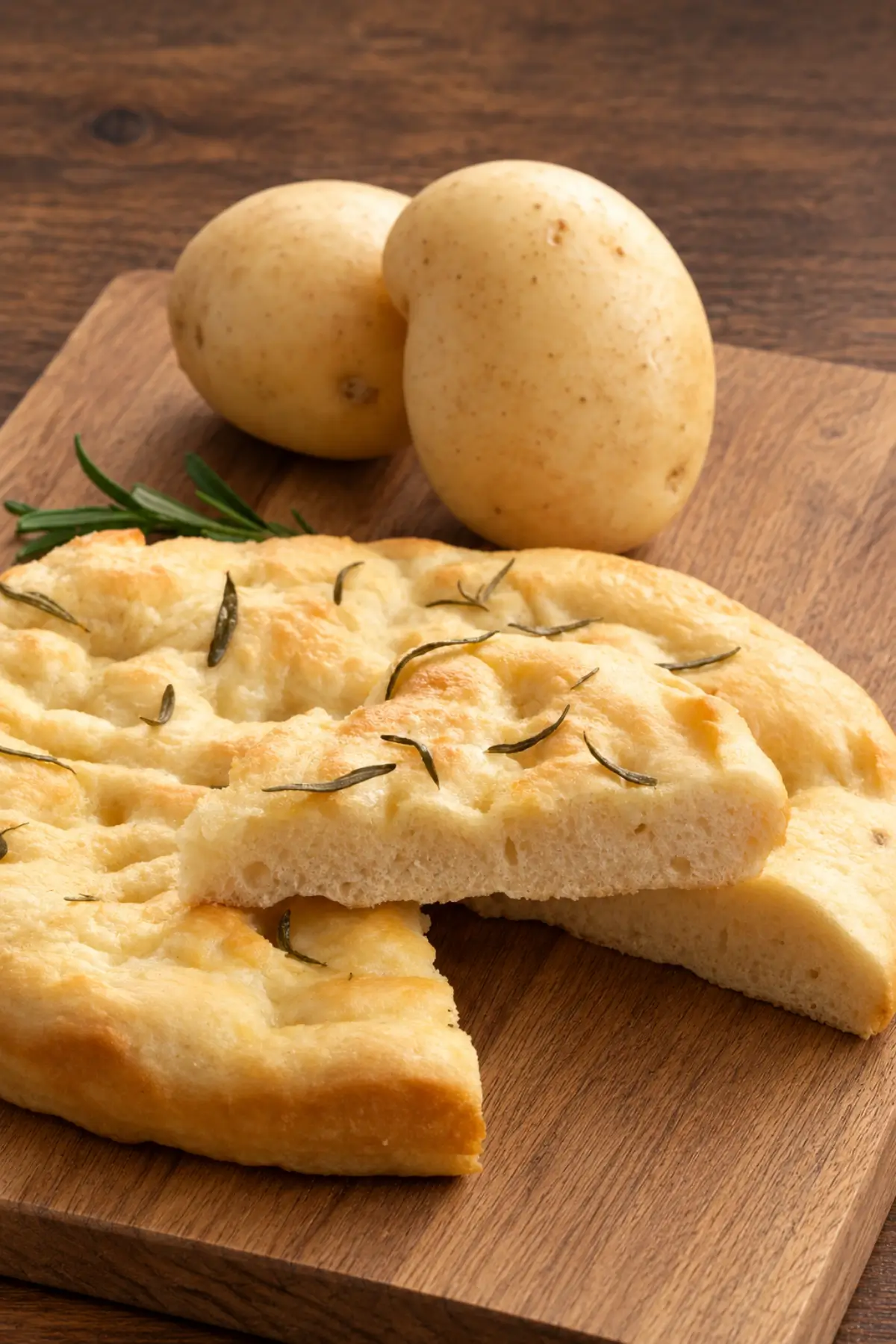
I first made this Potato Focaccia when I was looking for lower-fat options after my gallbladder surgery. There’s no oil, butter, or lard in the dough, yet the mashed potato keeps the inside soft and moist. Extra virgin olive oil gives the focaccia its rich flavour and lightly crisp, golden crust.
I also like how this version only needs one rise, with no second rise before baking, so it’s quicker than some of the other focaccias I make. When I have more time, I make Focaccia bread, while Schiacciata is another favourite when I’m short on time.
Why You’ll Love This Potato Focaccia
- Good for dipping into sauces, soups, or olive oil when you want something more substantial on the side.
- Freezer-friendly when you want to save extra portions for another meal instead of finishing everything at once.
- Travels well for picnics, packed lunches, or meals away from home.
Key Ingredients for Potato Focaccia
Potatoes
Mashed potato keeps the focaccia soft, moist, and airy. Yukon Gold or Russet potatoes work well because they mash easily. For a finer, lump-free texture, use a potato ricer or a regular potato masher.
All-Purpose Flour
All-purpose flour gives the focaccia a soft crumb with enough structure to hold its airy texture. Its mild taste works well with the potato, rosemary, and extra virgin olive oil without making the bread feel heavy.
Dry Active Yeast
Dry active yeast gives the focaccia its airy crumb and subtle bread-like flavour. Use yeast within its expiry date, as older yeast may be less active and give you a weaker rise.
Rosemary
Fresh rosemary adds a fragrant, slightly woody flavour to the focaccia. It pairs naturally with extra virgin olive oil and salt, giving the surface a simple Italian flavour.
Find the complete list with measurements in the recipe card below.
How to Make Potato Focaccia
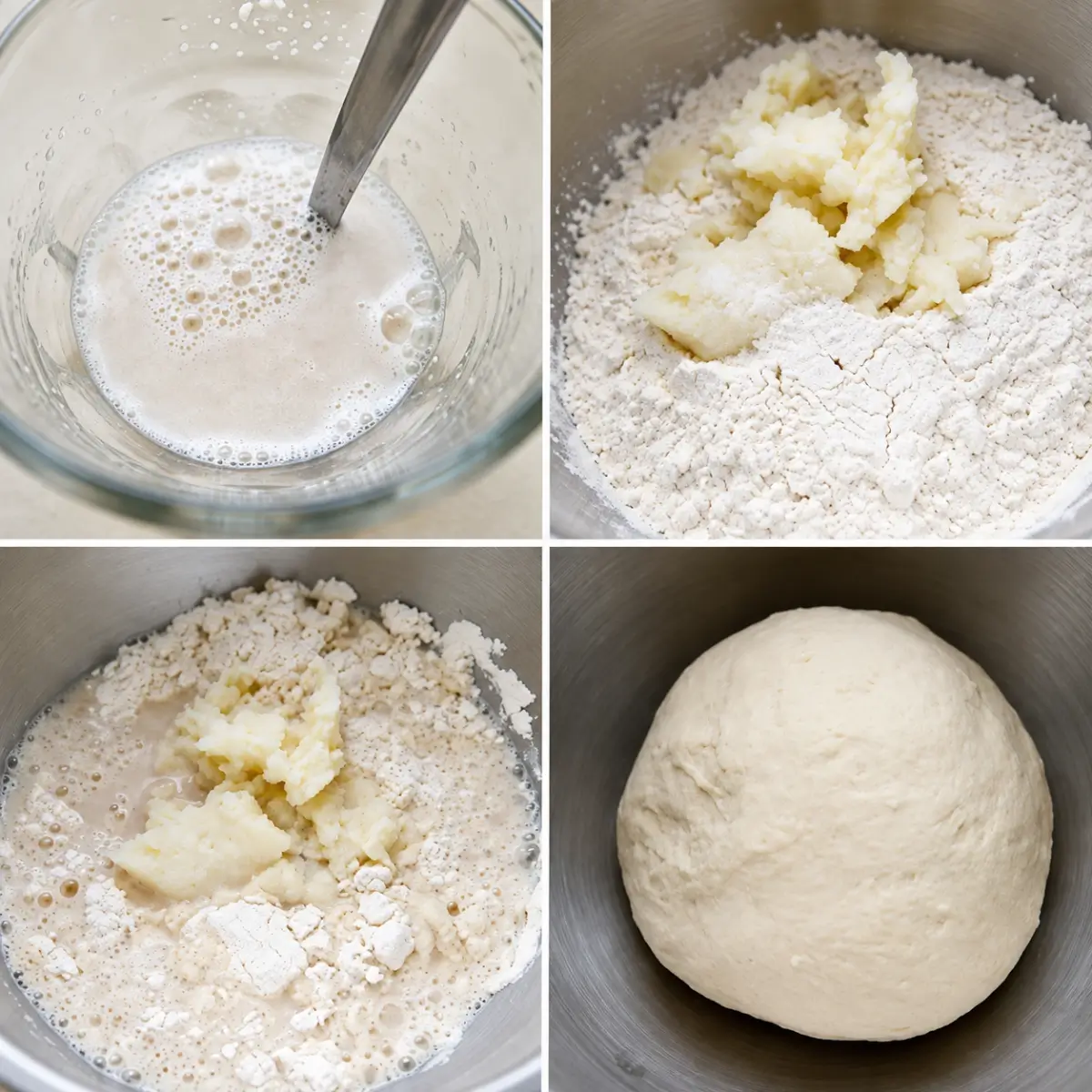
Step 1: Mix the yeast with the sugar and lukewarm water, then set aside to activate.
Step 2: Once frothy, transfer the mixture to the bowl of an electric mixer fitted with a dough hook.
Step 3: Add the flour, mashed potato and salt, then knead until the dough is smooth.
Step 4: Shape the focaccia dough into a ball, cover with cling wrap and leave to rise in a warm, draft-free area for at least 1 hour, or until doubled in volume.
Step 5: Grease two 23 cm – 9 inch round tins with extra virgin olive oil. Once the dough has doubled in volume, divide it between the two tins and press it down with your fingertips to create the characteristic holes.
Step 6: Drizzle generously with extra virgin olive oil and a little water. Sprinkle with salt and top with fresh rosemary.
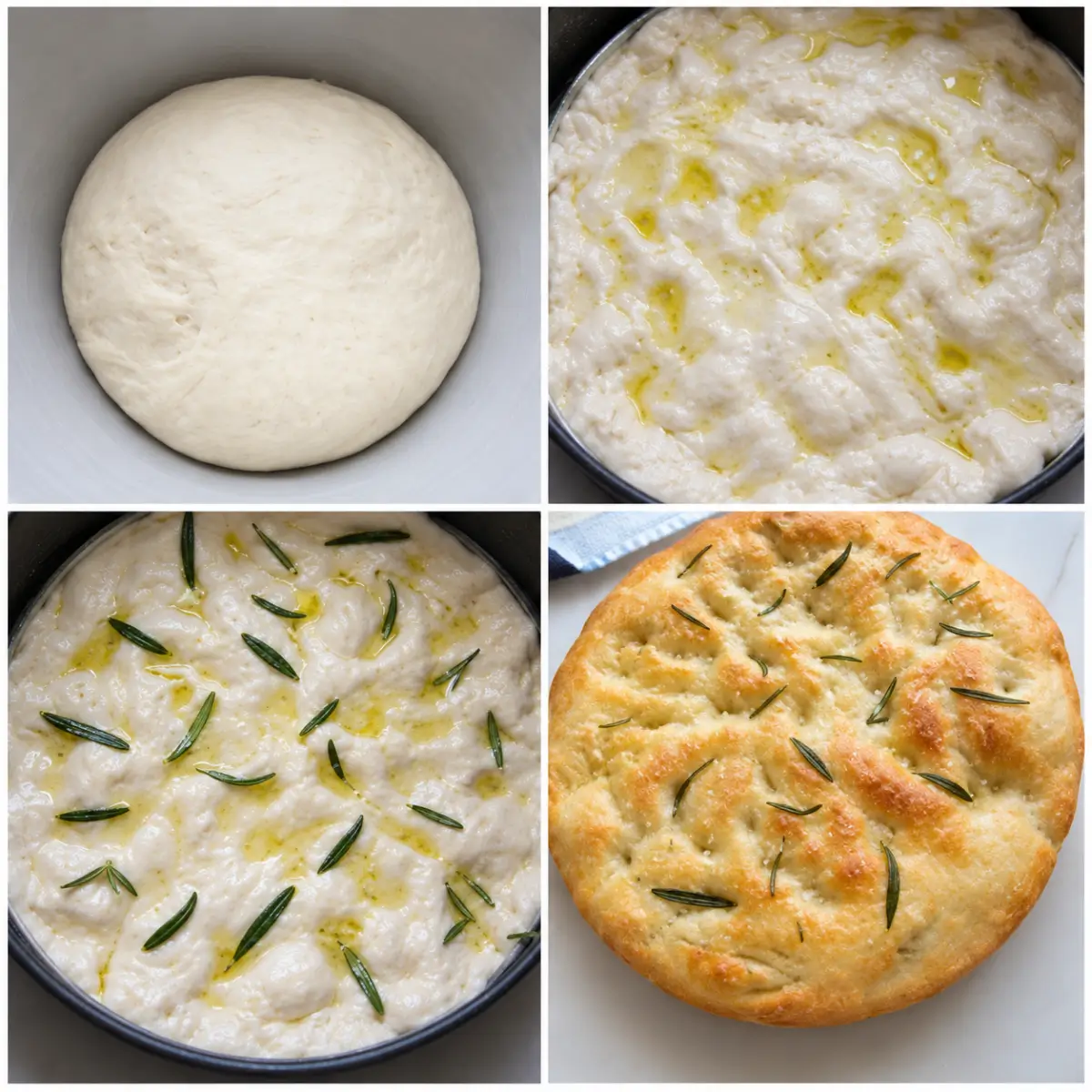
Step 7: Bake in a preheated oven at 180°C – 355°F for 20 minutes, or until golden brown.
Step 8: Allow to cool slightly, then serve warm or at room temperature.
Expert Tips
Cool the Potato First – Let the mashed potato cool before adding it to the flour and yeast mixture. Very hot potato can affect the yeast and make the dough harder to work with.
Mash Until Smooth – Remove any firm lumps from the potato before mixing it into the dough. A smooth mash blends more evenly and gives the focaccia a more consistent crumb.
Flour Your Hands Lightly – Dust your hands with a small amount of flour when working with the sticky dough. Use only as much as needed so you don’t introduce too much extra flour.
Transfer to a Wire Rack – Move the focaccia from the tins to a wire rack after it has cooled slightly. This allows steam to escape from underneath and helps prevent the base from becoming soggy.
Variations and Twists
Turn It into a Focaccia Sandwich – Slice the baked focaccia horizontally and fill it with your favourite sandwich fillings, such as prosciutto, cheese, tomatoes, grilled vegetables or pesto.
Pair Potato with Onion – Top the focaccia with thin slices of par-cooked potato and a small amount of thinly sliced onion. Finish with rosemary, extra virgin olive oil and salt before baking.
Season with Garlic and Mixed Herbs – Scatter a little minced garlic with rosemary, parsley, oregano, or chives over the surface before baking. Use one herb or a combination depending on the flavour you prefer.
Use Bread Flour – Replace the all-purpose flour with bread flour for a slightly chewier focaccia with a firmer structure while keeping the centre soft and airy.
Frequently Asked Questions
Floury potatoes such as Russet work well because they mash easily and have a relatively dry texture. Yukon Gold is also a good option and gives the crumb a slightly creamier texture.
The focaccia should be golden on top after about 20 minutes at 180°C – 355°F. The surface should feel lightly crisp while the centre remains soft.
Yes. Cherry tomatoes, olives, sliced onion, or fresh herbs all work well as toppings. Add them before baking and keep the amount moderate so the focaccia cooks evenly and turns golden on top.
Use active dry yeast and lukewarm water, then leave the dough in a warm, draft-free area to rise. It’s ready for the next step once it has roughly doubled in volume.
No. An electric mixer with a dough hook makes kneading easier, but it isn’t essential. You can mix the ingredients with a wooden spoon, then knead the dough by hand until smooth.
Storage and Shelf Life
Store Potato Focaccia in an airtight container at room temperature for up to 2 days once completely cooled. You can also keep it in the fridge, although refrigeration may make the bread firmer.
For longer storage, wrap individual pieces well and freeze them in an airtight freezer-safe container or bag for up to 3 months.
Thaw at room temperature. To reheat, place the focaccia in a 180°C – 350°F oven until warm and lightly crisp on the outside.
Italian Bread Recipes to TryWalnut Ciabatta Bread
- Homemade No Knead Ciabatta Bread
- Walnut Ciabatta Bread
- Panettone Gastronomico
- Olive Bread
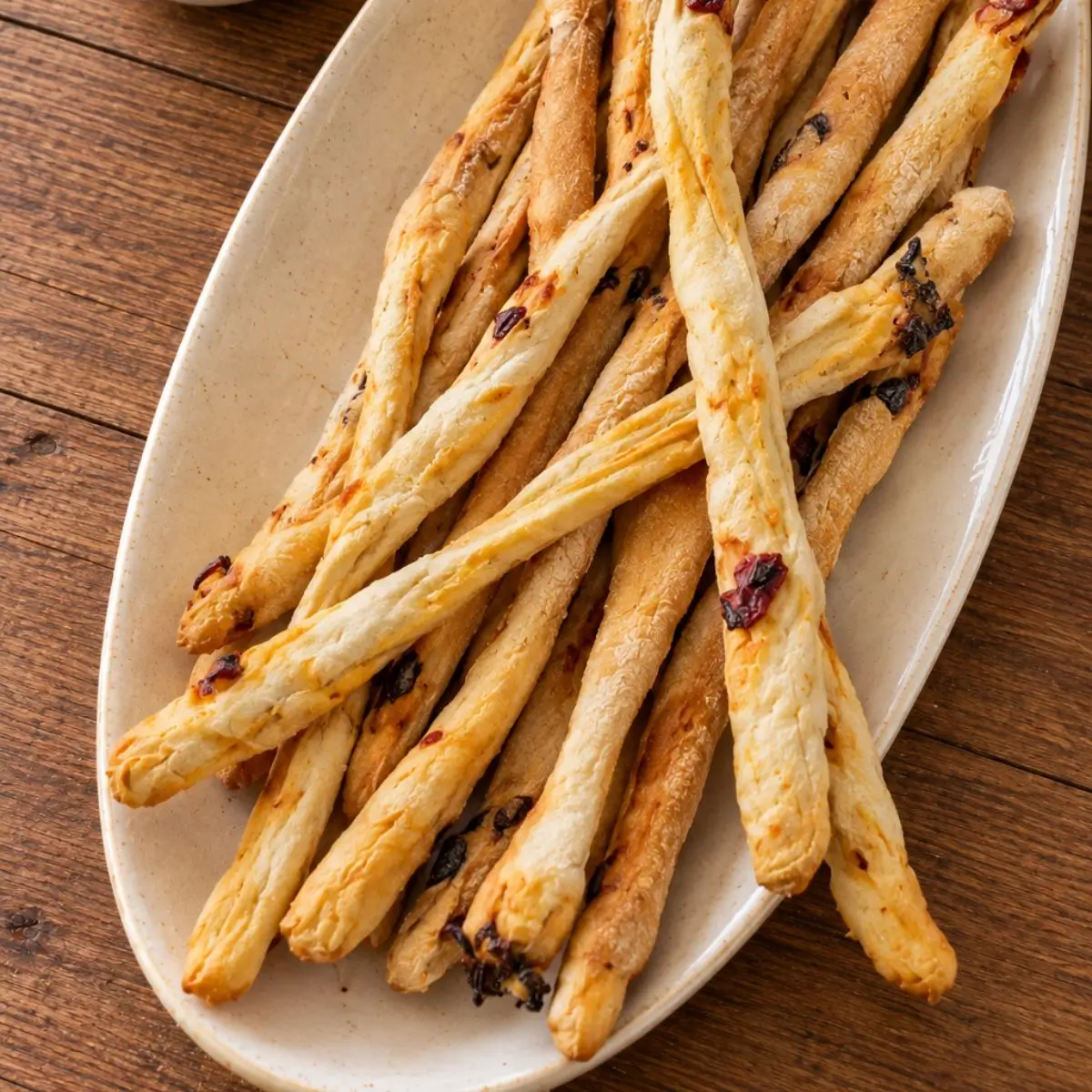
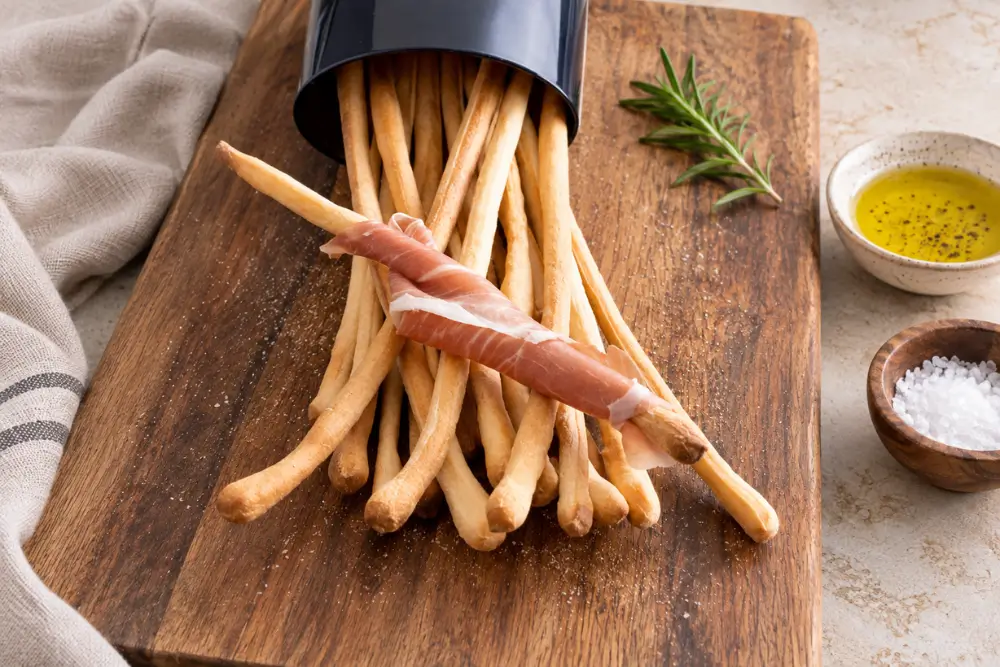
- Grissini Torinesi
Potato Focaccia Recipe
Ingredients
- 300 g – 2 cups all-purpose flour
- 170 ml – ¾ cup water – lukewarm
- 100 g – 3½ oz potato – boiled and mashed
- ½ teaspoon salt
- 7 g – 2 teaspoon dry active yeast
- 1 teaspoon sugar
- extra virgin olive oil
- rosemary
- more salt – to taste
Instructions
- Mix the yeast with the sugar and lukewarm water, then set aside to activate.
- Once frothy, transfer the mixture to the bowl of an electric mixer fitted with a dough hook.
- Add the flour, mashed potato and salt, then knead until the dough is smooth.
- Shape the focaccia dough into a ball, cover with cling wrap and leave to rise in a warm, draft-free area for at least 1 hour, or until doubled in volume.
- Grease two 23 cm – 9 inch round tins with extra virgin olive oil. Once the dough has doubled in volume, divide it between the two tins and press it down with your fingertips to create the characteristic holes.
- Drizzle generously with extra virgin olive oil and a little water. Sprinkle with salt and top with fresh rosemary.
- Bake in a preheated oven at 180°C – 355°F for 20 minutes, or until golden brown.
- Allow to cool slightly, then serve warm or at room temperature.

Love travelling as much as cooking?
Many of the recipes I share are inspired by places I've visited around the world. On Travel with Manu you'll find destination guides, itineraries and travel inspiration to help you plan your next adventure.



Can u make this successfully in a bread maker as a dough. I think I will it and see