

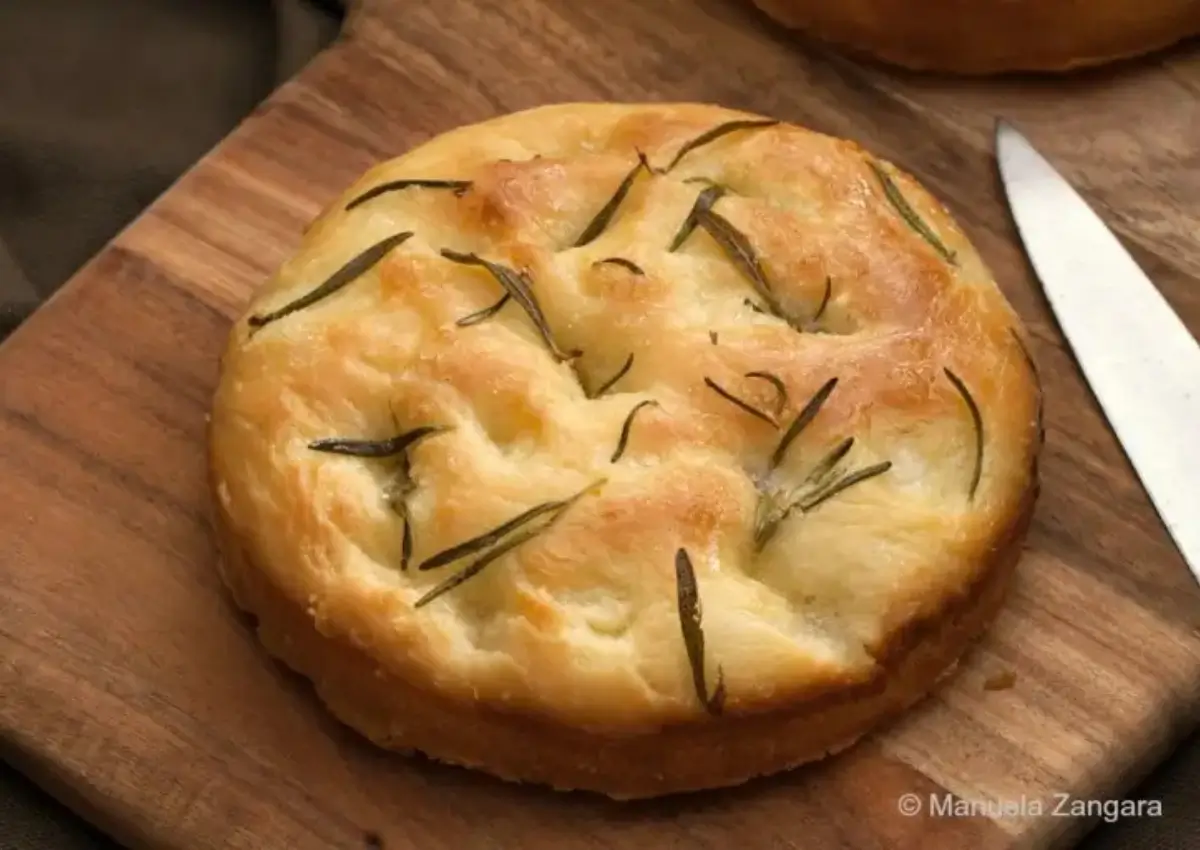
Fresh from the oven, Schiacciata is golden and airy, brushed generously with olive oil, a Tuscan flatbread pressed thin into tins and baked until lightly crisp on top.
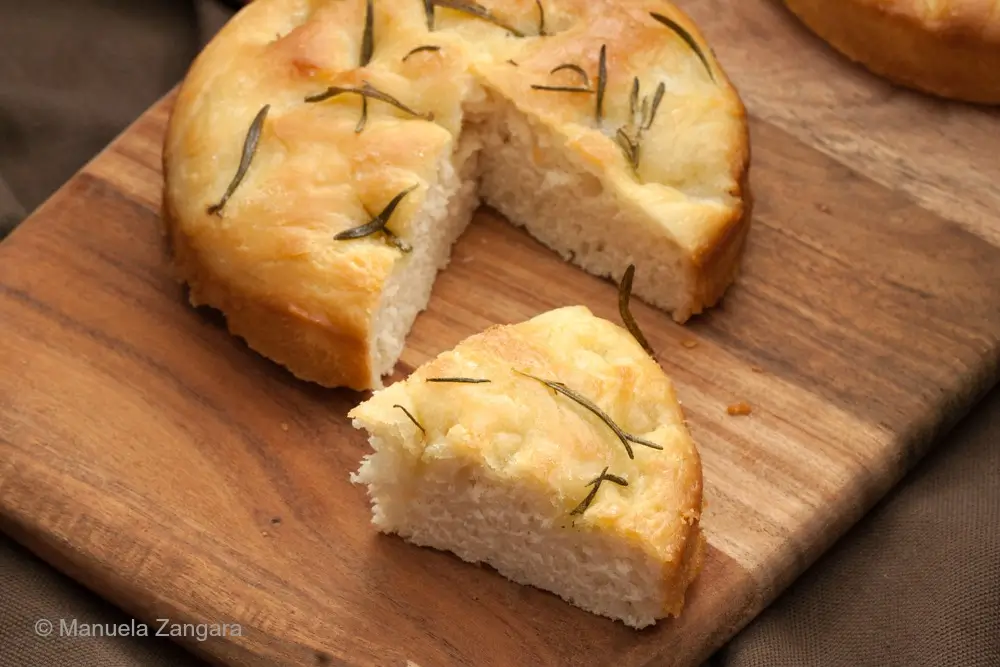
I have already shared my Onion Schiacciata, and this time I am making a more basic recipe for a simple Schiacciata, the kind you often see across central Italy. You can add fresh rosemary or leave it plain. It tastes wonderful either way.
I made it as the base for another dish I will be sharing soon, and I was so impressed that I found it hard to resist the temptation to eat it all before I could use it.
What is Schiacciata?
Schiacciata (pronounced ski-a-chatta) is a Tuscan flatbread made with a simple dough of flour, water, yeast, salt, and olive oil. The name comes from the verb schiacciare, meaning “to press” or “to flatten,” which describes how the dough is firmly pressed into the tin before baking.
Although it is often compared to focaccia, schiacciata is typically thinner and prepared with a more straightforward method. Unlike breads that use a poolish or other pre-ferment for long fermentation, traditional schiacciata is usually made with a direct dough. It requires only a single rise before baking. This gives it a lighter structure and makes it practical for everyday baking.
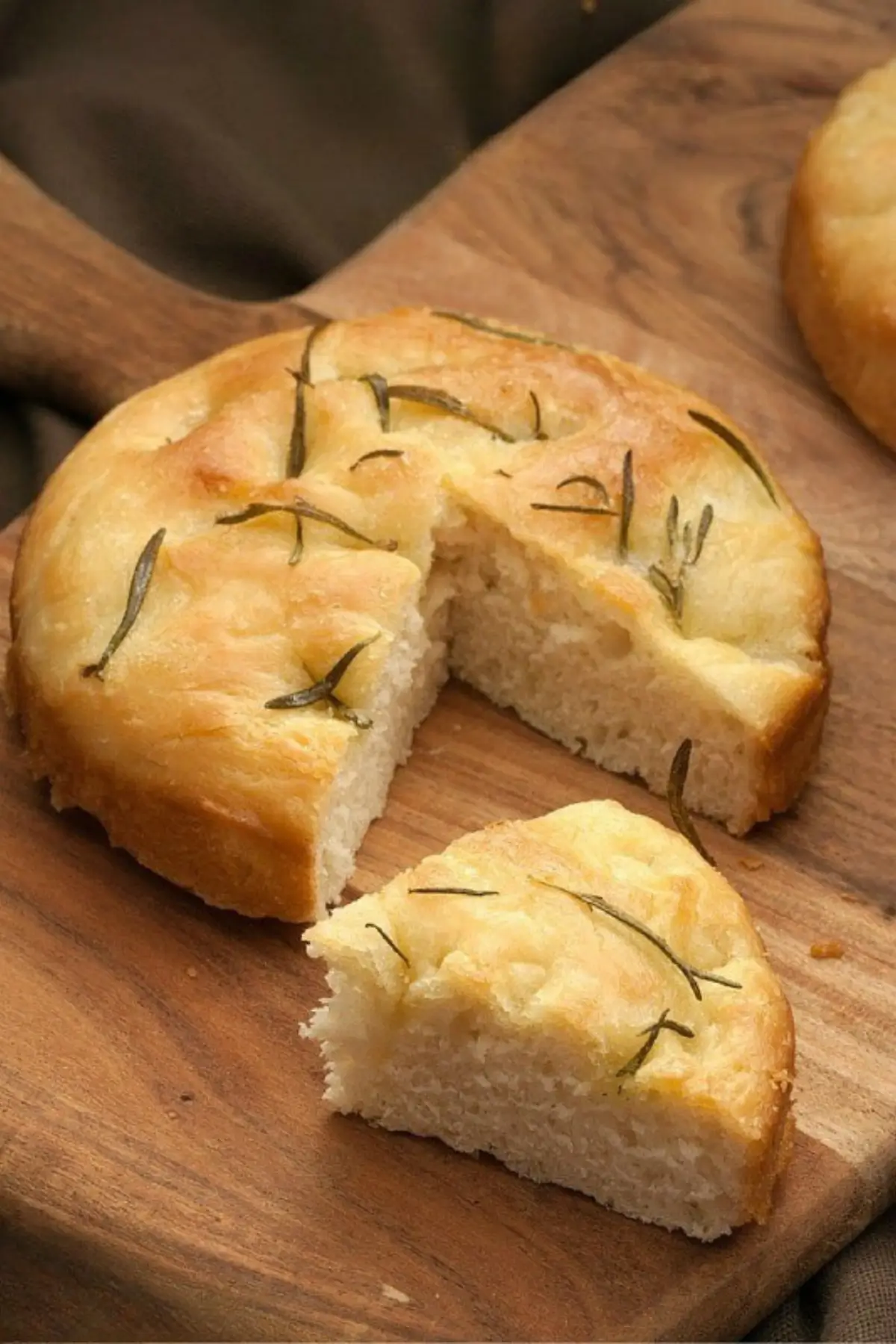
It is commonly finished with olive oil and salt, and sometimes rosemary or other herbs. Depending on the region, you may also find versions topped with onions, tomatoes, or olives, but the base remains simple and rustic.
Reasons to Make Homemade Schiacciata
- Makes excellent picnic bread because it travels well and doesn’t crumble easily.
- Slices easily into squares, then crosswise, ready to pile high with your favourite sandwich ingredients.
- Feels like the best bread choice when you want something simple that works with everything.
Key Ingredients for Schiacciata
All-Purpose Flour
Gives the dough structure and helps it stretch smoothly during kneading. A protein level of around 10–11% keeps the crumb tender while still allowing enough gluten development for elasticity in this thinner flatbread.
Lard or Extra Virgin Olive Oil
Keeps the crumb soft after baking. Lard produces a slightly fuller texture, while olive oil creates a lighter result typical of central Italian bread baking.
Dry Yeast
Supports fermentation during the single rise, giving the bread a light crumb. Combine it with lukewarm water first and check for surface bubbles before incorporating it into the dough.
Find the complete list with measurements in the recipe card below.
How to Make Schiacciata
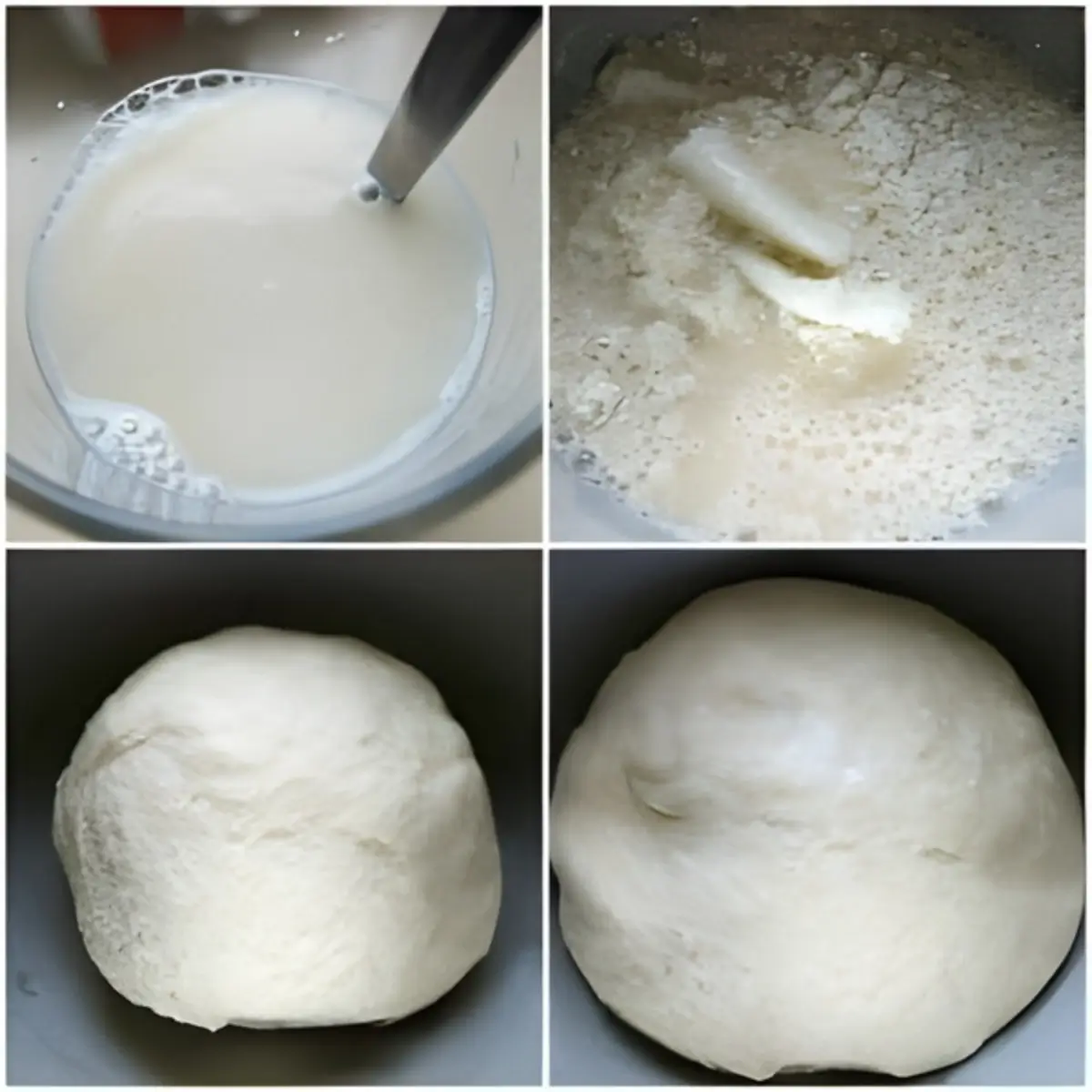
Step 1: Mix the yeast, sugar, and lukewarm water together. Set aside to activate.
Step 2: Once frothy, transfer the mixture to the bowl of an electric mixer fitted with a dough hook attachment. Add the flour, salt, and lard, then knead until a smooth dough forms.
Step 3: Shape the dough into a ball, cover it, and let it rise for at least 1 hour, or until doubled in volume.
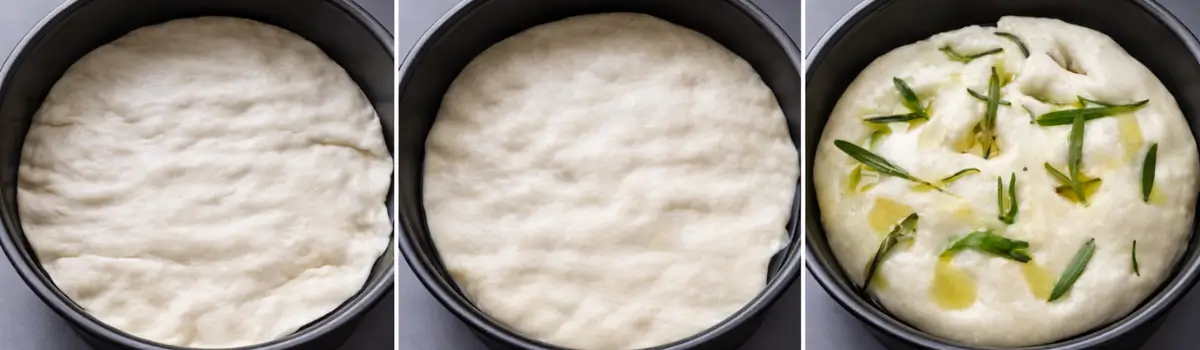
Step 4: Meanwhile, grease two 24 cm – 9.5 inch round tins with extra virgin olive oil. When the dough has doubled in volume, divide it evenly between the tins, and gently press it down. Let it rest for 30 minutes.
Step 5: Drizzle generously with extra virgin olive oil, a little water, and some salt. Scatter fresh rosemary over the top, if using.
Step 6: Bake in a preheated oven at 200°C – 390°F for 25–30 minutes, or until golden brown.
Frequently Asked Questions
Yes. Mix the ingredients in a large bowl and knead by hand on a lightly floured surface for about 8–10 minutes, until the dough feels smooth and elastic.
Thin potato slices, zucchini rounds, sliced red peppers, or grated pecorino can be pressed into the surface before baking. After baking, fill it with prosciutto, capocollo, roasted eggplant, fresh mozzarella, or arugula.
Place the tins on the lower oven rack and make sure the oven is fully preheated before baking. You can also remove the schiacciata from the tins for the last 5 minutes of baking to allow the underside to brown more evenly.
Yes. Replace the dry yeast with double the weight of fresh yeast. Dissolve it in lukewarm water first, then proceed with the recipe as written.
Extra Help from the Kitchen
Rest the Dough if It Resists – If the dough shrinks back while pressing it into the tins, leave it to rest for 5–10 minutes. This relaxes the gluten and makes it easier to flatten without tearing.
Weigh the Dough for Even Baking – Use a kitchen scale to divide the dough into two equal portions before placing it in the tins. Equal weight helps both breads bake at the same rate and reduces the chance of one browning faster or finishing earlier than the other.
Use the Lower Oven Rack – Baking on the lower third of the oven encourages better base colour and prevents a pale underside, especially in home ovens that heat unevenly.
Avoid Using a Rolling Pin – Press the dough gently into the tins with your fingertips, guiding it toward the corners of the pan and creating shallow dimples across the surface. A rolling pin forces out the air developed during rising and can lead to a tighter, denser crumb.
Variations and Twists
Olive and Herb Schiacciata – Press halved pitted olives and a small scatter of chopped rosemary into the dough before baking. The olives soften in the oven and add a gentle savoury note that works well with the olive oil base.
Tomato and Basil Schiacciata – Press halved cherry tomatoes into the surface after shaping and add fresh basil once baked. The tomatoes release their juices as they roast, keeping the top moist and lightly caramelised.
Grape Flatbread – Divide the dough in half, layer fresh grapes over the first pressed layer, sprinkle lightly with sugar, then cover with the remaining dough before baking. The grapes soften and create pockets of sweetness inside.
Salt and Rosemary Schiacciata – Combine coarse sea salt with finely chopped rosemary and press into the surface just before baking. This keeps the seasoning distinct and evenly distributed.
Filled Sandwich Schiacciata – Once baked and cooled slightly, slice horizontally and fill with mortadella, pecorino, and rocket. The thin but sturdy crumb holds fillings well without becoming heavy.
Storage and Shelf Life
Store Schiacciata at room temperature in an airtight container or wrapped well in baking paper and foil for up to 2 days. Keep it on the counter in a cool, dry place away from direct sunlight. Refrigeration is not recommended, as it can cause the crumb to firm up more quickly.
For longer storage, freeze once completely cooled by wrapping tightly in plastic wrap and placing in a freezer-safe bag or container for up to 1 month. Thaw at room temperature while still wrapped to prevent excess moisture from forming on the surface.
Reheat in a preheated oven at 180°C – 350°F for 8–10 minutes to refresh the crust and soften the interior before serving.
Ways to Serve Schiacciata
Serve with Antipasti – Slice into wedges and arrange alongside cured meats and cheeses like pecorino, mozzarella, provolone, or taleggio, plus marinated vegetables and olives for a simple starter spread.
Pair with Soup – Serve warm wedges next to minestrone, tomato soup, or lentil soup so the bread can soak up the broth.
Make a Sandwich – Slice horizontally and fill with prosciutto, mozzarella, rocket, or grilled vegetables for an easy lunch.
Serve with Salad and Balsamic – Cut into squares and serve alongside a tomato or green salad with a light drizzle of balsamic vinegar and olive oil.
Explore More Italian Recipes
Schiacciata Recipe
Fresh from the oven, Schiacciata is golden and airy, brushed generously with olive oil, a Tuscan flatbread pressed thin into tins and baked until lightly crisp on top.
Ingredients
- 400 g – 3 ¼ cups all-purpose flour
- 40 g – 1.5 oz lard or extra virgin olive oil
- 10 g – 2 teaspoons of salt
- 1 tsp dry yeast
- 220 g – 1 scant cup lukewarm water
- 1 tbsp sugar
- extra virgin olive oil – for drizzling
- salt – to taste
- rosemary – optional
Instructions
-
Mix the yeast, sugar, and lukewarm water together. Set aside to activate.
-
Once frothy, transfer the mixture to the bowl of an electric mixer fitted with a dough hook attachment. Add the flour, salt, and lard, then knead until a smooth dough forms.
-
Shape the dough into a ball, cover it, and let it rise for at least 1 hour, or until doubled in volume.
-
Meanwhile, grease two 24 cm – 9.5 inch round tins with extra virgin olive oil. When the dough has doubled in volume, divide it evenly between the tins, and gently press it down. Let it rest for 30 minutes.
-
Drizzle generously with extra virgin olive oil, a little water, and some salt. Scatter fresh rosemary over the top, if using.
-
Bake in a preheated oven at 200°C – 390°F for 25–30 minutes, or until golden brown.

Love travelling as much as cooking?
Many of the recipes I share are inspired by places I’ve visited around the world. On Travel with Manu you’ll find destination guides, itineraries and travel inspiration to help you plan your next adventure.











Leave a Reply