

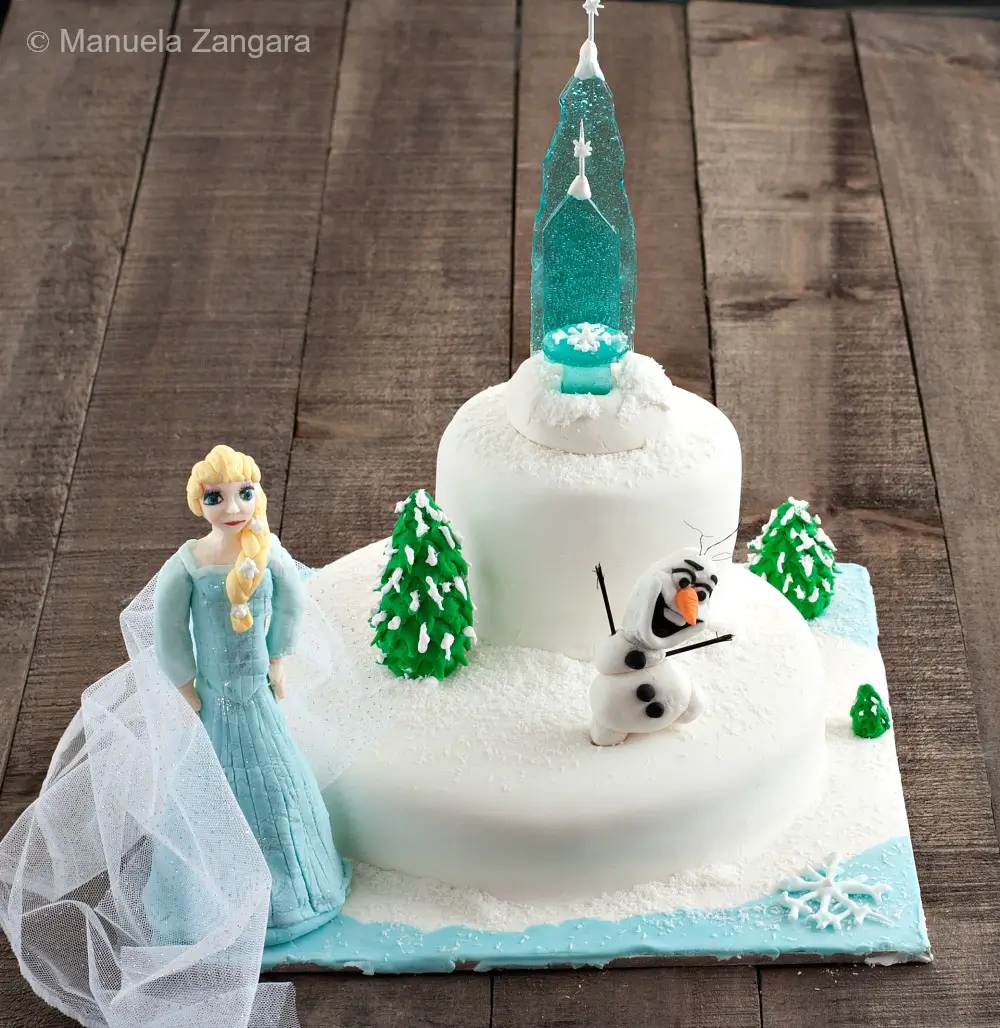
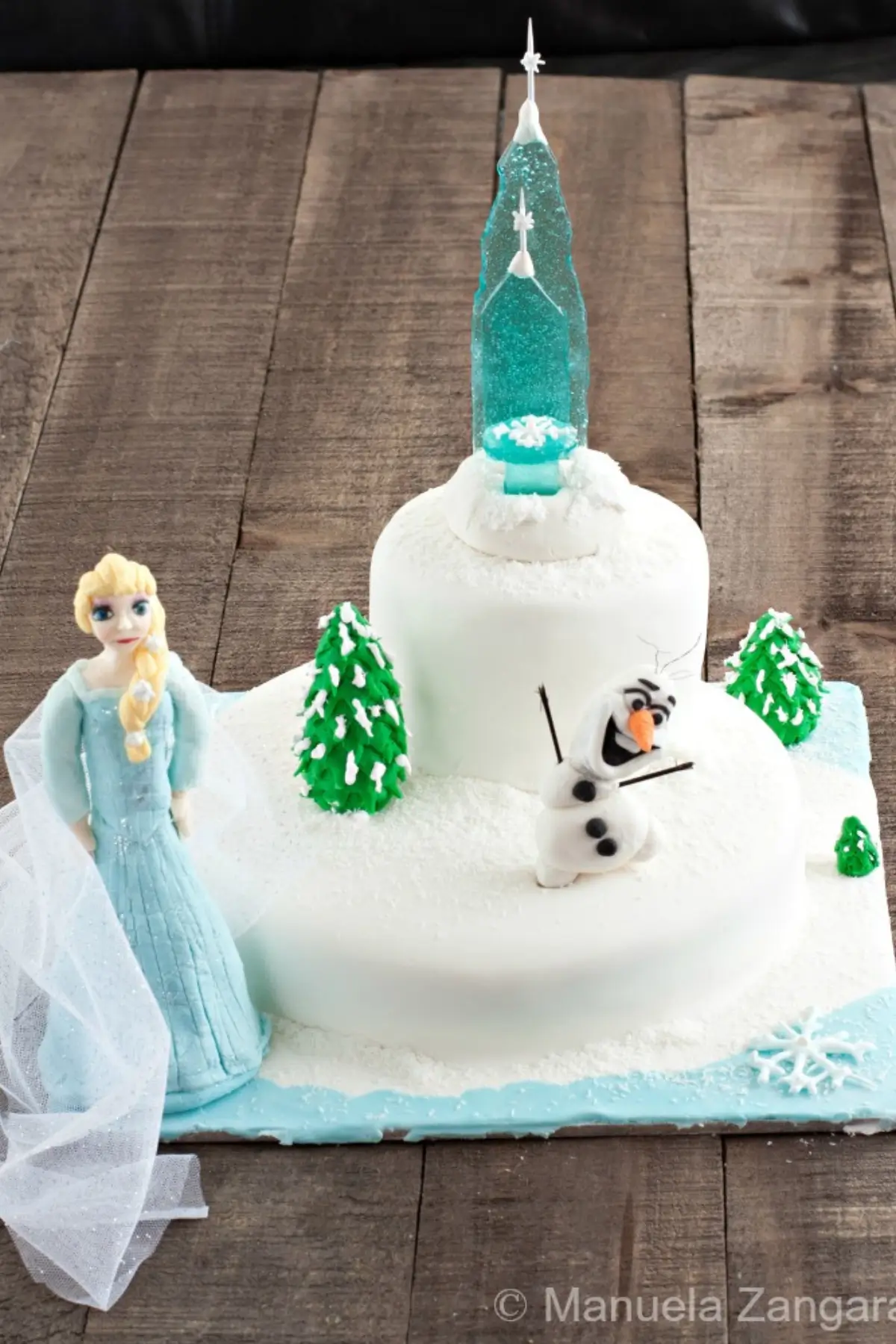
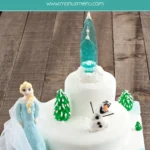
Soft yoghurt layers covered in pale blue fondant create a Frozen Cake with a simple winter style, ideal for parties where children want a dessert inspired by their favourite characters and icy colours.
Like many girls her age, Victoria has a real love for princess stories, and the latest Disney film was no exception.
She adored Frozen from the moment she saw it, and so did her little sister. Movie, songs, costumes, everything. She even knows parts of it by heart, and I am not exaggerating. So when her 7th birthday party came around, choosing a Frozen theme was the obvious choice, cake included.
My first thought was to make a flat fondant-decorated cake, similar to the Peppa Pig Cake I had made before, but Victoria had other plans.
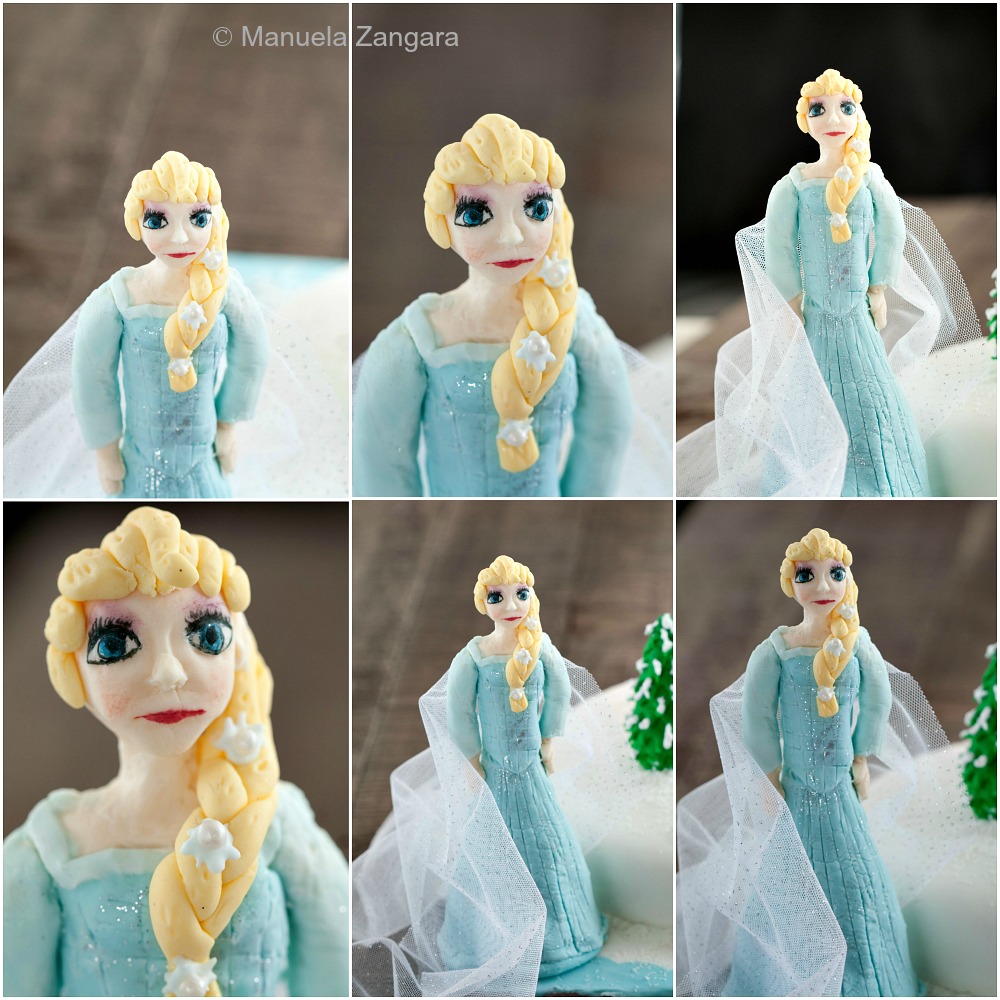
She wanted Elsa, and she wanted her standing. I do not usually make human fondant figurines because they take time and require patience.
When you organise a themed party, there is always plenty to prepare, and the cake, while important, is still only one part of the day. A flat design is usually easier and quicker to manage.
Even so, I could not bring myself to say no. I made the figurines a week in advance to save time, though I did not let the children eat them as they had firmed up.
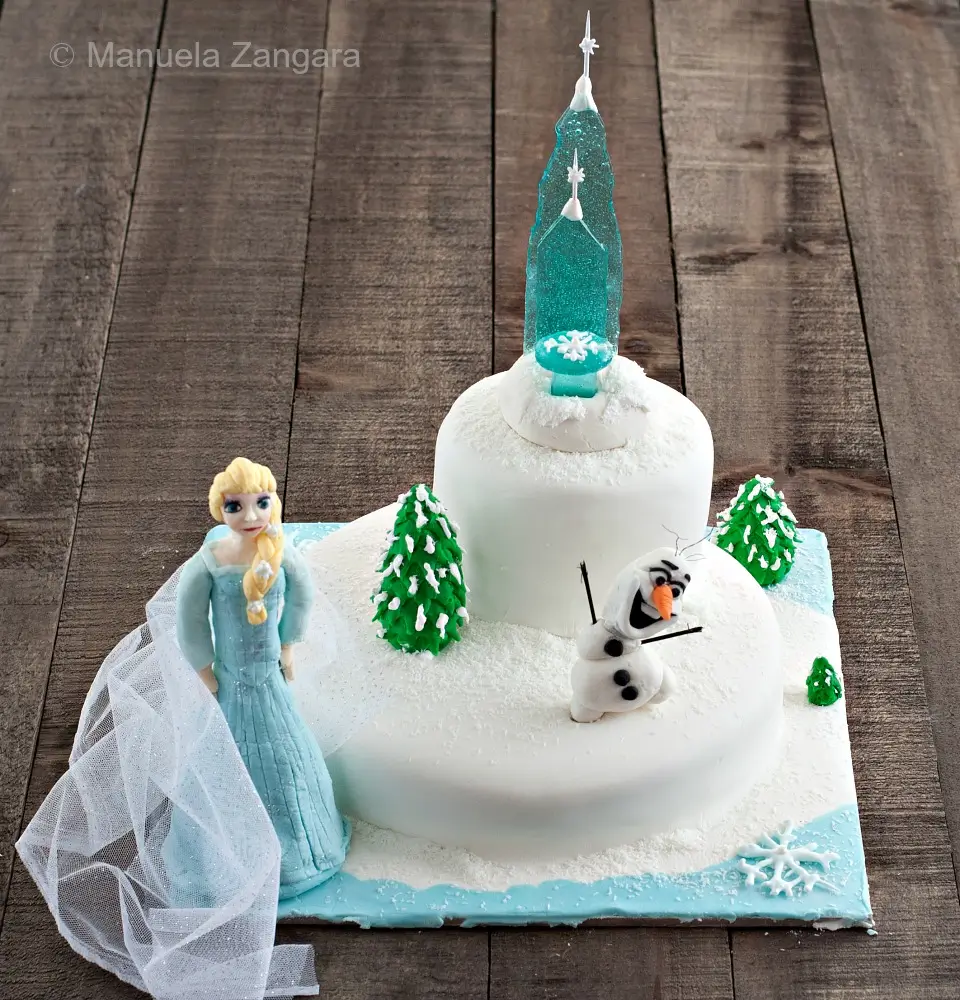
In the end, the cake was a success and not as difficult as I expected. My husband helped by making moulds for the sugar castle, which made a big difference.
Reasons to Make Frozen-Theme Cake
- Brings a fun winter theme to the table and instantly gives the birthday setup a bit of excitement.
- Works well for parties because the decorations stay steady at room temperature once dry.
- Uses ingredients easy to find in most supermarkets, making planning simpler.
Key Ingredients for Frozen Cake
Yoghurt Cakes
A firm and reliable base with a light, subtle tang from the yoghurt. I bake my homemade yoghurt cakes ahead of time so they cool fully and hold their shape during stacking.
Royal Icing
Ideal for adding small accents such as snowflakes and tree tops. I prepare my royal icing for this cake, and it gives clean, defined lines once dry.
Fondant
Used to create Elsa, Olaf, the trees, and the full outer covering of the cake. It colours evenly, handles shaping well, and dries with enough strength to support fine details.
Find the complete list with measurements in the recipe card below.
How to Make Frozen Cake
Step 1: Bake your cakes ahead of time. I made 3 yoghurt cakes and froze them for easy assembly.
Step 2: Colour all the fondant you plan to use. Dip a toothpick into the gel colour, rub it onto the fondant, and knead until the colour is evenly combined. Pre-coloured fondant can also be used in the amount needed.
Elsa
Step 1: Shape Elsa’s head by rolling a small ball of fondant, forming the nose, eye sockets, forehead, and cheekbones, then shaping the chin and mouth carefully so the head does not deform.
Step 2: Roll a teardrop shape for the torso, flatten the narrow end to create the waist, and leave the wider end for the shoulders.
Step 3: Roll 2 equal balls of fondant and shape them into arms with one thinner end. Bend each arm into position and form the wrists and hands.
Step 4: Roll blue fondant for the skirt to form the bottom of the gown. Insert a wooden stick into the top of the skirt and attach the torso with water or edible glue. Roll a thin piece of blue fondant for the top part of the gown, attach it to the torso, and add vertical and horizontal scoring with an exacto knife.
Step 5: Secure the parts with toothpicks and water or edible glue. Paint the lips and eyes using edible ink pens or a fine brush dipped in gel colours mixed with vodka (the lips and eyes can be painted using a brush dipped in gel colours mixed with vodka).
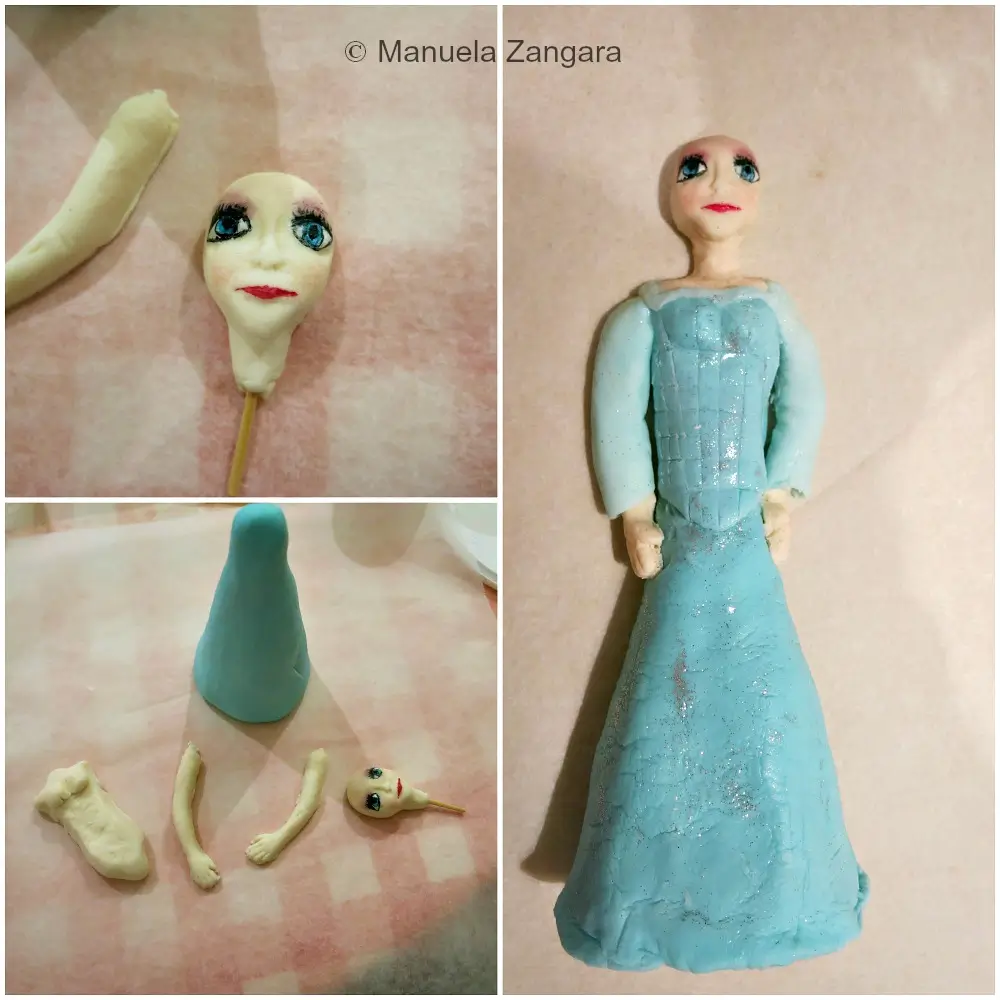
Step 6: Once dry, make the hair with light yellow fondant. Roll a plait and smaller pieces for the rest of the hair. Form one ear, as the other will be covered. Add Royal Icing stars or snowflakes to decorate the plait.
Step 7: Attach a fabric piece to the back using edible glue to create the cape. Allow Elsa to dry completely.
Olaf
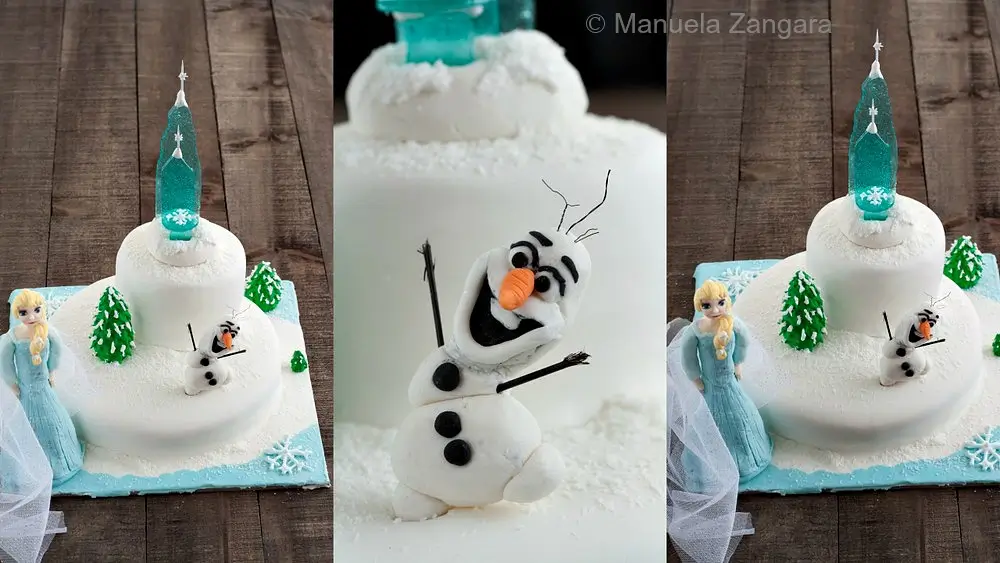
Step 1: Roll different sizes of white fondant balls for Olaf’s body, using a reference picture for proportions, and secure them with a toothpick.
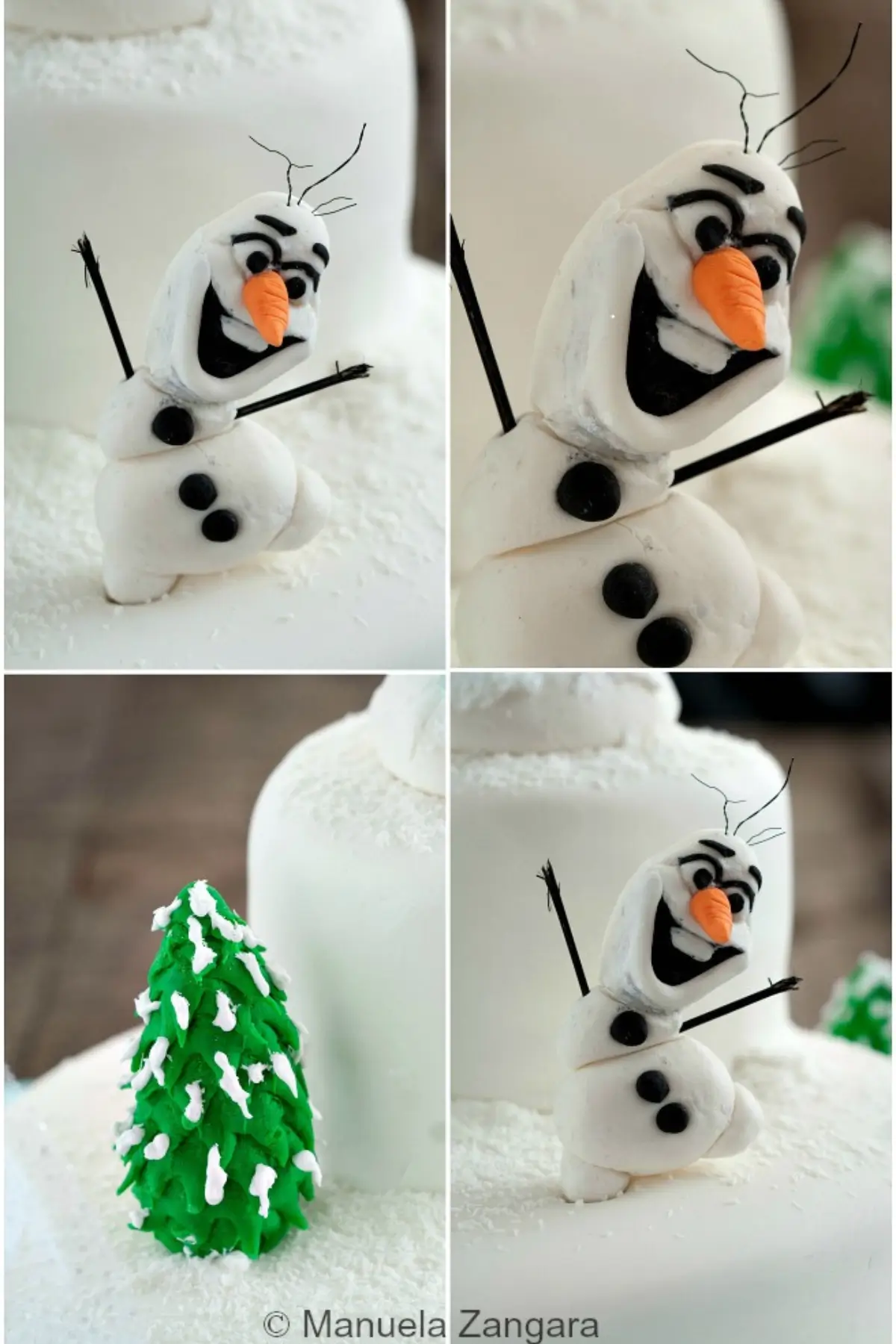
Step 2: Shape the head, mouth, and nose area using fingers and a bamboo skewer. Recess the mouth slightly (inside the indented area), leaving enough fondant at the sides. Add black fondant inside the mouth and place the white tooth.
Step 3: Make the eyes by shaping a white fondant ball and topping it with a smaller black fondant ball. Add black borders and eyebrows.
Step 4: Roll 3 black fondant balls for the buttons and attach them with water or edible glue.
Step 5: Shape the nose from orange fondant into a small “carrot.”
Step 6: Use 2 toothpicks coloured black (the toothpicks can be tinted white), trimming the ends to form fingers.
Step 7: Add the hair using black twine (the same type used for making bracelets).
Trees
Step 1: Roll green fondant into a teardrop shape.
Step 2: Snip along the sides with small scissors to form branches and leaves.
Step 3: Pipe Royal Icing on top to resemble snow.
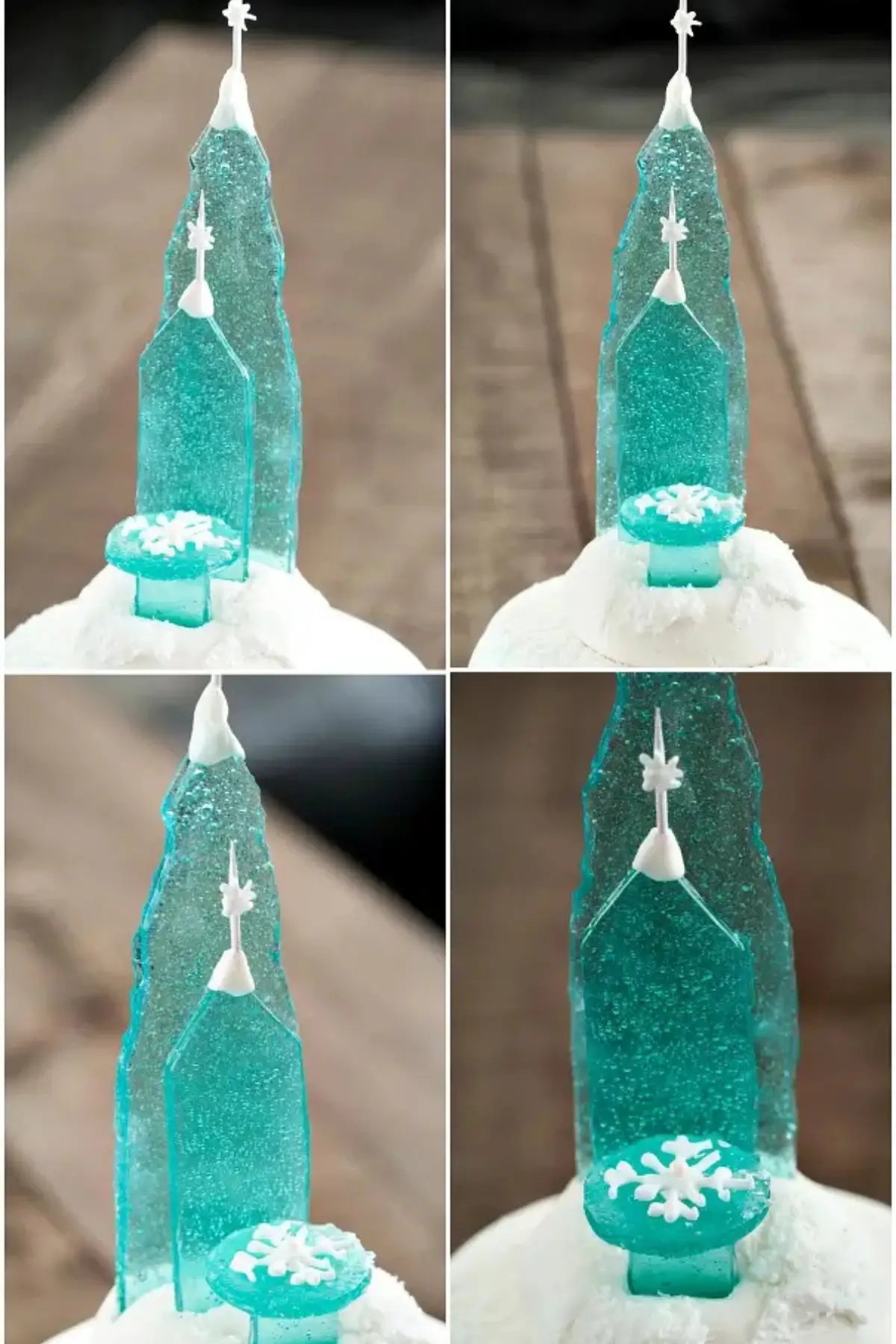
Castle
Step 1: Prepare 4 moulds for the castle pieces by lining them with tape and baking paper.
Step 2: Combine sugar, water, and glucose syrup in a pot and bring to a boil.
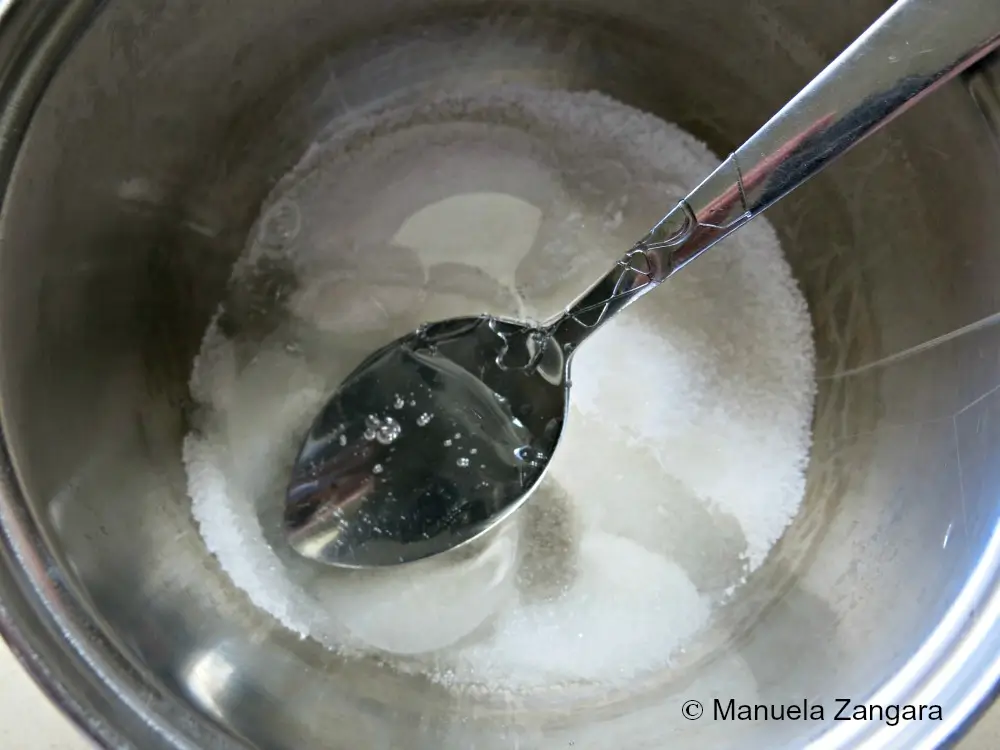
Step 3: Cook until the syrup reaches 150°C – 302°F (hard crack stage), turn off the heat, mix in 1–2 drops of blue colouring, and pour the syrup into the moulds, spreading it evenly.
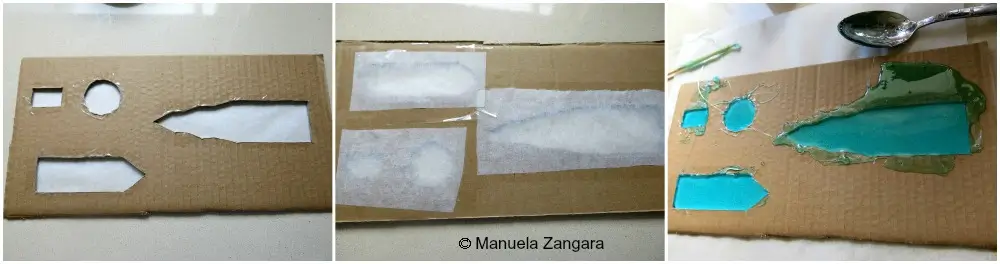
Step 4: Allow the pieces to dry completely before unmoulding. Cut the moulds open gently with scissors (as the sugar pieces can break easily).
Step 5: Use any leftover syrup to make lollipops.
Step 6: When dry, insert 2 toothpicks (the toothpicks can be tinted white) at the top of the front and back panels. Attach the panels with edible glue and white fondant. Add Royal Icing snowflakes if desired.
Assembling
Step 1: The day before the party, prepare the icing for the crumb coat (you can use any favourite icing recipe, keep it slightly looser so it spreads smoothly and is easy to apply). Remove the frozen yoghurt cakes from the freezer and level them with a serrated knife.
Step 2: Spread icing in the centre of a cake board and place the biggest cake on it (with the smooth side facing up). Crumb coat the top and sides, smooth the surface, and chill until firm (the crumb coat can be applied before transferring the cake to the board).
Step 3: Spread icing between the 2 smaller cakes and stack them, choosing the smoothest sides for the top (this surface will likely become the bottom of one of the cakes). Crumb coat the stacked cakes and chill until set.
Step 4: Roll out white fondant and cover the smaller cake. Set it aside. Roll out more fondant to cover the bigger cake and the board, adding light blue fondant at the bottom for an ice effect. Smooth and trim the excess.
Step 5: Position the smaller cake on top of the bigger one. If needed, insert a bamboo skewer for stability.
Step 6: Attach all decorations using fresh fondant, edible glue, or toothpicks.
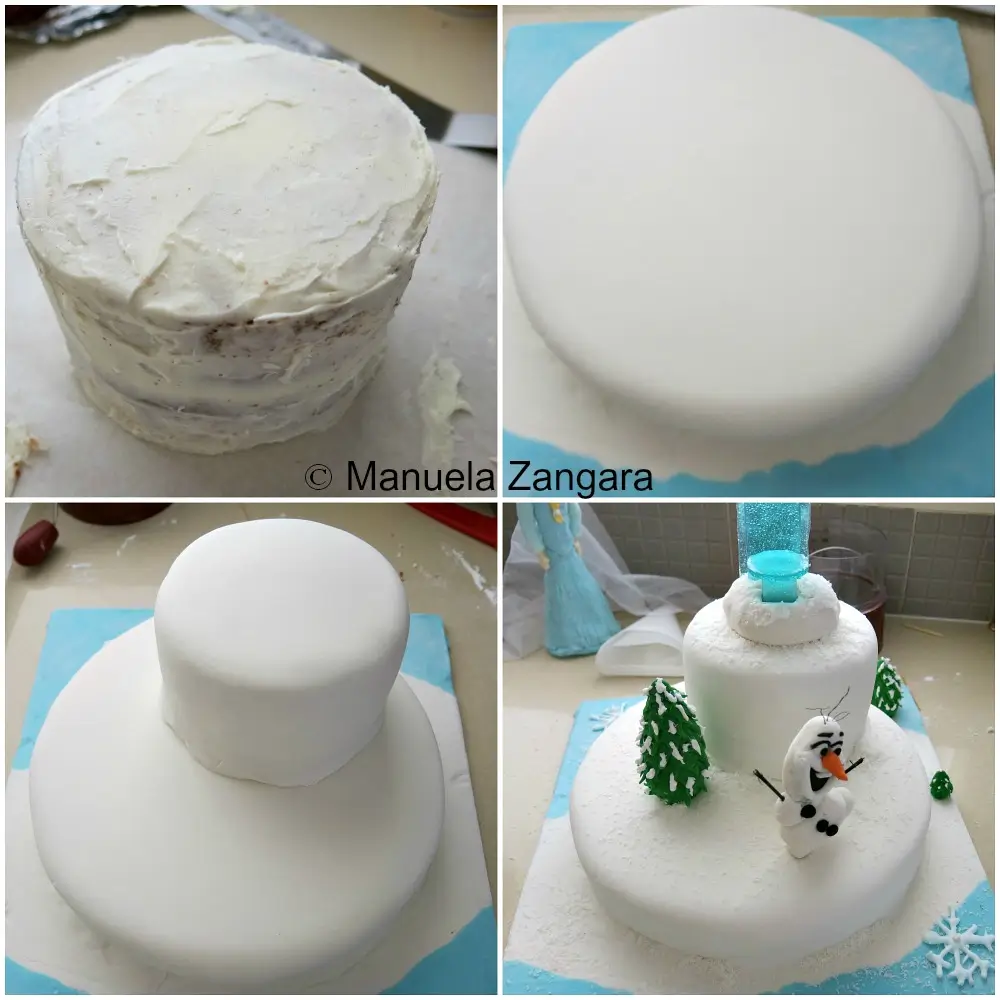
Step 7: Finish with coconut powder sprinkled around to resemble snow.
Frequently Asked Questions
Yes, but choose a sponge with enough structure to support the weight of fondant and decorations. Dense sponges work better than very airy ones.
Use fresh fondant combined with edible glue and allow a short resting time before moving the cake. This provides better support and keeps the pieces in place.
Glucose syrup prevents crystallisation, so removing it increases the risk of cloudy or brittle pieces. Using it gives more reliable results.
Rub a tiny amount of shortening over any small cracks and smooth it with your finger. This helps blend the surface without adding extra moisture.
Extra Help from the Kitchen
Work in Small Fondant Batches – Colour small portions at a time so you have better control over the shade and avoid drying the entire block.
Choose Firm Boards – Use a strong cake board for the base tier to prevent bending once the decorations and castle pieces are added.
Test Fondant Thickness – Roll fondant to the same thickness for both tiers so the surface stays smooth and the cake settles evenly.
Dry Figures Upright – Leave Elsa and Olaf upright during drying to keep their shape steady and prevent leaning.
Keep Sugar Pieces Covered – Store the finished castle pieces in an airtight container with silica gel packets to protect them from humidity.
Variations and Twists
Add Edible Gel Snow Effects – Mix white gel colour with a small amount of vodka to paint light snowy accents on the skirt, trees, or castle edges.
Use White Chocolate Ganache Instead of Plain Icing – Cover each yoghurt cake layer with a thin white chocolate ganache before the fondant for a smoother surface and added flavour.
Use Butter Cake Instead of Yoghurt Cake – Replace the base cake with a butter cake to support heavier decorations and maintain structure during transport.
Create a Two-Colour Ombre Base – Blend white and pale blue fondant to form a winter gradient around the bottom tier.
Storage and Shelf Life
Store the Frozen Cake in the fridge inside a covered container for up to 3 days to keep the fondant firm and the decorations stable. Keep the fondant figures at room temperature in a dry spot, as moisture can soften their shape.
Freeze leftover cake slices for up to 1 month in airtight containers. Thaw frozen slices in the fridge overnight before serving.
Frozen-Inspired Sweets for Your Next Frozen Party
Frozen Cake Recipe
Soft yoghurt layers covered in pale blue fondant create a Frozen Cake with a simple winter style, ideal for parties where children want a dessert inspired by their favourite characters and icy colours.
Ingredients
Cake, Elsa, Olaf and Trees
- 1 ½ yoghurt cakes – baked in 1 × 23 cm – 9 inch and 2 × 10 cm – 4 inch round pans
- coloured fondant
- edible glue
- gel colours
- fabric – for the cape
- icing for crumb coating
- icing sugar or corn starch – for dusting and rolling fondant
- coconut powder
Castle
- ⅓ cup sugar
- 2 tbsp glucose syrup
- 1 tbsp water
- blue food colouring
- Royal Icing
Instructions
-
Bake your cakes ahead of time. I made 3 yoghurt cakes and froze them for easy assembly.
-
Colour all the fondant you plan to use. Dip a toothpick into the gel colour, rub it onto the fondant, and knead until the colour is evenly combined. Pre-coloured fondant can also be used in the amount needed.
Elsa
-
Shape Elsa’s head by rolling a small ball of fondant, forming the nose, eye sockets, forehead, and cheekbones, then shaping the chin and mouth carefully so the head does not deform.
-
Roll a teardrop shape for the torso, flatten the narrow end to create the waist, and leave the wider end for the shoulders.
-
Roll 2 equal balls of fondant and shape them into arms with one thinner end. Bend each arm into position and form the wrists and hands.
-
Roll blue fondant for the skirt to form the bottom of the gown. Insert a wooden stick into the top of the skirt and attach the torso with water or edible glue. Roll a thin piece of blue fondant for the top part of the gown, attach it to the torso, and add vertical and horizontal scoring with an exacto knife.
-
Secure the parts with toothpicks and water or edible glue. Paint the lips and eyes using edible ink pens or a fine brush dipped in gel colours mixed with vodka (the lips and eyes can be painted using a brush dipped in gel colours mixed with vodka).
-
Once dry, make the hair with light yellow fondant. Roll a plait and smaller pieces for the rest of the hair. Form one ear, as the other will be covered. Add Royal Icing stars or snowflakes to decorate the plait.
-
Attach a fabric piece to the back using edible glue to create the cape. Allow Elsa to dry completely.
Olaf
-
Roll different sizes of white fondant balls for Olaf’s body, using a reference picture for proportions, and secure them with a toothpick.
-
Shape the head, mouth, and nose area using fingers and a bamboo skewer. Recess the mouth slightly (inside the indented area), leaving enough fondant at the sides. Add black fondant inside the mouth and place the white tooth.
-
Make the eyes by shaping a white fondant ball and topping it with a smaller black fondant ball. Add black borders and eyebrows.
-
Roll 3 black fondant balls for the buttons and attach them with water or edible glue.
-
Shape the nose from orange fondant into a small “carrot.”
-
Use 2 toothpicks coloured black (the toothpicks can be tinted white), trimming the ends to form fingers.
-
Add the hair using black twine (the same type used for making bracelets).
Trees
-
Roll green fondant into a teardrop shape.
-
Snip along the sides with small scissors to form branches and leaves.
-
Pipe Royal Icing on top to resemble snow.
Castle
-
Prepare 4 moulds for the castle pieces by lining them with tape and baking paper.
-
Combine sugar, water, and glucose syrup in a pot and bring to a boil.
-
Cook until the syrup reaches 150°C – 302°F (hard crack stage), turn off the heat, mix in 1–2 drops of blue colouring, and pour the syrup into the moulds, spreading it evenly.
-
Allow the pieces to dry completely before unmoulding. Cut the moulds open gently with scissors (as the sugar pieces can break easily).
-
Use any leftover syrup to make lollipops.
-
When dry, insert 2 toothpicks (the toothpicks can be tinted white) at the top of the front and back panels. Attach the panels with edible glue and white fondant. Add Royal Icing snowflakes if desired.
Assembling
-
The day before the party, prepare the icing for the crumb coat (you can use any favourite icing recipe, keep it slightly looser so it spreads smoothly and is easy to apply). Remove the frozen yoghurt cakes from the freezer and level them with a serrated knife.
-
Spread icing in the centre of a cake board and place the biggest cake on it (with the smooth side facing up). Crumb coat the top and sides, smooth the surface, and chill until firm (the crumb coat can be applied before transferring the cake to the board).
-
Spread icing between the 2 smaller cakes and stack them, choosing the smoothest sides for the top (this surface will likely become the bottom of one of the cakes). Crumb coat the stacked cakes and chill until set.
-
Roll out white fondant and cover the smaller cake. Set it aside. Roll out more fondant to cover the bigger cake and the board, adding light blue fondant at the bottom for an ice effect. Smooth and trim the excess.
-
Position the smaller cake on top of the bigger one. If needed, insert a bamboo skewer for stability.
-
Attach all decorations using fresh fondant, edible glue, or toothpicks.
-
Finish with coconut powder sprinkled around to resemble snow.

Love travelling as much as cooking?
Many of the recipes I share are inspired by places I’ve visited around the world. On Travel with Manu you’ll find destination guides, itineraries and travel inspiration to help you plan your next adventure.











Wow! Incredible, Manu! This is truly impressive as I can only imagine how long it took to make the human figure! Fabulous job on all of it, and I’m sure Victoria was over the moon! I used to make fondant cakes for my kids when they were small, starting with Winnie the Pooh, and moving to Cinderella and Hercules! I will have to find the photos and post them one day. I wonder if I will break out the fondant again, sometime. You’ve inspired me!
You did a great job Manu.
Manu, you are so very clever!
That is one amazing cake 🙂 You are so creative. I bet you had fun seeing your idea come to live 🙂 Your little girls are very lucky and I hope they’ll have your talent and skills too.