

With a crisp shell, soft centre, and fresh fruit topping, Pavlova brings sweetness and texture together in every slice.
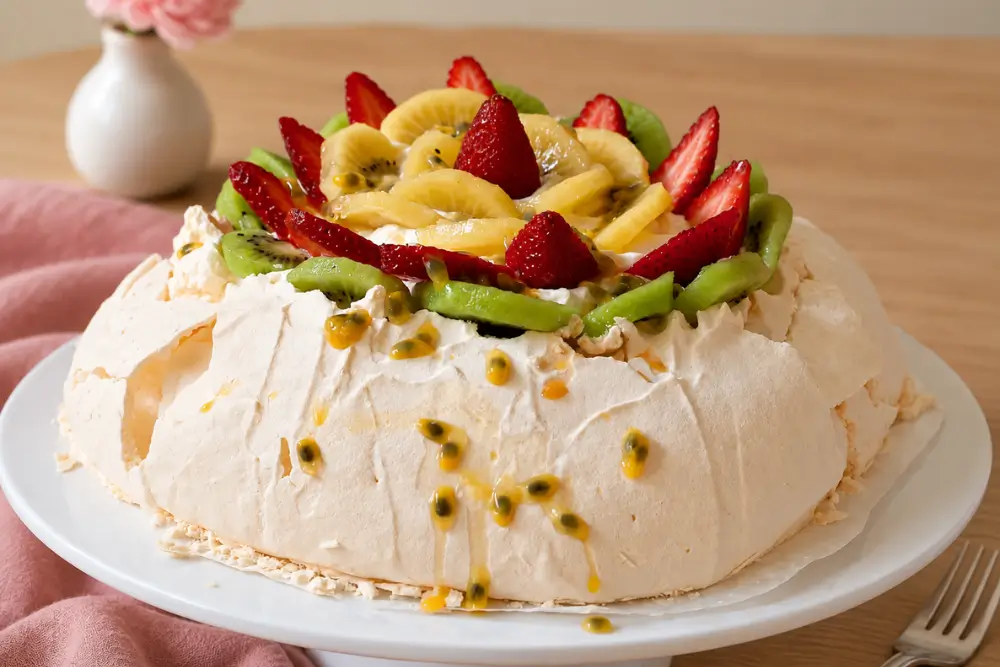
The last recipe from my “Come have some Aussie tucker, mate!” party is the Pavlova recipe, and I saved it for last for a reason. This is not an easy dessert to make, and mine did crack slightly, but the flavour was completely unaffected and absolutely worth the effort.
For a first attempt, I was more than happy with the result, though I will be making it again to refine it further.
Pavlova is one of those desserts that teaches you something every time you bake it, and I already know what I will do differently next time.
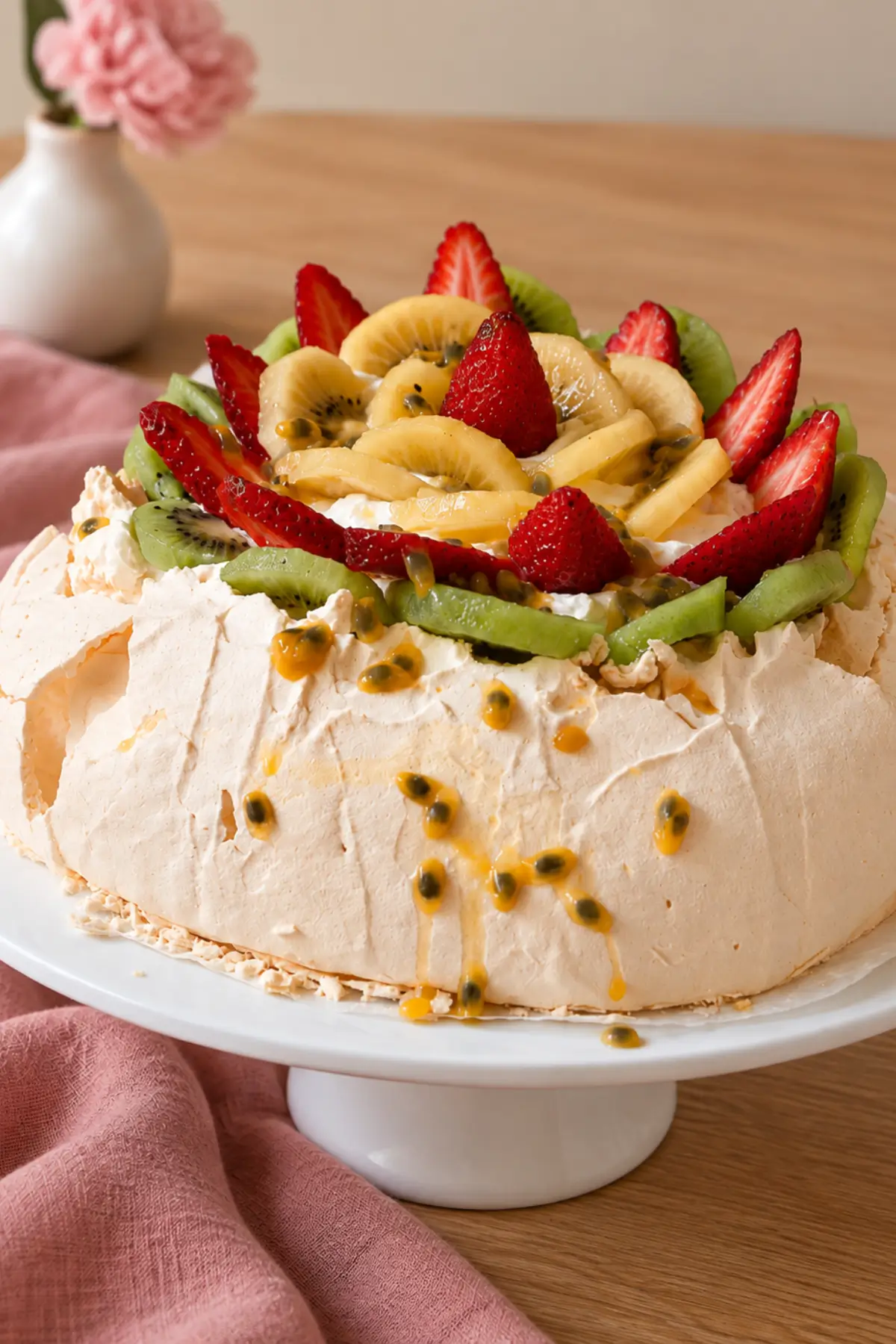
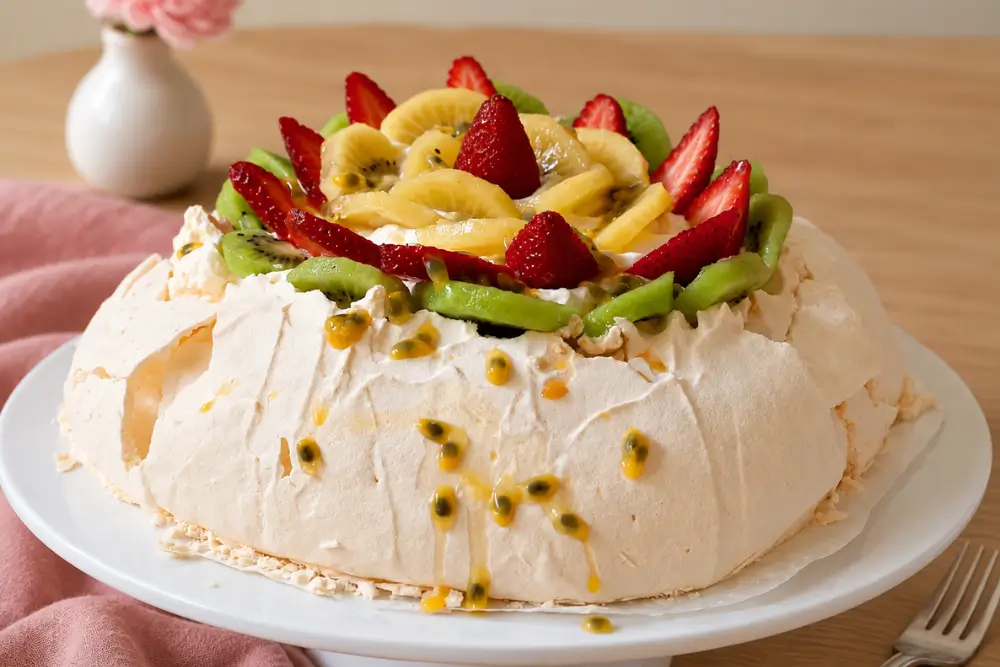
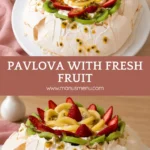
I chose strawberries, kiwi, golden kiwi, and passion fruit, though mango or berries would also work depending on the season. I tasted passion fruit for the first time while making this Pavlova and was immediately taken by its flavour. It is hard to believe I went so many years without it. I hope you enjoy this Pavlova as much as I did.
What is Pavlova?
Pavlova is a classic meringue-based dessert with a crisp outer shell and a soft, marshmallow-like centre. It is usually topped with whipped cream and fresh fruit such as strawberries, kiwi, and passion fruit, which keeps it light and not overly sweet.
It is especially popular in Australia and New Zealand, and both countries proudly claim it as their own. The dessert is named after Anna Pavlova, the famous Russian ballerina, with the airy texture meant to reflect her grace and elegance.
Why We Love Homemade Pavlova
- Crisp outer shell gives way to a soft, marshmallow-like centre with every slice.
- Fresh fruit topping adds colour, juiciness, and contrast to the creamy layer.
- Coffee or tea pairs naturally with the light sweetness of the dessert.
Key Ingredients for Pavlova
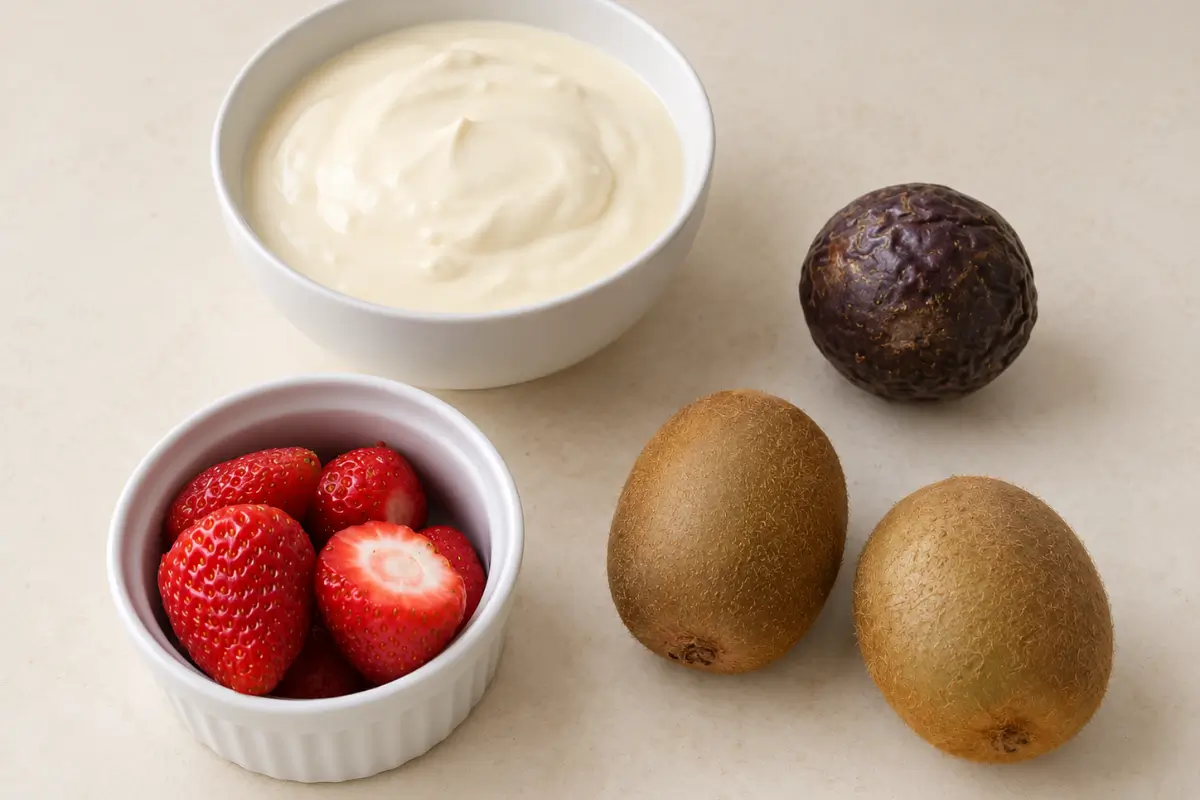
Egg Whites
Whipped to firm peaks, egg whites give pavlova its shape and lift. Using large eggs at room temperature helps them whip more evenly and reach better volume.
Caster Sugar
Fine sugar dissolves easily as you beat the meringue, giving it a smooth, glossy texture rather than a gritty finish. Superfine sugar works well if caster sugar is not on hand.
Thickened Cream
Thickened cream whips up easily and holds its shape, pairing well with the crisp meringue and fresh fruit. Heavy cream can be used as an alternative if needed.
Find the complete list with measurements in the recipe card below.
How to Make Pavlova
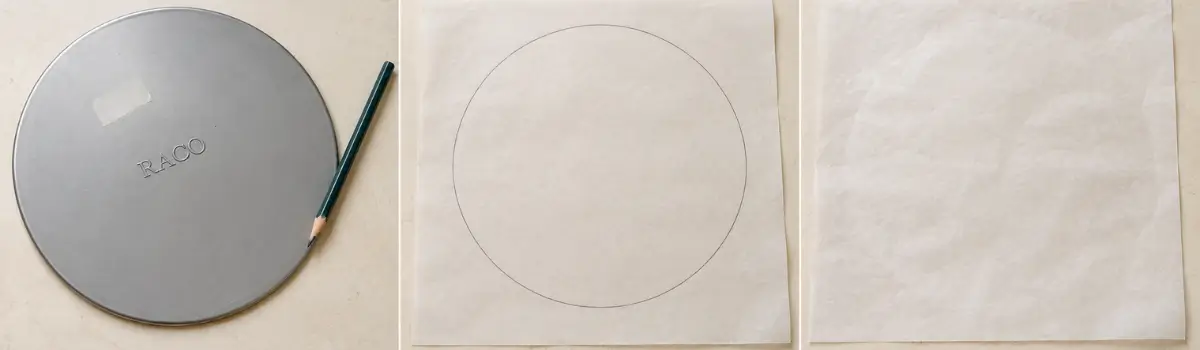
Step 1: Line a baking tray with baking paper. Draw a 20 cm disc on the paper, then turn it ink-side down. Set aside.
Step 2: Using an electric beater, beat the egg whites just until firm peaks form. Gradually add the sugar, 1 tablespoon at a time, beating constantly, until the sugar dissolves and the mixture is thick and glossy. Add the cornflour, vinegar, and vanilla essence, then beat for 1 minute more.
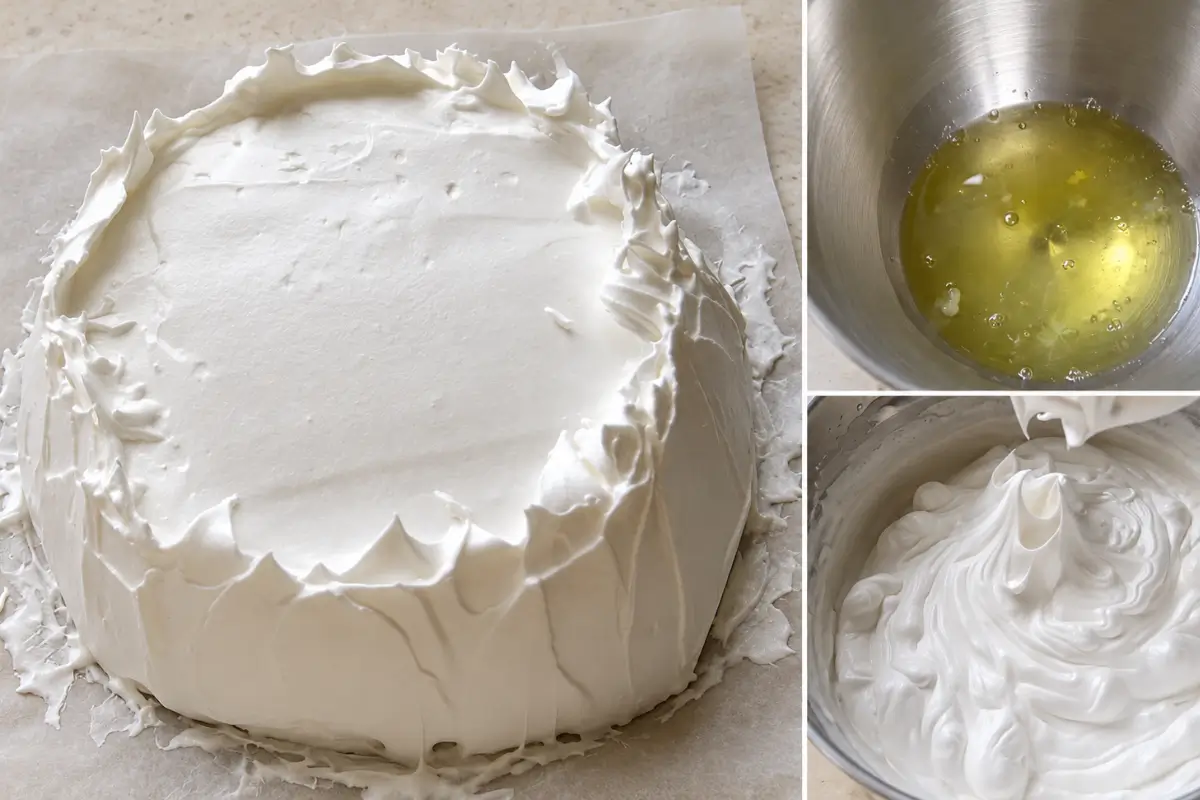
Note: If you overbeat the egg whites, the meringue is likely to collapse and crack during baking.
Step 3: Spoon the meringue mixture onto the disc and shape it into a “cake,” creating furrows with a spatula.
Step 4: Bake in a preheated oven at 150°C – 300°F for 10 minutes, then reduce the oven temperature to 110°C – 230°F and bake for 1 hour more, or until the meringue is crisp and dry. Turn the oven off and leave the meringue in the oven, with the door closed, to cool completely.
Step 5: Whip the cream with the 2 tablespoons caster sugar until firm peaks form, then spread it over the top of the pavlova.
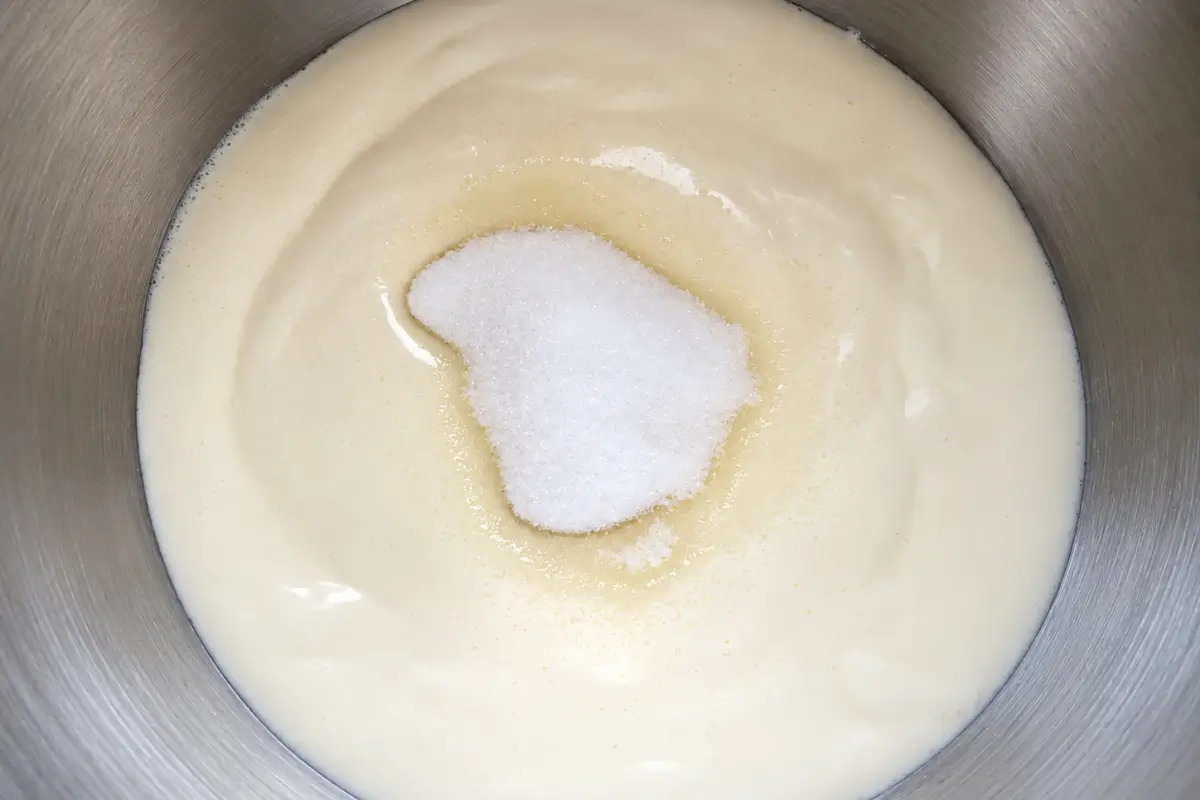
Step 6: Decorate with the sliced fruit and the passion fruit pulp.
Frequently Asked Questions
Lightly sweetened mascarpone softened with a small amount of cream works well for a richer topping. Whipping cream mixed with mascarpone creates a thicker, more stable layer that holds its shape and pairs well with fresh fruit.
Superfine sugar is the closest substitute, as it dissolves easily during whipping and gives a smooth, glossy meringue. Regular granulated sugar is not ideal, as it takes longer to dissolve and can leave a gritty texture.
Berries, mango, stone fruit, or extra passion fruit work well. Choose fruit with some acidity to contrast the cream and meringue.
Extra Help from the Kitchen
Choose a Dry Day – Bake pavlova when humidity is low, as moisture in the air can soften the shell and affect the final texture. If the weather is humid, running a dehumidifier in the kitchen for about an hour before starting helps create a drier environment for the meringue to set.
Use a Metal or Glass Bowl – Whip egg whites in metal or glass, since plastic can hold traces of fat that limit volume.
Check Oven Accuracy – Use an oven thermometer to confirm low temperatures, as many ovens run hotter than the dial suggests.
Whip Cream at the Last Minute – Prepare the cream close to serving time to keep it smooth and stable on the pavlova.
Slice with a Warm Knife – Warm and dry the knife before cutting to reduce cracking through the crisp shell.
Variations and Twists
Classic Berry Topping – Finish the whipped cream with strawberries, raspberries, blueberries, or blackberries. Drain any very juicy berries well before using so the meringue stays crisp longer.
Tropical Fruit Medley – Use mango, pineapple, kiwi, and passion fruit for a warm-weather version. Pat the pineapple dry before topping to avoid excess moisture softening the shell.
Lemon Curd and Berry Layer – Spread a thin layer of lemon curd over the cream before adding berries. The sharp citrus flavour works especially well with the sweetness of the meringue, while the firm cream base keeps the topping stable.
Chocolate and Cherry Pavlova – Drizzle cooled, melted dark chocolate over the cream and finish with pitted cherries. Make sure the chocolate has cooled so it does not soften the whipped cream.
Fig, Honey and Nut Garnish – Arrange fresh fig slices over the cream, drizzle lightly with honey, and scatter chopped pistachios. Keep the honey light and controlled so it does not weigh down the topping.
Storage and Shelf Life
Store the pavlova base at room temperature in a dry, airtight container for up to 1–2 days before topping. Keep it away from heat and humidity, as moisture will soften the shell.
Once topped with cream and fruit, refrigerate and serve within 24 hours, knowing the exterior will soften over time. Freezing is not recommended, as thawing affects both the crisp shell and the soft centre.
Fresh and Fruity Meringue Recipes
Pavlova Recipe
Ingredients
For the Meringue Base
- 6 egg whites – at room temperature
- 315 g – 1 ½ cups caster sugar
- 3 tsp cornflour
- 2 tsp white vinegar
- 1 tsp vanilla essence
For the Topping
- 375 ml – 1 ½ cups thickened cream OR heavy cream
- 2 tbsp caster sugar
- 1 –2 passion fruit – halved
- 1 kiwi – sliced
- 1 golden kiwi – sliced
- 1 punnet strawberries – sliced
Instructions
- Line a baking tray with baking paper. Draw a 20 cm disc on the paper, then turn it ink-side down. Set aside.
- Using an electric beater, beat the egg whites just until firm peaks form. Gradually add the sugar, 1 tablespoon at a time, beating constantly, until the sugar dissolves and the mixture is thick and glossy. Add the cornflour, vinegar, and vanilla essence, then beat for 1 minute more.Note: If you overbeat the egg whites, the meringue is likely to collapse and crack during baking.
- Spoon the meringue mixture onto the disc and shape it into a “cake,” creating furrows with a spatula.
- Bake in a preheated oven at 150°C – 300°F for 10 minutes, then reduce the oven temperature to 110°C – 230°F and bake for 1 hour more, or until the meringue is crisp and dry. Turn the oven off and leave the meringue in the oven, with the door closed, to cool completely.
- Whip the cream with the 2 tablespoons caster sugar until firm peaks form, then spread it over the top of the pavlova.
- Decorate with the sliced fruit and the passion fruit pulp.

Love travelling as much as cooking?
Many of the recipes I share are inspired by places I’ve visited around the world. On Travel with Manu you’ll find destination guides, itineraries and travel inspiration to help you plan your next adventure.










I had so much fun making this for the Secret Recipe Club this month! And I got to check this off my culinary bucket list! Love your blog and I can’t wait to try more recipes.
I have attempted making Pavlova and it turned out to be a disaster… anything that involves merengue makes me nervous. Yours is beautiful. Also glad you discovered passion fruit. I love it and although I am not a cocktail person I love caipirinhas and vodka sours with maracuja (passion fruit), the best combination of tangy and sweet. Try them!
Oh I love the passion fruit in this! I really really really need to make myself a pavlova!
Lovely Pavlova, Manu. Like your choice of fruit filling too. I can imagine that the slightly sharp touch to the passion fruit contrasts beautifully with the sweet meringue. Yuuuuuummmmm!
Oh Manu, that looks so beautiful! It looks so delicious and refreshing! Pavlova is something I would love to try!
Btw, Happy Mother’s Day to you! Have fun, my dear!
Beautiful pav, especially for your first time! This is one of my favorite desserts – the “real” one here in Melbourne is so different than the pavlova I thought I knew overseas 🙂
Lovely presentation, too.
Gosh that pavlova looks great. I will have to try it soon. Thanks for sharing with us.
What a beautiful pavlova! The last time I made one, I used raspberry vinegar, which was really lovely–just a slight hint of raspberry, but very nice indeed. You have inspired me to make one soon!
Stunning Manu! This pavlova look so beautiful and tasty! Great colors and fruit arrangement!